

Paid search advertising has solidified its position as the cornerstone of the global marketing landscape, generating a staggering $102.9 billion in U.S. revenue throughout 2024. This figure, representing nearly 40% of all digital advertising spend, underscores a fundamental shift in how businesses allocate capital to reach consumers at the peak of their intent. As the largest digital advertising format by a significant margin, the scale of paid search is driven by its unique ability to place brands directly in front of users at the precise moment they express a need or desire through a search query. However, as the market matures, the complexity of managing these investments has escalated, requiring a sophisticated understanding of auction mechanics, algorithmic shifts, and the critical importance of the post-click user experience.
The Historical Trajectory of Search Advertising
To understand the current $100 billion-plus market, one must look back at the technological milestones that defined the sector. The concept of paid search began in the late 1990s with GoTo.com (later Overture), which introduced the first bid-based search engine model. Google followed in 2000 with the launch of AdWords, initially starting with 350 advertisers. A pivotal moment occurred in 2005 when Google introduced "Quality Score," a metric that shifted the auction from a simple "highest bidder wins" model to one that rewarded relevance and user experience.
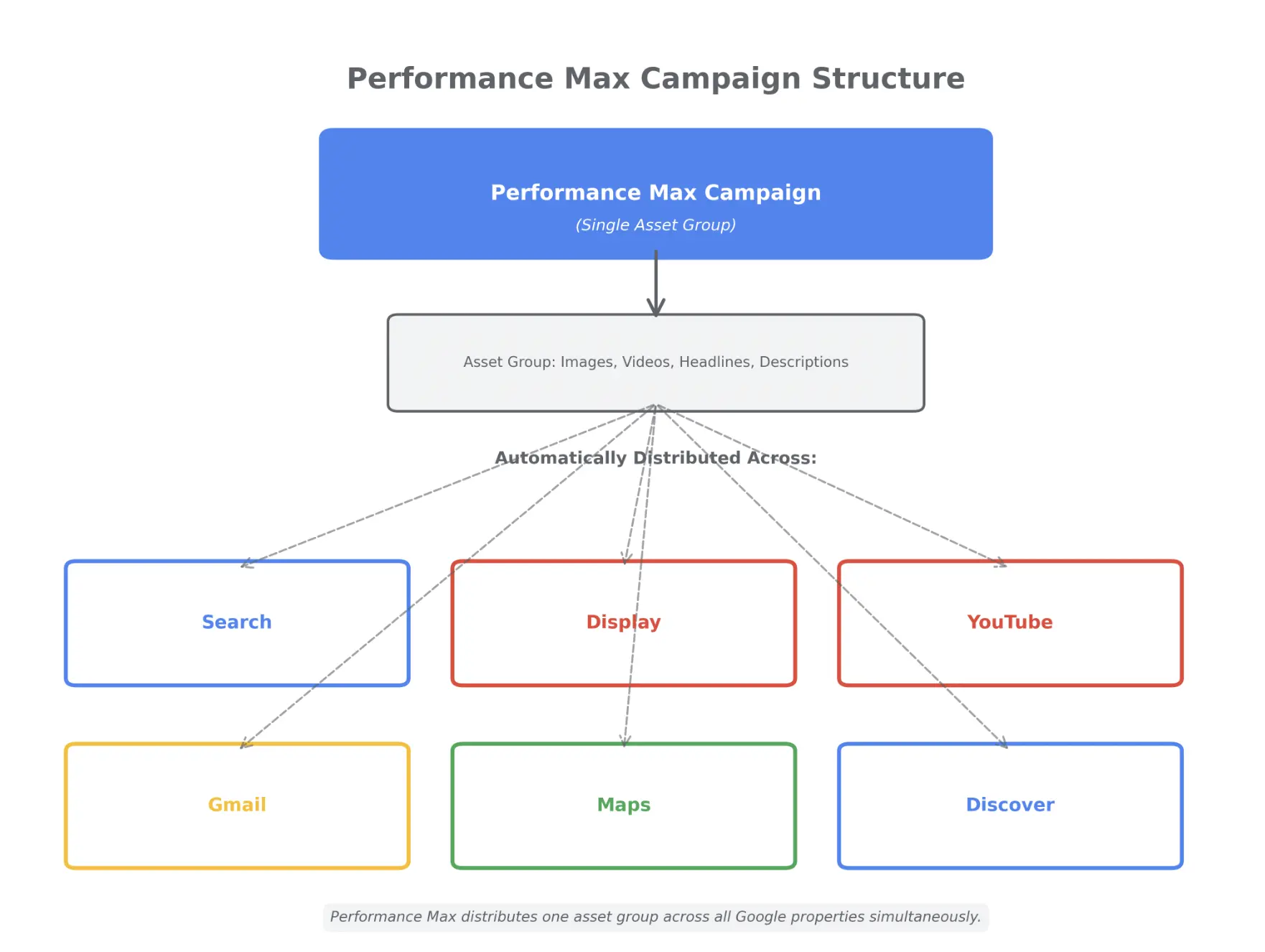
By the mid-2010s, the industry transitioned from desktop-centric strategies to "mobile-first" approaches as smartphone penetration skyrocketed. In the early 2020s, the integration of machine learning led to the deprecation of expanded text ads in favor of Responsive Search Ads (RSAs) and the introduction of Performance Max (PMax), which automates ad placement across diverse networks. This chronology reflects a broader trend: the removal of manual levers in favor of automated, data-driven optimization.
The Mechanics of the Modern Search Auction
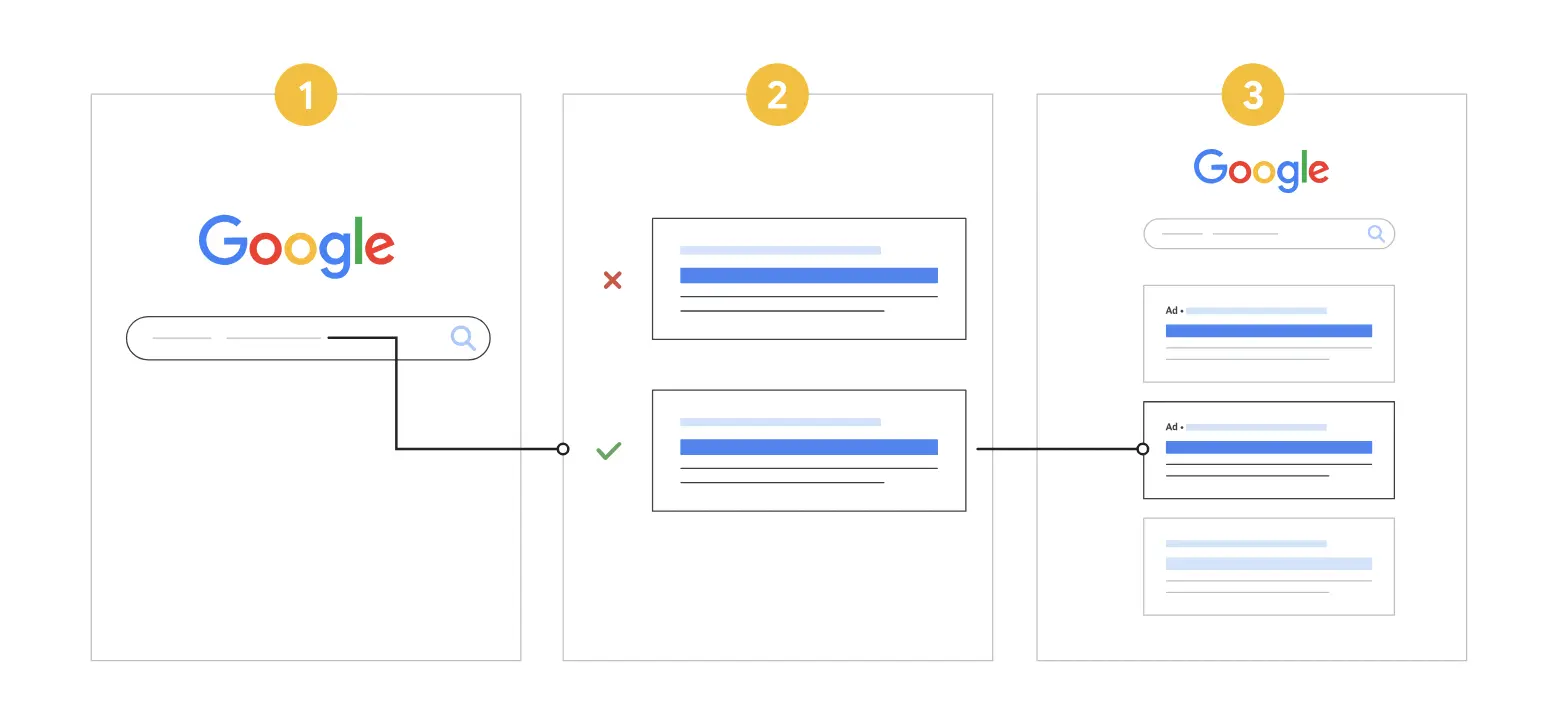
The modern paid search auction is a high-frequency, automated event that occurs in milliseconds every time a user performs a search. While many perceive the auction as a simple financial transaction, it is governed by a complex formula known as Ad Rank. This score determines not only where an ad appears on the Search Engine Results Page (SERP) but also whether it appears at all.
Ad Rank is calculated using several variables: the maximum bid, the quality of the ad at the time of the search (including expected click-through rate and ad relevance), and the landing page experience. This means an advertiser with a lower bid can frequently outrank a competitor with a higher bid if their ad content and landing page are deemed more useful to the user. Once the ranking is established, the actual cost-per-click (CPC) is determined by the "second-price auction" model, where the winner pays only one cent more than the amount required to beat the Ad Rank of the advertiser immediately below them.

Competitive Landscape: Google, Microsoft, and the Rise of Niche Platforms
While Google remains the titan of the industry, commanding roughly 90% of the global search market, the landscape is becoming increasingly multi-polar. Microsoft Advertising has carved out a significant niche by syndicating ads across Bing, Yahoo, AOL, and DuckDuckGo. Microsoft’s recent expansion into the ad-supported tiers of streaming services like Netflix and its integration of generative AI into search results have provided a compelling alternative for B2B and high-income demographic targeting.
Simultaneously, Apple Search Ads has emerged as a dominant force within the mobile app ecosystem. By capturing intent within the App Store, Apple allows developers to bypass traditional search engines and engage users at the point of download. This diversification highlights a growing reality for marketers: a holistic paid search strategy must now account for multiple ecosystems, each with its own unique audience behaviors and technical requirements.
The Strategic Shift: Beyond Keywords to Audience Signals
For years, the "keyword" was the primary unit of currency in paid search. However, as privacy regulations like GDPR and CCPA have limited tracking, and as third-party cookies face obsolescence, platforms have shifted toward "audience signals." Modern campaigns often combine keyword intent with demographic data, past purchase history, and first-party data.
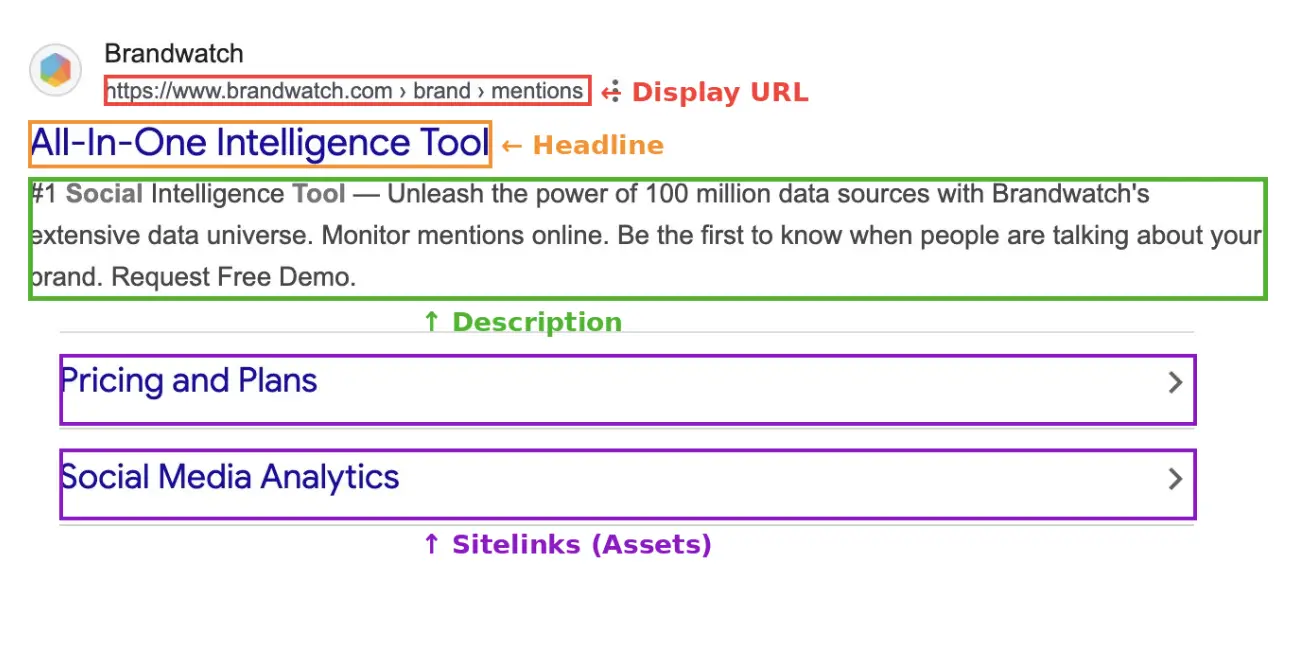
This shift is most evident in the rise of Performance Max and Dynamic Search Ads (DSAs). In these models, the advertiser provides creative assets and a target objective, and the platform’s AI determines the best combination of headlines and placements. While this reduces the manual workload for marketers, it increases the necessity for high-quality data inputs and robust conversion tracking. Without accurate data fed back into the system, the AI cannot effectively optimize the campaign, leading to what industry analysts call "the black box problem."
The Post-Click Imperative: Conversion Rate Optimization
Data from 2024 and projections for 2025 indicate a rising trend in the cost-per-lead (CPL) across nearly all industries. The average CPL rose from $66.69 in 2024 to approximately $70.11 in 2025. With rising competition driving up CPCs, the most effective lever for maintaining profitability is no longer the ad itself, but the landing page.
Industry benchmarks suggest a stark contrast in performance based on page relevance. While generic homepages typically convert at rates between 2% and 4%, dedicated, message-matched landing pages can achieve conversion rates exceeding 15%. This is driven by the "message match" principle: if an ad promises a specific solution, the landing page must immediately and clearly fulfill that promise without the distractions of a standard website navigation menu.
Furthermore, technical performance has become a non-negotiable factor. Research into mobile user behavior indicates that a one-second delay in page load time can result in a 20% drop in conversions. For an advertiser paying $10 per click, a slow-loading page is not just a technical flaw; it is a direct drain on capital.
Measurement and the Evolution of Analytics
The transition from Universal Analytics to Google Analytics 4 (GA4) has redefined how paid search success is measured. Marketers are moving away from "vanity metrics" like impressions and total clicks, focusing instead on Return on Ad Spend (ROAS) and Cost Per Acquisition (CPA).
The integration of GA4 allows for a more nuanced view of the customer journey, recognizing that a user may click a search ad, leave, and eventually convert through a direct visit or an email link. This "multi-touch attribution" is essential for justifying the high costs of top-of-funnel search terms that introduce users to a brand but may not result in an immediate sale.

Industry Implications and Expert Analysis
Analysts suggest that the next frontier of paid search will be defined by "Generative AI Search." As search engines like Google and Bing integrate AI-generated summaries at the top of the SERP, the space available for traditional organic results is shrinking. This makes paid placements even more critical for brands that wish to remain visible "above the fold."
"The era of ‘set it and forget it’ search advertising is over," notes industry analysts. "We are seeing a bifurcation in the market. On one side, small businesses are leaning into full automation. On the other, enterprise brands are investing heavily in custom landing page experiences and first-party data warehouses to feed the algorithms more accurately than their competitors."
The broader implication for the economy is a move toward hyper-efficiency. As platforms become better at predicting user intent, the waste in advertising spend is theoretically reduced. However, this efficiency comes at the price of higher entry costs, as the sophisticated tools required to compete—such as AI-driven content generators and advanced A/B testing platforms—require both financial investment and specialized expertise.
Conclusion: The Future of Intent-Based Marketing
As paid search spend is forecasted to hit $355 billion globally by 2025, the channel remains the most powerful tool in the marketer’s arsenal. Its ability to capture high-intent traffic is unmatched by social media or display advertising. Yet, the 2024 data serves as a warning: volume does not equal value.
Success in the current climate requires a holistic approach that balances the "pre-click" (the auction, the bid, and the ad copy) with the "post-click" (the landing page, the load speed, and the conversion path). For businesses that can master this synergy, paid search remains a scalable engine for growth. For those who rely on outdated manual tactics or generic web experiences, the rising costs of the digital auction may soon prove prohibitive. The evolution of search is no longer just about being found; it is about what happens after the click.







