The banking sector, traditionally perceived as conservative and resistant to rapid digital shifts, is now confronting an undeniable truth: an active and strategic social media presence is no longer optional. It is a critical nexus where consumers, particularly younger generations, gather financial information, compare institutions, and cultivate trust. Beyond mere visibility, a well-executed social media strategy directly contributes to tangible business outcomes, including lead generation, enhanced customer retention, and robust brand awareness, all while navigating a complex regulatory environment.
The Evolving Digital Landscape and Banking’s Transformation

For decades, banks relied on brick-and-mortar branches, print advertising, and direct mail to connect with customers. The advent of the internet brought online banking, followed by mobile applications, gradually shifting consumer interactions into the digital realm. However, the true seismic shift arrived with social media, which transformed passive consumption into active engagement and conversation. Initially, many financial institutions approached social platforms with caution, wary of regulatory hurdles, data privacy concerns, and the potential for reputational damage. This hesitation created a vacuum, quickly filled by independent financial influencers ("finfluencers") and non-traditional financial services, underscoring the urgency for established banks to adapt. Today, social media platforms are indispensable touchpoints for banks seeking to remain relevant and competitive.
Social Media as a Primary Source for Financial Intelligence
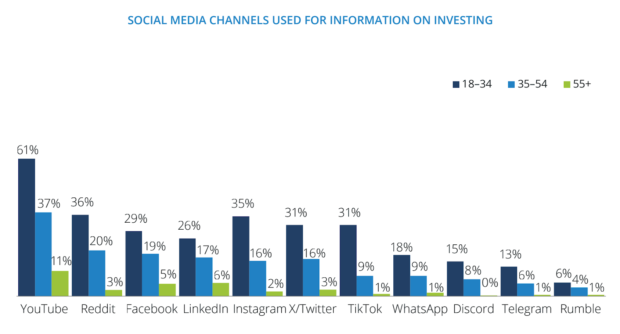
Modern investors, especially those new to the market, increasingly turn to social media as a primary resource for financial education and investment ideas. Research from the FINRA Foundation highlights this trend, revealing that a significant 29% of investors utilize social media and online message boards to glean insights for their investment decisions. Platforms such as YouTube, Reddit, Facebook, and LinkedIn have emerged as popular conduits for this information exchange. For banks, this presents both a substantial opportunity and a profound responsibility. While there is a clear demand for financial education, the digital sphere is also characterized by volatile public sentiment and a fragile ecosystem of trust. This necessitates a commitment to delivering clear, accurate, and transparent information, especially within a heavily regulated industry where credibility is paramount. The implication is clear: banks must transition from simply broadcasting information to actively educating and engaging their audience, becoming trusted voices amidst a cacophony of online advice.

Gen Z’s Affinity for Digital Financial Guidance
The younger demographic, particularly Generation Z, demonstrates a distinct preference for obtaining financial guidance through social media channels. A recent Gallup poll underscores this phenomenon, indicating that 42% of Americans aged 18 to 29 actively seek financial advice on social media. Furthermore, a compelling 61% of investors under 35 report having acted on recommendations from financial influencers. This trend is hardly surprising; finfluencers, particularly those active on platforms like TikTok, have mastered the art of delivering digestible, relatable, and often entertaining financial content that resonates deeply with this generation. Their approach, characterized by bite-sized videos focused on financial literacy, practical advice, and actionable strategies, offers a blueprint for how traditional banks can recalibrate their social media content. By adopting similar formats and focusing on demystifying complex financial concepts, banks can bridge the generational gap and cultivate a new generation of loyal customers.
The Dominance of Digital in Banking Marketing Strategies
Digital channels have transcended their role as merely "one channel" within the marketing mix; they have become the channel for the contemporary banking industry. Currently, digital marketing commands nearly 62% of bank marketing budgets, solidifying online platforms as the predominant method for banks to engage, educate, and acquire customers. This significant allocation of resources confirms that social media is neither an optional nor an experimental endeavor but an integral component of a bank’s overarching marketing strategy. With consumer banking digital ad spend approaching $370 million per quarter, social media’s role in a bank’s digital footprint is non-negotiable. The competitive landscape further emphasizes this necessity: a 2023 ABA report revealed that nine out of ten banks consider social media important, with 88% reporting active engagement on their accounts. In this environment, inaction is a strategic disadvantage, leaving valuable connections and market share to competitors who are already actively cultivating their online communities.
Strategic Platform Selection: Reaching the Right Audience
The optimal social media platforms for a bank are dictated not by fleeting trends, but by rigorous audience research and clearly defined goals. As Leen Li, Chair of the Wealthsimple Foundation, aptly states, "You can have the best product and content, but if you can’t distribute to your audience on the proper platform, you’re not going to hit your goal." A pragmatic approach, such as investing a modest amount in paid content across multiple platforms to "see what the first $1,000 could get us," as Li’s organization did, can provide invaluable data for strategic platform allocation.

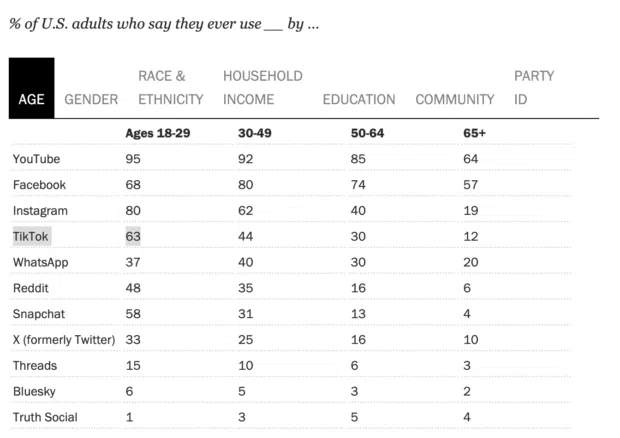
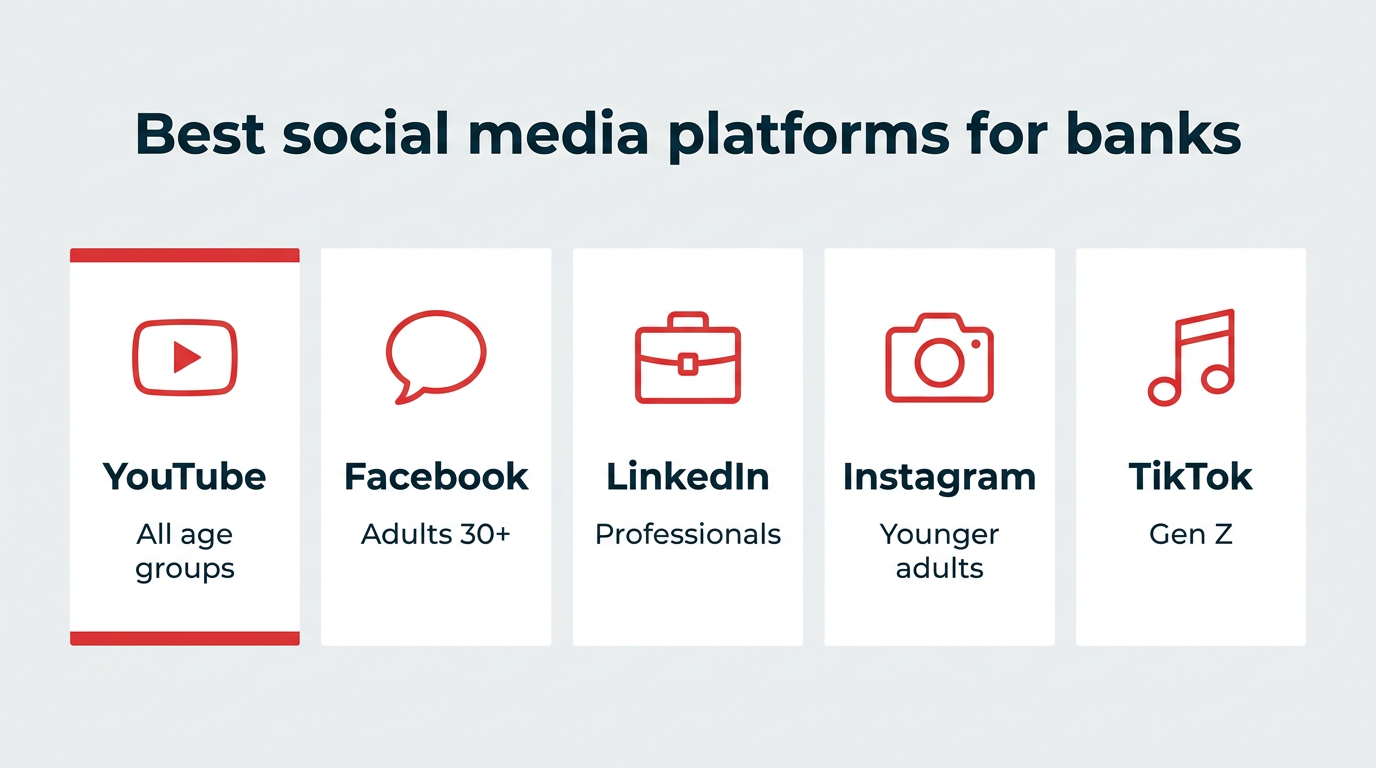
According to Pew Research Center data, YouTube boasts the broadest reach across all age groups, with 95% of adults aged 18–29 utilizing the platform, making it a foundational element for most banks’ social strategies. Facebook, conversely, maintains strong engagement among adults aged 30 and above, offering robust opportunities for community building and local engagement. For reaching Gen Z and younger millennials, who increasingly prefer "bite-sized financial videos" over traditional advisory appointments, TikTok and Instagram emerge as essential investments.
Here’s a breakdown of major platforms and their banking utility:
- YouTube: Ideal for broad reach and in-depth financial education. Best for long-form videos, webinars, explanatory content, and expert interviews.
- Facebook: Effective for local engagement and connecting with older customer segments. Suited for community updates, event promotions, and direct customer interaction.
- LinkedIn: The go-to for establishing brand authority, thought leadership, B2B networking, and recruitment. Content includes industry insights, company news, and career opportunities.
- Instagram: Strong for engaging younger adults through visual storytelling. Perfect for Reels, carousels, and Stories focused on financial literacy and brand personality.
- TikTok: Uniquely positioned to reach Gen Z and younger millennials. Employs short-form video, often leveraging finfluencer styles to demystify financial topics.
The key is not omnipresence but strategic presence: engaging where the target audience naturally congregates, with content tailored to their preferred learning and interaction styles.
Crafting Engaging and Trustworthy Content: Beyond the Sales Pitch
Effective social media content for banks transcends mere product promotion. It must educate, build trust, and reveal the human element of the institution. Drawing inspiration from the finfluencer dynamic, successful strategies prioritize education and personality over direct sales pitches. Short-form videos, interactive carousels, and engaging threads can be powerful tools for banks to share practical financial literacy advice and strategies.
Content types that foster trust and engagement include:
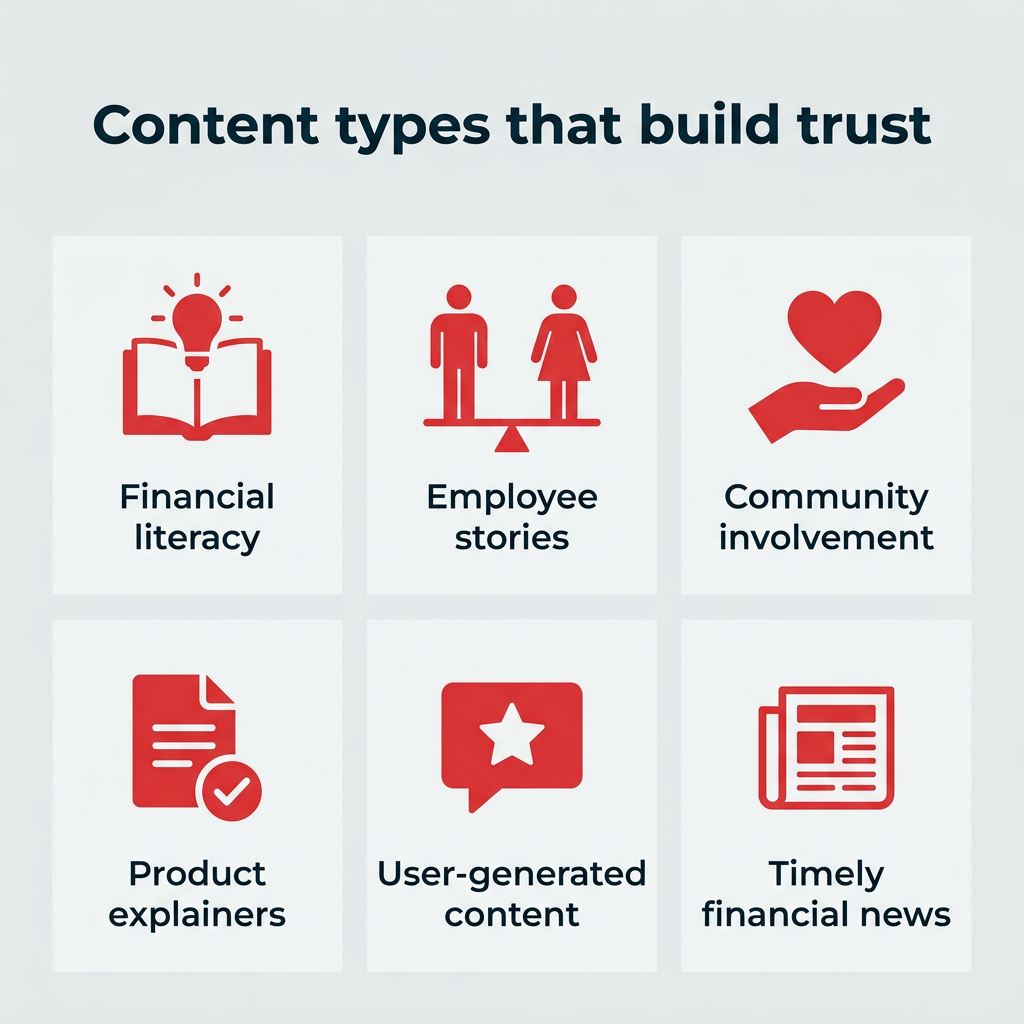
- Financial Tips and Explainers: Demystifying complex financial products, investment strategies, or budgeting advice.
- Behind-the-Scenes Content: Showcasing employee stories, daily operations, and the bank’s culture to humanize the brand.
- Community Involvement: Highlighting charitable activities, local sponsorships, and employee volunteerism to demonstrate social responsibility.
- Customer Testimonials and Success Stories: Authentic narratives from satisfied clients build credibility and social proof.
- Q&A Sessions and Live Webinars: Directly addressing customer questions and providing real-time value.
- Timely Updates: Announcing new services, security alerts, or market insights.
User-generated content (UGC) can also significantly bolster trust. Securian Financial’s #LifeBalanceRemix campaign, for example, successfully leveraged UGC to boost community engagement and achieve impressive results, including a 46% increase in engagement and a 57% increase in brand mentions. By actively encouraging customers to share their experiences, banks can amplify authentic voices and build a stronger, more relatable brand image.
Navigating the Regulatory Landscape: Compliance and Risk Management
For financial institutions, operating within a highly regulated environment means that social media compliance and risk management are not merely best practices but legal imperatives. Operating jurisdictions dictate specific rules that banks must meticulously follow. Regulatory bodies such as FINRA (Financial Industry Regulatory Authority), the SEC (U.S. Securities and Exchange Commission), the OCC (Office of the Comptroller of the Currency), and the FDIC (Federal Deposit Insurance Corporation) establish stringent guidelines concerning investment-related communications, advertising, and consumer protection. Violations, whether through sharing unauthorized customer information, making unsubstantiated claims, or failing to maintain proper records, can lead to severe legal penalties, substantial fines, and irreversible reputational damage. Furthermore, the threat of security breaches stemming from unauthorized social media activity or sophisticated cyberattacks poses a significant financial and reputational risk.
To mitigate these risks, banks must implement a multi-faceted approach:
-
Social Media Audit: Begin with a comprehensive audit to map all existing social media accounts, identifying official pages, dormant profiles, and potential rogue accounts. Global insurance giant MAPFRE, for instance, consolidated over 80 official pages onto a single platform, gaining a unified view and significantly boosting their online presence with a 24% increase in impressions and a 42% rise in brand mentions.
-
Internal Team Education: A critical phase involves thoroughly educating internal teams on industry regulations and the bank’s specific social media guidelines. Employees who understand compliance protocols are less likely to inadvertently post problematic content. Platforms like Hootsuite’s Parliament (employee advocacy platform) can facilitate this by allowing content administrators to push pre-approved, compliant content for employees to share, extending reach while minimizing risk. Julius Baer, a Swiss private banking group, leveraged this, increasing reach by 125% and engagement by 150%.

-
Robust Governance Policy: A detailed social media governance policy is essential, outlining clear rules of engagement for all employees. This document should cover content approval workflows, data security protocols, legal disclaimers, crisis communication procedures, and record-keeping requirements. The policy must align with broader communication guidelines (email, text) and often involves the Chief Information Officer and Chief Risk Officer. Tools like Hootsuite Social OS with its Vigil governance layer help enforce these rules consistently, ensuring all content undergoes necessary approvals and archiving.
-
Crisis Preparedness: Given the unique reputational risks faced by banks, a well-defined crisis management plan is non-negotiable. A single mishandled comment can escalate rapidly in a regulated industry. The plan should include:
- Identifying potential risks and scenarios.
- Establishing monitoring systems for early detection of issues.
- Developing pre-approved response protocols and holding statements.
- Defining roles and responsibilities for the crisis team.
- Establishing internal and external communication channels.
- Conducting regular drills and post-crisis reviews.
A clear plan ensures a calm, consistent, and compliant response during critical moments.
-
AI Content Transparency: A growing consideration, especially by 2026, is transparency around AI-generated content. Banks must be upfront about their use of AI in customer-facing content to protect brand reputation in a low-trust environment. Trying to educate and sell simultaneously, or using AI deceptively, can quickly erode trust.

-
Cybersecurity Measures: Financial technology providers like SIX, which manages services for 130 banks, demonstrate the importance of automated cybersecurity measures. By implementing tools within Hootsuite Social OS like Vigil for governance and Lumen for real-time monitoring, SIX achieved a 99% accuracy in threat detection and a 70% reduction in false positives, safeguarding their vast network from unauthorized profiles and malicious content.
Integrating Social Media into a Broader Marketing Ecosystem
Younger investors (18-34) rarely rely exclusively on social media for financial advice; they use it in conjunction with a multitude of other sources. This emphasizes the need for banks to integrate social media into an overarching, omnichannel marketing strategy. By linking social posts back to informative blog articles, and those articles to vetted external resources, banks can construct a reliable network of digital information, bolstering their reputation as trustworthy authorities. Simple calls to action like "click the link in our bio" become crucial bridges. Hootsuite Social OS facilitates this integration by connecting social data with broader marketing stacks, including CRM systems like Salesforce and analytics platforms like Adobe, ensuring seamless information flow and consistent customer journeys across all touchpoints.

Humanizing the Brand through Authentic Engagement
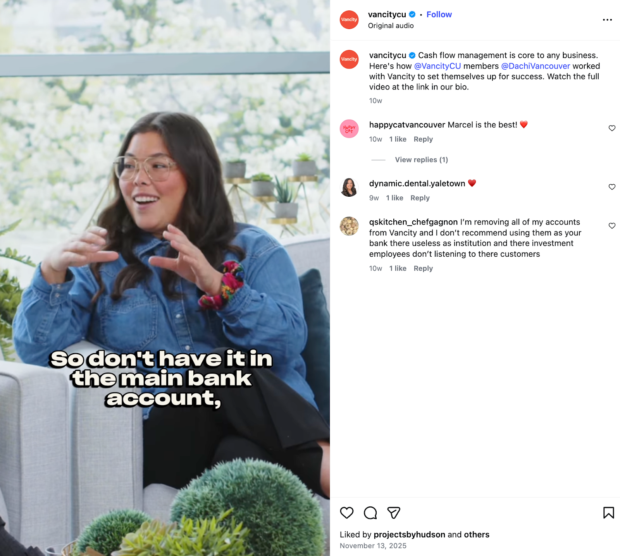
In an industry often perceived as impersonal, humanizing the brand through people-forward content is vital for improving social media engagement. Sharing employee stories, client testimonials, and behind-the-scenes glimpses conveys a genuine commitment to people. Kennebec Savings Bank, for example, uses LinkedIn to showcase its employees, fostering a sense of community and authenticity. Similarly, Julius Baer’s use of an employee advocacy platform empowered its staff to become brand ambassadors, resulting in a 125% increase in reach and a 150% boost in engagement, demonstrating the power of authentic voices in building trust and expanding influence.
Proactive Engagement and Customer Service

Social media is inherently a two-way street, offering an unparalleled opportunity for direct interaction and improved customer experience. Responding promptly to comments, messages, and threads humanizes the institution and cultivates customer loyalty. Platforms like SoFi actively provide customer support on X (formerly Twitter), demonstrating responsiveness and accessibility. A unified inbox, such as Hootsuite Social OS’s Nest, consolidates all conversations, enabling teams to respond quickly and consistently, transforming potential complaints into opportunities for positive engagement and stronger customer relationships.
Measuring Success and Adapting Strategy for Continuous Improvement
Measuring the effectiveness of a bank’s social media strategy requires tracking key performance indicators (KPIs) that directly align with business objectives.
Essential metrics include:
- Engagement Rate: Measures audience interaction with content (likes, comments, shares).
- Reach and Impressions: Indicates the potential audience size and visibility of content.
- Sentiment Analysis: Tracks public perception and brand reputation based on mentions.
- Conversion Rate: Measures how many social media users complete a desired action (e.g., sign up for a newsletter, open an account).
- Customer Satisfaction Score (CSAT): Assesses the quality of customer service provided via social channels.
- Lead Generation: Quantifies new prospects acquired through social media efforts.
Tools like Hootsuite Social OS provide comprehensive analytics, allowing banks to monitor these KPIs, identify trends, and understand what content resonates most effectively. Beyond basic scheduling and reporting, specialized apps for compliance archiving, social listening, and CRM integration are invaluable for financial institutions.
The most successful social strategies are dynamic and adaptable. Regular review of metrics through analytics platforms is crucial to identify high-performing content and areas for improvement. If a particular content type consistently drives engagement, resources should be allocated accordingly. Conversely, a drop in engagement necessitates a strategic reassessment. Data-driven adjustments ensure optimal utilization of social media budgets and continuous improvement in achieving strategic goals.
In conclusion, social media is no longer an ancillary marketing tool for banks but a foundational pillar of their digital strategy. By embracing these platforms with a focus on education, transparency, compliance, and authentic engagement, financial institutions can not only meet evolving consumer expectations but also forge deeper trust, drive significant business growth, and secure their position in the rapidly evolving financial landscape.

 rifanmuazin
 Pevita Pearce