The digital landscape is increasingly fraught with sophisticated cyber threats, making the integrity and security of email communication paramount for individuals and organizations alike. In this complex environment, the concept of "email authentication" has transcended technical jargon to become a fundamental pillar of trust and deliverability. It represents a suite of digital security measures designed to verify the sender’s identity, ensure message integrity, and ultimately protect recipients from malicious activities such as phishing, spoofing, and spam. Without robust authentication, an email program risks not only diminished deliverability but also severe damage to brand reputation and potential exposure to costly cyberattacks. The recent mandates from major mailbox providers (MBPs) like Gmail, Yahoo, and Microsoft have cemented this reality, transforming email authentication from a recommended best practice into a non-negotiable requirement for all senders, particularly those operating at scale.
The Genesis of Email Security: A Historical Perspective
The internet’s early days were marked by a spirit of open connectivity, with the Simple Mail Transfer Protocol (SMTP) designed primarily for relaying messages without inherent security checks for sender identity. This fundamental vulnerability became increasingly exploited as email evolved into a ubiquitous communication channel, giving rise to the pervasive problems of spam, phishing, and domain spoofing. Recognizing the escalating threat to user trust and the functionality of email itself, several pioneering groups began collaborating to develop standards that could inject much-needed security into the system.
In the late 1990s and early 2000s, organizations like the Internet Engineering Task Force’s (IETF) Anti-Spam Research Group, along with industry giants such as Yahoo and Cisco, initiated efforts to build foundational protocols. These efforts aimed to allow receiving mail servers to verify that an incoming email genuinely originated from the domain it claimed to be from and that its content had not been tampered with in transit. This collaborative work laid the groundwork for the core authentication technologies that safeguard email today, moving from rudimentary checks to a sophisticated layered defense system. The evolution of these standards reflects a continuous arms race against malicious actors, pushing the industry towards more stringent and comprehensive security measures.
Understanding the Pillars: SPF, DKIM, and DMARC
At the heart of modern email authentication are three interconnected technologies: Sender Policy Framework (SPF), DomainKeys Identified Mail (DKIM), and Domain-based Message Authentication, Reporting & Conformance (DMARC). These protocols work in concert to establish sender legitimacy and protect against various forms of email abuse.
Sender Policy Framework (SPF): The Authorized Guest List
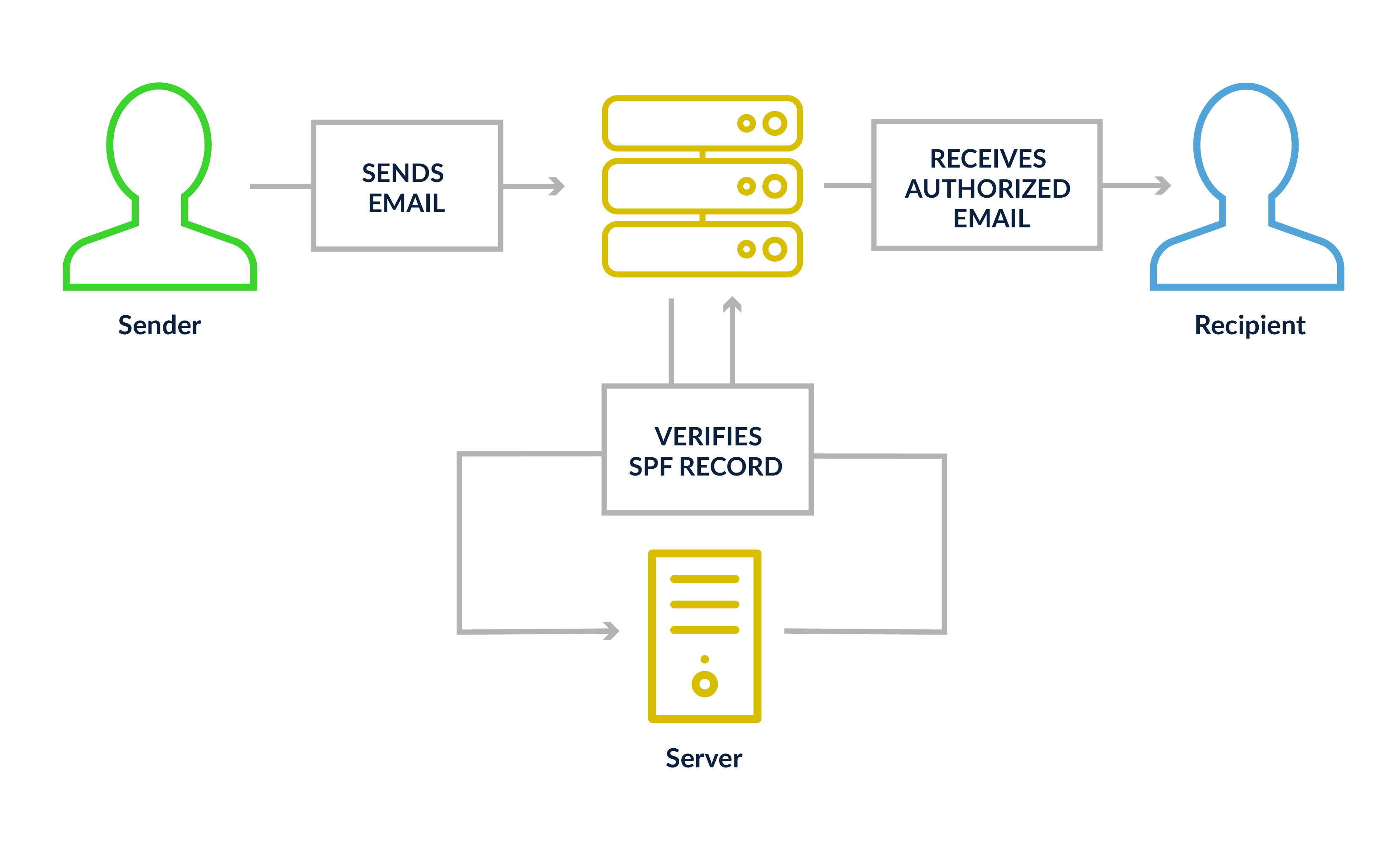
Introduced in the early 2000s, SPF acts as a digital guest list for your domain. It allows domain owners to publish a specific DNS (Domain Name System) record that explicitly lists all authorized IP addresses permitted to send email on their behalf. When a receiving mail server receives an email, it performs an SPF check by querying the sender’s domain’s DNS record. If the sending IP address is not on the approved list, the receiving server flags the email as potentially illegitimate.
SPF records are configured as a TXT record in the domain’s DNS settings. They can specify individual IP addresses, IP ranges, or include references to third-party email service providers (ESPs) that are authorized to send mail for the domain. For instance, a marketing department using a specific ESP for campaigns would need that ESP’s sending IP addresses or domains included in their SPF record. Senders can also define enforcement levels within their SPF record: +all (pass), ~all (soft fail, meaning the email might still be accepted but marked with a warning), and -all (hard fail, indicating the email should be rejected). Most reputable senders opt for ~all or -all to ensure robust protection.
A common challenge with SPF is the "10-lookup limit." Each time an SPF record uses an include mechanism to reference another domain’s SPF record (common when using multiple third-party senders), it counts as a DNS lookup. Exceeding this limit results in a "permerror," which can cause SPF to fail entirely, rendering the domain vulnerable and impacting deliverability. This necessitates careful management and consolidation of sending sources. According to industry analyses, SPF adoption rates hover around 80-90% for active domains, indicating its widespread acceptance as a baseline security measure.
DomainKeys Identified Mail (DKIM): The Tamper-Evident Seal
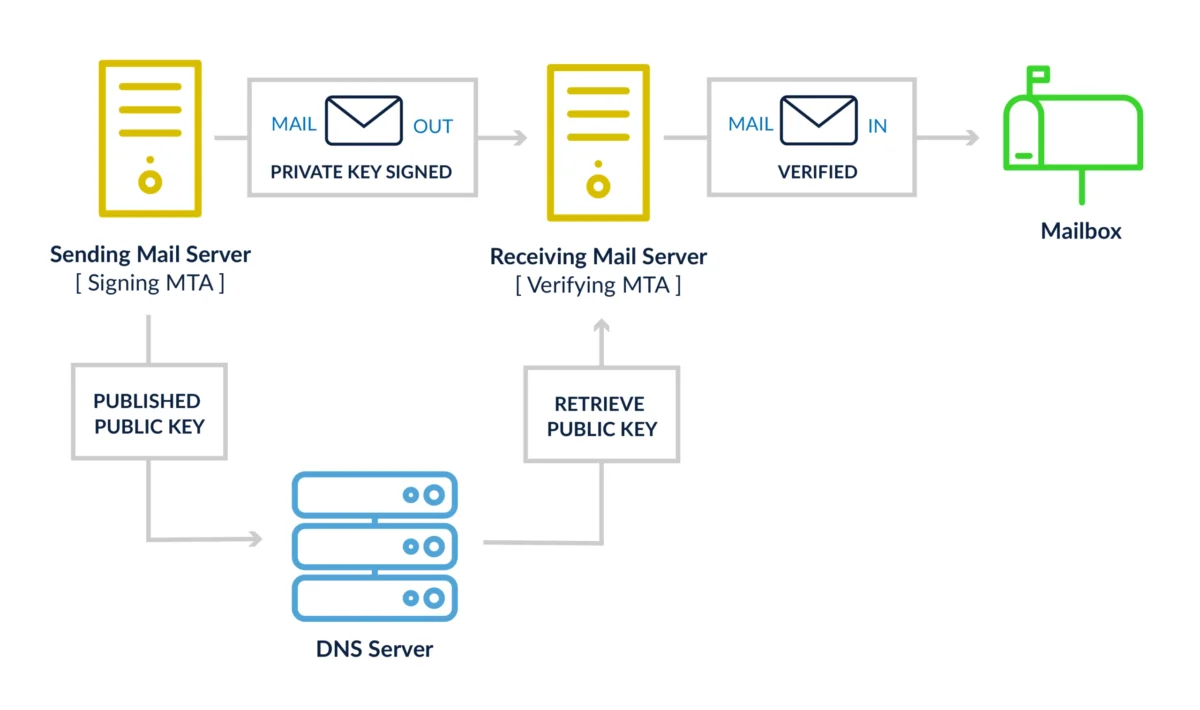
DKIM provides a cryptographic signature for emails, functioning much like a tamper-evident seal on a physical package. When an email server sends a message, it uses a private key to generate a unique digital signature based on specific parts of the email’s header and body. This signature is then embedded into the email’s header. The corresponding public key is published in the sender’s domain’s DNS records.
Upon receiving the email, the recipient’s mail server retrieves the public key from the sender’s DNS and uses it to decrypt the signature. If the decrypted signature matches the computed hash of the email’s content and headers, it confirms two critical aspects: the email truly originated from the claimed domain, and its content has not been altered since it was signed. A mismatch indicates potential tampering or spoofing, causing the DKIM check to fail.
For optimal security, DKIM keys should be at least 2048 bits in length. Older 1024-bit keys are considered less secure and are increasingly being phased out by MBPs. While many ESPs manage DKIM key generation and rotation for their clients, it is crucial for senders to confirm that their chosen platform adheres to these modern security standards. DKIM’s strength lies in its ability to verify message integrity, making it a powerful defense against man-in-the-middle attacks and content manipulation. Its adoption rate is comparable to SPF, demonstrating its critical role in email authentication.
Domain-based Message Authentication, Reporting & Conformance (DMARC): The Policy Enforcer and Reporter

DMARC builds upon SPF and DKIM, acting as the overarching policy layer that dictates what receiving mail servers should do when SPF or DKIM checks fail. Crucially, DMARC introduces an "alignment" check: the domain visible in the email’s "From" header (the one the recipient sees) must match the domain used in either the SPF or DKIM record. Without this alignment, DMARC fails, even if the underlying SPF or DKIM checks passed independently. This alignment feature is vital for preventing direct domain spoofing, where malicious actors attempt to impersonate a brand’s sending domain.
DMARC policies are defined in a DNS TXT record and allow senders to specify three primary actions for non-compliant emails:
p=none(Monitor): This policy instructs receiving servers to take no action on failing emails but to send aggregate reports back to the domain owner. This is an essential starting point for DMARC implementation, allowing organizations to gather data on their email traffic and identify legitimate sending sources before enforcing stricter policies. For bulk senders,p=noneis often the minimum required policy.p=quarantine(Spam Folder): Emails failing DMARC checks are directed to the recipient’s spam or junk folder. This significantly reduces the visibility of fraudulent emails.p=reject(Block Entirely): The most stringent policy, instructing receiving servers to completely block and refuse delivery of emails that fail DMARC checks. This offers the highest level of protection against spoofing and phishing.
A significant benefit of DMARC is its reporting mechanism. Receiving MBPs send daily aggregate reports (XML format) to the email addresses specified in the DMARC record. These reports provide invaluable insights into email traffic originating from a domain, detailing which messages passed or failed authentication, the IP addresses involved, and whether alignment was achieved. This data serves as an early-warning system for detecting unauthorized sending or active phishing campaigns impersonating the domain, enabling rapid response and mitigation. Global DMARC adoption has seen a steady increase, with major organizations and governments recognizing its indispensable role in brand protection and cybersecurity.
Beyond the Basics: ARC and BIMI for Enhanced Trust and Branding
While SPF, DKIM, and DMARC form the foundational triad, two other standards, Authenticated Received Chain (ARC) and Brand Indicators for Message Identification (BIMI), further enhance email security and user trust.
Authenticated Received Chain (ARC): Preserving Authentication Through Forwarding
ARC addresses a specific challenge that arises when emails are forwarded or processed by intermediate systems like mailing list servers, security gateways, or forwarding services. These intermediate systems often modify email headers or content, which can inadvertently break the original DKIM signature. A broken DKIM signature can then cause DMARC to fail, leading legitimate forwarded emails to be incorrectly flagged as spoofed or spam.
ARC acts as a "paper trail" or chain of custody for email authentication results. Each intermediate server that processes an email and makes modifications adds an ARC seal, which includes a snapshot of the email’s authentication status before its modifications and a cryptographic signature to verify the seal’s integrity. When the email finally reaches its destination, the receiving server can examine the ARC chain. If the chain shows that the email was legitimately authenticated at the start of its journey, even if DKIM subsequently broke due to forwarding, the receiving server can use the ARC information to override a DMARC failure, allowing the legitimate email to be delivered.
Unlike SPF, DKIM, or DMARC, ARC is not something individual senders configure directly. It is implemented by mail servers that act as intermediaries. However, understanding ARC is crucial for senders to comprehend why legitimate forwarded emails might behave differently or why some authentication failures occur without malicious intent, ensuring a smoother experience for their subscribers who use forwarding services.
Brand Indicators for Message Identification (BIMI): Visual Trust and Brand Presence
BIMI is a newer standard designed to enhance brand visibility and recipient trust by displaying a brand’s verified logo directly in the recipient’s inbox, even before the email is opened. This visual cue helps subscribers instantly recognize legitimate emails from trusted brands, significantly reducing the likelihood of falling victim to phishing attacks that rely on impersonation.
To implement BIMI, a brand must first have robust SPF, DKIM, and DMARC policies fully configured and enforced. Specifically, the DMARC policy must be set to either p=quarantine or p=reject; a p=none monitoring policy is insufficient for BIMI. Once these prerequisites are met, the brand publishes a BIMI DNS record that points to a properly formatted SVG (Scalable Vector Graphics) version of their logo.
BIMI further distinguishes between two types of certificates:
- Verified Mark Certificate (VMC): The original and most robust certification option. A VMC requires the brand’s logo to be a registered trademark. Issued by authorized Certificate Authorities (CAs) like DigiCert, VMCs unlock full BIMI support across participating MBPs, including the prominent blue checkmark often seen in Gmail, signifying a high level of verified authenticity, and logo display in Apple Mail.
- Common Mark Certificate (CMC): A more recent and accessible option, CMCs do not require a registered trademark. Instead, they require proof that the brand’s logo has been publicly displayed for a minimum of 12 months. Google began accepting CMCs in 2024, significantly broadening BIMI’s accessibility for many brands. CMC holders benefit from logo display in Gmail, though the coveted blue checkmark remains exclusive to VMC holders.
BIMI adoption is growing as more MBPs recognize its value in combating visual brand impersonation and enhancing user experience. While not directly a security protocol in the same vein as DMARC, BIMI leverages the security established by DMARC to provide a visual layer of trust, making it a powerful tool for brand marketers and security teams alike.
The New Mandate: Mailbox Providers Drive Universal Adoption
The email landscape underwent a significant shift starting in late 2023 and early 2024, as major mailbox providers — Google (Gmail), Yahoo, and Microsoft (Outlook.com) — announced and began enforcing stringent new authentication requirements for all senders, particularly those sending bulk email. This marked a pivotal moment, transitioning email authentication from a recommended best practice to an undeniable industry standard with immediate and severe consequences for non-compliance.
Chronology and Specific Requirements:
- October 2023: Google and Yahoo jointly announced their updated sender requirements, signaling a unified industry push for stronger email authentication.
- Early 2024: Microsoft followed suit with its own set of enhanced bulk sender rules, aligning closely with Google and Yahoo’s directives.
- February 2024: The first phase of enforcement began, with Google and Yahoo starting to reject a small percentage of non-compliant emails from bulk senders.
- April 2024: Gmail began progressively rejecting non-compliant traffic more widely, affecting senders who had not met the basic authentication standards.
- Late 2025 (Projected): Non-compliant senders will face more severe consequences, including temporary and permanent rejections, effectively preventing their emails from reaching recipients.
The core requirements for all senders, especially bulk senders (typically defined as sending over 5,000 emails per day to Gmail or Yahoo accounts), include:
- Authentication with SPF or DKIM: All emails must be authenticated with at least one of these protocols.
- DMARC Setup: Senders must have a DMARC policy configured for their sending domain, even if it’s initially set to
p=none(monitor-only). - Aligned DMARC: For bulk senders, DMARC must be aligned, meaning the "From" domain matches the SPF or DKIM domain.
- One-Click Unsubscribe: Bulk senders are required to implement a clear, one-click unsubscribe mechanism in their emails, facilitating easy opt-out for recipients. This reduces spam complaints and improves sender reputation.
- Maintain Low Spam Rates: Senders must keep their spam complaint rates exceptionally low, typically below 0.1% (or 0.3% as a hard maximum threshold), as monitored through Google Postmaster Tools and similar platforms. High complaint rates are a strong indicator of unwanted mail and will lead to deliverability issues.
The motivation behind these mandates is clear: to create a safer, more trustworthy email ecosystem for users. By making authentication mandatory, MBPs aim to significantly reduce the volume of spam, phishing, and spoofed emails, which not only degrade the user experience but also pose substantial cybersecurity risks. As a spokesperson for Google might state, "Our goal is to protect users from malicious content and empower them to trust the emails they receive. These new requirements are a critical step towards a more secure and reliable inbox for everyone."
The impact on senders has been profound. Organizations that failed to adapt quickly found their legitimate emails being routed to spam folders or outright rejected, leading to lost engagement, damaged customer relationships, and direct revenue losses. This has spurred a widespread scramble across industries to audit and update email infrastructure, highlighting the non-negotiable nature of modern email security.
Impact and Implications: A Safer Digital Ecosystem
The widespread adoption and enforcement of email authentication standards have far-reaching implications, creating a more secure and trustworthy digital ecosystem for all stakeholders.
For Businesses and Marketers:
- Enhanced Deliverability: Proper authentication is now the baseline for inbox placement. Brands that comply see improved deliverability, ensuring their legitimate communications reach their intended audience. Conversely, non-compliance leads to direct rejection or spam-folder placement, rendering marketing and transactional emails ineffective.
- Brand Protection and Trust: Authentication, particularly DMARC with a
p=rejectpolicy, drastically reduces the ability of phishers and spoofers to impersonate a brand. This protects brand reputation, prevents customer fraud, and reinforces trust with the audience. BIMI further amplifies this by providing a visual trust signal. - Reduced Risk of Cyberattacks: By making it harder for attackers to spoof domains, organizations reduce their exposure to phishing attacks that target their customers or even internal employees.
- Improved ROI on Email Campaigns: With higher deliverability and trust, email marketing campaigns are more likely to achieve their objectives, leading to better engagement rates, conversions, and ultimately, a stronger return on investment.
- Operational Efficiency: While initial setup requires effort, ongoing DMARC reporting provides valuable insights into unauthorized sending, allowing security teams to quickly identify and shut down malicious activity, reducing investigation time and potential damage.
For Consumers:
- Safer Inbox: The most direct benefit is a significant reduction in the volume of spam, phishing attempts, and spoofed emails reaching their inboxes. This makes email a more pleasant and less risky communication channel.
- Increased Trust: Users can have greater confidence that emails appearing to be from legitimate senders are indeed authentic, reducing anxiety about clicking links or opening attachments.
- Clarity and Recognition: BIMI helps users quickly identify trusted brands through their logos, making it easier to distinguish legitimate emails from imposters at a glance.
For the Broader Internet Security Landscape:
- Industry Collaboration: The coordinated efforts of MBPs, IETF, and other security organizations underscore a growing consensus and collaboration in combating cyber threats.
- Raising the Bar for Attackers: The increased complexity of bypassing these layered authentication mechanisms forces attackers to expend more resources and employ more sophisticated techniques, making large-scale, unsophisticated attacks less effective.
- Data-Driven Security: DMARC’s reporting functionality provides invaluable aggregated data on email authentication failures across the internet, offering a clearer picture of the threat landscape and enabling continuous improvement of security protocols.
The Path Forward: Sustained Vigilance and Continuous Improvement
Email authentication, while a cornerstone of modern digital security, is not a one-time configuration but an ongoing commitment to vigilance and adaptation. The threat landscape is constantly evolving, and so too must the defenses against it.
Organizations must view the proper configuration of SPF, DKIM, and DMARC not as the finish line, but as the foundational starting point. From there, the journey involves:
- Moving DMARC to Enforcement: Progressing from a
p=nonemonitoring policy top=quarantineand ultimatelyp=rejectis crucial for maximizing protection against spoofing and phishing. This transition should be data-driven, leveraging DMARC aggregate reports to ensure all legitimate sending sources are properly authenticated before enforcing stricter policies. - Continuous Monitoring: Regularly reviewing DMARC reports is essential. These reports provide a powerful early-warning system for detecting unauthorized email activity, misconfigurations, or new threats targeting the domain.
- Implementing BIMI: Once DMARC is enforced, adding BIMI can further enhance brand visibility and user trust, providing a visual layer of authentication that complements the technical protocols.
- Staying Informed: The email authentication landscape is dynamic. New standards, best practices, and MBP requirements emerge regularly. Organizations must stay abreast of these changes to maintain optimal deliverability and security.
Tools and services are available to assist organizations in navigating this complex terrain. Platforms like Litmus, as mentioned in the original context, offer infrastructure checks and analytics to ensure that every aspect of email authentication is correctly configured and performing as expected. Email service providers also play a crucial role, often providing built-in tools and expert guidance to help their clients achieve and maintain compliance.
In conclusion, the era of optional email authentication is definitively over. With major mailbox providers now enforcing strict requirements, a robust authentication strategy is no longer merely a technical exercise but a strategic imperative for any entity relying on email for communication, marketing, or customer engagement. It is the bedrock upon which deliverability, brand reputation, and cybersecurity now firmly rest, ensuring that digital messages are not only sent but also truly received and trusted. The collective effort to secure email ultimately contributes to a more reliable and secure internet for everyone.