

The landscape of online information retrieval is undergoing a fundamental transformation as traditional search engine optimization (SEO) evolves into a multifaceted discipline known as AI Search Optimization (AISO). As large language models (LLMs) such as ChatGPT, Claude, and Gemini increasingly serve as the primary gateways for user discovery, the digital marketing industry is shifting its focus toward making content extractable for these generative engines. Recent data indicates that the reliance on traditional search engines is being supplemented, and in some cases replaced, by conversational AI interfaces that synthesize information from across the web to provide direct answers, rather than a mere list of hyperlinks.
![How to Create B2B Content that AI Wants to Cite: Step-by-Step Guide for AI Overviews & GenAI Answers [Based on 15 Latest Studies]](https://www.convert.com/wp-content/uploads/2025/04/The-Complete-Guide-to-Optimizing-Your-Content-For-AI-Search-ft.webp)
The Shift from Keyword Matching to Semantic Extraction
For over two decades, the primary objective of digital visibility was to rank on the first page of Google. However, the emergence of generative AI search engines has introduced a new paradigm where "statistical relevance" and "contextual mentions" carry more weight than traditional on-page keyword density. AI search optimization, also referred to as Generative Engine Optimization (GEO) or LLM Optimization (LLMO), focuses on embedding a brand across the various sources that these models consume.
According to a 2024 report by Plausible Analytics, referral traffic from GenAI sources surged by a staggering 2,200% year-over-year. This trend has continued into 2026, as users transition from "searching" to "prompting." Unlike traditional algorithms that prioritize backlinks and metadata, LLMs build an entity model of a brand by aggregating signals from the entire web, including official websites, G2 profiles, Reddit discussions, and press mentions. If these sources provide conflicting information, the LLM’s citation confidence drops, leading to hallucinations or the omission of the brand from recommendation lists.
![How to Create B2B Content that AI Wants to Cite: Step-by-Step Guide for AI Overviews & GenAI Answers [Based on 15 Latest Studies]](https://www.convert.com/wp-content/uploads/2022/06/uwemedimo-96x96.jpeg)
A Chronology of the AI Search Transition
The transition from traditional SEO to AISO has been marked by several key developmental phases. In late 2022 and throughout 2023, the public release of ChatGPT and Microsoft’s integration of AI into Bing sparked initial curiosity, though most marketers viewed AI as a tool for content creation rather than a search destination.
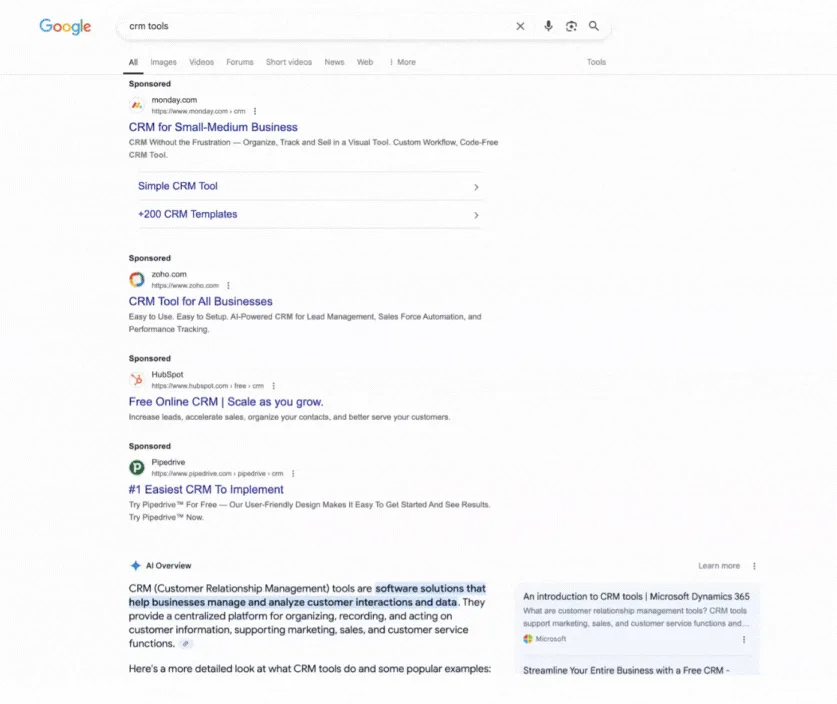
By 2024, the "referral surge" became undeniable. Platforms like Perplexity AI emerged as dedicated search alternatives, and Google began testing its Search Generative Experience (SGE), later rebranded as AI Overviews. During this period, industry analysts observed that top-ranking content on Google was being pushed further down the Search Engine Results Page (SERP), often requiring users to scroll through 65% of the page to reach the first organic link.
![How to Create B2B Content that AI Wants to Cite: Step-by-Step Guide for AI Overviews & GenAI Answers [Based on 15 Latest Studies]](https://www.convert.com/wp-content/uploads/2025/04/What-GenAI-referred-traffic-looks-like-on-Google-Analytics-for-Convert.com_.webp)
In 2025, academic research, most notably the Princeton GEO paper, provided the first scientific framework for AISO. Researchers identified that specific content modifications, such as front-loading answers and including inline citations, could increase a brand’s visibility in AI responses by up to 40%. By 2026, the industry reached a state of maturity where specialized tools for tracking "AI appearance frequency" became standard in the marketing tech stack.
Supporting Data: The Decline of the Traditional Click
The impact of AI on traditional organic traffic is quantifiable and significant. A series of analyses conducted between 2025 and early 2026 by Ahrefs and other SEO utility providers revealed a deepening decline in click-through rates (CTR). For queries where a Google AI Overview is present, the CTR for the #1 organic result has dropped by an average of 58%.
![How to Create B2B Content that AI Wants to Cite: Step-by-Step Guide for AI Overviews & GenAI Answers [Based on 15 Latest Studies]](https://www.convert.com/wp-content/uploads/2024/01/Google-search-with-traditional-SEO-ranking-of-web-pages.jpg)
The "cliff" is even steeper for results further down the page. Results in the #5 position have seen a 32.6% drop in CTR, while the #10 position has declined by 19.4%. This data suggests that appearing in the AI summary itself is no longer a luxury but a necessity for survival. Furthermore, the overlap between "Google Top 10" rankings and "AI Citations" is shrinking. In mid-2025, 76% of pages cited in AI Overviews also ranked in the Google Top 10. By March 2026, that figure plummeted to 38%, as AI engines began utilizing "fan-out" queries to pull information from niche, authoritative sources that might not rank for broad head terms.
The B2B Buyer Journey: From Prompt to Purchase
Analysis of B2B SaaS decision-makers in late 2025 by Omniscient Digital and Wynter highlights a new "validation loop" in the buyer journey. The modern journey typically follows a sequence: Google (broad discovery) → LLMs (structuring and comparison) → Peers (validation via Slack or LinkedIn) → Vendor Websites (verification of specifics) → Peers (final sanity check).
![How to Create B2B Content that AI Wants to Cite: Step-by-Step Guide for AI Overviews & GenAI Answers [Based on 15 Latest Studies]](https://www.convert.com/wp-content/uploads/2025/04/Example-of-ai-search-result-from-Perplexity-and-Microsoft-Copilot.webp)
Buyers are utilizing LLMs in two distinct modes. The first is "Landscape-mapper" mode, where the user seeks to understand the available options in a category. The second is "Solution-hunter" mode, where the user asks specific technical questions, such as "Which CRM integrates with my specific tech stack?"
Despite the high usage of AI, trust remains a significant hurdle. Research indicates that 85% of buyers still trust peer recommendations over any other source, and 78% place high value on third-party reviews. Interestingly, only 14% of buyers trust vendor-produced content alone, and a mere 9% fully trust AI-generated summaries without further verification. This necessitates an AISO strategy that prioritizes off-site signals and peer-to-peer validation.
![How to Create B2B Content that AI Wants to Cite: Step-by-Step Guide for AI Overviews & GenAI Answers [Based on 15 Latest Studies]](https://www.convert.com/wp-content/uploads/2024/01/Gemini-describing-how-training-data-informs-AI-search-responses.jpg)
Strategic Framework: The Three Forces of Citability
To succeed in the AISO era, content must be optimized for three primary forces: Authority, Relevance, and Extractability.
1. Authority: This is an off-site signal. AI engines cross-reference a brand’s claims against the broader web. High-quality backlinks, consistent brand vocabulary across platforms, and active directory listings (such as G2 or Capterra) are essential. Industry experts note that G2’s 2026 acquisition of several software advice platforms has consolidated its influence, making it the single largest source of LLM citations for branded B2B queries.
![How to Create B2B Content that AI Wants to Cite: Step-by-Step Guide for AI Overviews & GenAI Answers [Based on 15 Latest Studies]](https://www.convert.com/wp-content/uploads/2025/04/GenAI-search-sources-example-on-Perplexity-AI.webp)
2. Relevance: Content must align with exact query intent. This involves building topical clusters rather than targeting single keywords. AI models favor content that includes current statistics, names credible sources, and is updated frequently. Data suggests that Perplexity, in particular, prioritizes "freshness," rewarding content updated within the last 90 days.
3. Extractability: This is a technical requirement. AI parses content in semantic chunks. For a section to be citable, the first 40 to 60 words must directly answer the heading’s question. Paragraphs should ideally remain under 80 words to facilitate easier processing by AI crawlers. Proper schema markup—specifically FAQ, Product, and Article schema—remains a critical bridge between raw text and machine understanding.
![How to Create B2B Content that AI Wants to Cite: Step-by-Step Guide for AI Overviews & GenAI Answers [Based on 15 Latest Studies]](https://www.convert.com/wp-content/uploads/2025/04/Google-search-results-from-ranking-algorithm.webp)
Technical Optimization and the Role of Video
While much of AISO is focused on text, video has emerged as a dominant citation source. As of early 2026, YouTube is the most-cited domain in Google AI Overviews, with its citation share growing by 34% in a six-month period. Analysts suggest that a short, well-titled YouTube tutorial can often earn an AI Overview citation even when a company’s written blog post fails to do so.
Technically, brands must ensure that their "robots.txt" files allow access to AI bots like GPTBot. While some publishers have opted to block AI crawlers to protect their intellectual property, this strategy often results in a total loss of visibility in conversational search results. Furthermore, the use of vector embeddings has become an advanced tactic for marketers. By converting content into mathematical coordinates, teams can measure how closely their pages align with the semantic "neighborhood" of common user prompts.
![How to Create B2B Content that AI Wants to Cite: Step-by-Step Guide for AI Overviews & GenAI Answers [Based on 15 Latest Studies]](https://www.convert.com/wp-content/uploads/2025/04/ChatGPT-AI-search-results-with-sources-or-citations.webp)
Measuring Success in a Probabilistic System
One of the greatest challenges of AISO is the inherent inconsistency of LLM outputs. A study conducted by SparkToro in January 2026, involving nearly 3,000 prompt runs, found that there is less than a 1-in-100 chance of an LLM producing the exact same list of brand recommendations twice.
Because of this randomness, "Rank" is being replaced by "Appearance Frequency" as the primary success metric. If a brand appears in 85 out of 100 prompt runs, it is considered deeply embedded in the model’s consideration set. If it appears only sporadically, its entity signal is weak. Marketers are now advised to run category prompts at least ten times across multiple platforms—ChatGPT, Claude, and Perplexity—to calculate a reliable frequency score.
![How to Create B2B Content that AI Wants to Cite: Step-by-Step Guide for AI Overviews & GenAI Answers [Based on 15 Latest Studies]](https://www.convert.com/wp-content/uploads/2024/01/Top-ranking-content-now-sits-further-down-on-the-first-page-of-Google-search-results.gif)
Broader Impact and Industry Implications
The rise of AISO represents a shift toward higher-quality, more differentiated content. Because AI can effortlessly summarize generic information, the "human edge"—original frameworks, lived experience, and unique data—has become the primary currency of digital authority.
Industry leaders suggest that the "SEO is dead" narrative is an oversimplification. Rather, the discipline is merging with public relations and brand management. A single editorial mention in a major publication like Reuters or TechCrunch now provides a disproportionate boost to AI visibility, as these sources are heavily weighted in the training data and recency filters of models like ChatGPT.
![How to Create B2B Content that AI Wants to Cite: Step-by-Step Guide for AI Overviews & GenAI Answers [Based on 15 Latest Studies]](https://www.convert.com/wp-content/uploads/2025/04/Decreasing-Breadth-_-Increasing-Trust22-B2B-buyer-funnel--1024x616.webp)
As we move further into 2026, the brands that thrive will be those that view their website not as the final destination, but as one of many nodes in a vast, AI-mapped ecosystem. By prioritizing extractability, maintaining a consistent off-site presence, and focusing on the validation loops of the buyer journey, organizations can ensure they remain visible in the era of the answer engine. The objective is no longer just to be found, but to be recommended by the systems that now guide human decision-making.







