
 rifanmuazin
Every April 1st, marketing professionals and consumers alike brace for a deluge of playful deception in their inboxes, a tradition that, when executed with finesse, can significantly enhance brand engagement. This year proved no exception, with numerous brands demonstrating both the creative potential and the critical pitfalls of integrating humor into their digital marketing strategies. The annual tradition of April Fools’ Day email campaigns offers invaluable insights into effective communication, the psychology of consumer interaction, and the evolving challenges posed by artificial intelligence and sophisticated inbox algorithms.
The Enduring Legacy of April Fools’ Day
The exact genesis of April Fools’ Day remains shrouded in historical ambiguity, yet its roots are widely believed to stretch back centuries, intertwining with ancient customs and calendrical shifts. One prominent theory traces the modern iteration to 16th-century France. Prior to 1582, much of Europe, including France, celebrated the New Year around the spring equinox, often concluding with a week-long festival ending on April 1st. However, in 1564, King Charles IX officially adopted the Gregorian calendar, decreeing that the New Year would henceforth commence on January 1st. Those who were slow to adopt the new calendar, or who continued to celebrate the New Year on April 1st, were purportedly ridiculed and became known as “April Fools,” often having paper fish placed on their backs (a “poisson d’avril,” or “April fish,” still common in France today).
Other historical accounts suggest possible links to ancient Roman festivals like Hilaria, celebrated in late March, where revelers would dress in disguises and mock others, mirroring the spirit of playful deception. Some scholars also point to medieval mystery plays, particularly the Feast of Fools, as precursors to the tradition. Regardless of its precise origin, April Fools’ Day evolved into a global phenomenon, a day dedicated to harmless pranks and jokes, a collective opportunity to suspend disbelief and embrace levity. In the digital age, this tradition has found a vibrant new home in email marketing, offering brands a unique platform to connect with their audience on a more human, humorous level.

The Potent Power of Humor in Digital Marketing
Beyond mere amusement, humor serves as a remarkably potent tool in the arsenal of modern email marketing. In a crowded digital landscape, where consumers are constantly bombarded with messages, humor can cut through the noise, capturing attention and fostering deeper engagement. An Oracle study underscored this truth, revealing that a staggering 91% of consumers desire brands to be funny, and a significant 72% would actively choose to purchase from a humorous brand over a competitor. This data highlights not just a preference, but a strategic imperative for brands seeking to differentiate themselves and build lasting customer relationships.
The psychological underpinnings of humor in marketing are multifaceted. Humor can:
- Create Emotional Connections: Laughter is a powerful emotion that fosters positive associations with a brand, making it more memorable and relatable.
- Enhance Brand Personality: A brand that uses humor effectively can project an approachable, authentic, and innovative image, moving beyond purely transactional interactions.
- Increase Memorability: Humorous content is often more easily recalled than purely informative or promotional material, leading to higher brand recall.
- Break Through Clutter: In an inbox filled with generic promotions, a cleverly crafted humorous email stands out, increasing open rates and engagement.
- Build Trust and Loyalty: When a brand can make its audience laugh, it builds a rapport that transcends commercial interests, leading to greater trust and, ultimately, loyalty. Studies consistently show that emotional advertising can lead to higher purchase intent and brand advocacy.
However, the effective deployment of humor is a delicate art. It necessitates a profound understanding of one’s audience, brand identity, and the nuances of digital communication. Missteps can lead to alienation, confusion, or even legal repercussions, underscoring the need for careful strategic planning.
Ground Rules for Effective Humorous Campaigns
While the allure of a good prank is strong, successful April Fools’ campaigns, or any humorous marketing initiative, adhere to a strict set of unwritten rules. Brands that excel understand that humor must be meticulously calibrated to their audience and overall brand strategy. Here are essential guidelines:

- Know Your Audience Intimately: What one demographic finds hilarious, another might find offensive or simply unfunny. A deep understanding of your customer base’s sensibilities, cultural context, and humor preferences is paramount. Brands with an established playful or quirky persona have more leeway.
- Stay True to Your Brand’s Voice: Humor should always align with your brand’s core identity and messaging. A luxury brand attempting crude humor might appear disingenuous, while a lighthearted brand adopting a serious tone for a prank could confuse customers. The humor must feel authentic to who you are as a company.
- Ensure the Punchline is Clear and Timely: For April Fools’ pranks, it is crucial that the “reveal” – the moment the audience realizes it’s a joke – is unambiguous and appears early enough in the email to prevent genuine confusion or alarm. Burying the punchline at the bottom of a lengthy email risks alienating recipients who might not read that far.
- Avoid Misleading or Alarming Subject Lines: This is perhaps the most critical rule. Subject lines that simulate serious issues (e.g., “Your Order Has Been Canceled,” “Urgent Account Security Alert”) can cause genuine distress and violate consumer protection laws regarding deceptive practices. The humor should begin after the email is opened, not in the initial hook.
- Offer a Genuinely Positive Experience: Even if it’s a prank, the overall interaction should leave the customer feeling good. Some successful campaigns subtly offer a small discount or a real product reveal after the joke, turning the moment of realization into a positive reinforcement.
- Prioritize Inclusivity and Sensitivity: Humor should never come at the expense of any group or individual. Campaigns must be free of potentially offensive, discriminatory, or culturally insensitive content. When in doubt, err on the side of caution.
- Test and Get Feedback: Before deploying any humorous campaign, especially one involving a prank, internal testing and even small-scale external feedback can identify potential misinterpretations or unintended negative reactions.
A Look at 2026’s Standout April Fools’ Campaigns
This year, several brands masterfully navigated these guidelines, delivering memorable and on-brand April Fools’ experiences. Their creativity not only entertained but also subtly reinforced their brand values and unique selling propositions.
Charlotte Tilbury: The Talking Lipsticks
The luxury beauty brand Charlotte Tilbury unveiled a fictional new product: “The only lipstick that sweet talks with every swipe!” This campaign was a masterclass in brand-aligned humor. The brand, known for its glamorous, empowering messaging and its founder’s distinctive, encouraging voice, perfectly translated this into the prank. A clever micro-animation depicted speech bubbles emanating from a lipstick tube, uttering phrases like “Gorgeous, Darling!” The humor was gentle, sophisticated, and entirely consistent with Charlotte Tilbury’s high-end, aspirational image. It reinforced the idea that their products make users feel beautiful and confident, without ever crossing into absurdity that would undermine their luxury status. The campaign resonated because it felt like a natural, albeit exaggerated, extension of the brand’s core promise.
Honest Burger: The Burger Necklace
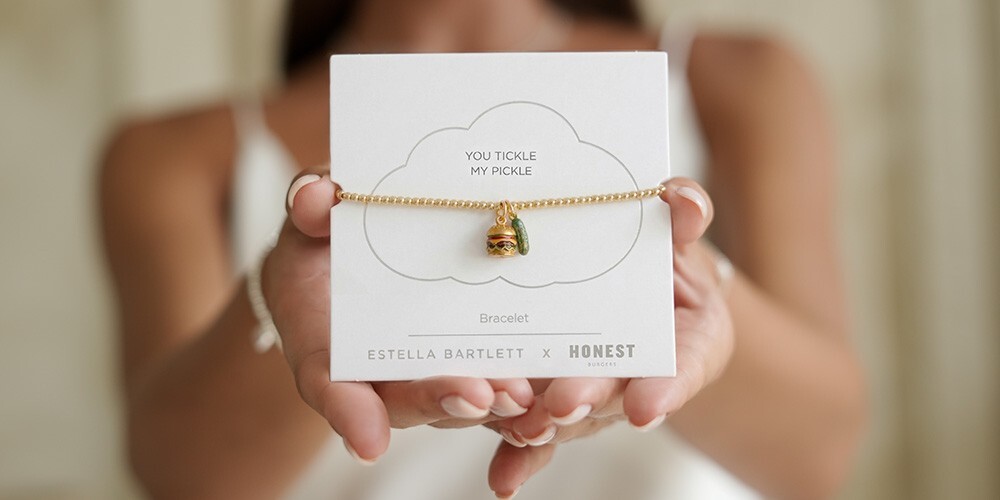
Honest Burger, a brand celebrated for its high-quality, no-nonsense burgers and a fiercely loyal customer base, pushed the boundaries slightly further with its “Burger Necklace” campaign. Collaborating with jewelry brand Estella Bartlett, they promoted a whimsical necklace featuring a miniature burger, accompanied by the playful tagline: “You tickle my pickle!” This campaign highlighted the brand’s confidence in its strong community and its relaxed, friendly persona. The humor here was more audacious, leaning into the slightly absurd, but it worked because it was unexpected yet charmingly on-brand for a company that celebrates the joy of eating. It also leveraged a collaborative angle, adding a layer of perceived authenticity and expanding its reach.
Virgin Voyages: The “Unforgettable Memories” Fragrance
Virgin Voyages, known for its adults-only, rebellious cruise experiences, crafted a brilliant prank that tapped into “embodied cognition”—the idea that our thoughts are deeply influenced by our physical sensations and experiences. Their fictional fragrance was “inspired by the unforgettable (and occasionally questionable) memories made on our adults-only voyages.” The humor lay in the hilariously specific and evocative scent notes: top notes of sea salt spray and SPF, heart notes of champagne hangovers, and base notes of sunrise yoga and midnight gummy bears. This ingenious concept allowed the brand to playfully articulate the unique, sometimes indulgent, and always memorable experiences offered on their cruises. It was a clever way to sell the experience of Virgin Voyages without literally selling a product, creating a strong emotional connection through relatable, sensory imagery.
Philips: One Blade Wild for Pets
Philips, a brand synonymous with precision grooming and innovative technology, introduced the “One Blade Wild”—a new precision grooming tool specifically for pets. The campaign humorously featured “Fur-Density Intelligence” and “Built-in Treat Dispensers,” alongside glowing, fictional user reviews such as: “My rabbit has never looked sharper!” This prank worked by applying Philips’ core expertise (personal grooming technology) to an unexpected and humorous context (pet grooming). The absurdity of applying high-tech human grooming features to animals, coupled with exaggerated testimonials, created a delightful and memorable campaign. It underscored Philips’ brand identity as an innovator while demonstrating a playful side.
The Cautionary Tale: What Not to Do
While many brands excelled, others offered important lessons in what to avoid. The consequences of a poorly executed April Fools’ prank can range from mild annoyance to significant reputational damage and even legal penalties.
Quasi: The Misleading Order Confirmation
A stark cautionary example came from the brand Quasi, whose subject line read: “Your Quasi Order Is Confirmed.” This message would undoubtedly trigger immediate alarm for most recipients, leading them to believe an unauthorized purchase had been made or a mistake had occurred. Only upon opening the email did subscribers discover the prank: “APRIL FOOLS! Just kidding, babe, you need to place it first.”
This type of prank is problematic on multiple fronts:

- Causes Distress: It intentionally induces a moment of genuine panic or confusion, eroding trust rather than building it.
- Violates Best Practices: It directly contravenes the principle of clear and honest communication, which is foundational to good email marketing.
- Legal Implications: Laws prohibiting misleading subject lines are becoming increasingly stringent globally. In the United States, the CAN-SPAM Act explicitly forbids “materially misleading” subject lines. Similar regulations exist in other regions (e.g., GDPR’s emphasis on transparency and fair processing). A prank that simulates a transaction or security alert could be deemed misleading and incur substantial fines, alongside damage to sender reputation and deliverability.
- Erodes Subscriber Trust: Even if not legally actionable, such a prank is likely to result in unsubscribes and negative sentiment, as customers may feel manipulated or disrespected.
The Quasi example serves as a powerful reminder that while humor can be a powerful engagement tool, it must never come at the expense of clarity, honesty, and consumer peace of mind.
Broader Marketing Lessons for an AI-Driven Future
April Fools’ Day campaigns, with their reliance on nuance and context, offer critical lessons that extend far beyond a single day on the calendar, especially in the rapidly evolving landscape of AI-driven digital communication.
The Challenge of AI Summarizers:
As artificial intelligence becomes increasingly sophisticated, AI summarizers are playing a larger role in how consumers digest information, particularly within email platforms. These tools are designed to extract key information and present concise summaries, which can be problematic for content heavily reliant on tone and context, like humor. An AI might interpret a prank literally if the “April Fools” reveal is buried deep within the email, potentially generating a summary that states, for example, “Brand X is selling talking lipsticks” or “You have a confirmed order from Quasi,” without including the crucial humorous context. This could lead to widespread confusion, miscommunication, and negative brand perception, making it essential for marketers to ensure their core message, even if humorous, is comprehensible and clearly signposted for both human and AI readers. The punchline must be prominent.
Navigating Relevance-Sorted Inboxes:
The rise of relevance-sorted inboxes, pioneered by providers like Google, Microsoft, and Apple, also presents a significant challenge. These algorithms prioritize emails based on perceived user relevance, often leading to time-sensitive messages being relegated to less prominent positions. We have already observed this phenomenon with other date-specific events, such as Valentine’s Day and Mother’s Day campaigns, where emails relevant to the day were sometimes buried beneath older, algorithmically “more relevant” messages.

For marketers, this means that even a perfectly crafted, humorous April Fools’ email might not be seen by its intended audience if the inbox algorithm deems it less important than other messages. To counteract this, marketers are increasingly adapting their strategies by explicitly referencing the date or occasion within subject lines or preview text. This signals to AI and algorithms that the email is specifically relevant to a particular day, increasing its chances of being prominently displayed and engaged with. This strategy applies not only to pranks but to all holiday and event-driven marketing, ensuring timely messages reach their audience when they matter most.
Conclusion: Mastering the Art of Engaging Deception
April Fools’ Day remains a fascinating annual barometer for brand creativity and digital marketing acumen. The success stories of brands like Charlotte Tilbury, Honest Burger, Virgin Voyages, and Philips highlight the immense potential of humor to forge stronger connections, enhance brand personality, and stand out in a crowded digital space. Their campaigns were not just funny; they were strategically aligned with their brand identities and audience expectations, delivering entertainment without confusion.
Conversely, the missteps, exemplified by Quasi, serve as a potent reminder of the critical importance of ethical considerations, legal compliance, and a deep understanding of consumer psychology. In an era where AI plays an ever-increasing role in content interpretation and inbox delivery, the nuances of humorous communication become even more pronounced. Marketers must not only master the art of the prank but also the science of digital communication, ensuring clarity, context, and positive impact for both human and artificial intelligence audiences. The lessons learned from April Fools’ Day are, therefore, not just about lighthearted deception, but about the fundamental principles of effective and responsible digital engagement that resonate throughout the entire marketing calendar.
For those eager to delve deeper into the strategic nuances and outrageous successes of April Fools’ email campaigns, the latest episode of Validity’s Email After Hours podcast provides an engaging discussion with Danielle Gallant, exploring the fine line between “funny or unsubscribed.” This resource is available on major podcast platforms including Apple, Spotify, YouTube, and Sender Score, offering further insights into navigating the comedic complexities of email marketing.









