rifanmuazin
In the competitive digital landscape, a landing page is far more than just another web destination; it’s a highly specialized tool designed with a singular purpose: to guide visitors toward a specific, desired action. Yet, despite offering objectively strong value propositions, many of these crucial pages are failing to convert. While design plays a role, a significant culprit behind lackluster conversion rates often lies within the copy itself. This article delves into the essential characteristics of effective landing page copy, providing actionable strategies and an audit framework to transform underperforming pages into lead-generating powerhouses.
The Core of Conversion: Understanding Effective Landing Page Copy
Effective landing page copy doesn’t rely on jargon or overly polished prose. Instead, it prioritizes clarity and directness, enabling visitors to quickly grasp the offer, assess its relevance, and understand the immediate next steps. This simplicity is key to facilitating automatic action. A visitor arrives with a degree of intent and a limited attention span. The copy’s primary function is to facilitate a swift evaluation of whether the offer is worth pursuing.

Strong landing page copy exhibits several critical traits:
- Clear Value Proposition: The inherent worth of the offer is communicated early and unequivocally.
- Visitor-Centric Language: The copy focuses on the tangible outcomes and benefits that matter most to the target audience.
- Scanability and Structure: The page is organized in a manner that allows for quick comprehension, enabling visitors to skim and absorb key information efficiently.
Reflecting Visitor Intent Across the Marketing Funnel
Landing pages serve various stages of the marketing funnel. A visitor encountering a landing page through an educational article might still be in the problem-identification phase, while someone clicking an ad for a free trial or demo is likely much closer to making a purchasing decision. Effective copy acknowledges this difference. High-intent visitors typically seek practical details: how a solution functions, what is required of them, and what to expect post-conversion. Pages that linger on broad, vague promises risk alienating these engaged prospects.
For instance, a software company offering a free demo needs copy that details the demo’s duration, the specific features that will be showcased, and any necessary preparation. Conversely, a business targeting early-stage researchers might focus more on the problem their solution addresses and the potential for discovery. Failing to align copy with this intent can lead to a disconnect, with visitors feeling the page doesn’t speak directly to their immediate needs.
Communicating Value Swiftly and Simply
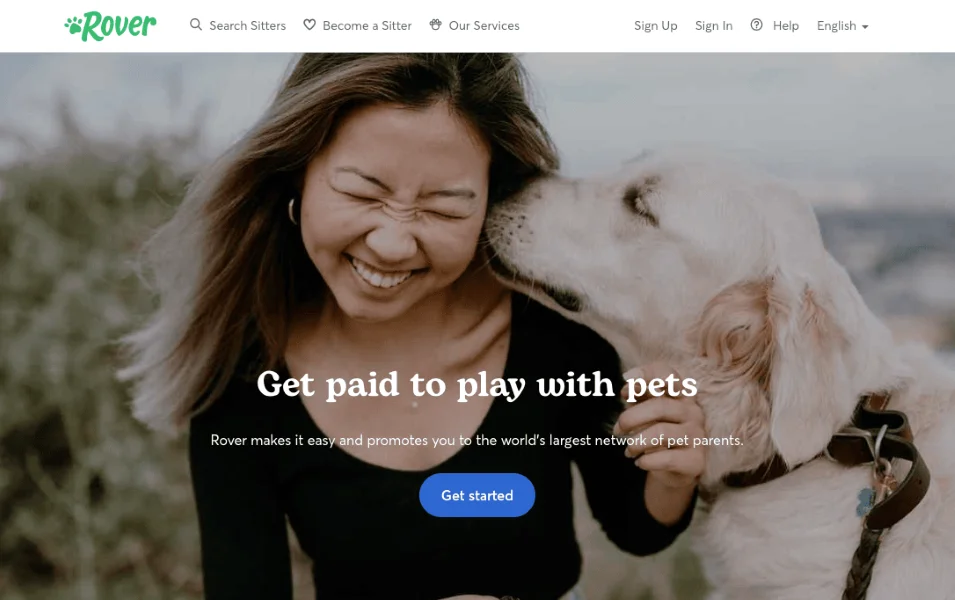
The initial seconds on a landing page are critical. Most visitors will scan before engaging in deep reading. If the headline and opening section fail to clarify the offer’s essence, a significant portion of potential leads will depart. High-converting landing pages make the value proposition immediately apparent. The headline should succinctly state what the product or service is, and the surrounding text should explain why this matters to the visitor.
Research consistently shows that simpler language drives better conversion rates. Pages written at a 5th-to-7th-grade reading level have demonstrated median conversion rates exceeding 11%, a figure significantly higher than pages written at higher reading levels. This is attributed to the reduced cognitive load required to understand the offer, making it more accessible and less daunting for a broader audience. The goal is not to patronize, but to ensure that the message is universally understood, thereby lowering the barrier to engagement.
Reducing Friction for Seamless Conversion
High-converting landing pages actively work to remove obstacles that might impede a visitor’s decision-making process. This can involve clarifying operational details, addressing practical concerns such as pricing transparency, outlining onboarding timelines, or detailing available support mechanisms. Small, well-placed pieces of information can often build more confidence than lengthy, abstract assurances.
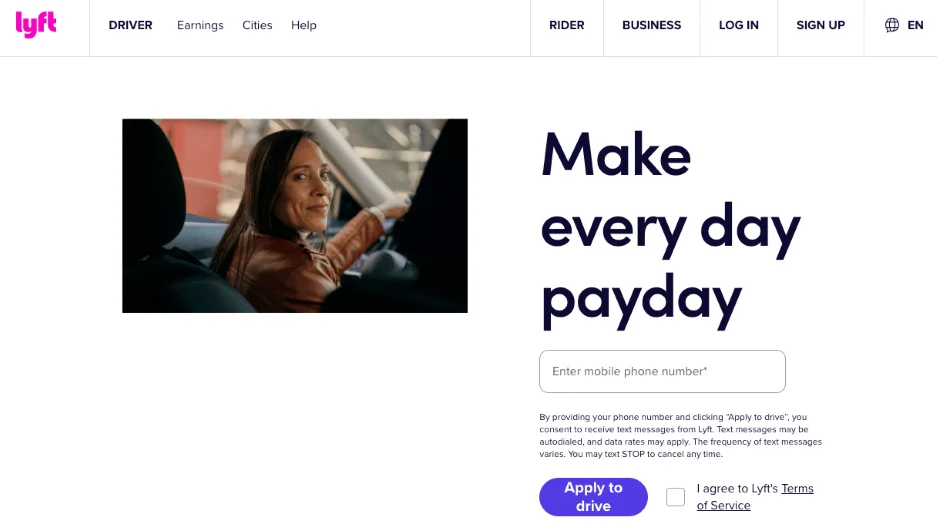
For example, a subscription service’s landing page might feature a concise FAQ section addressing common questions about billing cycles, cancellation policies, or data privacy. Such details, when readily available, preemptively address potential hesitations and foster a sense of trust and security, making the conversion path smoother.
Strategic Copywriting Elements for Enhanced Conversion
Crafting compelling landing page copy involves a strategic approach to several key elements:
1. The Power of a Singular Goal
Landing pages are most effective when designed around a singular, clearly defined objective. Whether the goal is to initiate a free trial, secure newsletter subscriptions, generate quote requests, or finalize a purchase, the copy must unequivocally support this primary aim. Pages attempting to serve multiple, disparate goals often suffer from diluted messaging, leading to conflicting calls to action and sections that feel disconnected from the core objective. Establishing the page’s goal upfront streamlines the writing process, ensuring that every element, from the headline to the call to action, is aligned towards a single, desired outcome.
2. Leading with a Value-Focused Headline
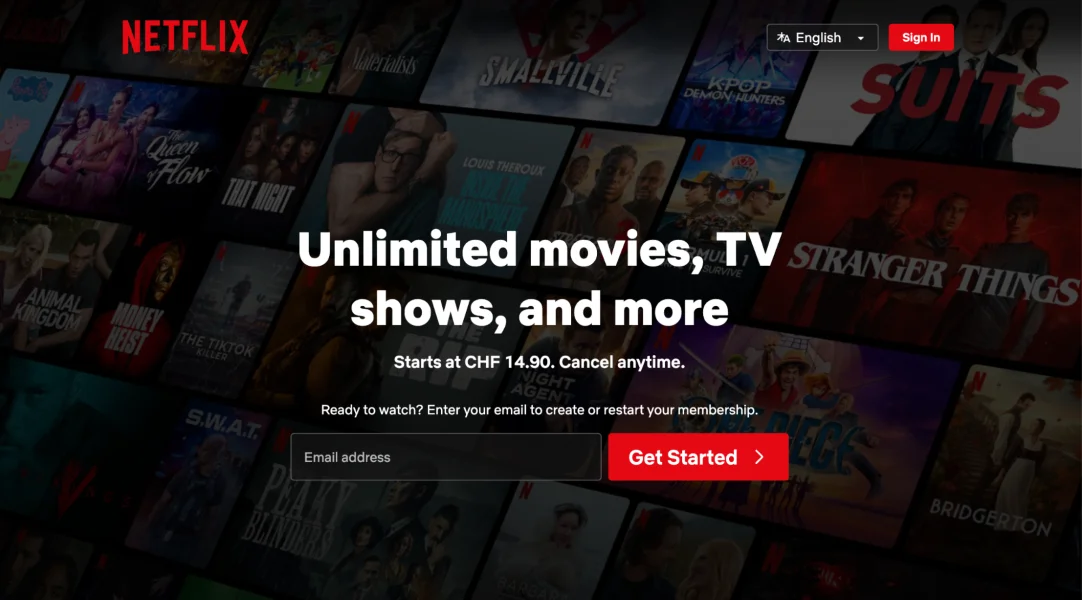
The headline is arguably the most critical component of a landing page. It is the first point of contact and often dictates whether a visitor continues to engage or abandons the page. Therefore, this is where the tangible value of the offer must be immediately apparent. Visitors should feel the benefit they will receive from the outset. While maintaining brand tone is important, it should never overshadow clarity. Specific language that communicates a core benefit or outcome makes the page more navigable and gives readers a compelling reason to delve deeper.
Consider a fitness program’s landing page. A headline like “Get Fit, Feel Confident” is less effective than “Achieve Your Fitness Goals in 90 Days with Personalized Training.” The latter immediately communicates a tangible outcome and a timeframe, providing a clear reason for engagement.
3. Directly Addressing Visitor Questions
Landing pages should avoid the pitfalls of acting as condensed homepages, replete with mission statements or internal company positioning. Instead, they must directly address the practical questions visitors bring with them. Visitors want to know if an offer is a good fit for their situation and, if so, how to access it. Copy that answers these questions proactively feels more useful and trustworthy.
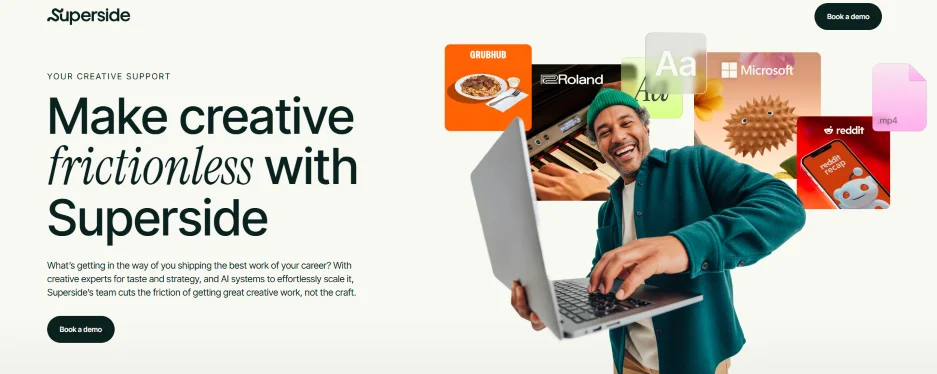
For instance, a B2B service provider’s landing page for a demo should clearly articulate what the demo will cover, its estimated duration, and whether any pre-demo preparation is needed. Providing these answers upfront can significantly accelerate the decision-making process.
4. Building Trust Through Specificity
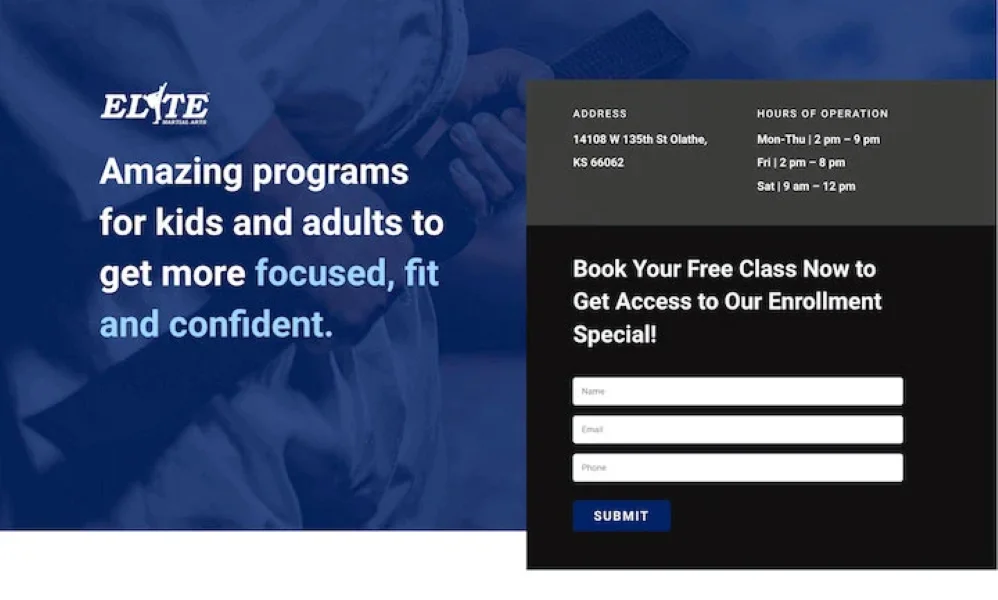
Trust is a fundamental element in conversion, but the way it’s communicated is paramount. Vague assurances often lack the persuasive power of concrete information. Specific details enable visitors to credibly assess an offer. This can manifest as documented customer outcomes, the number of clients served, guaranteed turnaround times, or a transparent explanation of the post-signup process. When these specific details are integrated naturally into the page’s narrative, they foster transparency and alleviate uncertainty.
A case study highlighting a 30% reduction in operational costs for a similar company, or a statistic stating that 98% of clients report increased efficiency, carries far more weight than a general statement about “delivering results.”
5. Strategic Use of Reassurance on High-Intent Pages
While reassurance regarding customer support, quality, or commitment is a common marketing tactic, its application on high-intent landing pages requires careful consideration. Excessive reassurance on pages where visitors are already close to conversion can inadvertently introduce doubt. If a page repeatedly emphasizes trust or ease, visitors might question why such assurances are deemed necessary.
High-performing pages in these scenarios often prioritize clarity. Direct explanations of the next steps, the precise nature of what the user will receive, and a transparent workflow provide stronger signals of confidence than generalized reassurances.
6. Crafting an Effortless Call to Action (CTA)
The call to action is the culmination of the landing page’s persuasive journey. The language surrounding the CTA must make the subsequent step feel straightforward and unambiguous. Generic buttons like “Submit” or “Learn More” can leave room for interpretation, prompting visitors to hesitate due to uncertainty about the outcome.
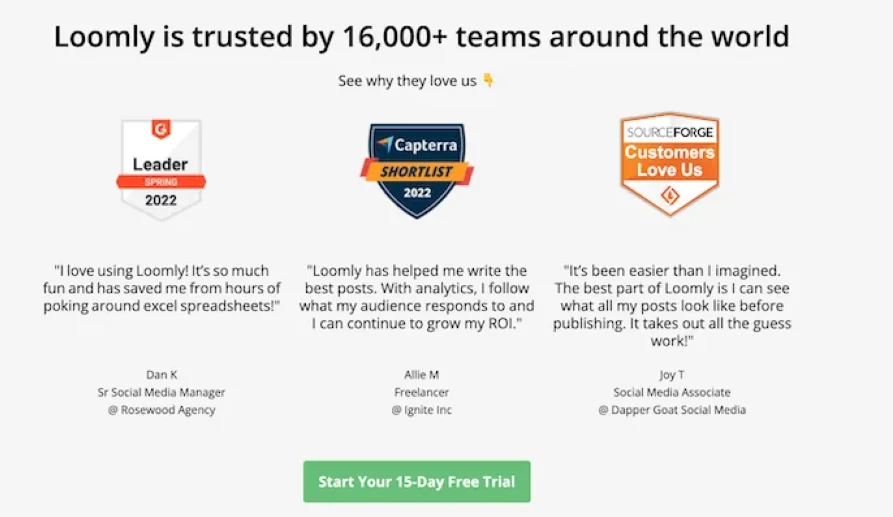
More descriptive CTA text, such as “Schedule Your Free Consultation,” “Start Your 14-Day Trial,” or “Get Your Custom Quote,” aligns the button’s text with the desired action and its outcome. Supporting copy near the CTA can further clarify what transpires after the click. Even minor wording adjustments can yield significant results. An experiment demonstrating a 139% increase in conversions by changing “Request a demo” to “Watch a demo” highlights how reducing perceived effort can dramatically impact engagement.
7. Designing for Skimmers
Even the most compelling copy loses its impact if visitors cannot easily navigate the page. Given the prevalence of skimming digital content, clear structure and concise language are essential. Subheadings guide the reader, short paragraphs enhance readability, and supporting visual elements help key details stand out. This structured approach ensures that essential information is easily discoverable, even for those who are not reading every word.
Auditing Your Landing Page Copy: A 10-Minute Review
Improving landing page copy doesn’t always necessitate a complete overhaul. A focused, short review can often identify areas for enhanced clarity and confidence.
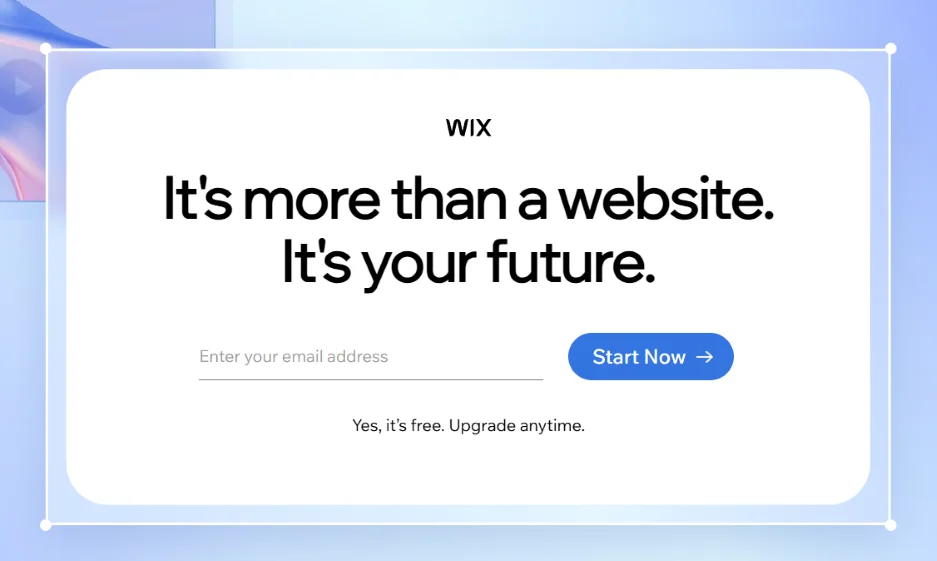
Initial Scan for Fresh Perspective: Open the landing page in a new tab and scroll through it once, as if seeing it for the first time. Note immediate impressions and areas of confusion. The goal is to assess if the copy simplifies the decision-making process, not to critique the design. The headline and opening section should convey the offer and its relevance within seconds. If they rely on vague language, consider more direct descriptions.
Structural Integrity Check: Review the page’s flow. Identify sections that repeat information or introduce unrelated topics. Landing pages can become cluttered over time as various teams add content with different objectives. Simplifying these sections enhances the page’s ease of processing.
Targeted Copy Questions: Apply the following questions to the copy itself:
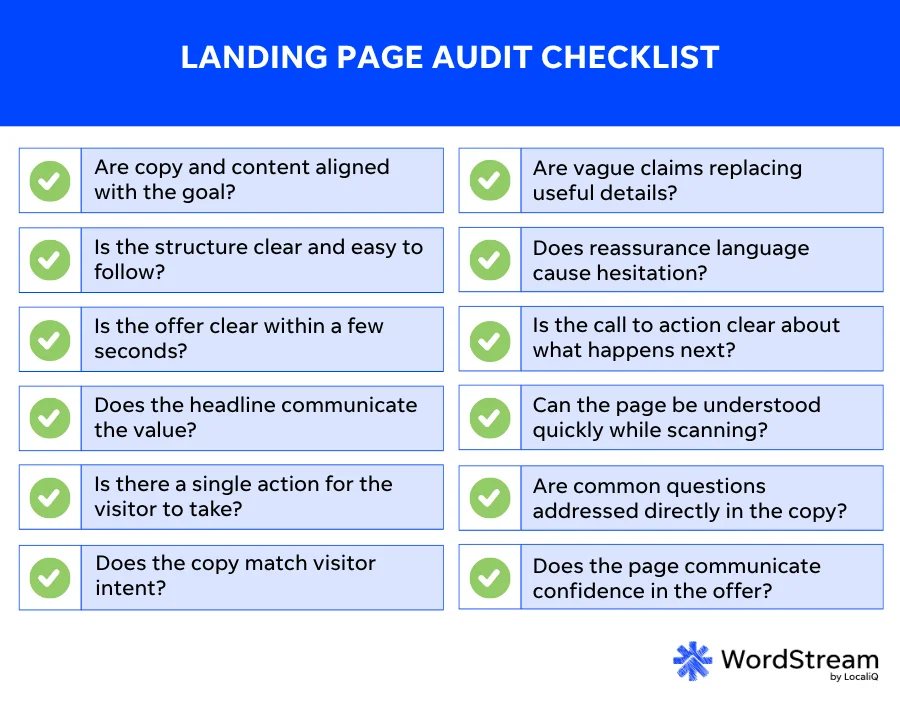
- Clarity of Offer: Is it immediately obvious what is being offered?
- Value Proposition: Is the primary benefit clearly articulated and compelling?
- Relevance: Does the copy speak directly to the needs and pain points of the target audience?
- Call to Action: Is the CTA clear, action-oriented, and specific about the next step?
- Trust Signals: Are there specific details or proof points that build credibility?
- Friction Points: Are there any elements that might cause hesitation or confusion?
- Readability: Is the language simple, concise, and easy to understand?
- Focus: Does the copy maintain a singular focus on the page’s objective?
By systematically applying these questions, small edits can significantly strengthen clarity. A headline might benefit from greater specificity, a CTA could be rephrased for better clarity, or a paragraph might be condensed for easier scanning. This quick review process can reveal straightforward opportunities to enhance copy effectiveness without extensive redesign.
Conclusion: Elevating Conversion Through Strategic Copywriting
High-converting landing page copy is not about clever wordplay or aggressive persuasion. It succeeds by communicating with unwavering clarity, directly addressing practical questions, and building visitor confidence to take the next step. When an offer is easily understood and the subsequent action feels predictable, the likelihood of conversion increases dramatically. Even minor adjustments—refining a headline, incorporating a specific detail, or simplifying a call to action—can yield substantial improvements in page performance, ultimately transforming passive visitors into engaged leads and loyal customers.