
 rifanmuazin
The practice of conversion rate optimization (CRO) has become a cornerstone of digital growth strategy, yet a significant gap remains between the execution of experiments and the retention of the knowledge they produce. While thousands of marketing and product teams worldwide utilize A/B testing and multivariate experimentation to refine user experiences, only a small fraction successfully converts these individual tests into a cohesive, long-term knowledge asset. In many organizations, the results of critical experiments are relegated to transient Slack threads, buried in disparate spreadsheets, or lost within the personal inboxes of departed employees. This lack of systematic documentation leads to "institutional amnesia," where teams inadvertently repeat failed experiments or fail to capitalize on previous successes, effectively forcing them to start from scratch every few months.
Vinayak Purshan, Associate Marketing Director at Cashfree Payments, recently addressed this systemic inefficiency during an appearance on the VWO Podcast. Cashfree Payments, a prominent player in India’s fintech sector that facilitates transactions for over 800,000 businesses, operates in an industry where security, trust, and precision are paramount. Purshan detailed a robust, five-step framework designed to capture, share, and reuse insights, ensuring that every experiment—regardless of its statistical outcome—serves as a building block for future strategy. This "fail-forward" methodology transforms experimentation from a series of isolated campaigns into a compounding engine for organizational growth.
The Chronology of Experimentation Maturity
The evolution of a sophisticated experimentation program typically follows a predictable trajectory. Initially, teams focus on the "what"—running simple tests to see which button color or headline performs better. As programs mature, the focus shifts to the "how," incorporating more complex multivariate tests across different segments. However, the highest level of maturity is reached only when an organization masters the "why" and the "where to next."
Purshan’s insights come at a time when the fintech industry is facing increased pressure to optimize customer acquisition costs (CAC) while maintaining high security standards. For companies like Cashfree Payments, the cost of a failed experiment is not just the lost traffic, but the lost opportunity to understand a complex user base. The shift toward a documentation-heavy culture marks a transition from tactical testing to strategic experimentation, where the primary KPI is not just "conversion lift," but "knowledge gained per test."

Step 1: Establishing Comprehensive Context in Documentation
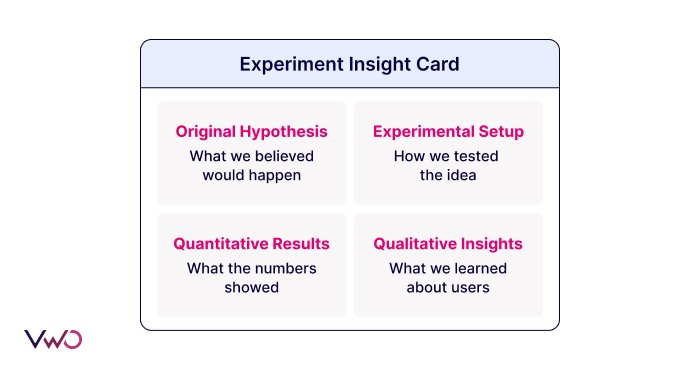
The foundation of a resilient CRO program lies in documenting every experiment with rigorous detail. According to the framework established at Cashfree, documentation must go beyond the final percentage of improvement. A detailed record is required for every test, comprising four essential pillars: the original hypothesis, the variations tested, the raw results (wins, losses, or neutral), and the qualitative insights derived from user behavior.
Purshan emphasizes that this standard applies universally, whether the team is making a minor copy adjustment or executing a wholesale redesign of a landing page. By documenting the "why" behind a hypothesis—the psychological trigger or user pain point the team intended to address—the record becomes a behavioral case study. If a test fails, the documentation provides a roadmap for what not to do; if it succeeds, it provides a blueprint for scaling that psychological trigger across other channels. This approach prevents the common pitfall where a "winning" test is implemented, but the team remains unsure of which specific variable drove the success.
Step 2: Implementing Structured Knowledge-Sharing Rituals
Documentation is only effective if it is accessible and discussed. To prevent insights from remaining siloed within the growth team, Cashfree Payments utilizes monthly all-hands marketing meetings specifically dedicated to experimentation. These sessions serve as "learning labs" where teams dissect the anatomy of recent tests.
A critical component of these rituals is the equal celebration of both wins and failures. In a traditional corporate environment, failures are often hidden or glossed over. However, the "fail-forward" mindset necessitates a culture of psychological safety where a team member can present a failed hypothesis without fear of reprisal. The structure of these meetings typically involves presenting the initial problem, the test design, the surprising results, and the subsequent adjustments to the marketing roadmap. This ensures that the entire organization, not just the experimenters, benefits from the data collected.
Step 3: Cross-Functional Integration of Insights
One of the most significant revelations from Purshan’s framework is that CRO learnings possess immense value far beyond the marketing department. At Cashfree, insights are systematically shared with product development, sales, and customer success teams. This creates a feedback loop that informs the entire product lifecycle.
For example, if an A/B test on a homepage reveals that a specific value proposition—such as "setup in 5 minutes"—outperforms "enterprise-grade security" by a factor of three, that insight is immediately relevant to the sales team. They can pivot their pitch decks to lead with speed of implementation. Similarly, the product team can use this data to prioritize features that simplify the onboarding process. By breaking down the silos between departments, a single marketing experiment can influence the company’s broader strategic direction.
Supporting Data and Industry Analysis
The necessity of such a framework is supported by broader industry trends. Research into high-growth SaaS and fintech companies suggests that the "win rate" for experiments typically hovers between 10% and 25%. This means that 75% to 90% of experiments do not yield a statistically significant positive result. Without a documentation system like the one Purshan describes, the vast majority of a team’s effort results in no long-term value for the company.
Furthermore, the "Documentary Debt"—the cost of not having records—manifests in wasted hours and redundant testing. Industry analysts estimate that marketing teams can lose up to 20% of their annual productivity by repeating mistakes or searching for past data. By institutionalizing a library of experiments, companies like Cashfree Payments effectively "buy back" this time, allowing their teams to focus on novel hypotheses rather than re-testing solved problems.
Step 4: The Development of Campaign Reference Libraries
To manage the cyclical nature of demand—such as festive seasons in the Indian market or end-of-year tax cycles—Cashfree maintains a campaign reference library. This library organizes past experiments by theme, audience segment, and objective.
When a new campaign is being planned, the team does not start with a blank slate. Instead, they consult the library to see what messaging resonated during the previous year’s cycle. This historical perspective is particularly vital in fintech, where consumer sentiment regarding financial security and digital payments can shift rapidly. A reference document allows a new team member to understand the nuances of a specific audience segment without having to spend months in trial-and-error. It effectively creates an "institutional memory" that survives employee turnover.
Step 5: Fostering a Learning-First Mindset
The final and perhaps most difficult step in the framework is the cultural shift toward a learning-first mindset. Purshan notes that "people learn from their past mistakes," but adds that in a fast-paced business environment, one cannot afford the time to make every mistake personally.
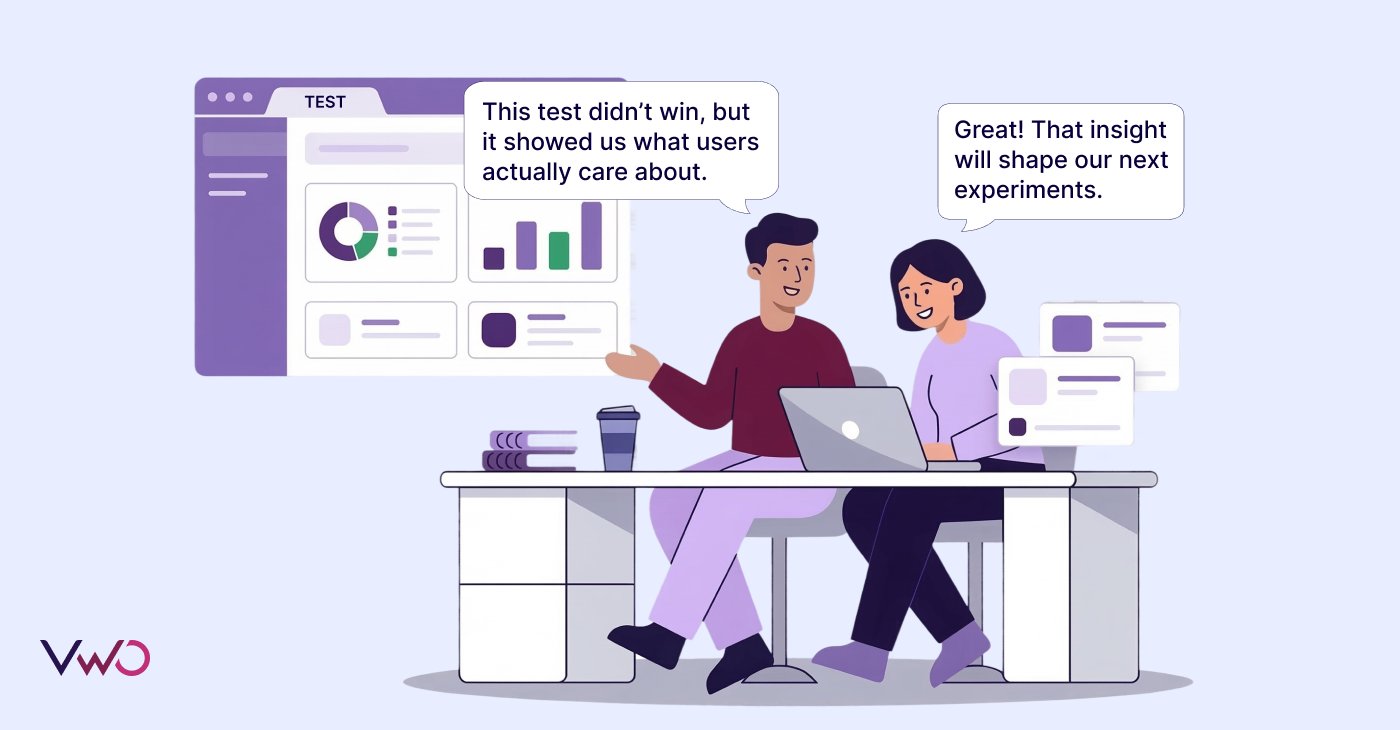
This cultural shift requires leadership to redefine what "success" looks like in experimentation. In the Cashfree model, a successful experiment is one that provides a clear, actionable insight, regardless of whether the conversion rate went up or down. This removes the pressure to "game" tests for short-term wins and encourages bold, high-impact testing that might otherwise be deemed too risky. It fosters an environment where the goal is to build a deeper understanding of the customer, which ultimately leads to more sustainable growth than any single "hack" could provide.

Broader Implications for the Global Market
The framework shared by Vinayak Purshan reflects a growing trend toward "Experimentation Ops"—the formalization of the processes and tools required to scale testing programs. As digital markets become more crowded and customer acquisition costs continue to rise, the ability to learn faster than the competition becomes a primary competitive advantage.
For organizations looking to emulate the success of Cashfree Payments, the transition requires a combination of the right technology—such as the VWO platform mentioned by Purshan for managing workspaces and sub-accounts—and a disciplined commitment to process. The implications are clear: the future of CRO is not just about better tools, but about better systems for managing the knowledge those tools produce. By treating every test as a permanent asset, companies can stop the leakage of valuable insights and build a compounding library of knowledge that drives long-term market leadership.








