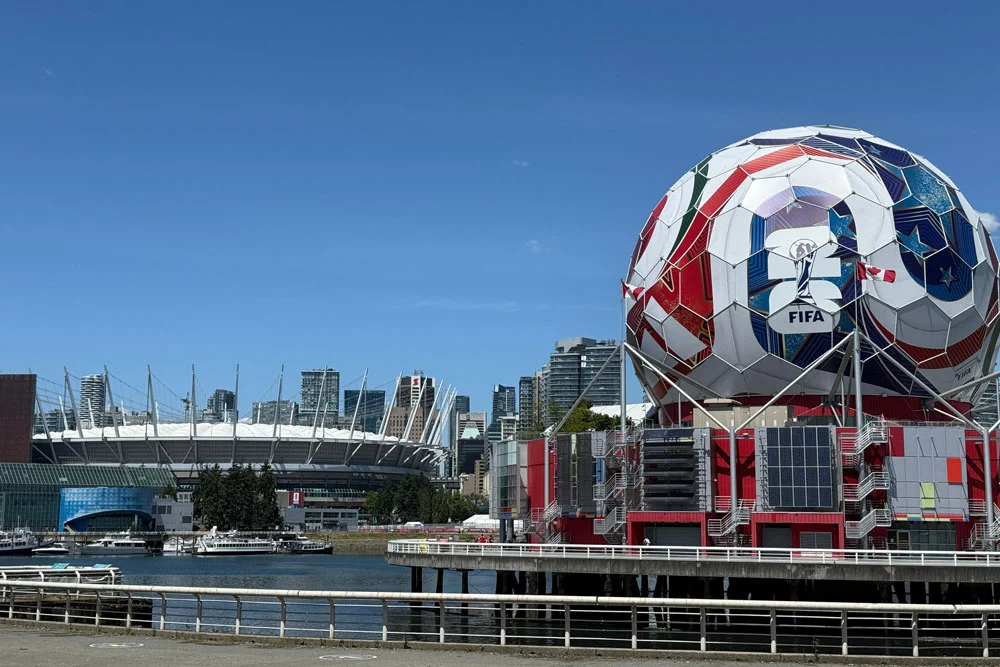
The FIFA World Cup 2026, a sprawling multi-national tournament hosted across the United States, Canada, and Mexico, has provided more than just a spectacle of elite athleticism; it has become a masterclass in the evolving dynamics of global competition and strategic management. As the tournament progresses through its expanded 48-team format, industry observers and marketing executives are identifying profound similarities between the drama on the pitch and the high-stakes environment of affiliate marketing. From the logistical complexities of the "Tartan Army" traveling from London to Boston to the shocking upsets in the knockout stages, the tournament serves as a contemporary metaphor for brand resilience, team diversification, and the relentless pace of digital commerce.
The 2026 World Cup: A New Era of Competition
The 2026 iteration of the FIFA World Cup marks a historic shift in the tournament’s structure. By increasing the field to 48 teams, FIFA opened the door for nations that had previously struggled to pierce the elite tiers of international soccer. This expansion has mirrored the democratization of the digital marketplace, where lower barriers to entry allow "underdog" brands to compete with established global conglomerates.
The tournament’s atmosphere was set early during the group stages, characterized by massive migrations of fans. Flights from European hubs like London to North American host cities like Boston were reported at 100% capacity, fueled largely by Scotland’s "Tartan Army." This surge in travel and consumer activity underscores the "event-based" nature of modern marketing, where specific windows of opportunity—much like a World Cup or a Black Friday weekend—demand peak performance and flawless execution.
The Myth of the Individual: Why Teamwork Governs Success
One of the most striking takeaways from the 2026 tournament has been the failure of individual brilliance to overcome cohesive team structures. In the Round of 16 and Quarterfinals, the world witnessed legendary figures struggle when their supporting casts faltered. Luka Modrić, despite his storied career and tactical intelligence, could not single-handedly carry Croatia past a disciplined Portuguese side. Similarly, Cristiano Ronaldo’s presence was insufficient to propel Portugal past Spain, as the latter’s systemic approach neutralized individual threats.
In the realm of affiliate marketing, this phenomenon is known as "Affiliate Concentration Risk." Many brands make the mistake of relying on one or two "super-affiliates"—high-traffic partners that generate the bulk of their revenue. However, just as a soccer team relies on a single star, a marketing program reliant on a single partner is vulnerable to shifts in algorithm updates, platform policy changes, or competitive poaching.
Industry data suggests that the most resilient affiliate programs are those that diversify their "roster." By spreading recruitment across various marketing channels—including content creators, review sites, loyalty portals, and social media influencers—brands create a "team" that can withstand the loss of any single player. Diversification is no longer a luxury; it is a prerequisite for stability in a volatile economy.
The Rise of the Underdog: Disrupting the Status Quo
The 2026 World Cup has been defined by the "Cinderella story." The Group Stage saw Curaçao, a debutant in the tournament, hold a powerhouse Ecuador team to a 0-0 draw, defying all statistical projections. Even more shocking was the Round of 16 encounter between Egypt and the defending champions, Argentina. Egypt maintained a 2-0 lead for the majority of the match, forcing the world’s top-ranked team into a desperate late-game scramble.
This "underdog" narrative is a familiar one in the history of digital disruption. A primary example cited by marketing analysts is the rise of Nectar Sleep. Entering the "mattress-in-a-box" market in 2017, Nectar was an underdog facing entrenched competitors like Casper, Saatva, and Purple. These brands had already secured the lion’s share of voice and prime affiliate partnerships.
However, through aggressive performance-based strategies and a relentless focus on high-converting affiliate funnels, Nectar Sleep’s program achieved the number one ranking on major affiliate networks like ShareASale within just one year of its launch. It surpassed legacy brands and retail giants such as Wayfair and Reebok. The lesson for the 2026 landscape is clear: market share is never permanent, and being an underdog often allows for the agility and risk-taking necessary to unseat complacent leaders.
Chronology of Competitive Evolution: 2017–2026
To understand the current intersection of sports and marketing, one must look at the timeline of how these sectors have matured:
- 2017-2019: The "Gold Rush" era of direct-to-consumer (DTC) brands. Companies like Nectar Sleep proved that affiliate marketing could be the primary driver of billion-dollar valuations.
- 2020-2022: The Pandemic Shift. Digital acceleration forced traditional retailers to adopt affiliate models as brick-and-mortar foot traffic vanished.
- 2024-2025: The integration of AI and predictive analytics in both sports coaching and affiliate recruitment. Teams and brands began using data to identify "undervalued" talent and partners.
- 2026: The FIFA World Cup serves as the ultimate proof of concept for "Globalized Localization," where brands must appeal to a global audience while maintaining local relevance in diverse host cities.
The Danger of Complacency: Never Resting on Laurels
Perhaps the most sobering lesson of the 2026 World Cup is the fall of the giants. Italy, a four-time world champion, failed even to qualify for the tournament, a shocking absence that highlighted a systemic failure to modernize. The Netherlands, a perennial powerhouse, was eliminated by Morocco in the Round of 32, while Brazil fell to Norway in the Round of 16.
Norway’s ascent is particularly telling. Having not appeared in a World Cup for nearly three decades, the Norwegian squad utilized a data-driven approach to player development and tactical execution, eventually reaching the Quarterfinals. Their success against Brazil—a team often synonymous with soccer excellence—serves as a warning to any brand that believes its history guarantees its future.
In affiliate marketing, the landscape is described as "dynamic" for a reason. Strategies that were highly profitable five years ago, such as basic coupon-coding or low-effort banner ads, have been largely rendered obsolete by sophisticated consumer behavior and privacy-centric browser updates (such as the phasing out of third-party cookies).
Official Responses and Industry Analysis
Marketing experts attending major industry summits, such as the Affiliate Summit in New York, have echoed these sentiments. Analysts suggest that the "Norway Effect"—where a smaller player uses specialized knowledge to defeat a giant—is becoming the norm in the affiliate space.
"The nature of the online landscape is that it evolves with every technological hurdle," noted one senior strategist from AM Navigator. "Education is not a destination; it is a continuous journey. If a brand stops learning, they end up like the 2026 Italian national team—watching the biggest event in their industry from the sidelines."
Supporting Data: The Value of Performance Marketing
The scale of the affiliate marketing industry in 2026 continues to grow, with global spending estimated to exceed $15 billion. Key data points include:
- Conversion Rates: Affiliate channels often boast conversion rates 3x higher than traditional display advertising due to the "trust factor" of third-party endorsements.
- ROI: For every dollar spent on affiliate marketing, brands are seeing an average return of $12 to $15, making it one of the most cost-effective customer acquisition strategies.
- Diversification: Top-performing programs now manage an average of 500 to 2,000 active affiliate partners to ensure a balanced revenue stream.
Broader Impact and Implications for the Future
The 2026 FIFA World Cup has demonstrated that the gap between the "elites" and the "underdogs" is narrowing. Whether on the grass of a stadium in Vancouver or the digital storefronts of an e-commerce giant, the requirements for victory remain the same: a diverse and talented team, a refusal to underestimate the competition, and a commitment to constant evolution.
As the tournament concludes and the "Tartan Army" and other fanbases return home, the lessons learned will remain. Brands that take a "soccer-centric" approach to their marketing—focusing on the system rather than the star, and staying agile enough to pivot when an underdog strikes—will be the ones celebrated in the next fiscal quarter. In a world where even Brazil can be knocked out by Norway, no brand is too big to fail, and no startup is too small to win.