The landscape of digital advertising is in constant flux, with platforms like YouTube continually refining their tools to empower advertisers. Among these advancements, Google’s Smart Bidding strategies have emerged as a critical component for driving campaign success, particularly on video-centric platforms. This article delves into the intricacies of leveraging Smart Bidding on YouTube, providing advertisers with actionable insights and best practices to maximize their return on investment. Understanding the nuances of these automated bidding strategies is no longer optional; it’s a prerequisite for achieving impactful results in the competitive online advertising arena.
Smart Bidding on YouTube is designed to optimize campaigns for specific conversion goals, whether it’s generating sales, leads, or sign-ups. While these powerful tools are primarily available for "Action Format" campaigns, such as Video Action Campaigns that utilize Target CPA (tCPA) and Maximize Conversions bidding strategies, there’s also an option for "Reach Formats" like bumper ads, which are geared towards building brand awareness. The effectiveness of Smart Bidding hinges not just on selecting the right options, but crucially on how campaigns are architected and managed to facilitate their success.
Understanding YouTube Smart Bidding Options
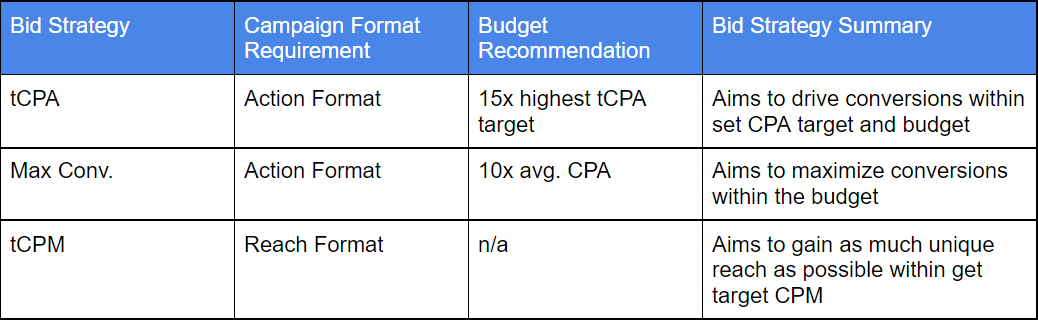
Google’s Smart Bidding suite on YouTube offers a spectrum of automated strategies, each tailored to a distinct campaign objective. For campaigns focused on driving direct business outcomes like sales and leads, the primary tools are:
- Target CPA (tCPA): This strategy aims to achieve as many conversions as possible at or below a specified cost-per-acquisition. Advertisers set a target CPA, and Google’s algorithms work to find users most likely to convert at that price point. This requires a solid understanding of historical CPA data to set realistic targets.
- Maximize Conversions: This strategy automatically sets bids to get the most conversions for your budget. It’s often recommended as a starting point, especially for new campaigns, as it helps establish a baseline CPA before transitioning to more specific targets like tCPA.
For campaigns whose primary objective is to expand reach and build brand visibility, the following strategy is often employed:

- Reach Formats (e.g., Bumper Ads) with Awareness Goals: While not strictly a conversion-focused Smart Bidding strategy in the same vein as tCPA or Maximize Conversions, campaigns utilizing bumper ads can leverage automated bidding to maximize impressions or reach within a set budget, thereby contributing to brand awareness objectives.
It’s crucial to recognize that Smart Bidding’s efficacy is intrinsically linked to the campaign format. Action Format campaigns, such as Video Action Campaigns (VACs), are specifically built to leverage these conversion-centric bidding strategies. VACs, for instance, integrate YouTube video ads with Google Search, Display, and Discover inventory, allowing for a more holistic approach to driving conversions across various touchpoints. The synergy between video creative and targeted audience segmentation, powered by Smart Bidding, can unlock significant performance improvements.
The Critical Role of Bid-to-Budget Ratios
A cornerstone of successful Smart Bidding implementation on YouTube, particularly for tCPA and Maximize Conversions, lies in the strategic alignment of budgets with expected conversion costs. Google’s recommendations in this regard are not arbitrary; they are derived from extensive data analysis and machine learning insights aimed at giving the algorithms the necessary fuel to perform optimally.
Google generally advises advertisers to set campaign budgets that are between 10 to 15 times the average cost per acquisition (CPA). This recommendation stems from the understanding that Smart Bidding algorithms require sufficient data to learn and optimize effectively. A budget that is too restrictive can starve the algorithm of the necessary impressions and clicks to identify conversion-driving signals, leading to suboptimal performance or even campaign limitations.
Let’s illustrate this with an example:
- Scenario: An advertiser aims to use tCPA and has established an average CPA of $85.
- Google’s Recommendation: To achieve optimal performance, the daily or campaign budget should be set at a minimum of 10 times the CPA, which would be $850. For even greater potential, a budget of 15 times the CPA, or $1,275, would be recommended.
For campaigns utilizing the Maximize Conversions strategy, the logic is similar, though the exact budget recommendation might be framed slightly differently, focusing on ensuring the budget is substantial enough to capture a significant volume of conversions. If the expected CPA is $85, a budget of at least $850 would be a starting point to allow the algorithm to gather data and drive conversions efficiently.

These bid-to-budget ratios may initially appear substantial and perhaps even daunting to some advertisers. However, empirical evidence and the experience of seasoned digital marketers consistently show that adhering to these recommendations is often a prerequisite for unlocking the full potential of Smart Bidding. Campaigns that are "Limited by Budget" (LBB) are a clear indicator that the budget is insufficient to meet the performance goals set by the Smart Bidding strategy. This limitation prevents the algorithm from exploring and bidding on valuable impressions, thereby hindering its ability to find the most cost-effective conversions.
Strategic Sequencing: Maximize Conversions First, Then tCPA
A frequently cited best practice for advertisers new to Smart Bidding on YouTube, or when launching a new campaign with a conversion objective, is to begin with the Maximize Conversions strategy before transitioning to Target CPA. This phased approach is designed to build a robust foundation for optimization.
Here’s the rationale:
- Data Accumulation: When a campaign first launches, the Smart Bidding algorithms have limited historical data to draw from. The Maximize Conversions strategy allows the system to explore a wider range of bidding opportunities within the allocated budget, gathering valuable data on user behavior, conversion paths, and effective targeting parameters. This phase is crucial for training the algorithm.
- Baseline CPA Establishment: As the Maximize Conversions strategy runs, it will naturally converge on a certain CPA. This period helps advertisers understand their realistic CPA for the given campaign parameters and audience.
- Informed Target Setting: Once a stable CPA is established through Maximize Conversions, advertisers can then switch to the Target CPA strategy. This allows them to set a more informed and achievable tCPA target, building upon the data already gathered. This reduces the risk of setting an unrealistic tCPA from the outset, which could lead to the campaign struggling to generate conversions or being significantly constrained.
This strategic sequencing is akin to teaching a student: first, let them explore and learn broadly, then guide them towards specific, measurable goals.
Mini Case Study: Overcoming "Limited by Budget" on tCPA
To underscore the impact of adhering to bid-to-budget recommendations, consider the following real-world scenario:
- Situation: A YouTube campaign operating under the Target CPA strategy was flagged by Google Ads as "Limited by Budget" (LBB). This status indicated that the campaign’s budget was insufficient to achieve its desired conversion volume or CPA target.
- Initial Bid-to-Budget Ratio: At the time of the LBB flag, the campaign’s budget was approximately 10 times its current CPA. While this meets the minimum recommendation, it was not enough to allow for optimal performance in this specific instance.
- Intervention: The decision was made to significantly increase the campaign budget, bringing the bid-to-budget ratio up to 15 times the current CPA. This represented a substantial increase in daily or campaign expenditure.
- Results: Following the budget adjustment and allowing for the standard two-week learning period of the Smart Bidding algorithm to recalibrate, the campaign experienced notable improvements. Both growth in conversion volume and efficiency gains (indicated by a stable or improved CPA) were observed. The data visualization from this case study typically shows a distinct upward trend in key performance indicators after the budget adjustment, demonstrating that the increased investment empowered the Smart Bidding algorithm to perform more effectively. This outcome validates the importance of providing adequate budget to Smart Bidding strategies, especially when they are operating under specific CPA targets.
This mini case study serves as a powerful illustration: when a campaign is performing well but is being held back by budget constraints, a strategic increase in investment, aligned with Google’s recommendations, can unlock substantial performance improvements. It highlights that Smart Bidding is not a "set it and forget it" solution; it requires ongoing monitoring and strategic adjustments based on performance data.
Other Considerations for YouTube Smart Bidding Success
Beyond understanding the core bidding strategies and budget recommendations, several other factors contribute to maximizing the effectiveness of Smart Bidding on YouTube:
- High-Quality Creative: Smart Bidding algorithms are sophisticated, but they cannot overcome fundamentally flawed advertising creative. Engaging, relevant, and compelling video ads are crucial for capturing user attention and driving desired actions. The creative should align with the campaign’s objective and resonate with the target audience.
- Accurate Conversion Tracking: The efficacy of any conversion-focused bidding strategy hinges on precise conversion tracking. Ensure that conversion actions are correctly implemented in Google Ads and that they accurately reflect the desired outcomes (e.g., purchases, form submissions, app installs). Any inaccuracies in tracking can lead the algorithm astray, resulting in misallocation of budget and suboptimal performance.
- Well-Defined Audiences: While Smart Bidding automates bid adjustments, the foundation of your targeting strategy remains paramount. Utilize a combination of demographic, interest-based, in-market, and custom intent audiences to reach users most likely to be interested in your products or services. Google’s algorithms will then leverage this data to find the best opportunities within those audiences.
- Sufficient Conversion Volume: Smart Bidding strategies, particularly tCPA, perform best when they have a consistent stream of conversions to learn from. If a campaign is not generating enough conversions, the algorithm may struggle to identify reliable patterns. For new campaigns, it’s often advisable to aim for at least 15-30 conversions per month per campaign for tCPA to be truly effective.
- Exclusion Lists and Negative Keywords: Just as important as reaching the right audience is excluding irrelevant ones. Implement negative keywords and audience exclusions to prevent your ads from showing to users who are unlikely to convert or who may generate fraudulent conversions. This refinement helps the algorithm focus its efforts on valuable opportunities.
- Campaign Structure and Organization: A well-organized campaign structure with distinct ad groups for different themes or targeting segments can provide clearer signals to the Smart Bidding algorithm. This allows for more precise optimization at a granular level.
- Continuous Monitoring and Iteration: While Smart Bidding automates many aspects of campaign management, it does not eliminate the need for human oversight. Regularly monitor key performance indicators, review campaign data, and be prepared to make adjustments to budgets, targets, or creative as needed. The learning period for Smart Bidding strategies is ongoing, and performance can fluctuate.
The Broader Impact of Smart Bidding on YouTube Advertising
The increasing reliance on Smart Bidding on platforms like YouTube signifies a broader shift in digital advertising towards data-driven automation. For businesses, this translates to several potential benefits:
- Increased Efficiency: By automating the complex task of bid optimization, advertisers can save time and resources, allowing them to focus on higher-level strategic planning and creative development.
- Improved Performance: When implemented correctly, Smart Bidding can lead to more efficient allocation of ad spend, resulting in higher conversion rates and a better return on investment. Google’s machine learning capabilities can often identify patterns and opportunities that human advertisers might miss.
- Scalability: Smart Bidding strategies are designed to scale with campaign performance. As a campaign matures and generates more data, the algorithms become more adept at optimizing, allowing for potential growth and increased reach.
- Adaptability: The algorithms are constantly learning and adapting to changes in user behavior, market trends, and auction dynamics, ensuring that campaigns remain relevant and performant over time.
However, it’s also important to acknowledge the potential challenges. A misconfiguration of Smart Bidding, inadequate data, or poor-quality creative can lead to wasted ad spend and disappointing results. Therefore, a thorough understanding of the underlying principles and a commitment to ongoing management are crucial.
In conclusion, mastering YouTube Smart Bidding is an essential skill for any advertiser looking to thrive in the digital advertising ecosystem. By understanding the available strategies, adhering to budget recommendations, employing a phased approach to conversion goals, and considering other critical factors like creative quality and accurate tracking, advertisers can unlock the full potential of these powerful automated tools. As the digital landscape continues to evolve, a strategic and informed approach to Smart Bidding will be a key differentiator for achieving sustained success on YouTube and beyond. For those seeking further guidance or wishing to explore how these strategies can be tailored to their specific business objectives, engaging with experienced digital marketing professionals can provide invaluable support and expertise.

 Laily UPN
 Siti Muinah