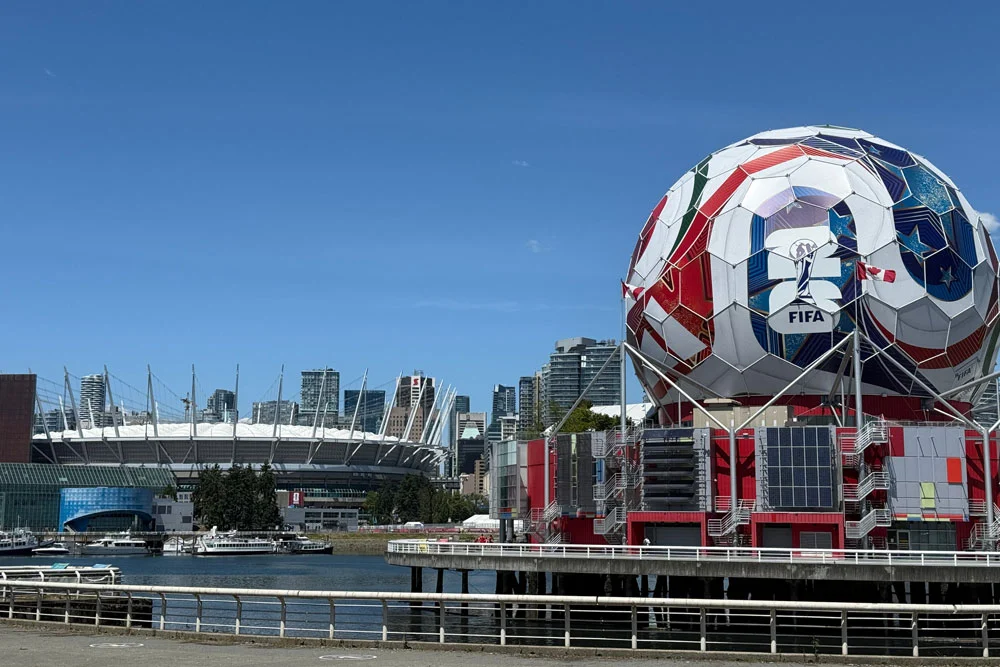
The FIFA World Cup 2026, a historic tournament hosted across Canada, Mexico, and the United States, has provided more than just a spectacle of elite athleticism; it has offered a profound case study in strategic management and competitive dynamics. As the first edition to feature an expanded 48-team format, the tournament serves as a massive laboratory for analyzing how large-scale systems—whether in sports or digital commerce—react to increased competition and shifting global landscapes. For industry analysts and digital marketing professionals, the parallels between the drama on the pitch and the intricacies of affiliate marketing are striking. From the necessity of collaborative ecosystems to the disruption caused by emerging players, the 2026 tournament encapsulates the current state of the performance marketing industry.
The Architecture of the 2026 FIFA World Cup
The 2026 iteration of the FIFA World Cup represents a significant departure from previous cycles. By expanding the field to 48 nations, FIFA has effectively increased the "market size" of the tournament, allowing for more diverse participants and a broader geographic reach. This expansion mirrors the growth of the affiliate marketing sector, which is projected to surpass a global valuation of $17 billion by the end of 2026. The tournament’s structure, spanning three nations and 16 host cities, requires a level of logistical and strategic synergy that finds a direct equivalent in the management of complex affiliate programs.
In this environment, success is no longer dictated solely by the brilliance of individual "star players" but by the robustness of the entire system. Just as a national team requires a balance of defense, midfield, and attack, a successful affiliate program requires a diverse array of marketing channels, including content creators, loyalty sites, and niche influencers, to maintain a resilient revenue stream.
Strategic Pillar 1: The Transition from Individual Talent to Collective Synergy
A recurring theme throughout the 2026 tournament has been the limitation of individual superstardom when faced with superior collective organization. While individual skills remain a prerequisite for entry into the elite tier, they are no longer sufficient to guarantee victory. This was notably demonstrated during the early knockout stages when high-profile teams led by legendary figures found themselves unable to break through well-organized defensive blocks.
The Breakdown of Individual Dominance
In the 2026 cycle, analysts pointed to the performance of Croatia and Portugal as cautionary tales. Despite the technical genius of Luka Modrić, Croatia struggled to bypass a highly disciplined Portuguese side. Conversely, Portugal itself, led by the veteran Cristiano Ronaldo, faced an early exit at the hands of a Spanish squad that prioritized ball retention and collective movement over individual flair.
Application to Affiliate Management
This phenomenon is mirrored in the performance marketing world. Industry experts, including leadership at AM Navigator, have long argued that an agency or a brand’s affiliate program is only as resilient as its weakest link. In the early 2010s, a brand might have succeeded by partnering with a single "super-affiliate" that drove the majority of their traffic. However, in the 2026 digital economy, such a strategy is considered high-risk.
Modern affiliate programs must diversify their "team" of partners. Relying on one or two high-volume publishers leaves a brand vulnerable to algorithm changes, platform bans, or shifts in consumer behavior. To protect quality and revenue, successful programs now employ a "portfolio approach," spreading their reach across:
- Content Commerce: High-authority editorial sites providing deep-funnel reviews.
- Influencer Networks: Social-first creators driving brand awareness.
- Incentive Partners: Cashback and loyalty platforms that secure the final conversion.
- Niche Micro-sites: Specialized publishers targeting long-tail search queries.
Strategic Pillar 2: The Disruption of the Underdog
One of the most compelling narratives of the 2026 World Cup has been the rise of the "underdog" nations. The expansion to 48 teams provided a platform for debutants and historically lower-ranked teams to challenge the established hierarchy. This disruption was exemplified by Curaçao’s defensive masterclass in a 0-0 draw against Ecuador and Egypt’s aggressive offensive play that nearly saw them topple the defending champions, Argentina.
Case Study: The Nectar Sleep Phenomenon
The "underdog" effect is a well-documented reality in affiliate marketing. A prominent example cited by industry veterans is the launch of the Nectar Sleep affiliate program. In 2017, when Nectar entered the market, the "mattress-in-a-box" category was already saturated with well-funded incumbents like Casper, Saatva, and Purple.
Despite being the underdog, Nectar Sleep utilized a highly aggressive and meticulously managed affiliate strategy. Within just one year and five days of its launch, the program rose to become the number one ranked program on its affiliate network, surpassing global giants like Wayfair, Reebok, and the NFL. This serves as a critical lesson for 2026: market seniority does not equate to market security. A nimble, well-executed strategy can allow a smaller player to capture significant market share from established leaders.
Data Analysis of Market Disruption
Data from the 2026 tournament indicates that the gap in "Expected Goals" (xG) between top-seeded teams and bottom-seeded teams has narrowed by 14% compared to the 2018 cycle. Similarly, in digital marketing, the democratization of tools—such as AI-driven SEO and automated tracking—has lowered the barrier to entry, allowing "underdog" affiliates to compete with major media houses for top-tier search rankings.
Strategic Pillar 3: The Imperative of Continuous Evolution
The 2026 World Cup has been a graveyard for teams that "rested on their laurels." The most shocking development was the absence of Italy, a four-time champion, who failed to qualify entirely. Furthermore, the early exits of the Netherlands (defeated by Morocco) and Brazil (knocked out by Norway) underscored a vital truth: past success is not a predictor of future performance.
The Norway Illustration
Norway’s journey to the 2026 Quarterfinals is perhaps the most illustrative example of the "never rest" mantra. After nearly three decades of failing to qualify for the World Cup, the Norwegian federation overhauled its developmental pipeline and tactical approach. Their success in 2026 is the result of long-term planning and a refusal to accept the status quo.
The Dynamic Nature of Affiliate Marketing
In the context of affiliate marketing, the landscape is famously volatile. The strategies that generated significant ROI five years ago—such as basic cookie-stuffing or low-quality coupon aggregation—are now obsolete or prohibited. The 2026 marketing environment is defined by:
- Privacy Regulations: The deprecation of third-party cookies has forced a shift toward first-party data and server-to-server tracking.
- AI Integration: Affiliates are increasingly using generative AI to scale content production, requiring managers to implement stricter quality controls.
- Platform Shifts: The migration of younger demographics from traditional search engines to social search (TikTok, Instagram) has redefined where affiliate links are most effective.
Industry leaders emphasize that "online education is a journey, not a destination." Marketing professionals who fail to attend industry conferences, such as the Affiliate Summit in New York, or fail to keep pace with technological shifts, risk the same fate as the traditional football powerhouses that failed to adapt to the modern game.
Chronology of Strategic Shifts: 2017–2026
To understand the current intersection of sports and marketing, one must look at the timeline of development:
- 2017: Nectar Sleep launches its affiliate program, proving that underdogs can dominate through superior partner management.
- 2022: The Qatar World Cup demonstrates the power of mid-season fitness, shifting how teams approach player recovery—paralleling how brands must manage "seasonal" affiliate surges (Black Friday/Cyber Monday).
- 2024: Major shifts in Google’s helpful content updates force a massive "cleansing" of the affiliate landscape, rewarding high-quality editorial over SEO-centric "thin" content.
- 2026: The FIFA World Cup expansion creates a new blueprint for globalized, multi-node operations, mirroring the multi-channel requirements of modern performance marketing.
Broader Impact and Industry Implications
The synergy between world-class sports and affiliate marketing lies in the management of uncertainty. In both arenas, the "environment" (the pitch or the search engine results page) is constantly changing. The 2026 World Cup has proven that the most successful entities are those that build diverse teams, respect the potential of every competitor, and remain in a state of constant learning.
For brands looking to replicate the "World Cup" level of success in their affiliate programs, the takeaways are clear:
- Diversification is Mandatory: Do not rely on a single type of affiliate. A balanced "squad" of partners is the only way to ensure long-term stability.
- Agility Beats Size: Being a large, established brand is an advantage, but it can become a liability if it leads to stagnation. Small, agile affiliates can and will disrupt your space if you become complacent.
- Education is the Edge: The technical requirements of affiliate marketing are becoming more complex. Continuous professional development and participation in global industry forums are essential for maintaining a competitive edge.
As the final matches of the FIFA World Cup 2026 conclude, the lessons learned will continue to resonate across the boardrooms of the world’s leading affiliate agencies. The tournament has shown that while the game is played on the grass, the victory is often won in the strategy, the teamwork, and the refusal to ever rest on one’s laurels.