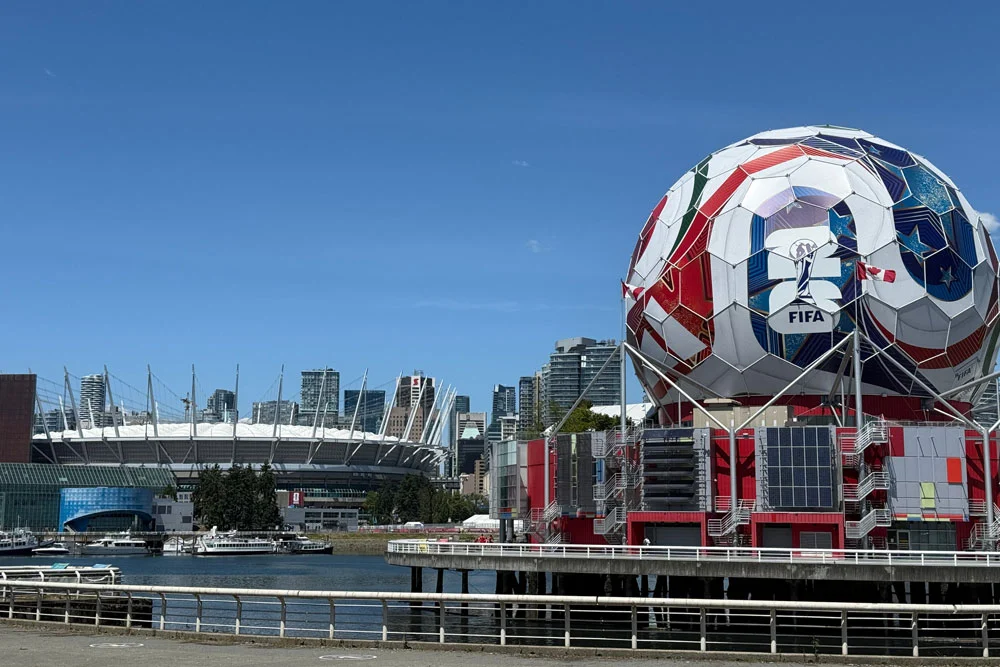
The FIFA World Cup 2026, the first iteration of the tournament to feature an expanded 48-team format across three host nations—Canada, Mexico, and the United States—has reached a fever pitch, delivering a spectacle that transcends the boundaries of sport. As the global community watches the drama of the knockout stages unfold, the tournament is providing more than just athletic entertainment; it is offering a masterclass in strategic management, resilience, and the necessity of evolution. For professionals in the digital commerce sector, specifically within affiliate marketing, the parallels between the pitch and the performance-based marketing landscape have never been more pronounced. From the Tartan Army filling transatlantic flights to the shocking exits of perennial powerhouses, the 2026 tournament serves as a high-stakes case study for brand longevity and partnership optimization.
The Power of Collective Effort over Individual Brilliance
A recurring theme of the 2026 tournament has been the limitation of individual "superstars" when faced with cohesive, well-organized tactical units. Despite the immense individual talent present in the tournament, several of the world’s most decorated players found themselves unable to carry their nations single-handedly through the rigorous bracket. Luka Modrić, the veteran maestro of the Croatian midfield, saw his side struggle against a disciplined Portuguese outfit, while Cristiano Ronaldo’s storied international career met a firm challenge as Portugal fell to a tactically superior Spanish side in the Round of 16.
This phenomenon directly mirrors the current climate of affiliate marketing. For decades, many brands relied on a "super-affiliate" model, where a single high-traffic partner—often a major coupon site or a dominant loyalty portal—accounted for the lion’s share of program revenue. However, the 2026 World Cup reinforces the reality that an agency or a marketing program is only as resilient as its entire roster. Industry data suggests that programs relying on a single marketing channel are significantly more vulnerable to algorithm shifts, regulatory changes, and competitive disruption.
To protect revenue and ensure the quality of referrals, modern affiliate managers are moving toward a "diversified base" strategy. This involves recruiting a mix of marketing types, including content creators, niche influencers, review sites, and technological partners. Much like a football manager must balance a squad with defenders, playmakers, and finishers, an affiliate program must balance top-of-funnel awareness with bottom-of-funnel conversion partners. The failure of "star-dependent" teams in 2026 underscores a vital business lesson: individual talent may win matches, but a diversified team wins championships.
The Rise of the Underdog: A Statistical Shift in Global Competition
One of the most defining characteristics of the 2026 World Cup has been the unprecedented success of perceived "underdogs." The expansion to 48 teams was initially criticized by some as a move that would dilute the quality of play, yet it has instead provided a platform for emerging nations to disrupt the established order. At the Group Stage, the debutant squad from Curaçao secured a historic 0-0 draw against Ecuador, a result that sent shockwaves through the CONMEBOL region. Similarly, in the Round of 16, Egypt demonstrated remarkable tactical discipline, leading 2-0 for the majority of their match against Argentina, the defending champions, before the game reached its dramatic conclusion.
In the realm of affiliate marketing, the "underdog" narrative is equally potent. A historical analysis of the mattress-in-a-box industry provides a quintessential example. In early 2017, when AM Navigator launched the affiliate program for Nectar Sleep, the brand entered a market dominated by well-funded giants like Casper, Saatva, and Purple. These incumbents held significant market share and established affiliate partnerships. However, through aggressive optimization and strategic partnership management, Nectar Sleep’s program achieved the number one ranking on the ShareASale network in just one year and five days.
This ascent saw the brand surpass established global entities such as Wayfair, Reebok, and the NFL. The data indicates that being an underdog is not a permanent state of mediocrity but rather a position that allows for greater agility and aggressive innovation. The 2026 World Cup results suggest that established brands cannot afford to ignore "smaller" competitors who are utilizing data-driven tactics and niche targeting to erode the market share of legacy giants.
A Chronology of Disruption: The 2026 Tournament Timeline
To understand the current state of play, one must look at the chronological progression of upsets that have defined this tournament cycle:
- Group Stage: The entry of 16 additional teams led to a record number of clean sheets by lower-ranked nations, most notably the Curaçao-Ecuador stalemate.
- Round of 32: The Netherlands, a traditional European powerhouse known for "Total Football," was eliminated by a surging Morocco side, proving that historical pedigree does not guarantee contemporary success.
- Round of 16: Norway, a team that had not qualified for a World Cup in nearly three decades, executed a masterclass in defensive organization to knock out Brazil, the five-time champions.
- Quarterfinals: As the tournament moves into the final stages, the presence of teams like Norway and Egypt alongside traditional titans has forced a re-evaluation of FIFA’s global rankings.
This timeline of disruption is a stark reminder to marketing executives. In the digital space, the timeline of disruption is even faster. A brand that dominates search engine results pages (SERPs) today can be displaced by a more agile competitor or a change in platform policy tomorrow. The "Norway scenario"—where a long-absent player returns with a superior strategy—is a constant threat in the affiliate world.
The Perils of Stagnation and the "Resting on Laurels" Trap
Perhaps the most significant takeaway from the 2026 World Cup is the failure of legacy powers to adapt. Italy, a four-time world champion, failed to even qualify for the tournament, marking a period of prolonged stagnation for the Azzurri. Meanwhile, the early exits of Brazil and the Netherlands suggest a failure to evolve tactically in response to the high-press, data-centric styles adopted by smaller nations.
In affiliate marketing, stagnation is often the precursor to obsolescence. The industry is inherently dynamic, shaped by shifting consumer privacy laws (such as GDPR and CCPA), the deprecation of third-party cookies, and the rise of generative AI in content creation. Strategies that were highly profitable five or ten years ago—such as basic "coupon-scraping" or unoptimized banner ads—are no longer viable in a value-driven economy.
Affiliate marketing education is no longer a one-time achievement but a continuous journey. Industry leaders emphasize that staying relevant requires constant participation in the broader ecosystem. Events such as the Affiliate Summit in New York serve as the "training camps" for the industry, where professionals exchange data on what is currently driving conversions and how to navigate the complexities of multi-touch attribution.
Broader Impact and Strategic Implications for 2027 and Beyond
As the 2026 World Cup nears its conclusion, the broader implications for both sport and business are becoming clear. The tournament has proven that the "democratization of talent" is a real phenomenon. Increased access to high-level coaching and data analytics has narrowed the gap between the elite and the emerging in football. Similarly, the democratization of marketing technology has allowed small startups to compete with multinational corporations on a level playing field.
For affiliate managers and program owners, the 2026 cycle offers three definitive action items:
- Prioritize Squad Depth: Do not rely on one or two "star" affiliates. Invest in a long-tail strategy that recruits and activates diverse partner types across multiple marketing channels.
- Monitor the "Underdog" Competitors: Conduct regular competitive intelligence. Small brands using innovative affiliate tactics can quickly scale and disrupt established market leaders.
- Commit to Continuous Evolution: Treat marketing strategy as a living document. What worked in the previous quarter may be obsolete in the next. Engagement with industry conferences and ongoing education is essential for maintaining a competitive edge.
The FIFA World Cup 2026 has been a tournament of surprises, but for the observant professional, those surprises are backed by logical shifts in strategy and execution. Whether on the grass in North America or in the digital trenches of an affiliate network, the rules of engagement remain the same: teamwork, respect for the competition, and a relentless refusal to rest on past achievements are the only paths to sustained victory. As the final whistle approaches for this World Cup, the lessons it leaves behind will likely influence the marketing strategies of the world’s leading brands for years to come.