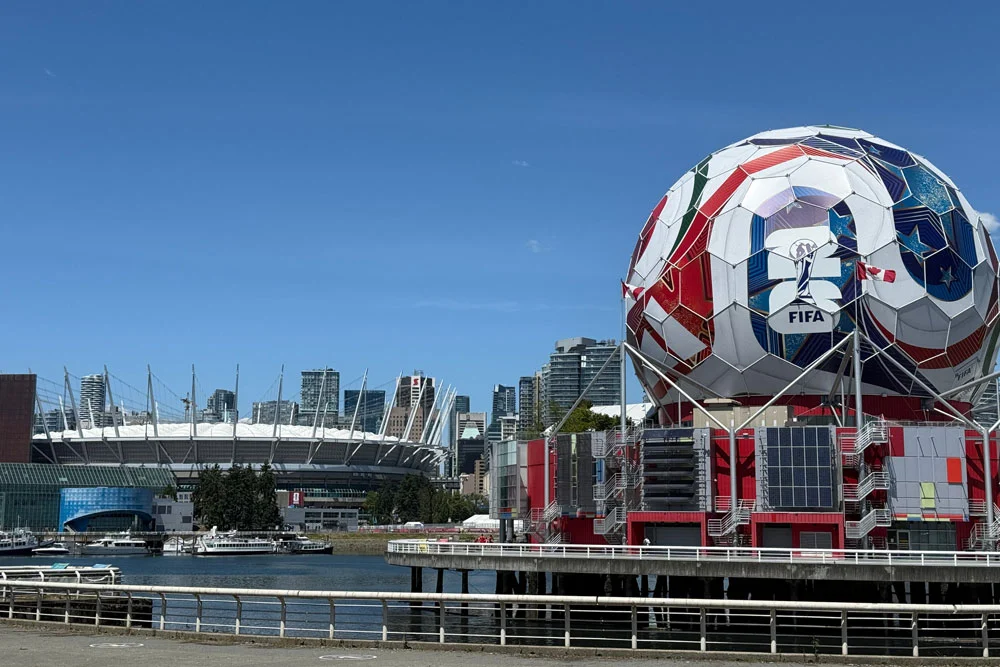
As the FIFA World Cup 2026 unfolds across the vast landscapes of Canada, Mexico, and the United States, the tournament has already proven to be a watershed moment in the history of international sports. With the expansion to a 48-team format and 104 matches scheduled across 16 host cities, the sheer scale of the event provides a unique laboratory for observing high-stakes performance and strategic execution. While the world focuses on the drama of the pitch, industry analysts and marketing professionals are identifying profound parallels between the dynamics of world-class soccer and the intricate mechanisms of the affiliate marketing sector. The lessons emerging from the stadiums in North America are transcending sport, offering a blueprint for resilience, diversification, and competitive strategy in the digital economy.
The Global Context: A Tournament of Unprecedented Scale
The 2026 iteration of the FIFA World Cup is the first to be hosted by three nations, reflecting a broader trend toward globalization and decentralized operations. This structural shift mirrors the evolution of the affiliate marketing industry, which has moved from a niche advertising tactic to a multi-billion-dollar global marketing channel. The tournament’s logistical complexity—spanning multiple time zones and diverse climates—serves as a metaphor for the modern affiliate manager’s challenge: coordinating a vast array of partners across different regions, platforms, and consumer behaviors.
From the arrival of the "Tartan Army"—the dedicated supporters of the Scottish national team—in major hubs like Boston and New York, to the high-altitude clashes in Mexico City, the tournament has been characterized by a collision of traditional powerhouses and emerging forces. This environment has set the stage for three critical observations regarding the intersection of professional sports and performance-based marketing.
The Synergy of the Collective: Moving Beyond Individual Brilliance
A primary takeaway from the early stages of the 2026 tournament is that individual talent, regardless of its magnitude, is insufficient to secure long-term success without a cohesive team structure. This was perhaps most visible in the performances of legendary figures such as Croatia’s Luka Modrić and Portugal’s Cristiano Ronaldo. Despite their storied careers and undeniable skill sets, their respective teams faced significant hurdles. Croatia’s inability to overcome Portugal in the group stages and Portugal’s subsequent exit at the hands of Spain in the Round of 16 underscored a fundamental truth: a single point of failure or a reliance on a lone superstar is a precarious strategy.
In the realm of affiliate marketing, this principle is equally applicable. Agencies and brands that rely solely on one or two "super-affiliates" often find themselves vulnerable to market shifts or changes in partner priorities. Data from the affiliate management sector suggests that the most resilient programs are those that prioritize a "team" approach.
Diversification of Affiliate Bases
To protect revenue streams and ensure the quality of referrals, successful affiliate programs must diversify across multiple marketing channels. This includes:
- Content Creators and Niche Bloggers: Providing long-form value and SEO benefits.
- Loyalty and Reward Portals: Driving high-volume repeat purchases.
- Influencer Partnerships: Leveraging social proof and audience trust.
- Comparison and Review Sites: Assisting consumers in the mid-to-bottom funnel decision-making process.
Just as a soccer manager must balance a defense, midfield, and attack, an affiliate manager must balance their partner mix to ensure that no single algorithm update or market fluctuation can destabilize the entire program.
The Rise of the Underdog: Market Disruption and Agility
The 2026 World Cup has been defined by the "underdog" narrative, challenging the traditional hierarchy of international soccer. Ancient strategic wisdom, often attributed to Sun Tzu in The Art of War, warns that there is no greater danger than underestimating an opponent. The Group Stage provided a stark illustration of this when Curaçao, making a historic appearance, held Ecuador to a 0-0 draw. Similarly, in the Round of 16, Egypt stunned the world by leading defending champions Argentina 2-0 for the majority of the match.
This phenomenon is not confined to the pitch; it is a recurring theme in digital commerce. The story of Nectar Sleep serves as a definitive case study in how a market entrant can disrupt established giants. When Nectar Sleep launched its affiliate program in early 2017, the "mattress-in-a-box" category was already saturated with well-funded incumbents like Casper, Saatva, and Purple.
Case Study: The Nectar Sleep Ascent
Through aggressive affiliate recruitment and a highly optimized conversion funnel, Nectar Sleep’s program achieved the following:
- Rapid Scaling: Within one year and five days of launch, it became the number one program on its affiliate network.
- Market Penetration: It surpassed over 5,000 other programs, including household names like Wayfair, Reebok, and the NFL.
- Strategic Positioning: By identifying gaps in the competitor’s affiliate strategies, Nectar Sleep proved that being an underdog is not a precursor to mediocrity but an opportunity for agility.
The broader implication for the industry is clear: size does not guarantee safety. In both sports and marketing, an underdog that leverages data, identifies weaknesses in the leader’s defense, and executes with precision can rapidly ascend to the top of the rankings.
Institutional Inertia: The Peril of Resting on Laurels
Perhaps the most shocking aspect of the FIFA World Cup 2026 has been the absence or early exit of traditional footballing royalties. Italy, a four-time champion, failed to qualify for the tournament entirely, marking a period of deep institutional reflection for the nation. The Netherlands was eliminated by Morocco in the Round of 32, and Norway’s victory over Brazil in the Round of 16 sent shockwaves through the sporting world. Norway’s progression to the Quarterfinals—after a nearly 30-year absence from the world stage—serves as a reminder that past glory does not guarantee future results.
This "dynamic" nature is the defining characteristic of affiliate marketing. The digital landscape is in a state of constant flux, influenced by technological advancements, regulatory changes (such as GDPR and CCPA), and shifts in consumer privacy preferences (including the phasing out of third-party cookies).
The Necessity of Continuous Evolution
What generated significant ROI five years ago—or even one year ago—may now be obsolete. To maintain a competitive edge, professionals must adopt a philosophy of lifelong education. The following factors are currently driving the need for constant adaptation in the industry:
- AI and Automation: The integration of artificial intelligence in partner discovery and fraud detection.
- Attribution Modeling: Moving away from "last-click" models to more sophisticated multi-touch attribution.
- Regulatory Compliance: Navigating the complex legal requirements of global advertising.
Industry veterans emphasize that the journey of education in affiliate marketing is a marathon, not a destination. Participation in major industry conferences, such as the Affiliate Summit in New York, is often cited as a critical requirement for staying abreast of these shifts.
Analysis of Implications: A Future-Forward Perspective
The 2026 World Cup and the current state of affiliate marketing both point toward a future where data-driven strategy and human intuition must coexist. The tournament has shown that while data can predict certain outcomes, the "human element"—grit, teamwork, and the refusal to be intimidated by larger opponents—often determines the final score.
For brands, the implication is that they must remain humble and hungry. The downfall of major teams like Brazil and Italy suggests that institutional inertia is the greatest threat to success. In marketing, this translates to the need for regular audits of affiliate programs, constant testing of new creative assets, and the courage to pivot when a strategy is no longer yielding results.
Official Responses and Expert Outlook
While FIFA officials have praised the 2026 tournament for its "unpredictability and competitive balance," marketing executives are drawing similar conclusions about the digital economy. Commentators suggest that the barriers to entry in both international sports and global marketing are lowering, allowing for a more diverse array of winners.
"The 2026 tournament is a wake-up call," noted one sports analyst during the Norway-Brazil post-match briefing. "The gap between the ‘elites’ and the ‘rest’ is closing because information, training techniques, and tactical awareness are now globally accessible."
In the affiliate marketing space, a similar democratization is occurring. Small brands now have access to the same tracking technology and global partner networks as Fortune 500 companies. The winners of the next decade will not necessarily be the ones with the largest budgets, but those who can build the most effective teams, respect the potential of the underdog, and refuse to rest on their laurels.
As the 2026 World Cup moves toward its final matches, the lessons learned in the stadiums of North America will continue to resonate. Whether on the grass or in the digital marketplace, the principles of strategic teamwork, mindful competition, and continuous improvement remains the standard for those aiming for the podium.