Black Friday marketing defines the strategic efforts e-commerce brands deploy to plan, promote, and execute their Black Friday and Cyber Monday (BFCM) sales, encompassing a multi-channel approach from early list-building to the final Cyber Monday campaign via email, SMS, push notifications, and paid advertisements. This critical period, traditionally marking the unofficial start of the holiday shopping season, has evolved into a pivotal week-long event for online retailers, with significant revenue implications. Industry analysis from 2025 revealed a notable increase in average order value (AOV) during Cyber Week, climbing from $164 to $215 across 5,000 U.S. small to medium-sized businesses (SMBs). This upward trend underscores the growing consumer willingness to spend more during the sales event and highlights the imperative for brands to initiate comprehensive planning well in advance to effectively capture this projected growth for the upcoming 2026 Black Friday, slated for November 27.
![Black Friday Marketing: Strategies and Examples [2026 ]](https://www.omnisend.com/blog/wp-content/uploads/2024/11/BF-marketing.png)
The Evolution and Significance of Black Friday Cyber Monday
Black Friday, historically a post-Thanksgiving brick-and-mortar sales phenomenon, has transformed into a global e-commerce powerhouse, seamlessly extending into Cyber Monday to form "Cyber Week." This period now represents the most concentrated shopping window of the year, driven by deep discounts and limited-time offers. For retailers, BFCM is not merely a sales event but a crucial benchmark for annual performance, an opportunity to clear inventory, acquire new customers, and reactivate dormant ones. The digital shift, accelerated in recent years, has cemented online channels as the primary battleground for consumer attention and spending during this intense period. The projected increase in AOV for 2025 serves as a strong indicator that despite economic fluctuations, consumers continue to prioritize value-driven purchases during Cyber Week, making sophisticated, data-driven marketing strategies more critical than ever.
![Black Friday Marketing: Strategies and Examples [2026 ]](https://www.omnisend.com/blog/wp-content/uploads/2025/10/1-Ruggable-BLack-Friday-popup.webp)
Early Planning: The Cornerstone of 2026 Success
To capitalize on the anticipated growth, e-commerce brands must begin their Black Friday marketing strategy as early as July or August, a full four months ahead of the November 27, 2026 sale date. This proactive approach allows ample time for data analysis, strategic goal setting, and campaign execution without the pressure of last-minute rushes. A fundamental first step involves a thorough review of the previous year’s Black Friday performance. Analyzing store data from 2025 will provide invaluable insights into which products generated the highest sales, what discount levels were most effective, and which strategies inadvertently eroded profit margins.
![Black Friday Marketing: Strategies and Examples [2026 ]](https://www.omnisend.com/blog/wp-content/uploads/2025/10/2-Rachel-Riley-BF-campaign.webp)
Key areas for early planning, ideally by July or August, include:
- Performance Review: Analyze 2025 sales data, identifying top-performing products, popular discount tiers, and customer segments that responded best.
- Goal Setting: Establish clear revenue targets, list growth objectives, and specific average order value (AOV) increases for 2026.
- Inventory Assessment: Evaluate current stock levels and forecast demand for popular items, ensuring sufficient inventory to meet anticipated sales.
- Competitive Analysis: Research competitor strategies from previous years, identifying opportunities and potential pitfalls.
For brands embarking on their first Black Friday marketing campaign, establishing an email list as early as possible is paramount. A structured schedule, meticulously adhered to, can mitigate common errors and maximize impact.
![Black Friday Marketing: Strategies and Examples [2026 ]](https://www.omnisend.com/blog/wp-content/uploads/2025/10/3.-fittea-1.webp)
A Phased Approach to Black Friday 2026:
| Month | Key Activities B. To set goals for four metrics: Average Order Value (AOV), Customer Reactivation, New Customer Acquisition, and Inventory Targets. AOV for Cyber Week is projected to rise to $215 in 2025. Setting clear goals provides direction and measurable outcomes for the campaign.
![Black Friday Marketing: Strategies and Examples [2026 ]](https://www.omnisend.com/blog/wp-content/uploads/2025/10/4.-hismile.webp)
Website and Technology Stack Audit: Preparing for Peak Traffic
The success of a Black Friday campaign is not solely dependent on attractive offers but also on the robustness of the underlying technological infrastructure. Your e-commerce site will experience its highest traffic during BFCM, making performance and stability paramount. A single site crash during peak hours can result in thousands of dollars in lost sales and irreparable damage to brand reputation. Therefore, a comprehensive audit of your website and technology stack by September is non-negotiable.
![Black Friday Marketing: Strategies and Examples [2026 ]](https://www.omnisend.com/blog/wp-content/uploads/2025/10/5.-toak-scaled.webp)
This audit should cover:
- Load Testing: Simulate high traffic volumes to identify bottlenecks and ensure the site can handle expected demand without slowdowns or crashes.
- Mobile Responsiveness: Verify that the website offers a seamless and optimized experience across all mobile devices, given the prevalence of mobile shopping.
- Payment Gateway Reliability: Confirm that all payment processors are fully functional and can handle high transaction volumes securely.
- Third-Party Integrations: Ensure that all integrated apps and services (e.g., analytics, loyalty programs, customer support) are working correctly and won’t impede site performance.
- Security Measures: Update all security protocols and conduct vulnerability assessments to protect against potential cyber threats during the heightened activity.
Building the Audience: The Power of List Growth
![Black Friday Marketing: Strategies and Examples [2026 ]](https://www.omnisend.com/blog/wp-content/uploads/2025/10/6.-amundsen.webp)
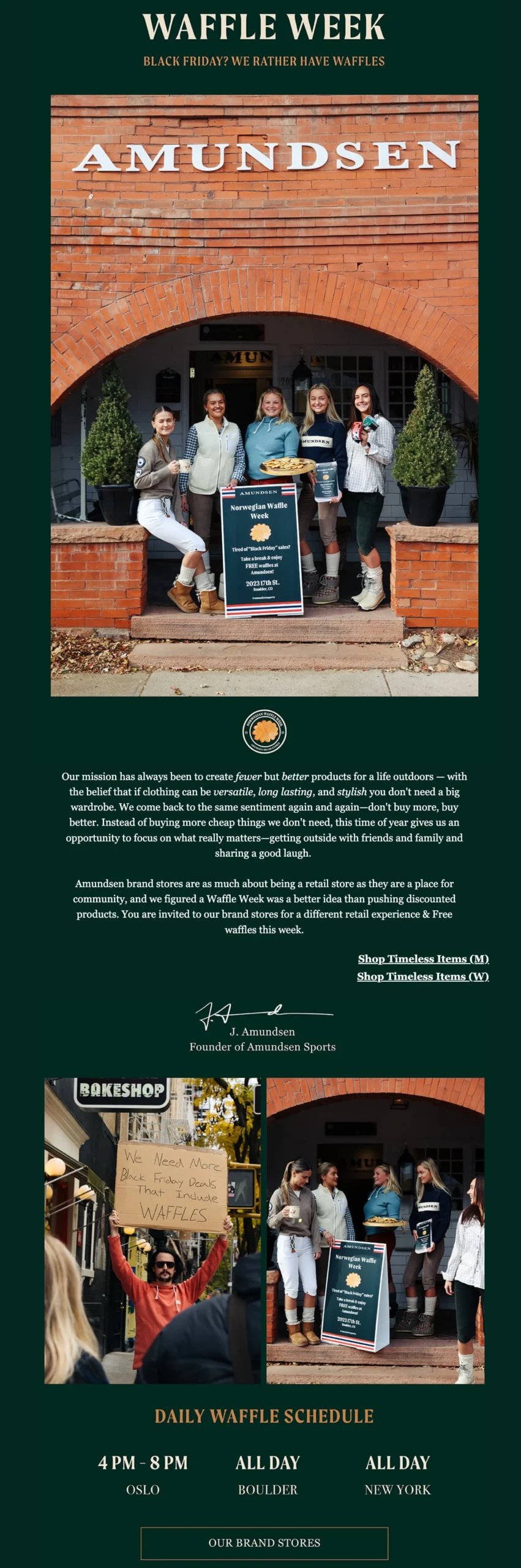
A robust subscriber list is a foundational asset for any successful Black Friday marketing campaign. Growing your email and SMS lists before the sale begins allows brands to directly reach a large pool of interested shoppers on launch day, significantly reducing dependence on increasingly expensive paid traffic. This approach yields a higher return on investment (ROI) by leveraging owned marketing channels.
Effective strategies for increasing sign-ups include:
![Black Friday Marketing: Strategies and Examples [2026 ]](https://www.omnisend.com/blog/wp-content/uploads/2025/10/7-Organics-Ocean-email.webp)
- Prominent Pop-ups: Implement clear, concise pop-ups on your website offering an incentive for signing up, such as early access to BFCM deals or a small introductory discount. Keep these forms simple, ideally one step, one field, and one action, to minimize friction.
- Dedicated Landing Pages: Create specific landing pages for BFCM sign-ups, highlighting the benefits of joining your list (e.g., exclusive offers, early notifications).
- Social Media Campaigns: Run organic and paid social media campaigns directing users to sign-up forms, emphasizing the value proposition of early access.
- In-store Promotions: For omnichannel retailers, offer incentives for in-store customers to join your digital mailing lists.
Brands like Ruggable effectively use single-field pop-ups linked to Black Friday promotions to increase subscriptions, while Rachel Riley leverages the promise of 24-hour early access to drive sign-ups, making subscribers feel valued and exclusive. These strategies demonstrate that perceived value, often beyond just a discount, is a powerful motivator for list growth.
Precision Targeting: Segmenting for Maximum Impact
![Black Friday Marketing: Strategies and Examples [2026 ]](https://www.omnisend.com/blog/wp-content/uploads/2025/10/8-MANSCAPED-promo.webp)
Generic, sitewide discounts often dilute impact and profit. A more effective Black Friday marketing strategy involves segmenting email and SMS lists based on shopper behavior. By creating distinct groups within your audience—such as top spenders, price-sensitive shoppers, cart abandoners, or recent buyers—brands can deliver highly relevant and personalized offers, even without resorting to the deepest discounts. This tailored approach enhances customer engagement and conversion rates.
Four primary customer groups typically form the basis of most Black Friday marketing campaigns:
![Black Friday Marketing: Strategies and Examples [2026 ]](https://www.omnisend.com/blog/wp-content/uploads/2025/10/9-BOGO-SMS-1.webp)
- Top Spenders (VIPs): Defined as the top 10% of customers by revenue over the past year. Offer them exclusive early access 24-48 hours before the general public via email and SMS, reinforcing their VIP status.
- Price-Sensitive Shoppers: Customers who frequently use discount codes (e.g., for 50% or more of previous orders). Target them with your most straightforward and deepest sitewide offer on launch day via email.
- Cart and Browse Abandoners: Shoppers who added items to their cart or viewed products but did not complete a purchase. Send automated reminders via SMS, including the specific abandoned items and a clear purchase deadline.
- Recent Buyers: Customers who purchased during the current Black Friday campaign. Instead of more discounts, offer product recommendations or add-on items via email to encourage additional purchases without devaluing their initial buy.
Advanced segmentation, leveraging tools with AI features or RFM (Recency, Frequency, Monetary) analysis, can further refine these groups. Omnisend’s AI can build segments from plain-language prompts, and its RFM analysis automatically groups shoppers, enabling precise targeting. Dukier, for example, generated approximately 45% of its email revenue from segmented campaigns during peak sales events, driving a remarkable 525% business growth. This demonstrates the profound impact of personalized communication.
Strategic Discounting and Engagement: Beyond Price Cuts
![Black Friday Marketing: Strategies and Examples [2026 ]](https://www.omnisend.com/blog/wp-content/uploads/2025/10/10-MUJI-free-shipping-threshold.webp)
While discounts are a primary motivator for 72% of BFCM shoppers, according to Omnisend’s 2025 spending predictions, brands need not sacrifice revenue. A 10-25% discount range can still attract significant attention and create urgency without fostering buyer skepticism about product quality. Moreover, a variety of promotional strategies can be employed to achieve sales goals while preserving brand value and margins.
Four key discount options and their applications include:
![Black Friday Marketing: Strategies and Examples [2026 ]](https://www.omnisend.com/blog/wp-content/uploads/2025/10/11-Wheel-of-fortune-popup.webp)
- Tiered Discounts: Incentivize higher spending by offering increasing discounts at different order value thresholds (e.g., 10% off $50+, 15% off $100+, 20% off $150+). This strategy, effectively utilized by brands like Organic Ocean, encourages customers to add more items to their cart to reach the next discount level, thereby increasing AOV.
- Product Bundles: Pair slow-moving inventory with bestsellers or create curated collections. Brands like Hismile package products into attractive bundles, offering more value for the same spend. Pricing bundles 15-20% below individual product costs creates obvious value while clearing excess stock and introducing customers to new items. Manscaped’s approach of combining bundles with VIP pricing and "Best Seller" labels further enhances appeal.
- Buy One, Get One (BOGO) Offers: Ideal for consumable products with healthy margins, BOGO offers (including variations like "buy two, get one free" or "BOGO 50% off") encourage bulk purchases and help move seasonal items before they become dead stock. FitTea’s time-limited BOGO offer is a prime example of its effectiveness, especially via SMS for quick action.
- Freebies with Purchases: Offer a complimentary gift when customers reach a specific order value. This strategy, adopted by To’ak Chocolate (offering a tasting kit for higher-value orders) and MUJI USA (free shipping with a $50 spend), allows brands to control costs while customers perceive added value. Gifts can include sample sizes, exclusive products, or excess stock, and can even serve to introduce new items.
Beyond direct discounts, engagement-focused promotions can build customer lifetime value (CLV) by creating memorable experiences:
- Mystery Discounts and Gamification: Introduce interactive elements like a "Wheel of Fortune" pop-up (as seen with Omnisend’s features) where customers spin to reveal a discount. This adds an element of anticipation and fun, making even small discounts feel more valuable.
- Flash Sales by Hour or Day: Offer different deals on different days or even hours during Cyber Week. Rockstar Original uses aggressive flash sale emails with subject lines like "🔥 Fire Flash Sale: Up to 90% OFF Denim" to create immediate urgency. This encourages repeat visits throughout the week.
- VIP and Subscriber Exclusive Deals: Reward loyalty by offering email and SMS subscribers early access, extra discounts, or free shipping. Vape Jucce’s VIP list promotions highlight the power of exclusivity in driving sign-ups and fostering a sense of community.
- Free Shipping Thresholds: Baymard Institute research from 2025 indicates that extra costs at checkout are the primary reason for 40% of cart abandonments. Offering free shipping above a certain threshold (e.g., "$75 free shipping" when AOV is $60) is often more effective than a flat percentage discount, as it encourages customers to increase their order value to qualify. MUJI USA successfully combines a Cyber Week discount with a free shipping incentive for orders over $50.
Expert advice suggests testing different offers with smaller customer segments before BFCM to identify the most effective promotions for your specific audience. Combining offers should be done judiciously to avoid complexity, ensuring the value proposition remains clear and easy for customers to understand. Tracking performance by promotion type provides granular insights into what truly drives new customer acquisition versus appealing solely to discount hunters.
![Black Friday Marketing: Strategies and Examples [2026 ]](https://www.omnisend.com/blog/wp-content/uploads/2025/10/12-Flash-sales-email.webp)
Automating Success: Streamlining Cyber Week Operations
In the high-stakes environment of Black Friday, automated marketing flows are indispensable. While comprising only 2% of all email sends, automations generated 30% of total email-driven revenue, as per Omnisend’s 2026 e-commerce marketing report. This makes automation a high-performing component of any BFCM strategy, recovering sales and engaging customers without requiring manual intervention during the busiest shopping period.
![Black Friday Marketing: Strategies and Examples [2026 ]](https://www.omnisend.com/blog/wp-content/uploads/2025/10/13-JUCCE-VIP-deal.webp)
Key automated flows to set up before Black Friday include:
- Cart Abandonment: Trigger an email 30 minutes after a shopper leaves items in their cart, followed by an SMS reminder after an hour if no purchase is made.
- Browse Abandonment: Send an email later the same day to shoppers who viewed products but didn’t add them to their cart, reminding them of their interest.
- Welcome Series: Immediately send a welcome email to new subscribers, ideally including an early-access offer to drive initial engagement and purchases.
- Post-Purchase: Automate thank-you messages and product recommendations after a customer completes an order, fostering loyalty and encouraging repeat business.
These automation flows, once built, can be reused for all sales events, requiring only updates to the specific Black Friday offers. To’ak Chocolate, for instance, attributes 39.4% of its email revenue to automated campaigns, underscoring their long-term value beyond seasonal promotions.
![Black Friday Marketing: Strategies and Examples [2026 ]](https://www.omnisend.com/blog/wp-content/uploads/2025/10/14-Free-shipping-threshold-SMS.webp)
Multi-Channel Execution: Orchestrating the Cyber Week Campaign
A successful Cyber Week campaign requires a synchronized, multi-channel approach integrating email, SMS, and push notifications to maintain visibility and urgency. A well-coordinated sending schedule ensures that offers reach customers at optimal times and through the most effective channels.
![Black Friday Marketing: Strategies and Examples [2026 ]](https://www.omnisend.com/blog/wp-content/uploads/2025/10/15-BWEAR-Black-Friday.webp)
A recommended multi-channel schedule for Black Friday 2026:
| Time | Channel | Purpose