rifanmuazin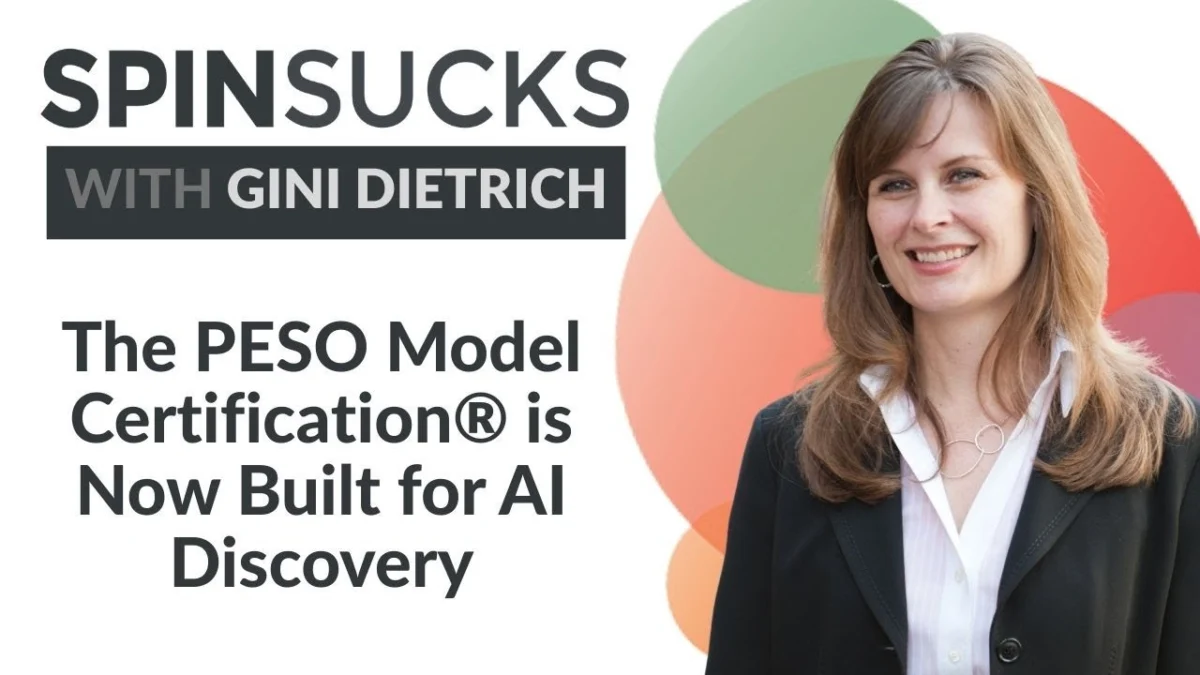
Spin Sucks, the professional development platform founded by Gini Dietrich, has announced a comprehensive overhaul of its flagship PESO Model® Certification for 2026, transitioning the framework from a tactical marketing strategy into a holistic "operating system" designed for an AI-centric communications environment. The updated certification program arrives at a critical juncture for the public relations and marketing industries, as the rise of generative AI, zero-click search results, and decentralized media consumption necessitates a fundamental shift in how brands build authority and maintain visibility. By integrating "visibility engineering" and AI-driven workflows, the 2026 certification aims to provide practitioners with a scalable methodology to ensure brand messaging remains consistent and discoverable across both human-centric and algorithmic platforms.
The Evolution of the PESO Model in a Post-Search Era
The PESO Model—an acronym for Paid, Earned, Shared, and Owned media—was first introduced by Gini Dietrich in her 2014 book, Spin Sucks. For over a decade, it has served as the industry standard for integrating disparate communications channels into a unified strategy. However, the 2026 reimagining of the model acknowledges that the digital landscape has undergone a seismic shift. The traditional "channel-first" approach, where marketers focused on individual silos such as social media management or media relations in isolation, is increasingly ineffective in an era defined by AI-powered discovery.
The 2026 framework introduces the concept of "visibility engineering." This strategic approach recognizes that search engines and AI platforms like ChatGPT, Perplexity, and Google’s Gemini are increasingly providing "zero-click" answers—summaries that satisfy a user’s query without requiring them to visit a brand’s website. According to industry data from SparkToro, nearly 60% of Google searches now end without a click to an external property. In this environment, the goal of a communications professional shifts from merely driving traffic to ensuring that the data used by AI models to generate these answers is accurate, credible, and favorable to the brand.
Chronology of Framework Development and the 2026 Launch
The development of the PESO Model has followed a distinct timeline of professionalization within the PR industry. Following its 2014 debut, the model was adopted by the PR Council and incorporated into various university curricula. In 2020, Spin Sucks partnered with the Newhouse School of Public Communications at Syracuse University to launch the first official certification, marking a move toward standardized accreditation for integrated marketers.
The 2026 update represents the third major iteration of the certification. This version was developed throughout 2024 and 2025 in response to the rapid adoption of Large Language Models (LLMs) in consumer search behavior. The official launch, timed to coincide with Gini Dietrich’s birthday, signifies a transition from the model being a theoretical framework to it functioning as a technical operating system. This "OS" approach allows teams of varying sizes—from solopreneurs to global enterprise departments—to implement a repeatable process that compounds results over time rather than relying on disparate, one-off campaigns.
Strategic Integration of AI and Visibility Engineering
A core component of the new certification is the "PESO OS AI," a specialized tool designed to help communicators pressure-test their strategies and automate repetitive tasks without sacrificing ethical standards. This technological integration addresses a growing gap in the industry: while 70% of marketers report using AI in some capacity, many struggle to move beyond basic content generation into strategic application.
Visibility engineering, as taught in the new curriculum, focuses on three primary pillars:
- Controlled Visibility: Utilizing owned media to establish a "source of truth" that AI crawlers can easily index.
- Borrowed Credibility: Leveraging earned media to provide third-party validation, which AI systems weigh heavily when determining the authority of a brand.
- Distributed Trust: Using shared and paid media to amplify proven content, ensuring that the brand’s message reaches audiences regardless of whether they are using traditional search engines or social discovery tools.
The certification teaches professionals how to align these pillars so that the work performed in one quadrant—such as an earned media placement—directly feeds the effectiveness of the others, creating a "flywheel effect" that increases authority without necessarily requiring an increase in human or financial resources.
The 2026 Certification Curriculum: An Eight-Week Implementation Roadmap
The certification is structured as an eight-week intensive program that prioritizes practical application over theoretical study. Each week is dedicated to a specific component of the operating system:
- Week 1: Orientation and Setup: Participants are grounded in the mindset shift required for visibility engineering and the "operating system" approach, setting up the digital infrastructure needed for the course.
- Week 2: Owned Media: Focuses on building a "home base" of content. This involves identifying "defensible themes"—topics where the brand possesses unique expertise—and creating an ecosystem that serves as the primary data source for both humans and AI.
- Week 3: Earned Media: Reimagines media relations as a credibility engine. Professionals learn to map story angles that reinforce their owned media themes, ensuring that third-party validation is strategically aligned with brand authority.
- Week 4: Shared Media: Addresses distribution in a decentralized ecosystem. This module focuses on moving signals across networks to drive conversation and engagement rather than just broadcasting messages.
- Week 5: Paid Media: Positions paid efforts as a strategic accelerator. The curriculum covers how to amplify content that has already proven successful in the earned or owned categories, optimizing spend for maximum impact.
- Week 6: Integration: The pivotal stage where the four media types are merged into a single system. This week focuses on creating workflows that allow content to be reused and scaled across channels.
- Week 7: Measurement: Moves beyond "vanity metrics" like likes or impressions. Participants build scorecards that connect communications activities to tangible business outcomes, utilizing AI to assist in sophisticated data storytelling.
- Week 8: Final Operating System: The program concludes with the consolidation of all work into a final PESO plan, providing a ready-to-implement strategy tailored to the participant’s specific organization.
Industry Impact and Professional Reactions
The shift toward a systemized version of the PESO Model has drawn attention from major industry bodies. The International Association of Business Communicators (IABC) and the Public Relations Society of America (PRSA) have maintained long-standing relationships with Spin Sucks, and members of these organizations are offered specialized access to the certification.
Industry analysts suggest that the move toward "operating systems" in PR reflects a broader trend of professionalization. As marketing budgets face increased scrutiny, the ability to demonstrate a repeatable, measurable process is becoming a requirement for senior leadership roles. The inclusion of AI-driven measurement and visibility engineering is expected to set a new benchmark for what constitutes a "qualified" modern communicator.
Furthermore, the program addresses the needs of different organizational structures. For agencies, the certification provides a standardized methodology to offer clients, ensuring consistency across account teams. For enterprise organizations, it serves as an alignment mechanism, preventing the "silo effect" where paid, earned, and social teams operate with different goals and messaging.
Analysis of Broader Implications for the Communications Sector
The 2026 PESO Model Certification launch signals a broader evolution in the role of the PR professional. No longer restricted to "media relations," the modern practitioner is becoming a hybrid of a data scientist, a brand strategist, and a technical architect. The concept of "visibility engineering" suggests that the future of the industry lies in the ability to influence the algorithms that mediate our reality.
As AI tools continue to evolve, the barrier to entry for content creation will continue to drop, leading to an even more crowded and noisy digital environment. In this context, the PESO Model’s emphasis on "earned" and "owned" media as the foundations of trust becomes even more critical. The 2026 certification is a proactive response to this challenge, offering a blueprint for maintaining human-led strategy in an AI-automated world.
By the end of the certification, practitioners are equipped not just with a certificate, but with a functional asset: a customized operating system. This shift from "learning" to "building" reflects a modern educational philosophy that prioritizes immediate utility in a fast-changing market. As Spin Sucks continues to iterate on the PESO Model, the 2026 version stands as a definitive guide for navigating the complexities of modern visibility and trust.