
 rifanmuazin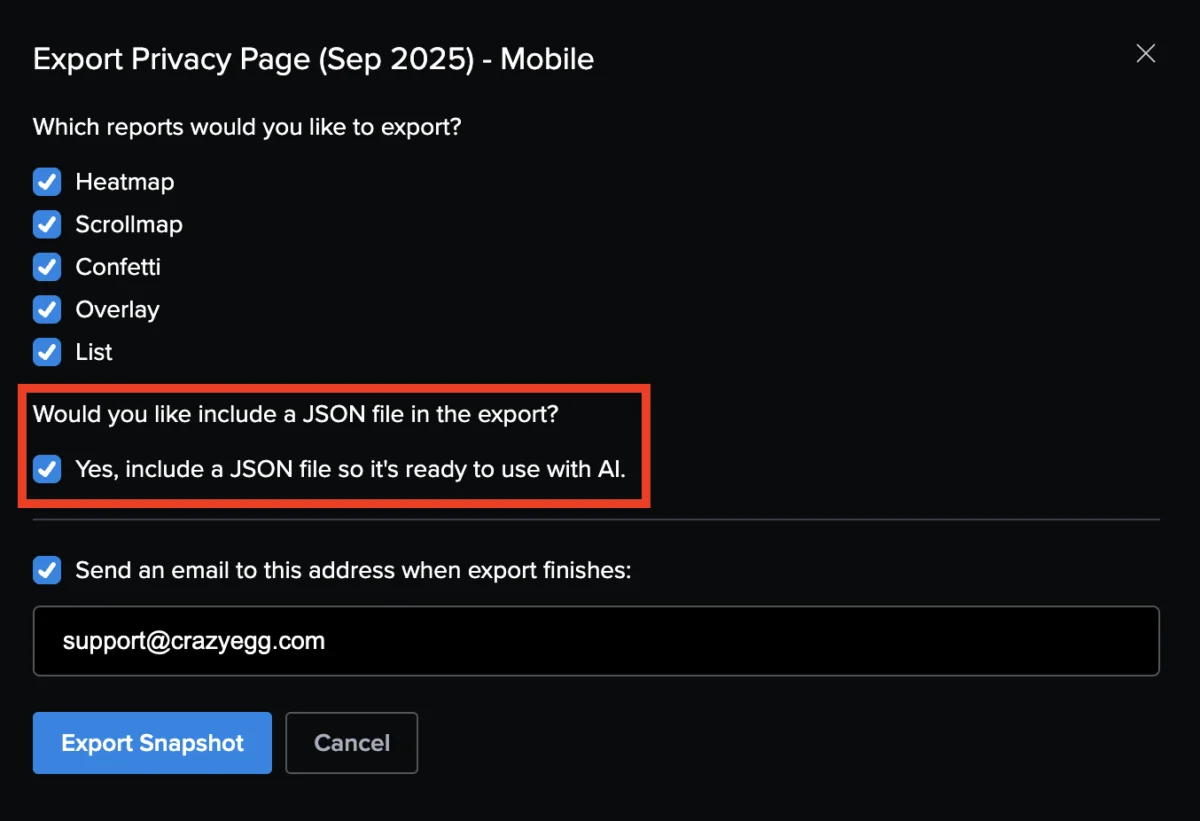
The Shift Toward AI-Driven User Experience Analysis
For over a decade, heatmaps have served as the standard for visualizing how users interact with a webpage. By overlaying colors to represent clicks, scrolls, and mouse movements, these tools allowed webmasters to see "hot" and "cold" zones. However, the traditional process required human analysts to spend hours squinting at screenshots, attempting to correlate a cluster of clicks with a specific business outcome. As websites become more complex and traffic volumes increase, this manual approach has become a bottleneck for growth-oriented companies.
The introduction of AI-ready exports, specifically in JSON (JavaScript Object Notation) format, bridges the gap between visual data and machine learning. JSON is the preferred data-interchange format for modern AI tools like ChatGPT, Claude, and Gemini because it provides a structured, hierarchical representation of information that these models can "read" with high precision. By transforming a visual heatmap into a structured data file, Crazy Egg allows AI to process thousands of interaction points in seconds, identifying trends that might be invisible to the human eye.
Technical Integration and the Inclusion of Conversion Data
The most critical aspect of this update is the integration of Conversion data. Previously, AI exports might focus on engagement metrics—where people moved their mice or how far down they scrolled. While useful, engagement does not always equal revenue. A user might scroll to the bottom of a page because they are interested, or because they are confused and looking for information they cannot find.
By including conversion events in the AI Export, Crazy Egg provides the "missing link" in the data set. When a user uploads this file to an AI tool, they can prompt the AI to specifically look for the differences between users who converted and those who did not. This allows for a more nuanced level of inquiry. For example, a marketer can now ask an AI tool: "Based on this heatmap data, what is the most common path taken by users who ultimately clicked the ‘Purchase’ button?" or "Identify the elements on this page that are distracting users away from the primary call-to-action."
Operational Chronology: From Data Capture to A/B Testing
The workflow for utilizing this new feature follows a logical progression designed to fit into a standard Conversion Rate Optimization (CRO) cycle. The process begins with the capture of user data through the Crazy Egg snippet installed on a website. Once a sufficient sample size has been gathered, the user navigates to the Heatmap report.
- Data Generation: The system records clicks, scrolls, hovers, and specific conversion events (such as form completions or button clicks).
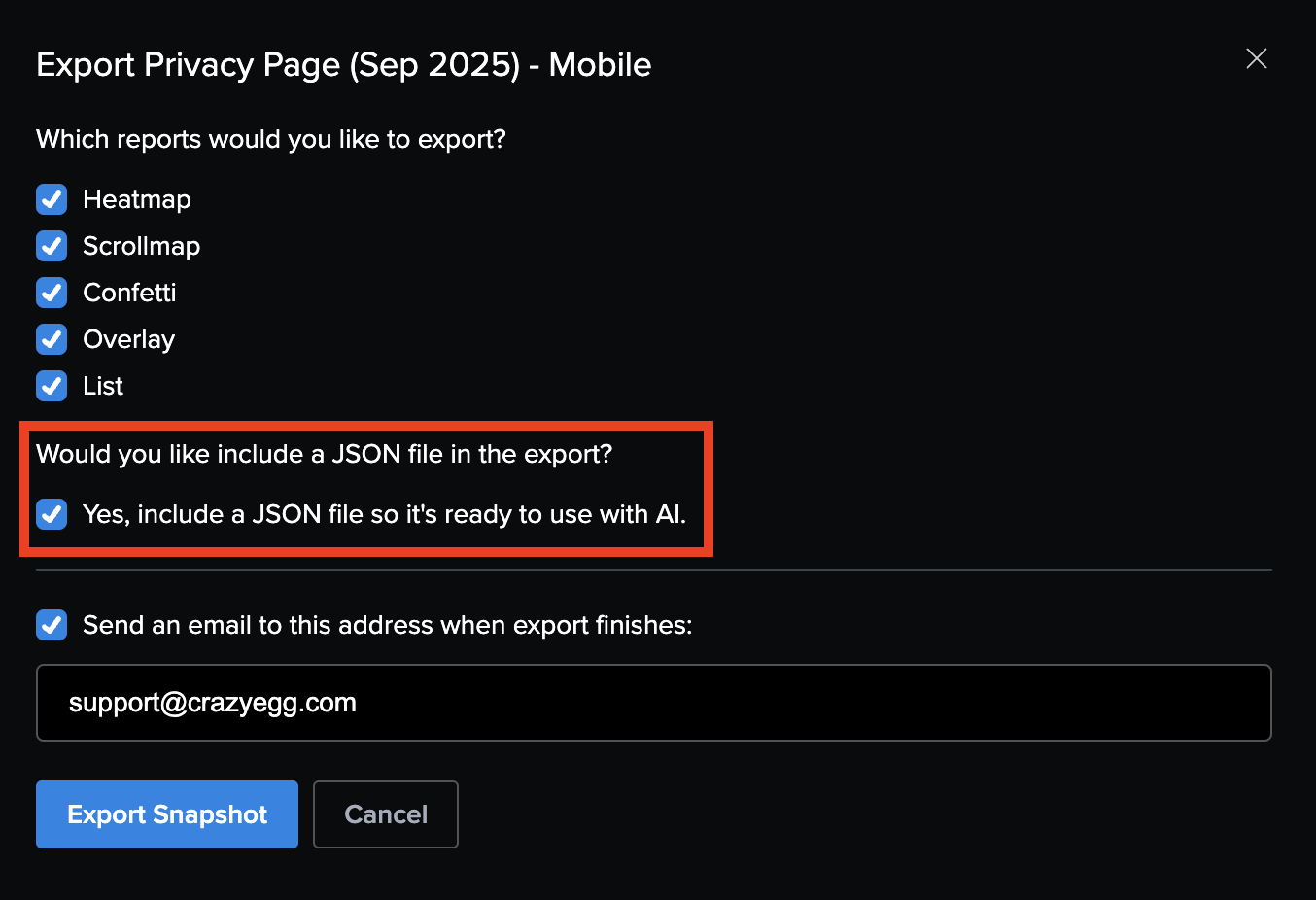
- Export Configuration: Users access the "Export" menu within the Heatmap interface. A new toggle allows them to select a JSON format specifically optimized for AI ingestion.
- AI Analysis: The resulting file is uploaded to a third-party AI platform. Here, the user provides a prompt—often a request for a "CRO Audit"—asking the AI to analyze the behavior patterns.
- Insight Extraction: The AI identifies friction points, such as "rage clicking" on non-clickable elements or high bounce rates at specific scroll depths.
- Hypothesis and Testing: The insights generated by the AI are then used to form hypotheses for A/B testing. For instance, if the AI notes that converters frequently hover over a specific testimonial before buying, the marketer might decide to move that testimonial higher up the page.
Industry Context: The Rise of the "Autonomous Marketer"
The move by Crazy Egg reflects a broader trend in the MarTech (Marketing Technology) industry toward "autonomous marketing." According to recent industry reports, over 70% of high-performing marketing teams now use AI to assist with data analysis. The primary driver of this trend is the need for speed. In a competitive e-commerce environment, the ability to identify a design flaw and correct it in 24 hours versus 24 days can result in a significant difference in quarterly revenue.
Stephen Ngo, Director of Growth Marketing at Crazy Egg and a veteran of the B2B startup space, has emphasized that the goal of these tools is to move beyond surface-level activity. By focusing on what actually drives conversions, businesses can move away from "vanity metrics" and toward data-driven decisions that impact the bottom line. This reflects a shift in the role of the digital marketer from a data gatherer to a data strategist.
Supporting Data and Economic Implications
The economic argument for AI-assisted heatmap analysis is rooted in the rising cost of customer acquisition (CAC). As digital advertising costs on platforms like Google and Meta continue to climb, businesses must ensure that the traffic they pay for is utilized as efficiently as possible. Improving a website’s conversion rate from 2% to 3% represents a 50% increase in revenue without spending an additional cent on advertising.
Data from recent CRO studies suggest that companies using automated analysis tools see a 15-20% faster turnaround on experiment cycles. By removing the manual labor involved in data interpretation, teams can run more tests per year. The AI Export feature specifically targets this efficiency. Because the JSON file includes data from any events being tracked in Conversions, it provides a comprehensive snapshot of the user journey, allowing the AI to act as a 24/7 data scientist.
Statements and Reactions from the Tech Community
While official press releases often focus on the features, the reaction from the broader tech and SEO communities highlights the strategic value of this integration. Analysts have noted that the "black box" of user behavior is finally being cracked open. Previously, heatmaps were qualitative—they told you "what" was happening. By pairing them with AI and conversion data, they become quantitative and predictive—telling you "why" it happened and "how" to fix it.
Industry experts suggest that this capability will be particularly beneficial for small to medium-sized enterprises (SMEs) that do not have the budget for a dedicated data science team. By leveraging a Pro or Enterprise plan with Crazy Egg and a standard subscription to an AI tool, a small business owner can gain insights that were previously reserved for Fortune 500 companies with massive analytics departments.

Broader Impact on Web Design and UX
Looking forward, the ability to analyze conversion data via AI is likely to influence the very philosophy of web design. We are moving toward an era of "evidence-based design," where every element on a page—from the color of a button to the placement of a hero image—is justified by behavioral data.
The integration also signals a future where AI might not just analyze the data, but eventually suggest real-time changes to the website interface based on individual user behavior. While we are not yet at a stage of fully autonomous website optimization, the ability to export conversion-rich heatmap data to an AI is a foundational step in that direction.
Accessibility and Availability
Crazy Egg has confirmed that the AI Export for Heatmaps is currently available to all customers on Pro and Enterprise plans. This tiered availability is a common strategy in the software-as-a-service (SaaS) industry, reserving high-compute and high-value features for power users who require deeper insights. To access the feature, users simply need to navigate to their Heatmap reports and select the JSON export option, ensuring that the "Yes, include a JSON file so it’s ready to use with AI" checkbox is selected.
As the digital economy continues to evolve, the integration of artificial intelligence into daily marketing workflows is no longer a luxury but a necessity. Tools that facilitate the seamless transfer of data between platforms, such as Crazy Egg’s new AI-ready exports, are essential components of a modern growth stack. By focusing on conversion data, businesses can ensure that their AI-driven insights are always aligned with their most important objective: sustainable growth.








