
 rifanmuazin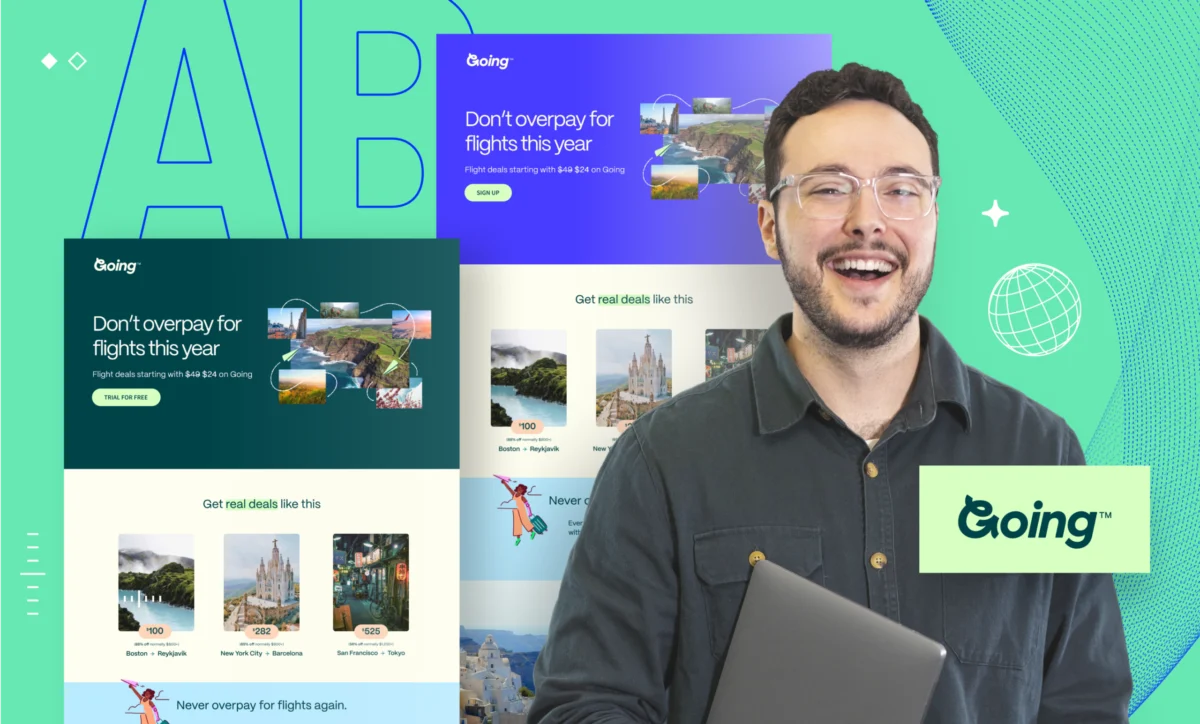
Conversion marketing has emerged as the critical focal point for digital businesses seeking to maintain profitability in an era of skyrocketing customer acquisition costs and increasingly fragmented online attention. As traditional methods of driving traffic—such as paid search and social media advertising—become prohibitively expensive for many small-to-medium enterprises (SMEs) and even established SaaS firms, the industry is witnessing a fundamental pivot from "volume-based" to "value-based" digital strategies. This evolution marks a transition where the priority is no longer simply bringing more eyes to a website, but ensuring that the existing visitors are guided toward meaningful, revenue-generating actions through a blend of psychology, data science, and user experience design.
The Economic Context: Why Conversion Marketing Is Reshaping Digital Budgets
The shift toward conversion-centric strategies is largely driven by the deteriorating efficiency of the traditional digital advertising duopoly. According to industry benchmarks, the cost-per-click (CPC) across major platforms like Google Ads and Meta has seen a year-over-year increase of 15% to 20% in various sectors. Simultaneously, privacy-centric updates, such as Apple’s App Tracking Transparency (ATT) framework, have made it more difficult for marketers to target high-intent audiences with surgical precision.
In this environment, "leaky funnels"—websites that attract high volumes of traffic but fail to convert them—represent a significant financial liability. Business analysts note that while companies traditionally allocated 90% of their digital budget to traffic acquisition and only 10% to conversion optimization, those ratios are beginning to balance out. The mathematical reality is compelling: a company with 50,000 monthly visitors and a 1% conversion rate generates 500 leads. By doubling that conversion rate to 2% through strategic optimization, the company achieves the same result as doubling its traffic, often at a fraction of the cost required for additional ad spend.
Defining the Conversion Marketing Framework
Conversion marketing is defined as the strategic practice of optimizing every touchpoint of the digital journey to increase the percentage of visitors who complete a specific, desired action. This practice is distinct from general brand awareness or SEO-focused content marketing, as it is strictly performance-oriented.
At its core, conversion marketing relies on Conversion Rate Optimization (CRO). This is the systematic process of testing and refining website elements—such as headlines, call-to-action (CTA) buttons, form lengths, and page layouts—based on user behavior data. The goal is to reduce "friction," the psychological or technical hurdles that prevent a user from completing a task, while simultaneously increasing "motivation" through compelling value propositions.
Macro vs. Micro Conversions
Strategic conversion marketing differentiates between two types of goals:
- Macro Conversions: The primary bottom-line objectives, such as a completed e-commerce purchase, a signed service contract, or a software subscription.
- Micro Conversions: Smaller incremental steps that indicate interest and move a user closer to the macro goal. These include signing up for a newsletter, downloading a whitepaper, or adding an item to a shopping cart.
By tracking both, marketers can identify exactly where in the "customer journey" the drop-off occurs, allowing for more surgical interventions.
The Chronology of Conversion Optimization Technology
The methodologies used to convert visitors have evolved significantly over the last three decades. Understanding this timeline provides context for the sophisticated AI-driven tools used by modern marketing teams today.
- The Early Web (1990s – Early 2000s): Marketing was largely static. Success was measured in "hits" and "page views." Conversion was an afterthought, and websites functioned primarily as digital brochures.
- The Analytical Era (2005 – 2012): The launch and widespread adoption of tools like Google Analytics allowed marketers to see for the first time where users were coming from and where they were leaving. This birthed the first generation of CRO, which was often based on "gut feelings" and simple A/B tests of button colors.
- The User Experience (UX) Revolution (2013 – 2019): Marketers began integrating heatmaps (Hotjar, Lucky Orange) and session recordings to understand the "why" behind the data. Landing page builders like Unbounce democratized the ability to create dedicated, high-converting pages without needing a developer.
- The AI and Personalization Era (2020 – Present): Modern conversion marketing now utilizes machine learning to provide dynamic experiences. AI-powered tools can now route traffic to different versions of a page based on a visitor’s past behavior, geographic location, or device type, achieving levels of personalization previously reserved for enterprise giants like Amazon and Netflix.
The Psychology of the Click: What Drives Consumer Action
Professional conversion marketing is as much about behavioral psychology as it is about data. Analysts have identified several "conversion triggers" that consistently influence user behavior across different industries.
The Value Proposition
A compelling value proposition is the cornerstone of any conversion strategy. It must answer the visitor’s internal question: "Why should I choose you over the competition?" Effective value propositions are clear, concise, and focused on benefits rather than features. Research suggests that visitors decide within the first five to eight seconds of landing on a page whether the offering is relevant to their needs. If the value proposition is muddled or too clever, the bounce rate typically spikes.
Trust Signals and Social Proof
In an era of digital skepticism, trust is a prerequisite for conversion. Social proof—the psychological phenomenon where people mirror the actions of others in an attempt to reflect correct behavior—is a powerful tool. This includes:
- Customer Testimonials: Specific, results-oriented quotes are more effective than generic praise.
- Trust Badges: Secure payment icons, industry certifications, or "as seen on" media logos.
- User Reviews: Aggregated ratings from third-party platforms like G2, Capterra, or Trustpilot.
- Case Studies: Detailed accounts of how a product or service solved a specific problem for a real client.
Urgency and Incentives
Human beings are naturally loss-averse. Marketers leverage this by creating legitimate urgency. Limited-time offers, countdown timers for shipping, or "low stock" alerts serve as catalysts for action. However, industry experts warn that "false urgency"—perpetual sales that never actually end—can permanently damage brand credibility.
High-Impact Tactics for Modern Marketers
To turn theoretical insights into actual revenue, marketing teams employ several high-impact tactics. These methods are designed to isolate variables and identify the most effective ways to communicate with an audience.
Dedicated Landing Pages
Unlike a general homepage, which serves as a multi-purpose hub, a landing page is designed for a single objective. By removing navigation bars and other "exit points," marketers can keep the user focused on the conversion goal. Data shows that campaigns using dedicated landing pages typically see a 25% higher conversion rate than those that send traffic to a standard homepage.
A/B and Multivariate Testing
The scientific method is central to conversion marketing. In an A/B test, two versions of a page (A and B) are shown to similar visitors at the same time. The version that produces more conversions is declared the winner. Multivariate testing takes this further by testing multiple elements—such as a headline, an image, and a CTA—simultaneously to see which combination performs best.

Smart Popups and Sticky Bars
While intrusive popups are often maligned, "smart" overlays triggered by specific behaviors—such as "exit-intent" (when a user’s mouse moves toward the close button)—have proven to be highly effective. A well-timed offer, such as a discount code or a free resource, can capture 5% to 10% of visitors who were otherwise prepared to leave the site forever.
Data Integration and the Feedback Loop
Successful conversion marketing requires a robust feedback loop between different departments. Support teams and sales representatives are often the best sources of "qualitative" data. They hear the specific objections and questions that prevent a prospect from buying. When these insights are fed back to the marketing team, they can be addressed directly in the website copy, preemptively neutralizing concerns before they lead to a bounce.
Furthermore, the integration of tools like Google Analytics with heatmapping software provides a "quantitative" view of the user journey. If a heatmap reveals that 80% of users never scroll past the "fold" (the part of the page visible without scrolling), it indicates that the most important information must be moved higher up on the page.
Broader Impact and Future Implications
The rise of conversion marketing has broader implications for the digital economy. As companies become more efficient at converting traffic, the "winner-takes-all" dynamic of digital platforms may intensify. Businesses that master CRO can afford to pay more for traffic because their "Return on Ad Spend" (ROAS) is higher, effectively outbidding competitors who have not optimized their conversion paths.
Looking ahead, the next frontier of conversion marketing lies in predictive analytics. Instead of reacting to how users have behaved, AI models will begin to predict how a specific user will behave in real-time, adjusting the website’s layout, pricing, and messaging instantaneously to maximize the probability of a conversion.
In conclusion, conversion marketing is no longer a luxury or a niche experiment for high-growth tech startups. It is a fundamental business necessity. By focusing on the quality of engagement rather than the sheer quantity of traffic, companies can build more resilient, profitable, and user-friendly digital presences. In a landscape where every click costs money, the ability to turn that click into a customer is the ultimate competitive advantage.








