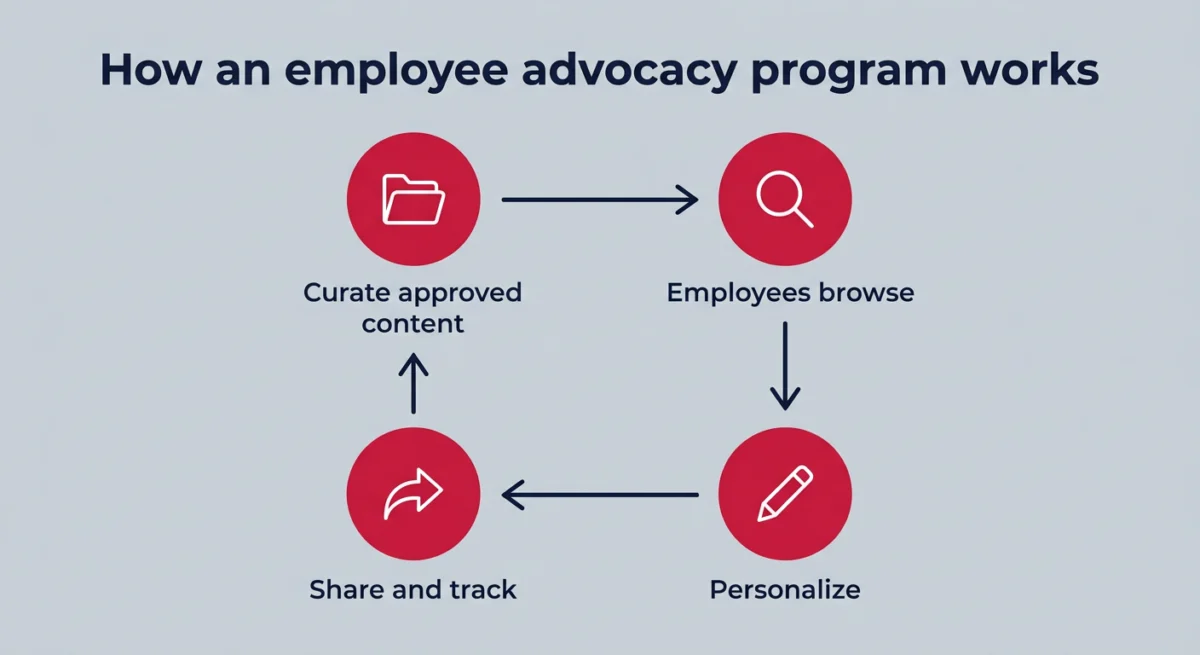
In an increasingly complex digital ecosystem, enterprises navigating the expansive realm of social media in 2026 face an unprecedented need for robust compliance strategies. What once began as a simple marketing channel has evolved into a critical nexus for customer service, public relations, sales, and employee engagement, each facet carrying distinct legal and reputational risks. Social media compliance tools have emerged as indispensable software platforms, designed to ensure organizations operate strictly within legal parameters, company guidelines, and platform-specific rules, safeguarding against financial penalties, legal repercussions, and severe brand damage.
The Rise of Regulatory Scrutiny in the Digital Age
The journey of social media from nascent communication platforms to indispensable business utilities has been marked by rapid innovation and, inevitably, escalating regulatory scrutiny. Early corporate adoption often prioritized reach and engagement over governance, a "wild west" era that gradually gave way to a patchwork of laws and guidelines. As social platforms became integral to financial transactions, healthcare communications, and government outreach, regulators worldwide recognized the imperative to extend existing compliance frameworks to this digital frontier. This shift has culminated in 2026 with a sophisticated landscape where proactive risk management is not merely advisable but mandatory. A recent analysis by the Digital Trust Institute indicates that over 60% of enterprise-level data breaches and privacy violations in the past two years had a social media component, underscoring the platform’s pervasive vulnerability and the growing regulatory spotlight.

Understanding Practical Social Media Compliance
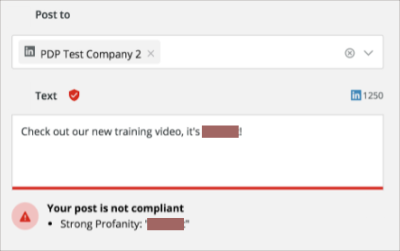
At its core, a social media compliance tool is a specialized software platform engineered to minimize risk when publishing digital content. These platforms go beyond basic scheduling and analytics, offering features critical for maintaining legal and ethical standards. In practice, this could mean ensuring that every piece of content undergoes a multi-stage approval workflow involving marketing, legal, and compliance teams before publication. It involves automated screening for specific keywords, phrases, or imagery that might violate industry regulations or internal policies. Crucially, it also encompasses the tamper-proof archiving of all social media communications – posts, comments, direct messages, and even edits – to provide an indisputable audit trail for regulatory inquiries or litigation.
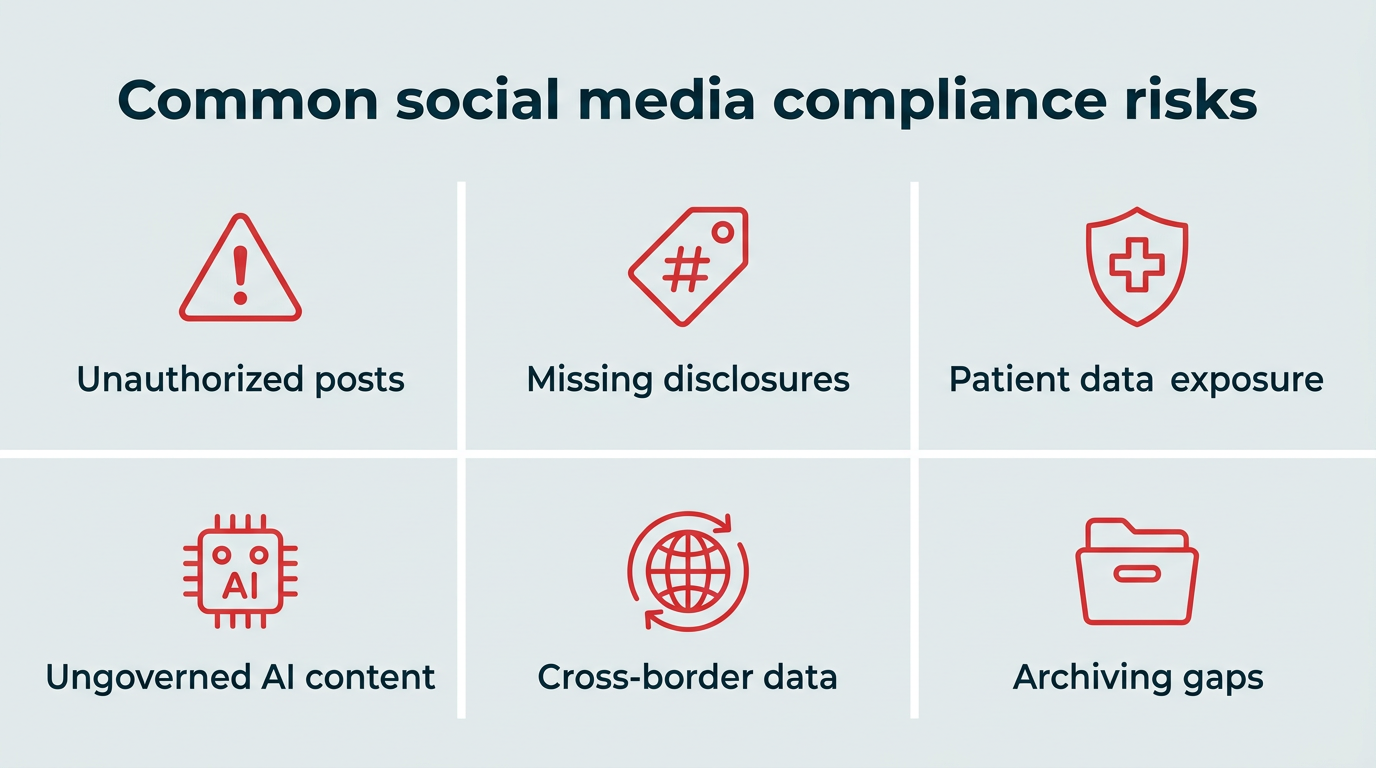
Consider a real-world scenario from the healthcare sector, where protecting patient dignity and confidentiality is non-negotiable under laws like HIPAA. In a widely reported incident, a former employee at a Santa Barbara clinic posted a video mocking patients, which quickly went viral. Sutter Health, the parent organization, promptly launched an investigation, terminated the employees involved, and reinforced its stringent social media policies. While the organization faced significant public backlash, it avoided substantial fines, largely attributed to its clear, enforceable social media compliance policy and the swift, documented corrective actions taken. This incident underscores that even well-intentioned posts, or those by individual employees, can quickly escalate into a crisis without robust compliance controls in place.
Beyond Basic Management: The Compliance Distinction

It is vital for enterprises to differentiate between generic social media management platforms and specialized compliance tools. While many standard social media tools offer features like content scheduling, basic analytics, and community engagement, they typically lack the depth of risk management and mitigation functionalities inherent in compliance-focused solutions. As Jason Sanders, Senior Digital Marketing Lead at UBC, notes, "I prefer tools that do their primary job well over do-it-all suites. Social media management tools need to post our content perfectly, allow us to personally engage with our community humanely at scale, seamlessly manage review and approval workflows, and generate useful reports." Compliance tools, however, are specifically engineered to provide these "review and approval workflows" with a legal and regulatory lens.
Here’s a snapshot of how the two categories compare:
- Content Scheduling and Publishing: Both offer this, but compliance tools integrate pre-publish review gates.
- Approval Workflows: Generic tools have limited or manual approvals; compliance tools feature built-in, multi-tier governance.
- Automated Risk/Policy Violation Detection: Exclusively offered by compliance tools (keyword flagging, lexicon-based screening).
- Tamper-proof Archiving and Audit Trails: Exclusively offered by compliance tools (regulatory-grade recordkeeping).
- Role-Based Permissions and Access Controls: Basic in generic tools; granular and policy-enforced in compliance tools.
- Real-time Takedown and Remediation: A critical feature of compliance tools for crisis management.
The return on investment (ROI) for compliance tools extends far beyond simply avoiding fines. Gartner predicts that enterprises will spend over $30 billion combating misinformation and disinformation by 2028, highlighting the broader reputational and operational costs of non-compliance. As Sanders further elaborates, while "emails from legal" might seem like a humorous ROI metric, "The true measurement is negative feedback or engagement from our audiences. Fines are one of the consequences, but when you do it right, your leading indicator should be ensuring your audience receives factual, accurate information so they can make informed decisions." Protecting brand reputation and maintaining audience trust are invaluable assets that compliance tools directly safeguard.
Navigating the Regulatory Maze: Key Frameworks
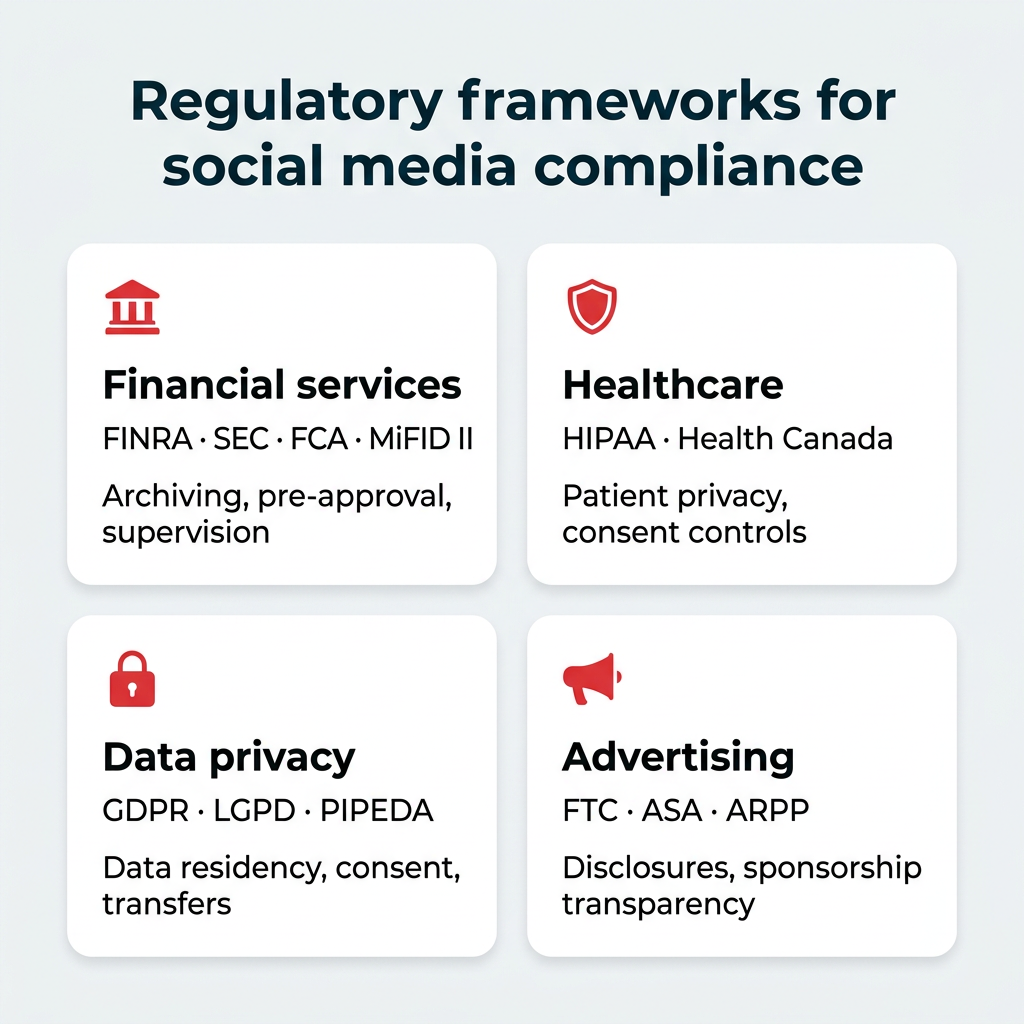
The regulatory landscape for social media is highly fragmented, varying significantly by industry and geographic region. Enterprise teams must understand the specific frameworks that apply to their operations to select the appropriate compliance solution.
-
Financial Services (FINRA, SEC, FCA, MiFID II): Financial firms operate under some of the most stringent social media compliance requirements globally. In a recent enforcement action, a prominent online brokerage agreed to pay a $350,000 FINRA fine for lapses in monitoring social media influencers, an action that followed FINRA’s targeted influencer sweep, which has since resulted in five formal enforcement actions. In the U.S., FINRA and the SEC mandate that firms archive all social media communications, pre-approve certain types of posts, and rigorously supervise employee activity on social platforms. Similarly, in the UK and EU, the Financial Conduct Authority (FCA) and MiFID II impose comparable obligations around recordkeeping, fair communication, and investor protection. Key requirements include transparent disclosure of financial promotions, supervision of all client-facing communications (including DMs), and the retention of records for several years, often up to seven.
-
Healthcare (HIPAA, Health Canada): Healthcare organizations bear a profound responsibility to protect patient privacy on social media. In the U.S., HIPAA violations for sharing protected health information (PHI) without explicit patient consent can result in staggering fines ranging from $145 to over $2.19 million per violation category, per year, as outlined by the HHS HIPAA penalty schedule (45 CFR §160.404), with inflation-adjusted amounts set out at 45 CFR §102.3. Even seemingly innocuous posts, such as celebrating a patient’s recovery without documented consent, can constitute a severe privacy breach. Compliance tools featuring strict permission controls, content screening for PHI, and robust audit trails are essential to prevent these costly and trust-eroding violations. Health Canada also imposes similar stringent guidelines for pharmaceutical and medical device companies regarding promotional content and patient testimonials.
-
Data Privacy and Advertising (GDPR, FTC, LGPD, PIPEDA): Data privacy regulations impact virtually every enterprise that collects or processes personal data through social media channels. The General Data Protection Regulation (GDPR) in the EU, Brazil’s Lei Geral de Proteção de Dados (LGPD), and Canada’s Personal Information Protection and Electronic Documents Act (PIPEDA) all impose rigorous requirements concerning data residency, explicit consent for data processing, and cross-border data transfers. On the advertising front, the U.S. Federal Trade Commission (FTC) mandates clear disclosure of sponsored content, influencer partnerships, and any material connections between brands and endorsers. Non-compliance is not theoretical; cumulative GDPR fines have now exceeded €7.1 billion, with social platforms themselves among the most heavily penalized organizations, demonstrating active enforcement and significant penalties. Compliance tools equipped with data residency options, customizable disclosure templates, and automated flagging capabilities are indispensable for navigating these complex and overlapping requirements across diverse regions.

Crucial Features for Effective Compliance
Choosing the right compliance software hinges on identifying features that align directly with an organization’s specific risks and regulatory obligations. As Jason Sanders emphasizes, a "simple design and workflow" is paramount, as teams often comprise individuals with varying levels of social media proficiency. The tool must convey the importance of compliance while ensuring the process is easily understood and followed. Sanders also looks for seamless integration with existing tools and comprehensive analytics to monitor compliance performance.
Key features to evaluate include:
- Permissions and Role Management: These controls prevent unauthorized publishing, limit access to sensitive accounts, and ensure distributed teams adhere to governance rules. Granular permissions are critical for large organizations.
- Approval Workflows and Publishing Controls: Multi-tier approval processes ensure legal, brand, and compliance reviews occur before any content goes live. This is indispensable for regulated industries and high-stakes executive communications.
- Archiving and Record-Keeping for Audits: Creating tamper-proof logs of posts, edits, approvals, and messages is fundamental for meeting regulatory requirements and supporting internal or external audits. Records must be easily searchable and exportable in an admissible format.
- Monitoring and Flagging of Regulated Content: Automated systems that detect risky language, missing disclosures, or policy violations allow teams to intervene proactively before issues escalate. This includes monitoring comments and DMs.
- Real-time Takedown and Remediation Controls: The ability for compliance teams to quickly remove or revert non-compliant posts and comments is crucial during audits, crisis moments, or immediate regulatory incidents.
- Integration with CRM, Legal, or Compliance Systems: Connecting social activity to customer data, legal workflows, and compliance review systems enables faster decisions, centralized oversight, and a holistic view of digital interactions.
- Scalability for Multi-Region and Multi-Language Teams: For global enterprises, the tool must support operations across different regions, adhere to localized regulations, and manage content governance without excessive manual overhead.
- Vendor Support and Regulatory Updates: The compliance landscape is dynamic. Robust vendor support and a commitment to regularly update the tool in response to evolving policies, platforms, and privacy laws are vital to avoid falling out of compliance.
- Reporting, Dashboards, and KPIs: Leaders need clear visibility into compliance performance, approval timelines, risk trends, and gaps in governance to make informed strategic decisions.
- Pre-approved Content Libraries: Providing teams with a source of compliant, legally reviewed content reduces bottlenecks, minimizes rewriting time, and accelerates content review cycles, especially for field-based teams.
- Customizable Lexicons and Compliance Rulesets: This allows compliance teams to tailor risk detection to specific industry regulations such as FINRA, HIPAA, FCA, MFDA, SEC, FTC, or Health Canada.
- Data Residency and Geo-Specific Storage Options: Essential for complying with GDPR, LGPD, PIPEDA, and other regional data-sovereignty laws by controlling where data is stored.
- Incident Reporting: A structured way for compliance teams to log violations, track remediation efforts, and produce evidence of corrective action for regulators or internal audit.
The AI Revolution in Compliance: New Opportunities and Challenges
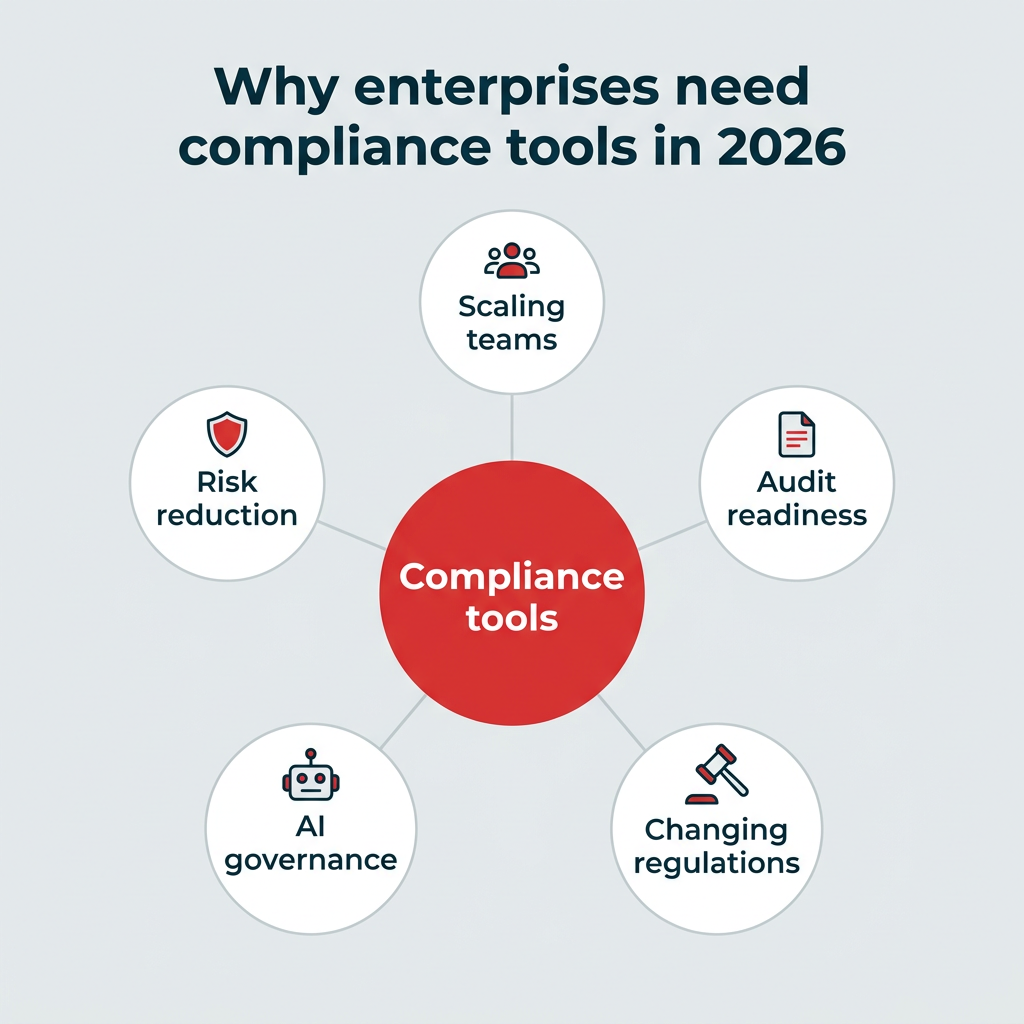
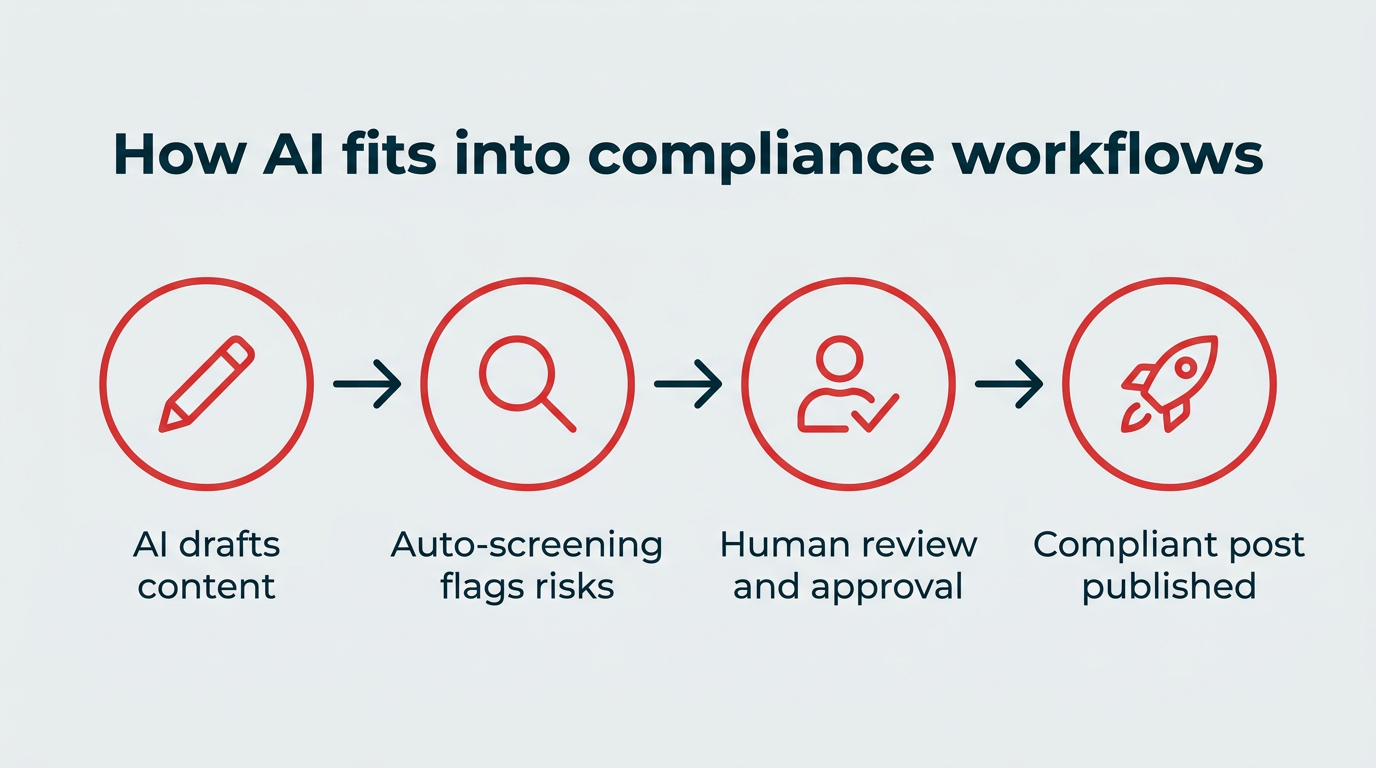
Artificial intelligence (AI) is rapidly redefining the landscape of social media compliance, simultaneously offering powerful solutions for risk mitigation and introducing new governance complexities. In 2026, AI’s role in compliance workflows is twofold: enhancing detection and necessitating new forms of governance for AI-generated content.
On the detection front, AI-powered tools are revolutionizing how enterprises manage risk. Instead of manually reviewing every post, AI can automate content screening with unprecedented speed and accuracy, flagging policy violations, detecting risky language patterns, and identifying missing disclosures before content goes live. AI’s ability to process vast volumes of data also allows it to surface potential risks in places humans rarely check, such as comment threads, user-generated content, and direct messages, enabling proactive intervention at scale.
Conversely, the proliferation of generative AI for drafting social content presents a new frontier for governance. As marketing and communications teams increasingly leverage AI to create initial drafts or even final pieces of social content, compliance tools must ensure that these AI-generated posts still undergo proper review and meet all regulatory standards. This includes verifying the inclusion of required disclosures, ensuring factual accuracy, and aligning with brand guidelines. FINRA’s 2026 Annual Regulatory Oversight Report explicitly mandates that firms govern GenAI outputs in customer-facing communications, highlighting the immediate need for oversight. An ungoverned AI model could inadvertently invent performance figures, omit critical disclaimers, or produce advice that would never pass legal review, creating significant exposure.
When evaluating AI capabilities in a compliance context, enterprises should look for:
- AI-assisted content screening: For real-time policy violation detection.
- AI-powered risk scoring: To prioritize content for human review.
- Audit trails for AI outputs: Documenting what was AI-generated, who reviewed it, and what changes were made.
- Integration with existing compliance workflows: Ensuring AI augments, rather than bypasses, established governance.
- Ethical AI considerations: Tools that address bias and ensure transparency in AI’s decision-making.
For platforms like Hootsuite Social OS, AI capabilities are integrated as connected systems. Wisdom supports AI-assisted content creation, Vigil applies the governance layer to prevent non-compliant publishing, Perch handles publishing and scheduling, and Lumen surfaces listening and insights signals critical for compliance teams. For organizations with heavier regulatory burdens, integrations like Proofpoint add specialized pre-publish compliance review. The overarching principle is to seek AI capabilities that augment your compliance process, ensuring human oversight and accountability remain paramount.
Leading Social Media Compliance Solutions for 2026
The optimal social media compliance software for an organization depends on its specific needs: publishing, screening, archiving, supervision, or a combination thereof. Below are nine prominent options, ranging from comprehensive social media management platforms with robust compliance features to specialized archiving and supervision tools.
-
Hootsuite Social OS: Best for enterprise and mid-market teams requiring integrated compliance controls alongside full social media management. It scales from single-team setups to multi-brand, multi-region operations with complex approval chains, unifying publishing, governance, and listening. Key compliance features include multi-tier approval workflows, role-based permissions, automated content screening via integrations, and comprehensive audit trails. Hootsuite’s ecosystem, including Wisdom for AI content drafting, Lumen for risk intelligence, and Parliament for governed employee advocacy, offers a holistic approach. Its extensive integration options, such as Brolly for data protection or Proofpoint for enhanced pre-publish review, make it adaptable.
- Pros: Comprehensive social media management, strong approval workflows, scalable for enterprises, robust integrations, AI-powered assistance.
- Cons: Advanced compliance features often require integrations, custom pricing for enterprise can vary.
-
Proofpoint: Ideal for regulated industries like financial services or healthcare that need specialized archiving, record-keeping, and advanced risk mitigation. Proofpoint integrates directly into workflows for Hootsuite Enterprise users, offering automated classification of content for violations, and the ability to remove or rollback problematic content both pre- and post-publish.
- Pros: Deep expertise in regulated industries, automated content classification, proactive risk detection, integration with Hootsuite.
- Cons: Primarily focused on compliance, less on broader social media management.
-
Smarsh: A robust choice for financial services firms needing to capture, archive, and supervise communications across a wide array of channels, including social media, email, and messaging platforms. Smarsh offers comprehensive capture of social posts, comments, and DMs, with supervision and review queues tailored for FINRA and SEC obligations, alongside AI-assisted surveillance to flag risky language.
- Pros: Comprehensive archiving across many channels, strong regulatory focus, AI-assisted surveillance, built for financial services.
- Cons: Can be complex to set up, custom pricing.
-
Global Relay: Tailored for enterprise-grade archiving and supervision, particularly for banks, broker-dealers, asset managers, and other heavily regulated organizations. It provides long-term, tamper-evident archiving of social and electronic communications, with powerful search and export tools designed for regulatory requests and litigation hold.
- Pros: Industry-leading archiving, litigation support, robust supervision, strong audit capabilities.
- Cons: Less focus on day-to-day social publishing, advanced skill level required.
-
Hearsay Systems: Best suited for advisor and agent networks in banking, insurance, and wealth management, where numerous licensed individuals publish on their own local channels. Hearsay provides pre-approved content libraries that field representatives can safely publish from, alongside supervision and review workflows for individual advisor accounts, and activity logging tied to individual representatives.

- Pros: Designed for distributed teams, strong compliance for financial advisors, pre-approved content.
- Cons: Niche focus, may not be suitable for broader enterprise needs.
-
Red Oak: Specifically designed for financial firms in regulated sectors, assisting broker-dealers and advisors in complying with FINRA and SEC. Its dual-console setup allows marketers and administrators to operate separately, with highly configurable lexicons and workflows tailored to financial regulations.
- Pros: Deep FINRA/SEC compliance, customizable workflows, dual-console setup.
- Cons: Niche focus, configuration requires expertise.
-
MirrorWeb: Excellent for organizations requiring archiving and audit trails of social conversations across multiple channels, making it suitable for government, financial, tech, healthcare, insurance, and legal industries. It offers unified capture of major social media platforms, providing a full-context archive and compliance search capabilities.
- Pros: Comprehensive multi-platform archiving, full-context audit trails, strong search.
- Cons: Setup can be intricate, primarily an archiving tool.
-
Pagefreezer: An effective solution for public sector agencies, legal teams, and regulated organizations that need website and social media archiving for FOIA (Freedom of Information Act), open records requests, and litigation hold. It automates the capture of social posts, comments, and edits with timestamps, providing evidentiary-quality exports.
- Pros: Strong public sector focus, website archiving, evidentiary exports.
- Cons: Less emphasis on proactive content screening.
-
Sprinklr: Best for large enterprises needing full global scale, often Fortune 500 companies with dedicated teams for social operations, governance, analytics, and compliance. Sprinklr offers monitoring across a wide range of social networks and advanced AI for trend prediction and enterprise compliance certifications like SOC 2.
- Pros: Comprehensive platform, massive scalability, advanced AI, broad network coverage.
- Cons: High cost, significant implementation complexity, requires advanced skill level.
Crafting an Ironclad Compliance Workflow: Seven Steps
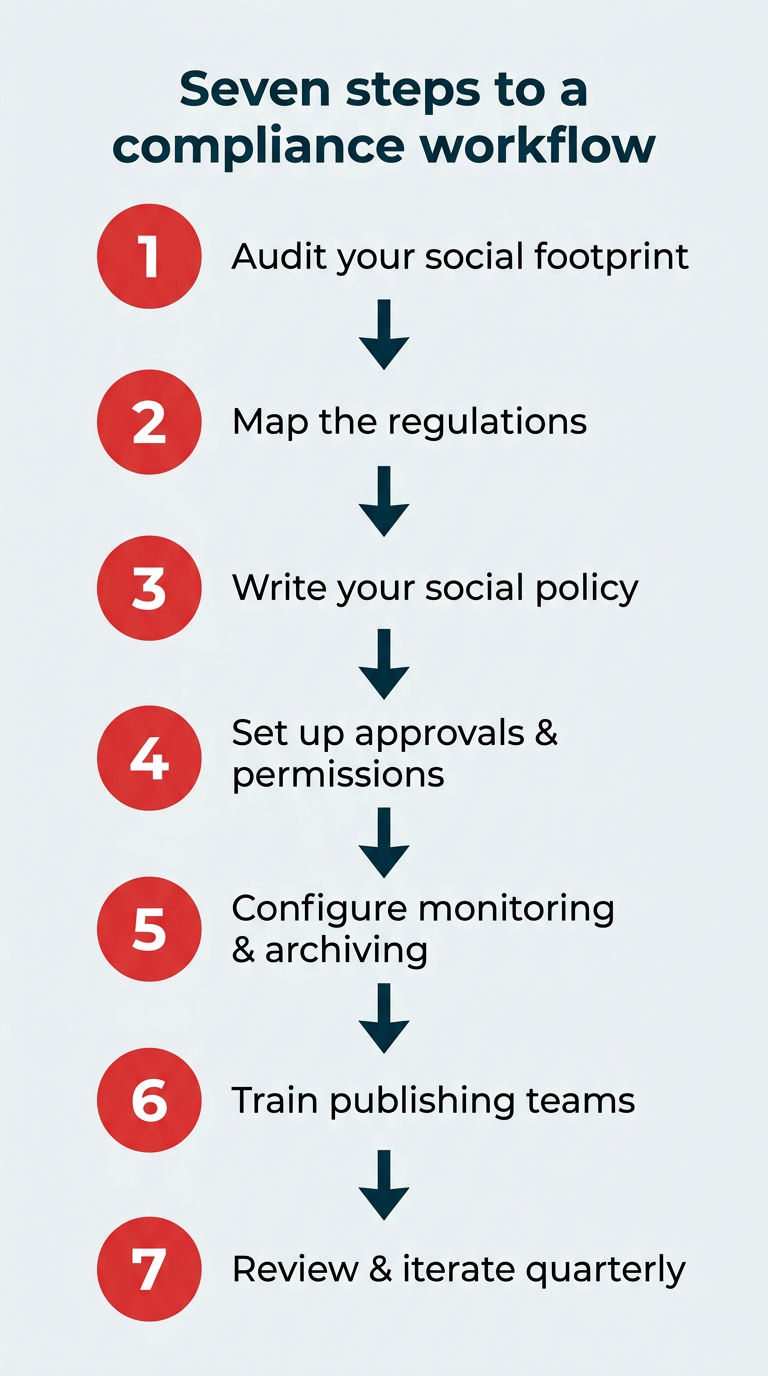
Acquiring a compliance tool is only the initial step; operationalizing compliance requires a repeatable, integrated process. Here are seven critical steps for building a robust social media compliance workflow:
-
Audit Your Current Social Footprint: Begin by creating a comprehensive inventory of every social media account associated with your brand. This includes official corporate pages, regional accounts, product-specific profiles, dormant accounts, and even those operated by individual employees or franchisees that might inadvertently represent the brand. For each account, document who has access, their permission levels, and whether that access remains appropriate. You cannot effectively govern what you haven’t identified.
-
Map Applicable Regulations: Collaborate closely with your legal and compliance departments to confirm all relevant regulatory frameworks governing your social media activity by industry and geographic region. A U.S. broker-dealer with EU customers, for instance, must concurrently adhere to FINRA, SEC, and GDPR requirements, necessitating a multi-layered approach. Document specific retention periods, disclosure rules, and supervision obligations for each applicable regulation.

-
Write or Refresh Your Social Media Policy: Develop a clear, concise, and actionable social media policy. This document should explicitly state what employees can and cannot post, what types of content require pre-approval, and the consequences of policy breaches. A vague policy provides no clear guidelines for teams, making adherence difficult. Regularly update this policy to reflect new platforms, features, and regulatory changes.
-
Set Up Approval Workflows and Permissions: Configure role-based permissions within your compliance tool to ensure that only authorized personnel can publish to sensitive accounts. Design multi-tier approval chains that automatically route content to legal, compliance, or senior management for review where required. It’s crucial to match the number of review tiers to actual risk; over-engineering approvals can create unnecessary bottlenecks and incentivize teams to circumvent the system.
-
Configure Monitoring, Flagging, and Archiving: Load your industry-specific lexicon into your content screening tool to automatically flag risky terms, missing disclosures, or policy violations before content goes live. Implement automated capture of all social media interactions—posts, comments, edits, and direct messages—at the retention periods mandated by your regulators. Verify that the archive is tamper-evident, easily searchable, and capable of producing audit-ready reports, not merely a collection of exports.
-
Train the Teams Who Publish: Comprehensive training is paramount. Everyone with publishing access, from marketing specialists to customer service representatives, must thoroughly understand the social media policy, the operational workflow within the compliance tool, and the underlying reasoning for both. As Jason Sanders highlighted, if colleagues across different skill levels cannot easily follow the process, errors are inevitable. Conduct regular refresher training sessions whenever policies or platforms evolve.
-
Review and Iterate on a Set Cadence: Compliance is an ongoing operational responsibility, not a one-time project. Schedule quarterly reviews of flagged content, identified approval bottlenecks, incident reports, and any recent regulatory changes. Adjust your lexicons, permissions, and workflows based on performance data and evolving requirements. This continuous improvement loop ensures your compliance framework remains robust and effective against emerging threats.
The Broader Implications of Compliance
The landscape of social media compliance is dynamic, continually shaped by technological advancements and evolving regulatory demands. For enterprises, navigating this complexity requires a strategic combination of robust tools, clear policies, and continuous training. Beyond merely avoiding punitive fines, effective social media compliance builds and maintains trust with audiences, protects hard-earned brand reputation, and fosters a culture of accountability and ethical communication across the organization. In 2026, social media compliance is not just a regulatory burden; it is a strategic imperative for sustainable digital success and a cornerstone of corporate integrity in the modern era.