

The landscape of digital communication has undergone a profound transformation, with SMS marketing emerging as a high-impact channel that consistently delivers impressive returns on investment. Unlike the often-cluttered email inbox, SMS messages offer brevity, immediacy, and a direct line of communication to the consumer, making them ideal for conveying critical information such as order confirmations, shipping updates, loyalty rewards, and time-sensitive promotions. This directness also fosters a more personal connection, allowing brands to deliver the right message to the right customer at the precise moment it matters most within their purchasing journey.
The Strategic Imperative: Why SMS Dominates in 2026
The prominence of SMS in 2026 is underscored by compelling data. Automated SMS campaigns, for instance, generate an average of $0.74 per send, contributing to an overall marketing ROI of an impressive $79 for every dollar spent. This efficacy is further amplified when considering the cost-effectiveness, with international text message campaigns now starting at rates as low as $0.007 per SMS on leading platforms. These figures are a stark reminder of the channel’s power, especially when integrated into broader marketing strategies.
Historically, SMS was often viewed as a supplementary channel, primarily for urgent alerts. However, the modern e-commerce ecosystem demands more. The shift towards organizing campaigns by customer lifecycle stage reflects a sophisticated understanding of consumer behavior. This lifecycle-based approach enables brands to systematically guide subscribers from initial curiosity through conversion, post-purchase engagement, and ultimately, long-term retention. It’s a departure from generic, flat lists of message types, embracing instead a dynamic, responsive communication model.
Navigating the Customer Journey: Lifecycle-Based SMS Strategies
Successful brands in 2026 are meticulously structuring their SMS marketing strategies around the customer lifecycle. This approach ensures that every text message is highly relevant to where a shopper is in their buyer’s journey, significantly enhancing engagement and conversion potential. The primary lifecycle stages – pre-purchase, conversion, post-purchase, and retention – each present unique opportunities for targeted SMS interventions.
- Pre-purchase (Acquisition): Focuses on capturing attention and building initial interest.
- Conversion: Aims to finalize sales and overcome purchasing hurdles.
- Post-purchase (Engagement): Nurtures loyalty and enhances the customer experience after a sale.
- Retention (Re-engagement): Works to prevent churn and encourage repeat business.
Triggers for these SMS use cases are behavior-driven, such as a customer signing up via a website popup (pre-purchase), leaving items in a cart for an hour (conversion), or a package being dispatched (post-purchase). This granular targeting is central to maximizing the impact of each message.
The Evolution of Messaging: Embracing Rich Communication Services (RCS)
A significant development shaping pre-purchase engagement in 2026 is the widespread adoption of Rich Communication Services (RCS). Moving beyond standard text-only promotions, RCS transforms SMS into an interactive, multimedia experience. Industry data indicates that RCS messaging achieves three to seven times higher click-through rates than traditional SMS. This is attributed to features like verified brand profiles, rich-media carousels, and in-thread quick-reply action buttons, all directly accessible within the native messaging inbox. Instead of minimalist hyperlinks, RCS allows for swipeable product catalogs with instant "Shop Now" buttons, providing a seamless and visually engaging path to purchase.
Pre-Purchase: Building Awareness and Capturing Intent
This initial phase is critical for establishing brand presence and converting casual browsers into engaged prospects.
-
Welcome Messages: The first interaction is paramount. Sent within minutes of a subscriber opting in, these messages introduce the brand, offer immediate value (e.g., a discount), and crucially, clearly outline opt-in and opt-out options in compliance with local regulations. Personalization, such as addressing the recipient by name, has been shown to make 65% of users more receptive to engaging with messages.
- Example Intent: "Hi [recipient name]! Welcome to [brand name]! Reply YES to confirm your subscription & get X% off on [product]. Msg & data rates apply. Freq varies. Text STOP to opt out, HELP for help. Terms & Privacy."
-
Flash Sales and Limited-Time Offers: Urgency-driven SMS campaigns consistently outperform email for time-sensitive promotions due to the near-instantaneous read rates of text messages. While email inboxes may be saturated, SMS offers a more targeted and anticipated communication channel, leading to higher open rates and immediate action. Adding countdown elements or specifying a short validity period intensifies psychological urgency.
- Example Intent: "[Brand name] FLASH SALE! ⏰ Next X hours only. Take X% off all duffels with code FLASHX at checkout: [Link]. Reply STOP to opt out."
-
Product Launch Announcements: Building anticipation for new product drops is highly effective through a coordinated two-message sequence: a teaser text 48 hours prior, followed by an immediate launch announcement with a direct link. This strategy rewards subscribers with real-time, exclusive access.
- Example Intent: "The wait is over. The [brand and product name] is officially live! Quantities are strictly limited. Claim yours now: [link]. Reply STOP to opt out."
-
Back-in-Stock Alerts: This represents an incredibly high-intent use case. Subscribers have explicitly requested notification for a specific product, indicating a strong intent to purchase. Seamless e-commerce platform integrations are vital here to ensure instant, automated alerts as soon as inventory updates.
- Example Intent: "Good news! The [brand and product name] is back in stock. We held one for you, but inventory is moving fast. Grab it here: [link]. Reply STOP to opt out."
-
Browse Abandonment Nudges: These messages target subscribers who viewed a product page but didn’t add it to their cart. Distinct from cart recovery, the goal is to offer additional, relevant information without overt pressure to buy, highlighting product value or unique selling points.
- Example Intent: "Still thinking about the [brand and product name]? It’s one of our top-rated organizers this season. Check out reviews and specs here: [link]. Reply STOP to opt out."
Conversion Optimization: Guiding Shoppers to Checkout
This stage focuses on addressing hesitations and providing the final push for customers who have shown clear buying signals.
-
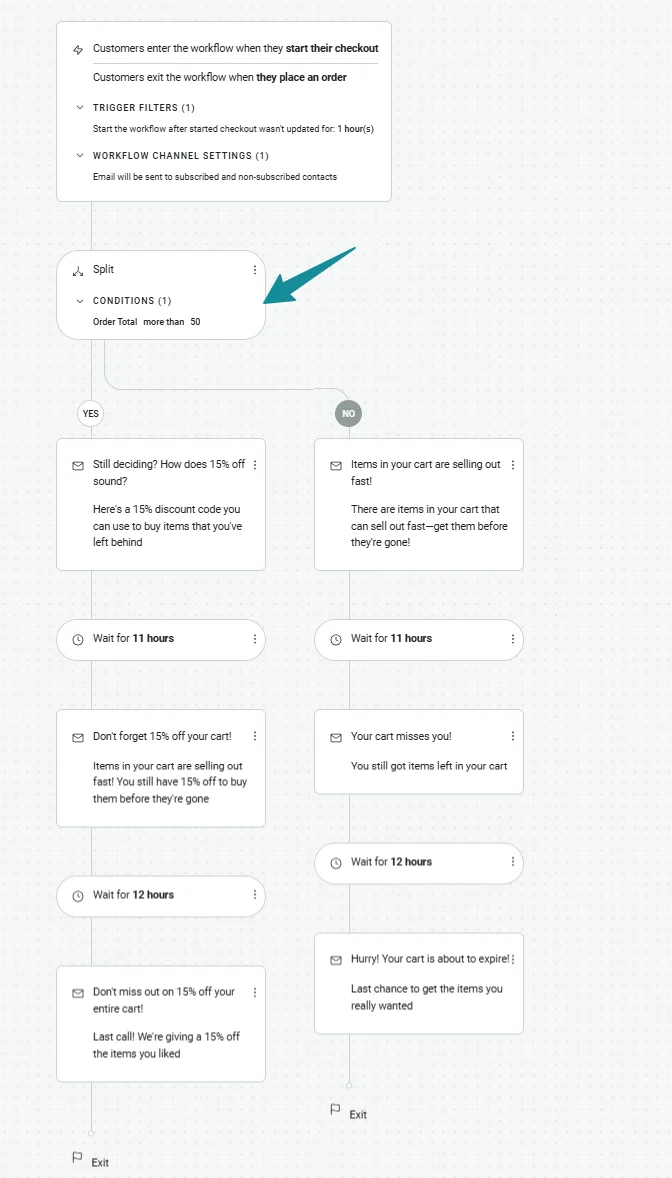
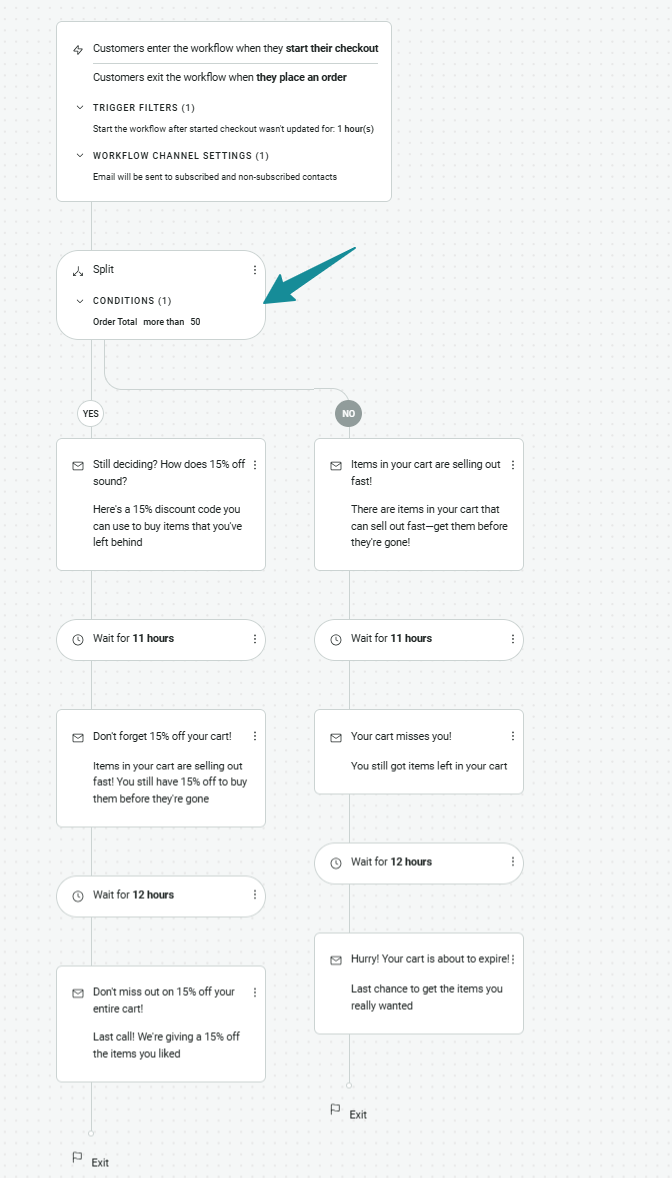
Abandoned Cart Recovery: This is consistently identified as the single highest-converting SMS automation in e-commerce. Data from the 2026 e-commerce marketing report highlights that SMS click rates more than doubled year-over-year in 2025, with push automation conversion rates climbing to 22.9%. SMS-based abandoned cart recovery yields an average return of $0.74 per send, significantly outperforming general campaigns. Best practice dictates sending the first text approximately one hour after abandonment, including the product name and a direct checkout link.
- Example Intent: "Hi [recipient name], we noticed you left your [brand product name] behind. Click here to jump right back into your checkout and complete your order: [Link]. Reply STOP to opt out."
-
VIP and Early Access Campaigns: Rewarding top customers with exclusive access cultivates a strong sense of community and brand loyalty. Segmenting audiences by total spend or lifetime purchase frequency allows for precise targeting of true VIPs. This strategy leverages exclusivity rather than relying solely on discounts.
- Example Intent: "[Brand name] VIP Alert: Our Black Friday collection opens to the public tomorrow, but your early access is active right now. Shop the catalog first: [link]. Reply STOP to opt out."
-
Limited-Time Discount Reminders: For shoppers who have received an active discount code but haven’t used it, a final reminder text can provide the necessary nudge before expiration. A single follow-up SMS sent 24-48 hours later adds urgency without being overly pushy, ensuring the discount’s intended effect isn’t diluted.
- Example Intent: "Final notice: Your X% welcome discount expires at midnight tonight. Don’t let your savings slip away! Apply it automatically here: [link]. Reply STOP to opt out."
Post-Purchase: Cultivating Loyalty and Enhancing Experience
The customer relationship extends well beyond the point of sale. The post-purchase window is a critical opportunity to reinforce buying decisions, ensure transactional transparency, and lay the groundwork for future purchases. Modern platforms are integrating advanced helpdesk functionalities, such as converting incoming text replies into support tickets, and syncing customer satisfaction scores to trigger automated recovery workflows for negative feedback.
-
Order and Shipping Updates (Transactional SMS): These are vital for building trust. Keeping customers informed about their order status without requiring them to constantly check email inboxes enhances satisfaction. These transactional messages can also subtly include light, non-intrusive brand marketing elements.
- Order Confirmed Intent: "Order confirmed! Your [brand name] adventure starts now. We’re packing your order [#X]. Track your progress here: [link]. Reply STOP to opt out."
- Order Shipped Intent: "Great news! Your [brand name] order has shipped. It’s officially on its way. Track your delivery in real-time: [link]. Check out new arrivals while you wait: [link]. Reply STOP to opt out."
- Order Delivered Intent: "Delivered! Your package has arrived at your doorstep. We hope you love your new [product]! Check out our [unique] tips: [link]. Reply STOP to opt out."
-
Cross-Sell and Upsell Messages: Recommending relevant products based on purchase history significantly increases customer lifetime value. These messages are most effective when timed appropriately, typically 24-48 hours after delivery, suggesting complementary items.
- Example Intent: "We hope you’re enjoying your new [product name]! Complete the look/set/combo with our [product recommendation]. Shop now: [link]. Reply STOP to opt out."
-
Review and Feedback Requests: Gathering authentic customer feedback is crucial for building social proof and improving offerings. Timing is key; requests should be sent after the customer has had sufficient time to experience the product, typically between seven and fourteen days post-delivery. Short, clean links facilitate an easy review process on mobile devices.
- Example Intent: "Hi [recipient name]! How is your new [brand and product name] treating you? Tap the short link below to leave a quick review and share your thoughts: [link]. Reply STOP to opt out."
Retention and Re-engagement: Sustaining Long-Term Customer Relationships
Long-term customer retention demands consistent, personalized nurturing that rewards loyalty and proactively addresses potential churn. These messages reinforce the brand relationship beyond transactional interactions.
-
Birthday and Anniversary Messages: Celebrating customer milestones with personalized rewards fosters an emotional connection. Collecting such data during initial opt-ins enables thoughtful, high-converting milestone texts that leverage personal touchpoints.
- Example Intent: "Happy Birthday from [brand name]! Let’s celebrate with a special gift. Use code BDAYX for $X off your next order this month: [link]. Reply STOP to opt out."
-
Win-Back Sequences: When a customer hasn’t engaged or purchased within a 60-90-day window, a two-message win-back sequence can effectively regain their attention. The first message adopts a softer, check-in tone, followed by a stronger incentive (discount with a defined duration) if no response is received. Sunset logic should be applied after the sequence to remove inactive subscribers and maintain deliverability.
- Soft Win-back Intent: "We’ve missed you around here! [Brand name] has some new updates while you’ve been away. Come see what’s new: [link]. Reply STOP to opt out."
- Discount Win-back Intent: "It’s been a while since your last visit to [brand name]. To welcome you back, enjoy [discount, e.g., 15% off] your next purchase. Just use code [discount code] at checkout. Explore what’s new: [link]. Reply STOP to opt out."
-
Loyalty Program Updates and Rewards: SMS is an ideal channel for loyalty program communication. Notifications about points, tier advancements, and rewards feel urgent and personal, incentivizing immediate action. These messages can also indirectly support win-back efforts by reminding customers of accrued benefits.
- Example Intent: "[Brand name] Rewards: You just entered Gold Tier status! ✨ Enjoy permanent free shipping and early access to all upcoming drops: [link]. Reply STOP to opt out."
-
Subscriber Surveys and Polls: Short, interactive SMS surveys and polls are excellent for gathering customer-specific data and insights into brand perception and product preferences. Customer replies can directly feed into segmentation engines for highly customized future content.
- Example Intent: "[Brand name] Poll: What’s your favorite [product]? Reply: 1 for [product 1], 2 for [product 2], 3 for [product 3]. Reply STOP to opt out."
Vertical-Specific SMS Applications: Tailoring Engagement
While core principles apply across the board, the most effective SMS marketing campaigns are customized to fit the unique needs and consumer behaviors of specific e-commerce verticals.
- Fashion and Apparel: Characterized by rapid inventory cycles and strong visual trends, this sector benefits from urgency around limited sizing and style curation. RCS, with its swipeable product carousels, is particularly impactful for showcasing new arrivals and driving immediate purchases.
- Beauty and Skincare: This vertical thrives on routine consistency. SMS use cases focus on consumption cycles and educational content, such as targeted automated replenishment reminders for frequently purchased items like serums (e.g., around days 25-28 of typical usage).
- Food, Beverage, and DTC Subscriptions: For businesses built on recurring consumption, SMS serves as a primary channel for operational and transactional communication. Teaser sequences for seasonal limited editions (e.g., holiday coffee blends) drive significant engagement and sales.
- Home Goods: With typically longer consideration phases and higher average order values, SMS positioning emphasizes design inspiration, curated ensembles, and lifestyle-driven cross-sells, such as seasonal redecorating promotions.
The Power of Synergy: Omnichannel Automation Workflows
SMS marketing reaches its highest potential when integrated into a broader omnichannel strategy, working in conjunction with other channels like email and push notifications. The Omnisend 2026 e-commerce marketing report reveals that omnichannel marketing utilizing email, SMS, and push messages collectively increased conversion rates by nearly 500% in the US in 2024. Furthermore, automated messages generated 16 times more revenue per send than scheduled campaigns in 2025.
- Welcome Series: Email + SMS Combined: An example flow might involve an immediate welcome email with a discount (Day 0), followed by an SMS reinforcement of the brand and discount code on Day 1 (or earlier if the email isn’t opened), and a follow-up email on Day 3 featuring social proof or bestsellers.
- Abandoned Cart: The Multi-Touch Recovery Flow: This maximizes recovery rates while minimizing message fatigue by adapting channels based on customer behavior. A typical flow could involve an initial email with a light incentive 30 minutes after abandonment, an SMS with a stronger discount and direct link after one hour (if the email wasn’t opened), and a final email with a higher discount or testimonial on Day 2.
- Post-Purchase: From Confirmation to Re-engagement: This sequence centers on transactional messaging and relationship-building. An immediate SMS confirms the order (Day 0), followed by an email with care tips or product education when shipped (Day 2). Another SMS on Day 5 confirms delivery and suggests complementary products, leading to an email review request on Day 10. The success story of Vagari Bags, a boutique travel accessories brand, exemplifies this synergy, achieving 6-7% click-through rates and an astonishing 1:121 return on investment from coordinated email and SMS campaigns.
Regulatory Compliance and Future Outlook
As SMS marketing becomes more sophisticated, adhering to regulatory frameworks such as the TCPA (Telephone Consumer Protection Act) in the US and registering 10DLC (10-Digit Long Codes) is non-negotiable. These regulations ensure consumer protection against spam and safeguard brand deliverability. The future of SMS marketing is poised for further innovation, likely incorporating more advanced AI-driven personalization, even richer interactive elements, and deeper integrations with CRM and customer service platforms. Brands that proactively adapt to these technological shifts and maintain rigorous compliance will be best positioned for sustained success.
Conclusion
In 2026, SMS marketing stands as one of the highest ROI channels available to e-commerce brands. By meticulously mapping SMS use cases across the entire customer lifecycle – pre-purchase, purchase, post-purchase, and retention – businesses can craft highly relevant and timely messages that resonate deeply with their audience. While SMS excels at driving immediate action for time-sensitive communications like abandoned cart reminders, its true power is unlocked when combined with email as part of a comprehensive omnichannel strategy. This integrated approach, as evidenced by compelling data and successful brand stories, not only builds trust and loyalty but also delivers unparalleled results in an increasingly competitive digital marketplace.








