In the dynamic landscape of modern digital communication, scaling social media content has emerged as a critical strategic imperative for enterprise-level organizations. This involves transcending the mere increase in posting frequency to establish robust, systematic frameworks that enable higher content output without compromising quality, brand consistency, or operational efficiency. The transition from ad-hoc content creation to a governed, scalable system is fundamental for large brands navigating diverse platforms, global audiences, and rapidly evolving cultural conversations.

The Evolving Landscape of Enterprise Social Media
The digital realm has undergone a profound transformation, with social media platforms becoming central to consumer engagement and brand perception. With over 5.17 billion people actively utilizing social platforms globally, dedicating an average of 2 hours and 21 minutes daily to scrolling, the competition for audience attention is relentless. For enterprises, this immense reach presents both an unparalleled opportunity and a significant challenge. Managing a vast array of social channels, catering to distinct regional nuances, and maintaining a unified brand voice across countless posts demands more than just a larger content team; it necessitates a sophisticated operational strategy. The early days of social media marketing, often characterized by simpler content needs and fewer platforms, have given way to a complex ecosystem where agility, consistency, and data-driven decision-making are paramount. Brands that fail to adapt risk brand fragmentation, diluted messaging, and diminished market relevance in an increasingly crowded digital space.

Defining Scalable Content Strategies
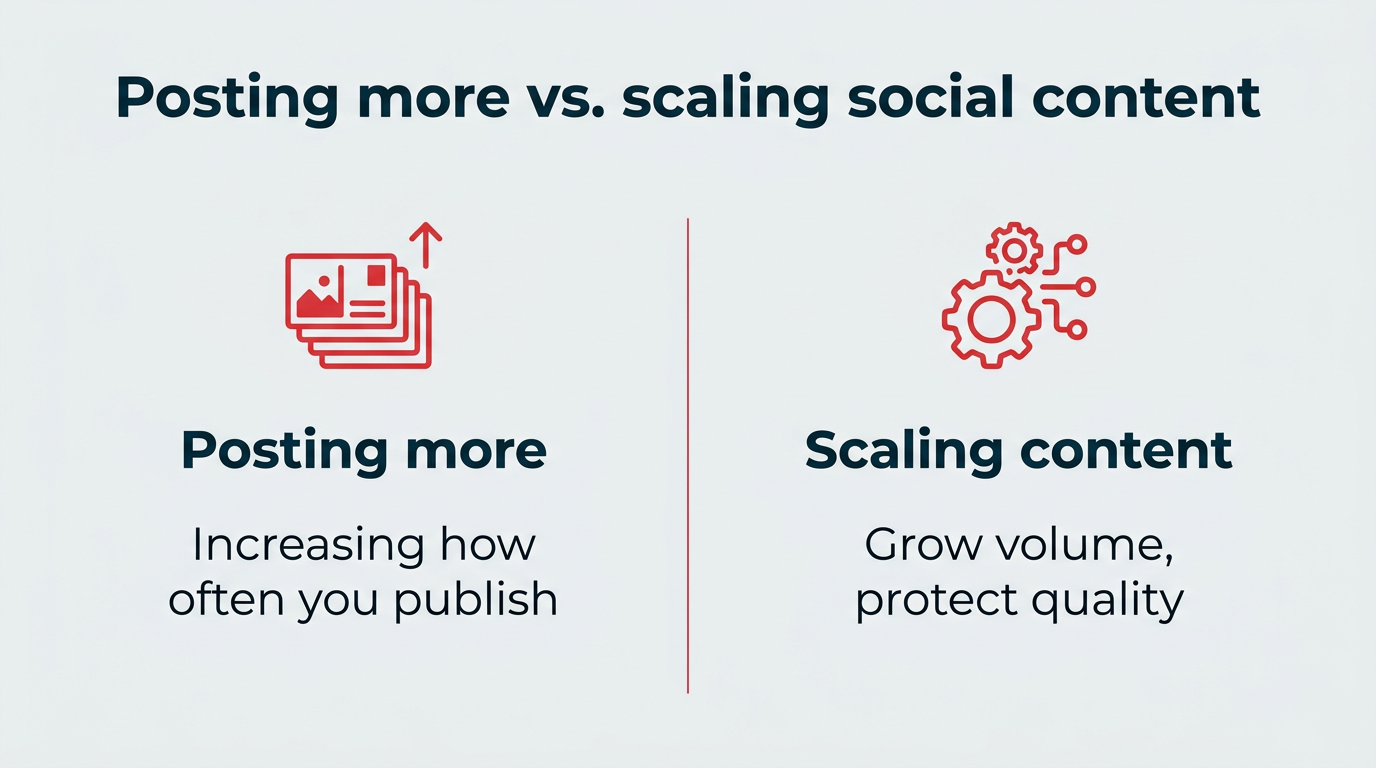
At its core, scaling social media content signifies the development and implementation of a system that empowers teams to generate a greater volume of high-quality content efficiently. This distinction is crucial: simply posting more frequently, while increasing output, often leads to stretched resources, compromised quality, and organizational chaos. True scaling, conversely, involves building an infrastructure that supports this increased volume sustainably. It is about creating leverage, where one strong idea can be intelligently repurposed across multiple platforms and formats, rather than requiring a fresh start for every single piece of content. This systematic approach ensures that even as content output grows exponentially, the brand’s integrity, messaging, and overall impact remain cohesive and strong, irrespective of publication location or platform.
Strategic Imperatives: Why Enterprises Must Scale
Enterprises face unique pressures that underscore the urgency of adopting scalable social media content strategies. The need for consistent brand representation across myriad touchpoints, coupled with the demand for rapid response to real-time trends, makes scalability non-negotiable.

- Managing Volume and Consistency Across Platforms and Regions: Enterprise brands operate on a global scale, publishing an enormous quantity of content tailored for various regions, each with its unique audience demographics, regulatory environments, and cultural specificities. Without a centralized, scalable system, teams often resort to independent content creation, leading to duplicated efforts, inconsistent messaging, and a fractured brand identity. A scalable framework provides shared tools, guidelines, and assets, ensuring that every social media post, regardless of its origin, resonates with the overarching brand narrative. This streamlined approach minimizes redundant work and guarantees that content consistently embodies the brand’s established voice and visual identity.
- Driving Brand Impact and Agility at Scale: The rapid pace of social media demands that large brands maintain agility without sacrificing their distinct voice. Hootsuite’s Social Trends data indicates a growing consumer expectation for brands to engage with cultural conversations and react to emerging trends in real time. This necessitates systems that allow for swift content adaptation, repurposing, and deployment. Scaled teams, equipped with robust monitoring tools, can quickly identify trending topics or shifts in public sentiment, enabling them to update existing content, launch relevant campaigns, or address customer inquiries before opportunities fade. Such responsiveness not only amplifies brand impact but also fosters a perception of attentiveness and relevance among the audience.
- Reducing Inefficiencies with Centralized Workflows: Dispersed teams and disparate processes inevitably lead to inefficiencies. Without centralized workflows, enterprises risk asset fragmentation, inconsistent content creation processes, and protracted manual approval cycles. Content scaling addresses these challenges by establishing unified systems for asset management, standardized production processes, and automated approval pathways. This centralization eliminates the need for teams to "reinvent the wheel" for every piece of content, freeing up valuable time and resources. The result is a more consistent, streamlined content production cycle that is easier for the entire organization to manage and leverage, leading to substantial cost savings and improved operational output.
The Nine Pillars of Effective Content Scaling
Achieving effective content scaling requires a multi-faceted approach, integrating tools, processes, and cultural shifts. Here are nine critical steps enterprises must implement:

-
Centralized Content Libraries: A shared content library serves as the indispensable repository for all approved content assets, ensuring that every team member has access to a single source of truth. This library should house not only finalized posts but also raw media, brand guidelines, messaging frameworks, and legal disclaimers. Tools like Hootsuite Social OS, with its Perch feature, consolidate content, planning, and publishing, facilitating quick access and consistent brand adherence across global teams. The estimated reduction in search time and asset recreation can be significant, often leading to a 15-20% increase in content production efficiency.
-
Streamlined Approval Workflows: To mitigate risks and maintain brand integrity, especially in regulated industries, clear and formalized approval workflows are paramount. These workflows must delineate roles (who creates, reviews, approves, and publishes), establish turnaround times, and define revision limits. Kevin Johnson, Global Social Media Manager at Talent Systems, emphasizes the transformative impact of enterprise-level social media suites like Hootsuite, noting they "solve your scheduling, content banks, and most approval headaches in one place." He also advocates for the use of RACI (Responsible, Accountable, Consulted, Informed) matrices to clarify responsibilities and prevent endless review cycles, highlighting that formalized processes can cut approval times by up to 30%.
-
Leveraging Standardized Templates: Templates are instrumental in accelerating content creation while ensuring brand consistency. These pre-designed frameworks for various content types—ranging from social media graphics and video intros to caption structures and campaign briefs—provide a head start for individual regions and teams. Johnson advises designers to create "modular templates for all your routine stuff: quotes, tips, awards, testimonials," making asset creation "basically plug-and-play." This strategy frees creative teams to focus on high-priority, custom campaigns, enhancing both efficiency and creative output. Resources like Hootsuite’s extensive free template library and platforms like Canva further democratize access to professional-grade designs.
-
Mastering Content Repurposing: Repurposing existing content is one of the most powerful levers for scaling. It allows enterprises to maximize the mileage of a single strong idea by transforming it into multiple platform-specific assets. A comprehensive blog post, for instance, can be distilled into a series of Instagram carousels, a short TikTok video, a LinkedIn article, and several X (formerly Twitter) threads. This approach significantly reduces the need to generate new ideas from scratch, ensuring a consistent message while dramatically increasing content volume. AI-assisted tools, such as Perch’s capabilities within Hootsuite Social OS, can rapidly rewrite, resize, and reframe content for different channels, embedding repurposing directly into the workflow.
-
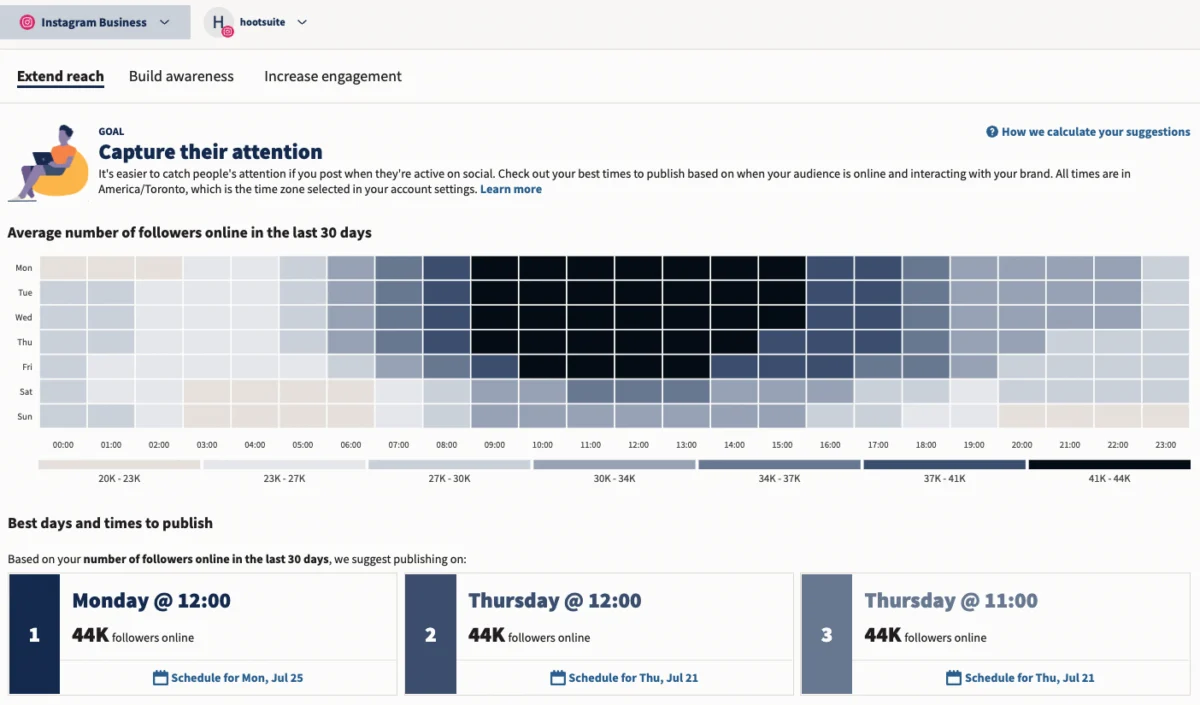
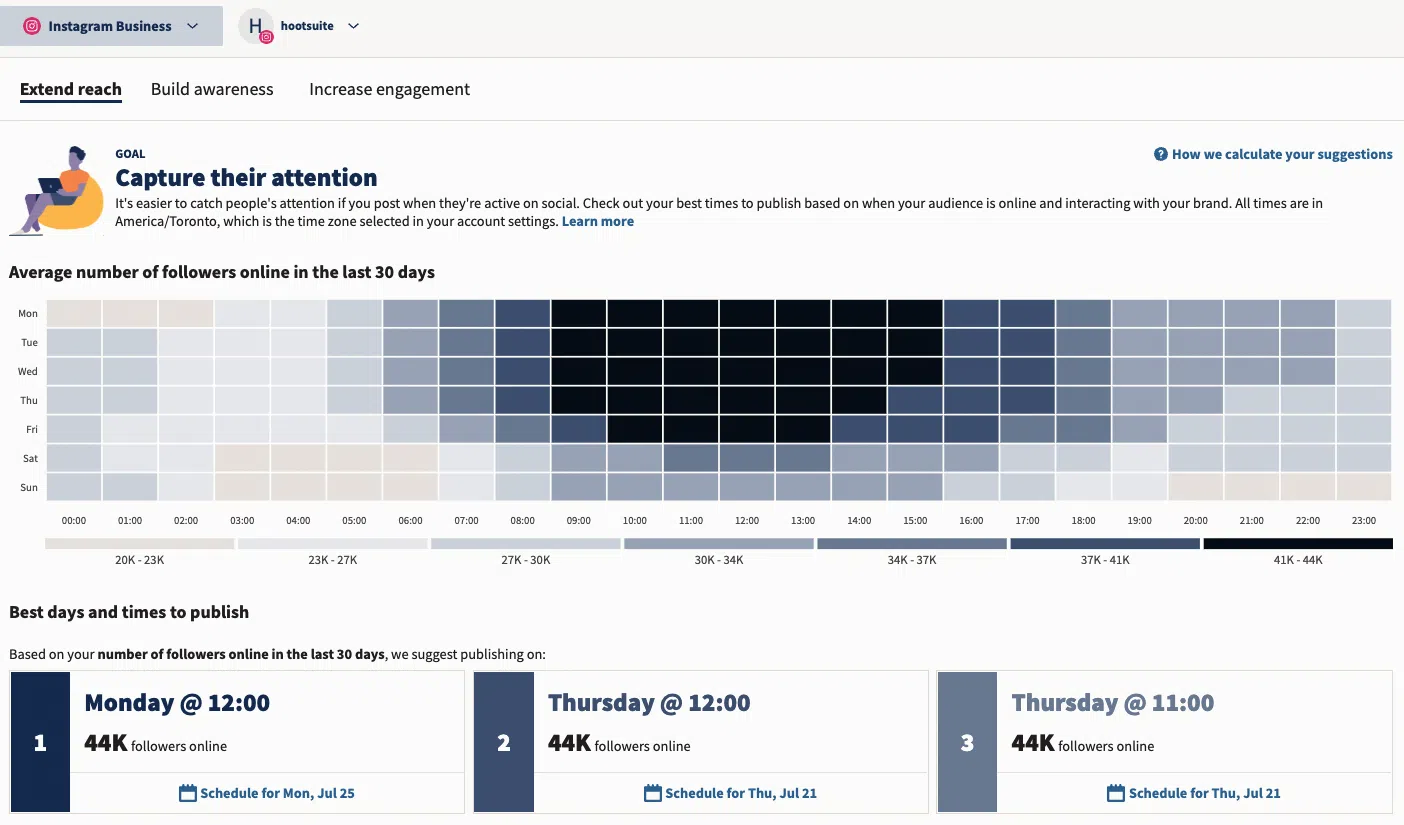
Harnessing Automation for Efficiency: Automation is the backbone of scalable operations, handling repetitive tasks to free human teams for strategic and creative endeavors. This includes automated scheduling, publishing, content tagging, performance tracking, and even initial content drafting. As Johnson points out, neglecting existing automation tools is a missed opportunity. Features like Hootsuite’s bulk scheduling and "best time to publish" recommendations eliminate guesswork and manual effort. The AI orchestration layer, Wisdom, within Hootsuite Social OS, connects these governed workflows across various applications, enabling seamless, automated execution and significantly improving operational speed. Studies show that automation can reduce manual task time by over 40%.
-
Empowering Local Teams with Guardrails: Global brands thrive on content that feels authentically local while maintaining a cohesive global identity. Deloitte reports that 75% of consumers are more likely to purchase from brands delivering personalized content. This necessitates giving local teams the autonomy to adapt content for cultural nuances, language specificities, and regional audience preferences. However, this freedom must operate within clear brand guardrails, including defined brand voice parameters, approved visual assets, localization checklists, and access to translation tools. This balance ensures local relevance without diluting the overarching brand identity, fostering both engagement and compliance.
-
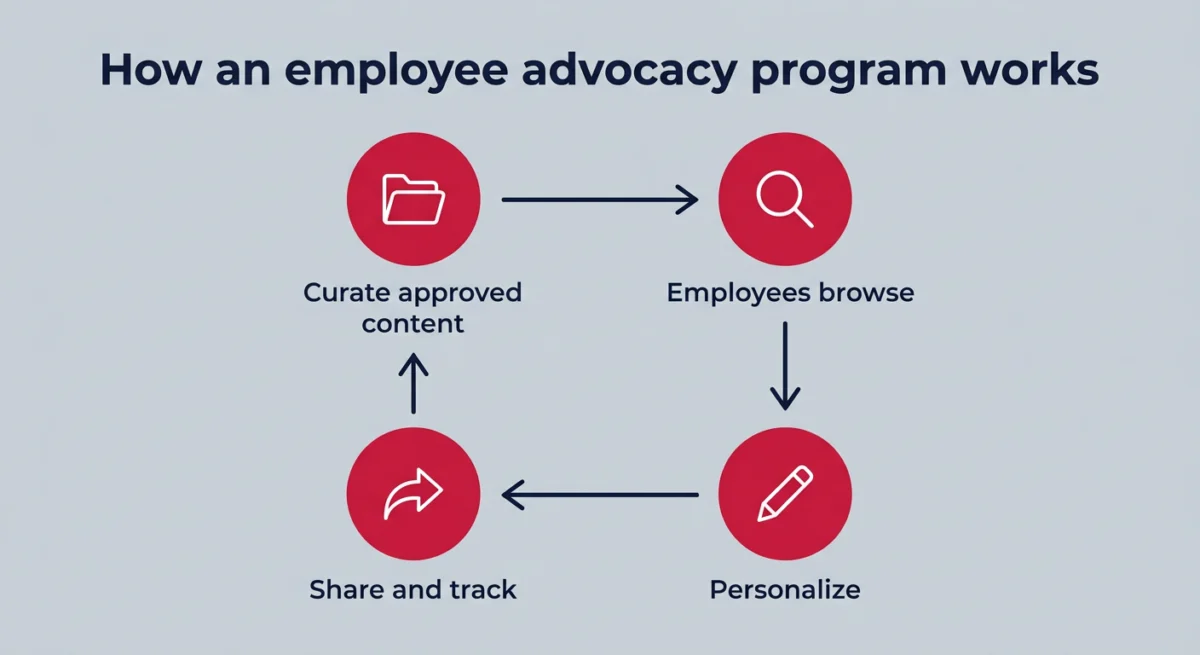
Activating User-Generated Content and Creator Partnerships: Leveraging user-generated content (UGC) and collaborating with creators offers a powerful external scaling mechanism, reducing the internal production burden while enhancing authenticity. The U.S. influencer marketing spending, projected to surpass $10 billion with 15.7% growth in 2026, underscores the efficacy of these partnerships. UGC, derived from customers and employees, provides organic, relatable content. Creator partnerships, meanwhile, tap into established audiences and unique creative voices. Hootsuite Social OS’s Parliament app, for instance, facilitates employee advocacy by providing pre-approved content for sharing, extending reach and maintaining consistent messaging compliantly. This approach can increase content volume by 25-30% without internal resource strain.
-
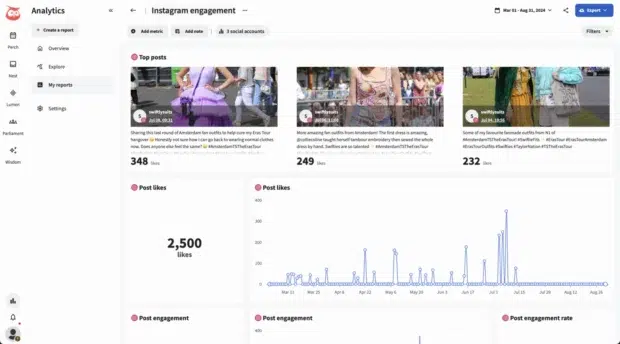
Data-Driven Scaling: The Role of Analytics: Not all content merits scaling. Strategic growth hinges on understanding what resonates with the audience and aligns with business objectives. Robust analytics are crucial for identifying top-performing content formats, topics, and channels. Enterprises must move beyond vanity metrics (likes, impressions) to focus on business-impact metrics (content velocity, cost per asset, time-to-publish, engagement rate, conversion contribution). Hootsuite Analytics provides comprehensive dashboards to track these metrics, enabling teams to make informed decisions about where to invest resources, optimize content planning, and scale what genuinely drives value