The annual Black Friday Cyber Monday (BFCM) sales period represents a critical juncture for e-commerce businesses, often accounting for a significant portion of yearly revenue. Traditionally, preparing for this intense shopping season has been a meticulous, data-heavy endeavor, beginning with a familiar checklist: analyzing previous year’s performance, refining subscriber lists, segmenting audiences, scheduling campaigns, and verifying automated workflows. Each step, while not inherently complex, demands substantial time and resources for data gathering and interpretation. However, a significant shift is underway, promising to transform this arduous process through the integration of artificial intelligence.
This year, marketers are equipped with a new paradigm for BFCM readiness, leveraging AI assistants connected to their marketing platforms like Omnisend via the innovative Model Context Protocol (MCP). This integration allows users to interact with their marketing data and execute complex tasks using natural language prompts, dramatically cutting down the time spent on analysis and operational setup. From dissecting historical performance to crafting segments, generating campaign briefs, and even building email templates, the AI assistant acts as an intelligent co-pilot, guiding marketers from data insights to actionable execution with unprecedented efficiency.
The Intensifying Pressure of BFCM: A Contextual Overview
Black Friday and Cyber Monday have evolved into a global retail phenomenon, extending beyond a single weekend into weeks of promotional activity. For many businesses, particularly small to medium-sized enterprises (SMEs) in e-commerce, BFCM can make or break annual targets. In 2023, global online BFCM sales reportedly surged past previous records, with digital spend exceeding tens of billions of dollars across major markets. This escalating competition and consumer expectation place immense pressure on marketers to deliver highly personalized, timely, and effective campaigns.
The conventional BFCM preparation timeline is unforgiving. Starting in early to mid-September, roughly 11-12 weeks before Black Friday, marketers typically embark on a rigorous audit cycle. This includes deep dives into past campaign data, assessing list health, and identifying potential bottlenecks. Discovering critical issues just days before launch can be catastrophic, leading to missed opportunities and suboptimal campaign performance. The introduction of AI-powered assistance aims to mitigate these risks by providing earlier, more precise insights and facilitating proactive adjustments.
The Core Innovation: Model Context Protocol (MCP)
At the heart of this transformation is Omnisend’s Model Context Protocol (MCP), a proprietary framework that enables AI assistants to securely and intelligently interact with a user’s marketing platform data. Unlike generic AI tools, MCP provides a structured, permission-based interface that allows AI models like those powering ChatGPT or Claude to access, analyze, and even modify Omnisend account data. This capability moves AI beyond mere content generation, empowering it to perform sophisticated data analysis, identify trends, and directly execute marketing tasks within the platform.
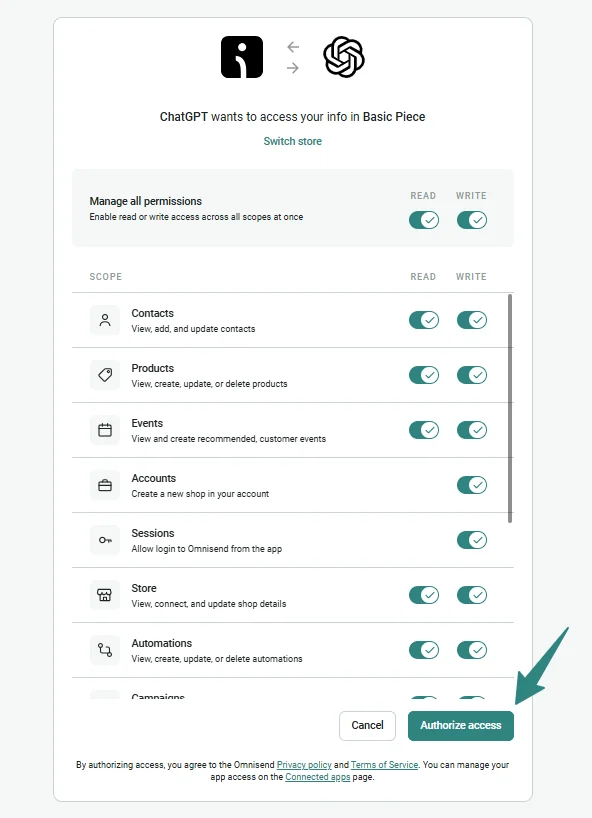
Connecting an AI assistant to Omnisend typically involves installing a dedicated plugin (e.g., Omnisend Plugin in ChatGPT) or using an official connector (e.g., in Claude). This setup process is designed to be straightforward, with detailed guides available for various AI clients, including options for manual connection via the MCP Server v2 API documentation for advanced users. A critical aspect of this integration is granular control over data permissions. Users with "Owner," "Admin," "Manager," or "Partner" roles in Omnisend can define read and write access separately for each data area. This ensures that while the AI can assist with analysis, marketers retain full control over sensitive data and the execution of live campaigns. It’s recommended to start with read-only permissions for initial audits and enable write access only when the AI is tasked with creating segments, campaigns, automations, or templates. Furthermore, using advanced frontier AI models is advised, as their superior reasoning depth is crucial for handling complex, multi-step MCP tasks and ensuring accurate, complete responses.
A Phased Approach to AI-Powered BFCM Preparation
The integration of AI fundamentally redefines the BFCM preparation workflow, structuring it into distinct phases that prioritize data-driven decisions and proactive intervention. The following timeline illustrates how marketers can leverage AI to navigate the critical weeks leading up to, during, and after the BFCM period.
Phase 1: Strategic Audit of Previous Performance (10+ Weeks Out)
The BFCM journey begins with a retrospective analysis of the previous year’s performance, but now, instead of manually sifting through reports, marketers can query their AI assistant. By prompting the AI to review performance data over a defined historical window (e.g., November 20 – December 2, 2025), the system can swiftly compile a comprehensive recap covering revenue, campaign performance across channels (email, SMS), and daily sending activity. The AI breaks down these metrics, highlights key comparisons, and flags any data limitations, providing a robust baseline.
- Identifying Winning Patterns: Moving beyond raw numbers, marketers can instruct the AI to analyze top-performing campaigns from the previous BFCM. The AI can identify shared patterns across subject lines, offers, calls-to-action, audience segments, and product categories. This objective analysis, backed by performance numbers, helps distinguish strong correlations from mere coincidences, informing strategic assumptions for the current year’s campaigns.
- Pinpointing Revenue Leaks: A critical function of this phase is identifying inefficiencies. The AI can audit past activity for potential "revenue leaks," such as underperforming sends, gaps in daily campaign coverage, or neglected automation steps. By showing the exact numbers or account evidence behind each issue, the AI helps prioritize areas for improvement, creating a BFCM prep checklist ordered by the time required for remediation.
Phase 2: Optimizing List Health and Deliverability (6-8 Weeks Out)
With BFCM volumes set to surge, ensuring a healthy and engaged subscriber list is paramount. Inbox providers heavily weigh recent engagement, meaning any negative trends require weeks to correct. The AI assistant can quickly surface deliverability warning signs by reviewing 90-day engagement data for bounces, complaints, unsubscribes, and overall engagement rates. It compares earlier versus more recent performance, ranking issues by urgency and flagging areas needing further investigation.
- Strategic List Growth: Marketers can also use the AI to assess subscriber growth and form performance, identifying which sign-up sources are most effectively contributing to their BFCM-ready list. This allows for targeted optimization of high-performing forms and a review of underperforming ones, ensuring list-building efforts are aligned with BFCM goals.
Phase 3: Precision Audience Segmentation (4-6 Weeks Out)
Once list health is stabilized, the focus shifts to segmenting audiences for tailored BFCM messaging. Omnisend already provides valuable pre-defined groups, but the AI assistant, with appropriate write permissions, can now dynamically create custom segments based on complex criteria.
- Re-engaging Past BFCM Buyers: The AI can identify customers who purchased during the previous BFCM but haven’t returned since, allowing marketers to target them with specific re-engagement offers.
- Building VIP Audiences: By analyzing customer purchase data over a 12-month period, the AI can help define and build VIP segments based on purchase frequency, total revenue, and average order value, enabling early access campaigns.
- Converting Engaged Non-Buyers: The AI can pinpoint subscribers who have shown engagement (e.g., clicked an email) but haven’t made a purchase, creating a dedicated segment for conversion-focused messaging.
- Smart Suppression: Crucially, the AI can also identify contacts with prolonged low engagement, recommending exclusion from or reduced frequency for peak BFCM sends. This protects sender reputation and ensures campaigns reach the most receptive audience. Marketers retain control, reviewing proposed criteria before segment creation.
Phase 4: Campaign Calendar and Creative Development (3-4 Weeks Out)
With analysis complete and segments defined, the AI transitions to campaign planning and content generation. Leveraging findings from the audit phase, the AI can construct a BFCM campaign calendar, proposing send dates and targeting specific segments for pre-sale, early access, peak sale, and post-sale recovery stages.
- Automated Creative Briefs: The AI can then translate approved calendar slots and winning patterns into detailed one-paragraph creative briefs for each campaign. These briefs include objectives, target audience, key message, desired call-to-action, and recommended imagery, ensuring consistency and strategic alignment.
- AI-Generated Email Templates: A significant advancement is the AI’s ability to generate fully editable, on-brand email templates directly within Omnisend. By adhering to an approved creative brief, the AI populates templates with the user’s Brand Assets (logo, colors, fonts) and structured email format, significantly accelerating the design process. Marketers can then fine-tune these templates in the Email Builder, verifying copy, images, links, offers, and mobile layouts before deployment.
Phase 5: Automation Stress-Test and Optimization (2-3 Weeks Out)
High-traffic automations, such as welcome series and abandoned cart flows, are crucial during BFCM. The AI can audit these automations message-by-message, using recent performance data to identify specific emails, SMS messages, delays, or steps that might weaken under increased BFCM traffic. It prioritizes issues with the biggest potential impact, recommending specific tests or changes.
- BFCM Automation Variants: The AI can also determine which individual messages within evergreen automations would benefit from a BFCM-specific version, providing contextually relevant messaging during the sales period without inventing offers or deadlines.
Phase 6: Real-time Monitoring During BFCM (The Weekend Itself)
During the intense BFCM weekend, rapid insights are paramount. The AI assistant offers a "five-minute BFCM morning check," providing a daily snapshot of revenue, campaign performance, deliverability, and any unusual activity for the previous day. It separates confirmed findings from possible explanations and ranks urgent issues, allowing marketers to prioritize immediate actions before subsequent campaigns are deployed.
Phase 7: Post-BFCM Analysis and Retention Strategy (First Week of December)
As the BFCM dust settles, the focus shifts to lessons learned and customer retention.
- Executive Recap: The AI can generate a comprehensive executive recap comparing the current BFCM performance with the previous year, covering key metrics, year-over-year changes, and five actionable takeaways for future planning.
- New Customer Retention: A crucial post-BFCM task is identifying new customers acquired during the sale. The AI can segment these first-time buyers and propose a 30-day retention plan, recommending follow-up messages based on their purchase and engagement data, aiming to encourage a second purchase or continued engagement without resorting to blanket promotions.
Guardrails and Best Practices: Ensuring Responsible AI Deployment
While AI offers unprecedented efficiency, Omnisend emphasizes the importance of human oversight. The core principle remains: use MCP to accelerate insights and creation, but always verify critical elements within Omnisend before anything goes live. This is particularly crucial for audience segmentation, exclusions, links, discount codes, offer dates, content, and scheduling. The granular permission controls are a key safeguard, allowing marketers to restrict AI access to only what is necessary for a given task, balancing automation with security and control. The platform’s August 2026 "What’s New" video highlights these enhanced MCP controls, including granular permissions, Claude support, and Brand Assets integration in generated templates, reinforcing a commitment to secure and effective AI implementation.
Broader Implications and the Future of Marketing
The integration of AI into platforms like Omnisend signifies a profound shift in the marketing landscape. It democratizes advanced analytics and campaign execution, making sophisticated strategies accessible to a wider range of businesses. By automating data collection, pattern recognition, and initial content generation, AI frees marketers from tedious, repetitive tasks, allowing them to focus on higher-level strategy, creative ideation, and customer relationship building.
This evolution is not about replacing human marketers but augmenting their capabilities. The AI acts as a powerful assistant, providing rapid insights and execution tools, thereby enhancing productivity and enabling greater personalization at scale. As AI models continue to advance in reasoning and natural language understanding, their role in marketing is expected to grow, further refining predictive analytics, optimizing campaign performance, and fostering even deeper customer engagement. The BFCM season, with its intense demands and high stakes, serves as a compelling proving ground for these transformative AI capabilities, setting a new standard for efficiency and strategic agility in e-commerce marketing.