 Asep Darmawan
The development of artificial intelligence has long been dominated by a model-centric philosophy, where the primary solution to performance failure is the transition to a larger, more sophisticated large language model (LLM). However, a new research initiative from Google Research, titled Harness², suggests that the "scaffolding" surrounding these models—the prompts, tools, memory structures, and control loops—is just as critical to success as the underlying weights of the neural network. By treating the agent’s environment as a dynamic, editable component, Harness² offers a pathway to significantly improved reliability without the prohibitive costs associated with constant model upgrades.
The Shift from Model-Centric to System-Centric AI
In the current landscape of generative AI, an "agent" is defined not just by its ability to process text, but by its capacity to interact with external environments, use software tools, and manage long-term tasks. When these agents fail, developers typically look to "prompt engineering" or "fine-tuning" to bridge the gap. Google Research’s latest findings indicate that these methods often hit a ceiling of diminishing returns. Specifically, the research highlights that different "harnesses"—the structural setups of an agent—excel at vastly different tasks. For instance, the Claude Code configuration shows superior results in spreadsheet management and programming, whereas Codex-based setups lead in web-based navigation.
The core realization of the Harness² project is that a fixed harness limits the potential of the model. To solve this, Google has developed a system that allows the agent to self-adapt its own operational framework at "test time," essentially rewriting its own rules of engagement based on the specific requirements of a task it may have never encountered before.
The Failure of Traditional Self-Editing Prompts
One of the most intuitive ways to improve an agent is to allow it to rewrite its own system prompt. However, Harness² research reveals a significant pitfall in this approach: the "token tax." Every instruction added to a system prompt increases the number of tokens the model must process during every single step of a task. As these prompts grow in complexity, they consume the model’s context window, leaving less room for the actual data and reasoning required to complete the work.
Furthermore, instructions in a prompt are merely "advice." An AI model may choose to ignore a prompt instruction under the pressure of complex reasoning. Harness² differentiates itself by moving beyond simple prompt editing, focusing instead on eight dormant components that only activate when triggered. These include guardrails, memory structures, skill libraries, tool guidance, scripts, sub-agent delegation, and middleware plugins. By placing rules within the control loop rather than the system prompt, the framework ensures that constraints are enforced by code, not just suggested by text.
The Propose, Probe, and Compose Methodology
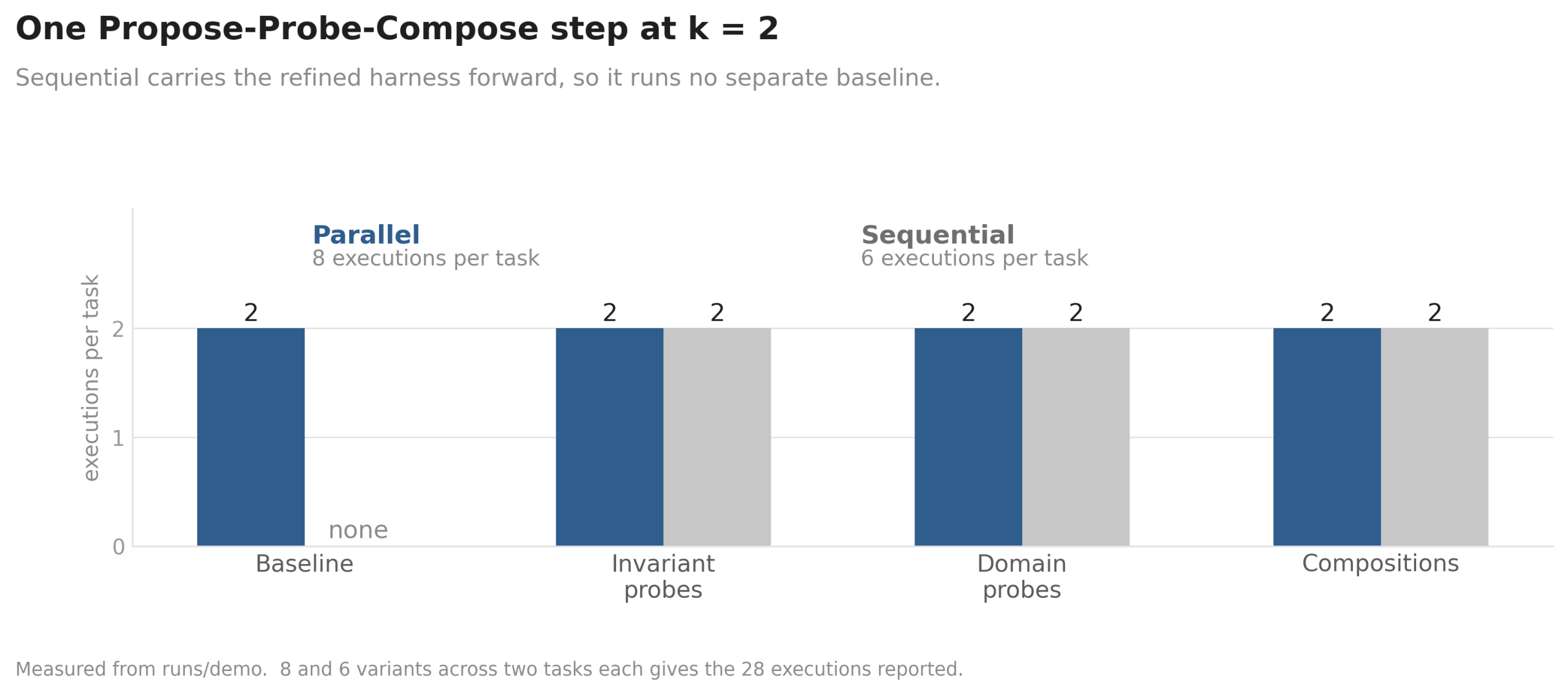
At the heart of Harness² is a rigorous three-stage validation cycle designed to ensure that any modification to the agent’s harness actually improves performance. This is particularly difficult in real-world scenarios where there is no "answer key" or benchmark score to provide immediate feedback.
- Propose: The agent attempts a task. Two distinct "editors" then analyze the execution logs. One editor focuses on the mechanical aspects of the workflow, such as identifying broken tool calls or syntax errors. The second editor acts as a domain specialist, proposing rules related to the subject matter, such as legal compliance or accounting standards.
- Probe: The system generates a modified harness based on these proposals and runs the task a second time. This produces a comparative data set between the original "baseline" run and the "edited" run.
- Compose: The system compares the two executions. An edit is only integrated into the permanent harness if it fixed a concrete, observable failure. If an edit was merely "neutral" or caused a new error, it is discarded.
Google’s data suggests that this "Probe" step is vital. In tests where the system was allowed to edit its harness without the validation of a second run, performance actually dropped by 10%. This confirms that "blind" self-optimization often leads to hallucinations or counter-productive complexity.
Empirical Data and Benchmark Results
The efficacy of Harness² has been tested across several professional-grade benchmarks, including WorkBuddy-Bench, JobBench, and LAB. The results, utilizing models such as Gemini 3.5 Flash, demonstrate a consistent upward trend in reliability.

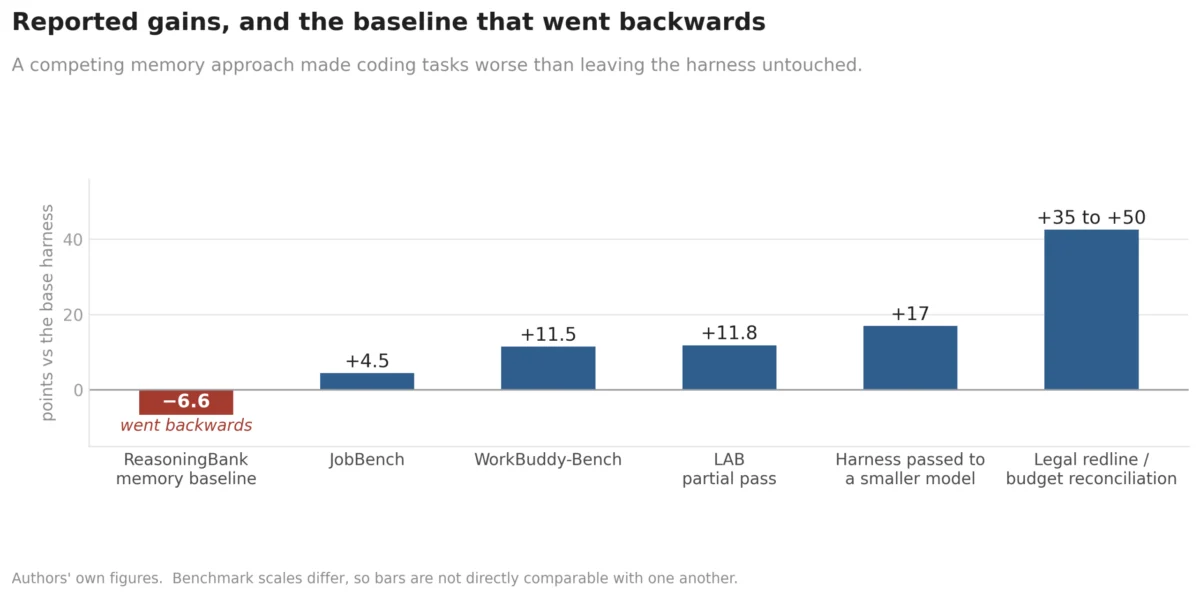
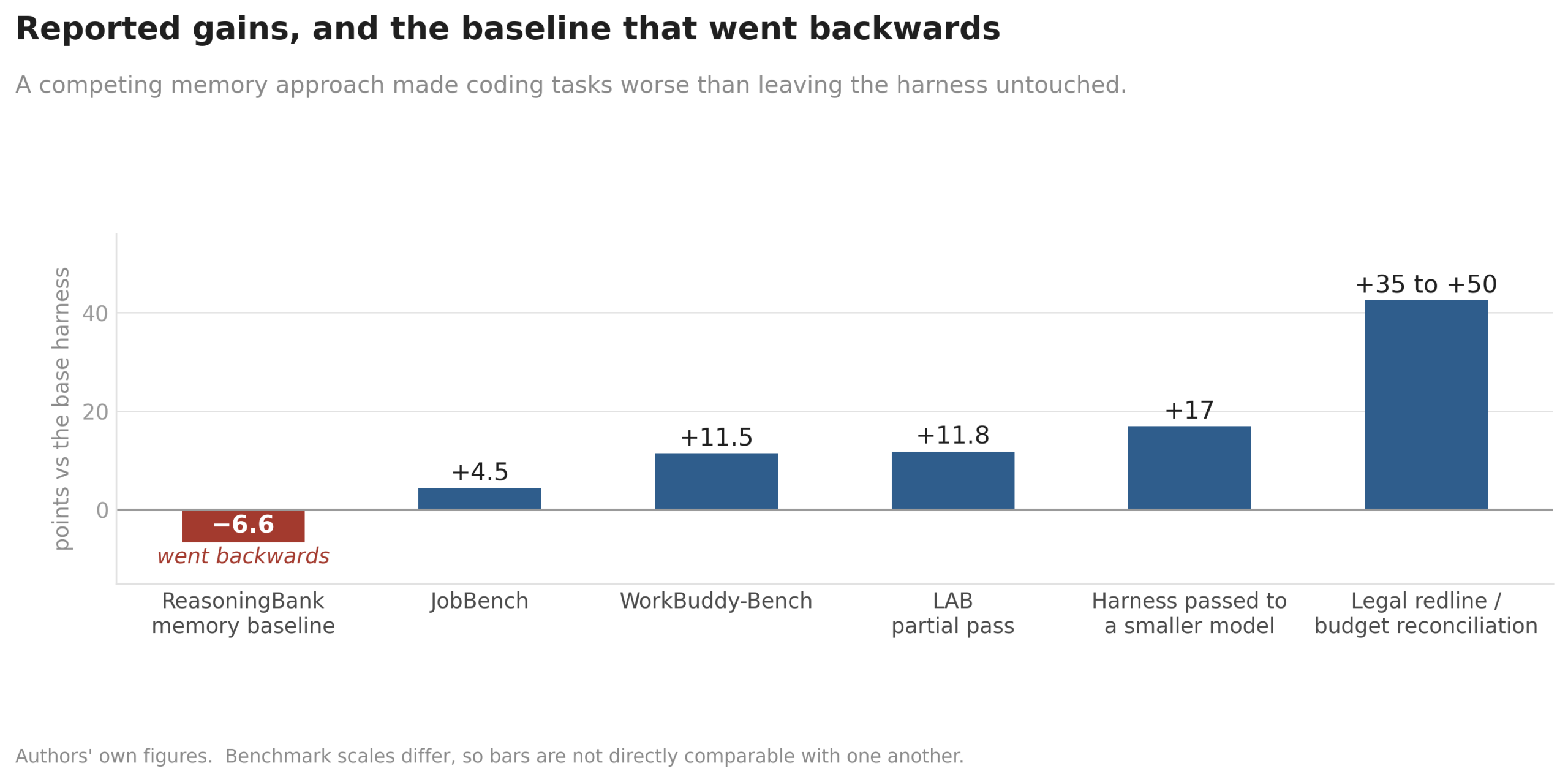
- WorkBuddy-Bench: The framework saw an improvement of up to 11.5 points. When five different harness candidates were probed in parallel, performance gained an additional 2.9 to 3.9 points.
- Legal and Financial Tasks: In specialized domains like legal redlining and budget reconciliation, Harness² achieved staggering improvements of 35 to 50 points in a single optimization step.
- LAB (Partial Pass Rate): The system improved the partial pass rate by 11.8 percentage points, showing that even when an agent doesn’t complete a task perfectly, the harness helps it get significantly closer to the goal.
One of the most significant findings in the research is the "transferability" of a harness. Google researchers found that a harness "evolved" or optimized using a powerful, expensive model (like Gemini 1.5 Pro) could be handed over to a smaller, cheaper model (like Gemini 1.5 Flash), resulting in an immediate 17-point performance boost for the smaller model. This suggests that organizations can use frontier models to design the "blueprints" for their agents, which can then be executed by more cost-effective infrastructure.
Technical Implementation and Operational Requirements
For developers looking to implement Harness², the project is available via Google Research’s GitHub repository. The installation requires a modern Linux environment, Python 3.12, and the uv package manager.
The initial setup involves cloning the repository and installing dependencies:
git clone --depth 1 https://github.com/google-research/harness2.git
cd harness2
uv venv --python 3.12 .venv
. .venv/bin/activate
uv pip install -e '.[render]'
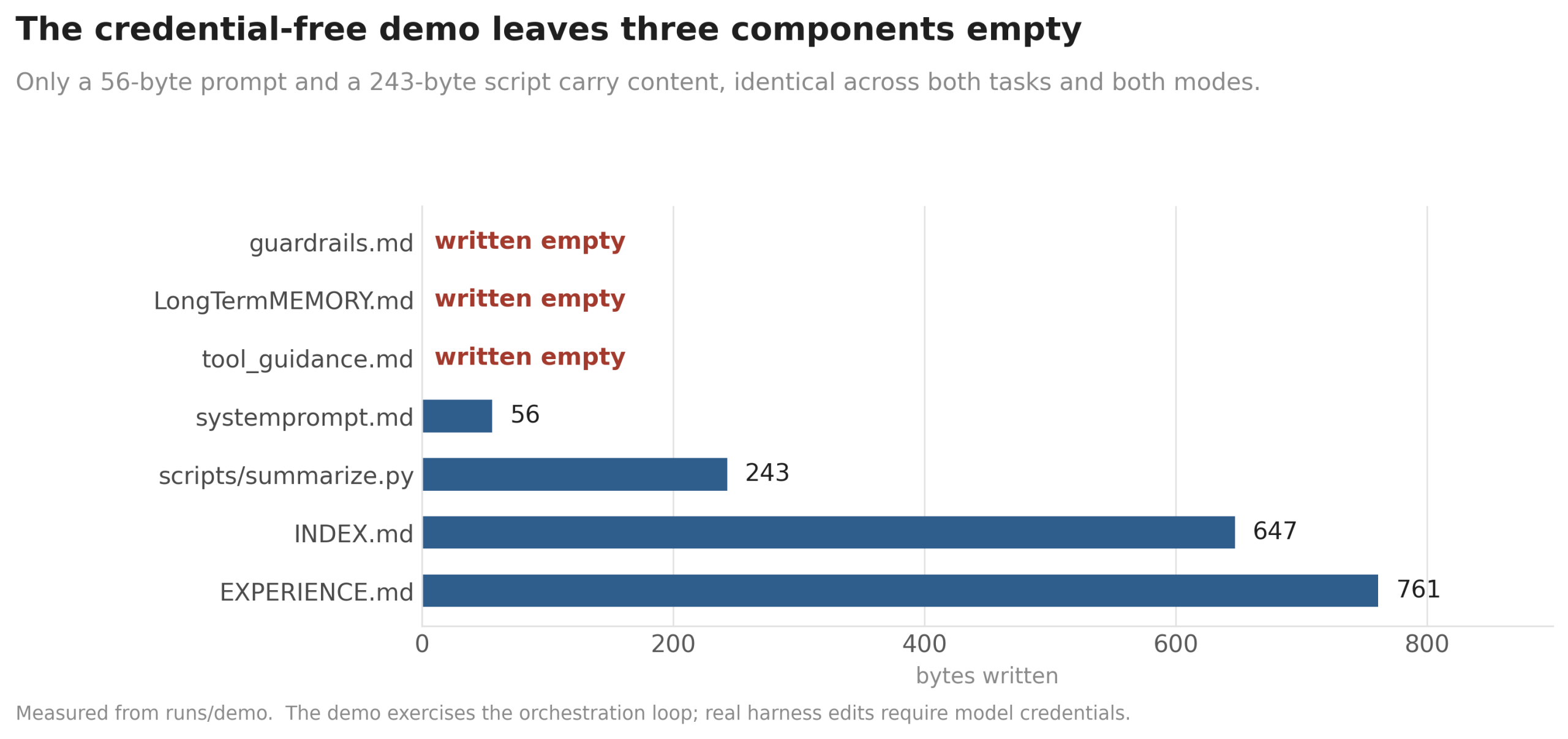
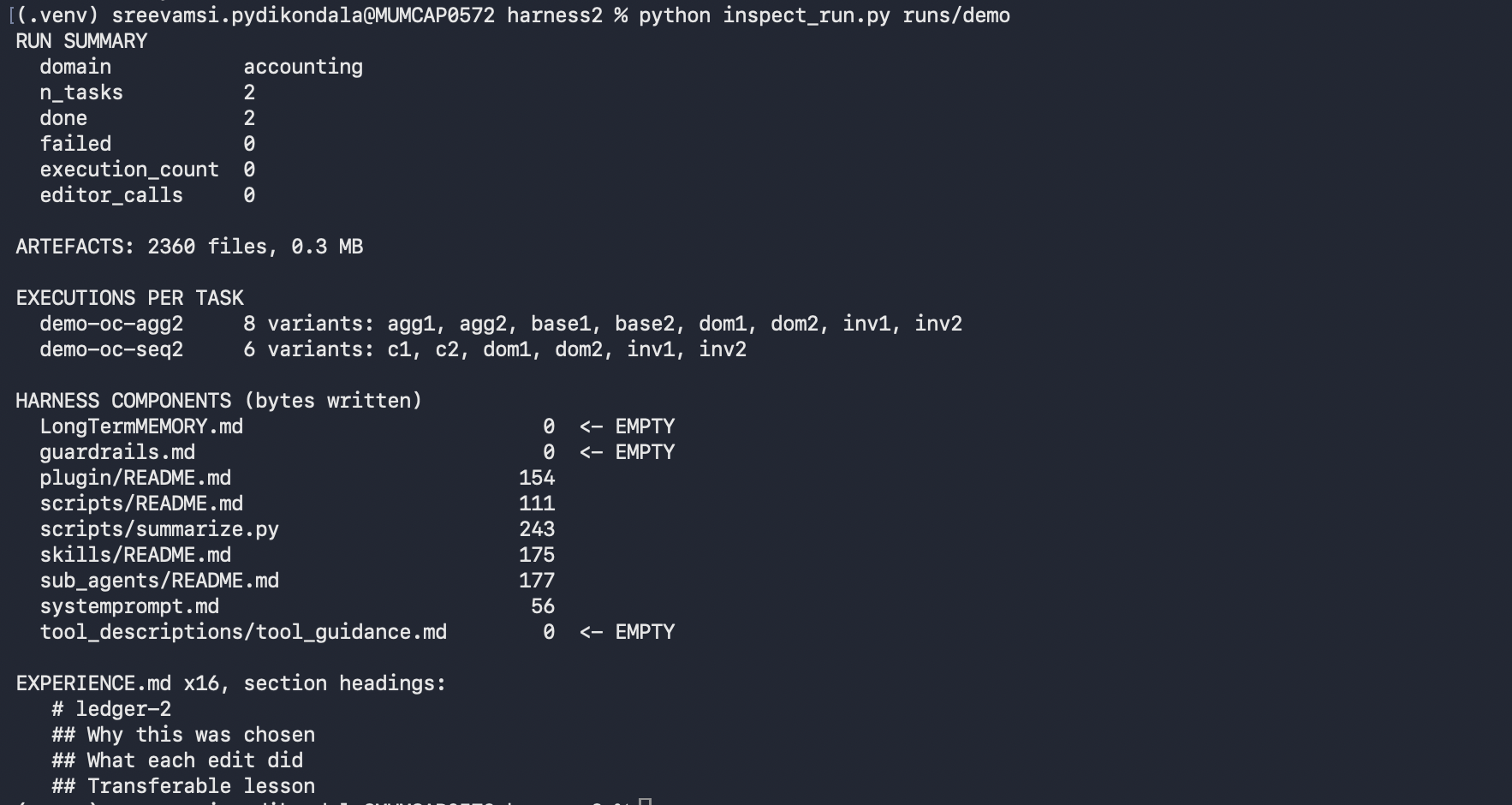
A local demo can be executed without cloud credentials or API keys, allowing developers to verify the "plumbing" of the system. However, the researchers emphasize that the demo uses "deterministic editors"—pre-written scripts that simulate the editing process. To see the true power of the "Propose, Probe, Compose" cycle, the system must be connected to a live LLM via Vertex AI.
Operationally, a single task run using Harness² is resource-intensive. A two-task run can generate over 2,300 files, as the system meticulously logs every variant, every probe, and every composition. Depending on the filesystem (such as ext4 vs. APFS), this can occupy significant disk space, a factor developers must consider when running large-scale benchmarks.
Chronology of Development and Future Implications
The release of Harness² follows a year of intense research into "Agentic Workflows," a term popularized by industry leaders like Andrew Ng. While 2023 was the year of the "Chatbot," 2024 and 2025 are becoming the years of the "Agent." The chronology of this development shows a clear move away from prompt-only solutions.
- Phase 1 (Late 2023): Focus on RAG (Retrieval-Augmented Generation) to provide models with better data.
- Phase 2 (Early 2024): Focus on Multi-Agent Systems, where different models talk to each other.
- Phase 3 (Late 2024 – Present): Focus on Scaffolding and Harnessing, where the system architecture itself becomes the object of optimization.
The implications of Harness² for the enterprise are profound. It offers a solution to the "reliability gap" that prevents many AI projects from moving out of the pilot phase and into production. By providing a mathematical and observational framework for "what works," Harness² removes the guesswork from agent development.
Analysis of Broader Industry Impact
The tech industry’s reaction to Harness² suggests a growing consensus that "smarter models" are not the only path to "smarter results." By optimizing the harness, developers can achieve performance levels on mid-tier models that previously required the most expensive frontier models. This democratization of high-performance AI could lead to a surge in specialized, local AI agents that operate within strict corporate guardrails.
Furthermore, the negative results published alongside the positive ones in the Harness² paper provide a rare, honest look at the limitations of AI. The fact that a "memory baseline" actually decreased performance in coding tasks serves as a warning to developers: more features do not always mean a better agent.
In conclusion, Harness² represents a shift toward "System Engineering" in the world of Artificial Intelligence. It treats the AI agent not as a magical black box, but as a component in a complex machine that requires careful tuning, rigorous testing, and a robust structural framework to succeed. As the industry moves toward more autonomous systems, the lessons learned from the Harness² project—specifically the importance of validation and the "token cost" of instructions—will likely become the standard operating procedure for AI developers worldwide.

 Nana