Tuesday, February 10th, 2026 – 9:00 am
The Out of Home Advertising Association of America (OAAA) has officially launched a significantly upgraded version of its OpenOOH venue taxonomy, a move poised to revolutionize how programmatic buyers engage with out-of-home (OOH) media. This updated standard, first introduced in 2020, addresses critical shortcomings in the traditional categorization of OOH inventory, aiming to inject greater transparency, precision, and efficiency into programmatic transactions. The initiative also marks the integration of the OpenOOH Taxonomy Working Group into the OAAA Taxonomy Committee, consolidating expertise for ongoing development and maintenance of the standard.
For years, the OOH industry has relied on broad venue categories, such as "retail" or "transit," to classify its vast inventory. While this approach may have sufficed in a predominantly direct-sold market, the burgeoning demand for programmatic buying, particularly as an extension of omnichannel strategies, has rendered these generic labels insufficient. Programmatic buyers, accustomed to granular data and precise targeting capabilities seen in digital channels like Connected TV (CTV) and retail media networks, require a deeper understanding of the specific environments where their advertisements will appear. The OAAA’s latest taxonomy update directly confronts this need, offering a more sophisticated and detailed framework designed to align OOH with the expectations of modern programmatic advertising.
Addressing the Programmatic Imperative
The drive behind this taxonomy overhaul is rooted in the increasing convergence of OOH with other digital media channels. Premesh Purayil, CTO at OOH publisher OUTFRONT Media, articulated this necessity, stating that programmatic advertisers are seeking an easier pathway to integrate OOH inventory seamlessly into their omnichannel campaigns, especially when complementing retail media and CTV buys. The current landscape, he noted, often forces programmatic buyers to make assumptions or rely on less precise data, which can lead to hesitancy and underutilization of OOH’s potential.
Anna Bager, President and CEO of the OAAA, underscored the strategic importance of this development. "By bringing OOH media classification more in line with programmatic buying, out-of-home publishers can capitalize on the recent explosion of programmatic CTV and retail media spend in recent years," Bager explained. This sentiment is echoed by the robust growth figures within the OOH sector itself. Despite the significant challenges posed by the COVID-19 pandemic, OOH has demonstrated remarkable resilience, recording 18 consecutive quarters of ad revenue growth. In the third quarter of 2025, for instance, advertisers collectively spent $2.13 billion on OOH, marking the highest third-quarter revenue ever, according to OAAA data. This signifies a strong market rebound, yet a substantial portion of this revenue still flows through direct-sold channels, largely due to the limitations of existing programmatic data.
The OAAA’s Q3 2025 report further detailed that open-auction programmatic currently represents a modest fraction of overall OOH ad spend. This disparity is directly attributable, in part, to the lack of granular classification that programmatic advertisers expect. The previous taxonomy, while functional for direct sales, did not provide the level of detail required for automated bidding platforms to efficiently identify and target specific OOH placements with the same precision as digital ad inventory.
A New Schema for Granular Targeting
The core innovation of the updated OpenOOH taxonomy lies in its adoption of a hierarchical, "parent/children/grandchildren" schema. This structure allows media owners to meticulously classify their inventory within OpenRTB bid requests, moving far beyond the broad strokes of previous categorizations.
For example, a digital screen located at an airport baggage claim, which would have previously been relegated to the general "transit" category, can now be precisely tagged as "transit/airports/baggage claim." This level of specificity empowers programmatic buyers to understand not just the general environment but the exact placement within that environment. This is a critical distinction for advertisers seeking to align their messaging and creative with the specific context of the audience’s presence.
Purayil acknowledged that the previous taxonomy did offer a "venue type string" – a free-text field within OpenRTB – allowing media owners and SSPs to manually input more detailed information. However, he pointed out a significant drawback: "Free text fields can be hard for programmatic systems to read accurately because they tend to be inconsistently applied across platforms." This inconsistency often led to misinterpretations by automated systems, undermining the very transparency and precision that programmatic buying demands. Recognizing this limitation, the new taxonomy officially deprecates the venue type string field, replacing it with a structured and standardized approach.
The OAAA has been proactive in engaging with industry bodies to ensure the seamless integration of this new taxonomy. While the AdExchanger reached out to the IAB Tech Lab for comment on their plans to incorporate the updated OOH taxonomy into the OpenRTB specification and deprecate legacy fields, no response was received by the time of publication. However, the OAAA’s commitment to standardization and its close collaboration with industry partners suggest a strong likelihood of broader adoption.
Democratizing OOH Inventory for Omnichannel Success
The implications of this enhanced taxonomy are far-reaching, promising to "democratize" OOH inventory and make it more accessible and effective for a wider range of advertisers.
"With more detailed categories, advertisers can zero in on the OOH inventory they want to use for omnichannel audience extension," Purayil explained. He provided a compelling example: CPG brands could now target specific types of stores where their products are actually sold, rather than being confined to the broad "retail" category. This granular targeting extends to the precise location within a venue. A potato chip brand might specifically seek out street-facing displays in the windows of convenience stores, while a pharmaceutical brand might prefer screens located near pharmacy counters within drugstores.
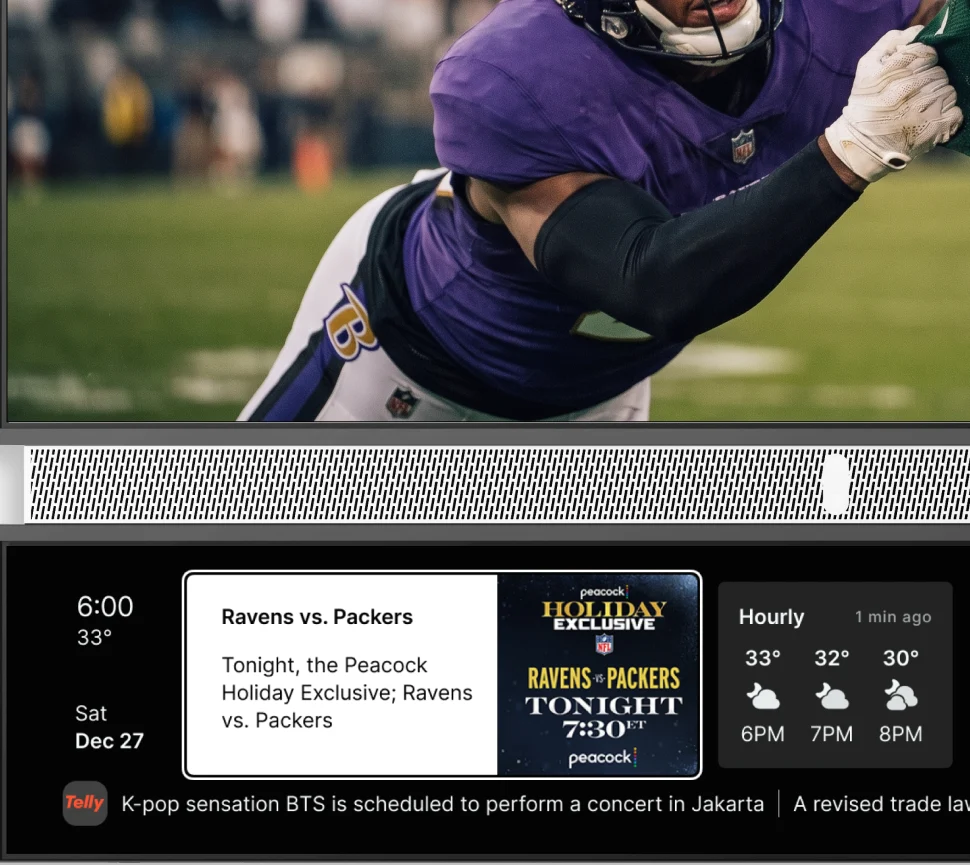
Furthermore, the taxonomy’s enhanced granularity helps advertisers avoid what Purayil termed "sorta CTV" OOH placements – for instance, televisions mounted in bars. For a brand whose CTV creative relies on sound, these environments might be undesirable. Conversely, a brand targeting sports fans with creative where audio is less critical might deliberately seek out these "sorta CTV" inventory types to broaden their reach. By clearly delineating these distinctions, the new taxonomy addresses concerns from both buyers and sellers, ensuring that disparate types of OOH inventory are not indiscriminately lumped together. This leads to more relevant media for advertisers and allows publishers to effectively showcase the unique value of their inventory without the risk of mismatched placements negatively impacting performance metrics.
Empowering Niche Publishers and Driving Open Marketplace Growth
Beyond enabling more precise targeting for large brands, the new taxonomy is expected to level the playing field for smaller, more niche OOH publishers. Purayil highlighted that larger OOH platforms, such as OUTFRONT Media, often benefit from established relationships with specialist agencies and direct sales teams, making their inventory well-understood and easily planned. Smaller publishers, lacking these advantages, have historically struggled to gain visibility and programmatic access.
However, by adopting the new OpenOOH taxonomy, these smaller entities can significantly enhance the programmatic activation of their inventory. This provides advertisers with a more straightforward method for executing OOH buys across a diverse mix of large and small publishers. Crucially, it enables better curation and management of these buys within existing omnichannel programmatic buying flows, potentially reducing reliance on direct deals and private marketplace (PMP) arrangements.
Purayil expressed optimism about the potential shift in revenue streams: "The revenue is already flowing in heavily through the private marketplace side," he commented. "But this could potentially move some of that revenue into the open marketplace, if it makes sense." This suggests a future where more OOH inventory, previously confined to less transparent or more exclusive deals, could become accessible through programmatic open auctions, further integrating OOH into the broader digital advertising ecosystem.
The OAAA’s commitment to advancing the OpenOOH taxonomy reflects a forward-looking strategy to position out-of-home advertising as a dynamic and integral component of the modern, data-driven media landscape. As programmatic buying continues its inexorable rise, this initiative is poised to unlock new growth avenues for the OOH industry, ensuring its continued relevance and profitability in an increasingly digital world. The integration of the taxonomy working group into the OAAA Taxonomy Committee also signals a sustained effort to evolve and adapt the standard, ensuring it remains a robust tool for years to come.