rifanmuazin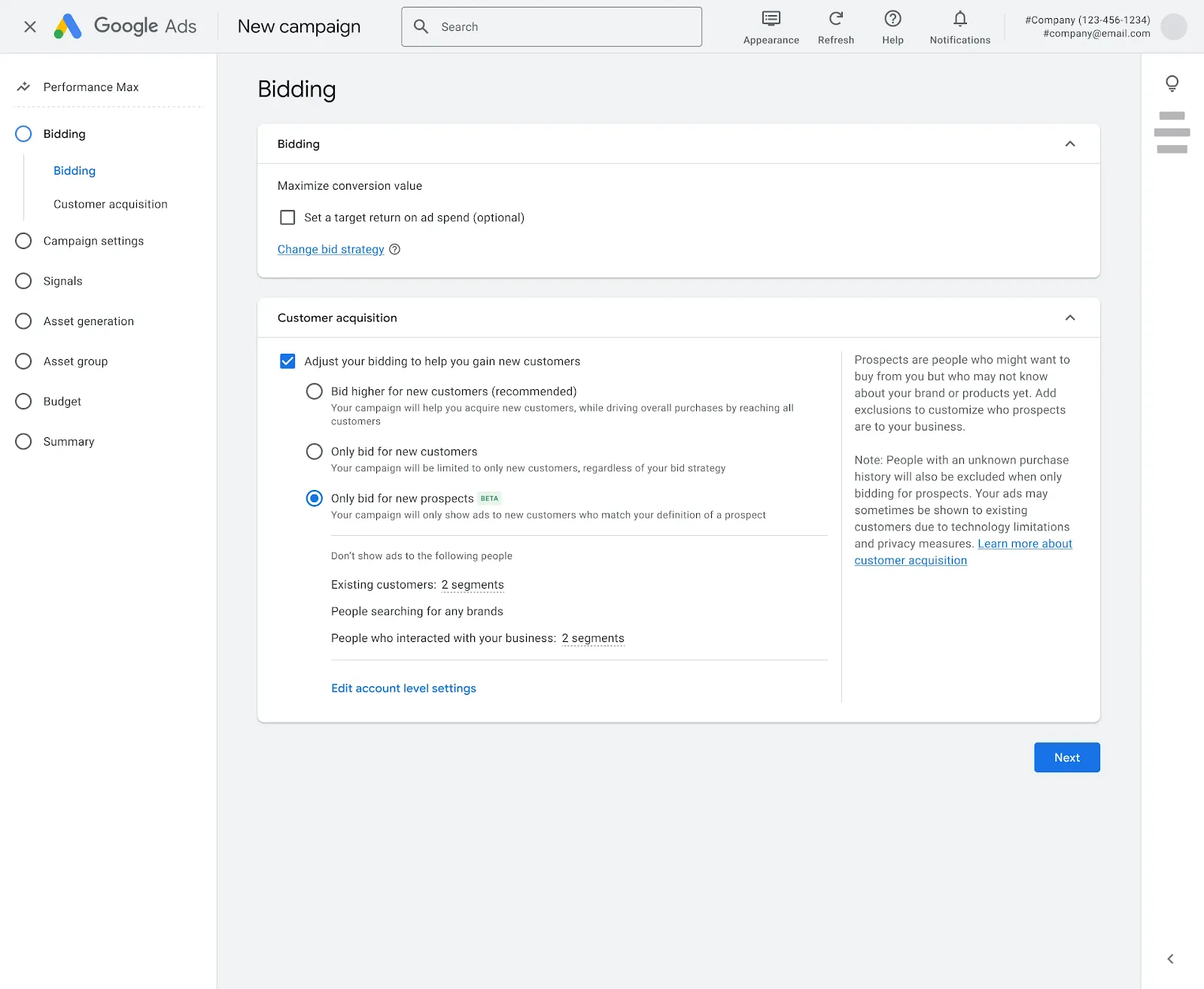
Google Ads has introduced a significant expansion to its New Customer Acquisition (NCA) capabilities with the rollout of “Prospect Mode.” This novel feature is specifically engineered to target brand-unaware users, a demographic often referred to as “cold prospects” within the digital marketing sphere. These are individuals who have not previously searched for, engaged with, or visited an advertiser’s website, representing an entirely untapped segment of potential customers. The introduction of Prospect Mode marks a strategic evolution in Google’s offerings, moving beyond traditional new customer targeting to a more granular approach focused on initial brand discovery.
The Evolution of Google Ads’ Customer Acquisition Strategies
For years, digital advertisers have grappled with the challenge of efficiently identifying and converting genuinely new customers without inadvertently re-engaging existing ones. Google Ads has progressively developed tools to address this, with the New Customer Acquisition (NCA) goals being a prominent feature. Prior to Prospect Mode, NCA primarily focused on identifying users who had not previously made a purchase, relying on various signals such as CRM data uploads, conversion tracking, and Google’s own machine learning algorithms to exclude known customers. This approach, while effective, still allowed for the targeting of users who might have had some prior interaction with the brand, such as visiting the website or engaging with earlier ad campaigns, even if they hadn’t completed a purchase.
The digital advertising landscape is characterized by its dynamic nature, with platforms constantly refining their targeting mechanisms in response to evolving user behavior, technological advancements, and increasing privacy regulations. The shift towards automation and machine learning has been a consistent theme, with Google continually enhancing its Smart Bidding strategies and automated campaign types to optimize performance. Prospect Mode can be seen as a logical next step in this trajectory, leveraging sophisticated AI to pinpoint users at the very top of the marketing funnel, those who are entirely unfamiliar with a brand or its offerings. This aligns with a broader industry trend of seeking out growth opportunities beyond immediate conversion, focusing on brand awareness and long-term customer relationships.
Defining the “Cold Prospect” and the Mechanics of Prospect Mode
At its core, Prospect Mode differentiates itself by narrowing the definition of a “new customer” to an entirely “brand-unaware” individual. Google explicitly states that this mode targets those who have “not searched for, engaged with, or visited your site.” This distinction is crucial for businesses aiming for aggressive market penetration or those launching new products and services without an established audience. The challenge with cold prospects has always been their inherent difficulty to reach cost-effectively, given their lack of expressed interest or familiarity.
The technical implementation of Prospect Mode is integrated directly into the Bidding section of Google Ads campaigns, presenting a new setting labeled “Only bid for new prospects BETA.” By activating this option, advertisers instruct their campaigns to exclusively show ads to users who fit Google’s stringent criteria for a prospect. The system automatically applies a bundle of exclusions to filter out any user who has:
- Previously searched for the brand’s products or services.
- Interacted with the brand’s previous ad campaigns.
- Visited the brand’s website or app.
- Been identified as an existing customer through CRM lists or other signals.
This automated filtering mechanism is designed to ensure that advertising spend is directed solely towards individuals who represent genuinely new, uninitiated potential customers. This level of automated exclusion minimizes the risk of wasting budget on users who are already aware of the brand or are further down the conversion funnel, allowing advertisers to focus on pure acquisition.
Strategic Rationale and Market Implications
The introduction of Prospect Mode comes at a time when competition for digital ad space is intensifying, and the cost of acquiring new customers is steadily rising across many sectors. Businesses are constantly seeking innovative ways to expand their reach and find new audiences efficiently. Prospect Mode offers a compelling solution for several strategic objectives:
- Market Expansion: For companies looking to break into new markets or significantly expand their customer base beyond their current sphere of influence, Prospect Mode provides a direct pathway to audiences unfamiliar with their brand.
- Product Launches: New products or services, especially those from emerging brands, can leverage Prospect Mode to generate initial awareness and interest among a broad, untargeted audience that might otherwise be difficult to reach.
- Brand Awareness Initiatives: While Google Ads is often seen as a performance marketing channel, Prospect Mode blurs this line, offering a powerful tool for upper-funnel brand awareness campaigns that are directly linked to new customer acquisition.
- Mitigating Ad Fatigue: By constantly reaching out to genuinely new audiences, advertisers can reduce the risk of ad fatigue among their existing target segments, maintaining the novelty and effectiveness of their campaigns.
The broader market implications are significant. Industry data consistently shows that while remarketing and existing customer engagement are vital for retention and upsells, sustainable growth hinges on a robust new customer acquisition strategy. A report by Statista indicates that global digital advertising spending continues to climb, projected to reach over $700 billion by 2024, highlighting the immense competition for consumer attention. In this environment, tools that can precisely target previously unreachable segments become invaluable. Prospect Mode, with its focus on “cold” audiences, aims to unlock new reservoirs of potential customers that might have been too expensive or complex to target effectively through traditional methods.

Expert Perspectives and Anticipated Benefits
Digital marketing professionals and PPC specialists are keenly observing the rollout of Prospect Mode, with many anticipating its potential to reshape acquisition strategies. Industry analysts suggest that this feature could be particularly beneficial for:
- E-commerce brands: Especially those with a wide product range or those entering new niches, where reaching entirely new shoppers is paramount.
- Startups and challenger brands: For whom building initial brand recognition and market share from scratch is a primary objective.
- Businesses in highly competitive sectors: Where differentiation through reaching new audiences before competitors can be a significant advantage.
“The ability to explicitly target brand-unaware users with automated exclusions is a game-changer,” commented Sarah Jenkins, a senior PPC strategist at a leading digital agency. “Previously, achieving this level of ‘cold’ targeting required complex manual exclusions and a lot of guesswork. Google’s machine learning, driving Prospect Mode, promises to make this far more efficient and scalable. We anticipate seeing improved return on ad spend for pure acquisition campaigns, even if the initial cost per acquisition might be higher due to the nature of targeting users at the very top of the funnel.”
Another perspective comes from Mark Thompson, a marketing technology consultant: “This move by Google aligns with the broader industry shift towards privacy-centric advertising. As third-party cookies diminish, platforms like Google are investing heavily in first-party data and sophisticated contextual and behavioral signals to maintain targeting efficacy. Prospect Mode, by leveraging Google’s vast data ecosystem to identify truly unknown users, demonstrates how AI can bridge the gap in a world with stricter data privacy.”
The anticipated benefits include:
- Reduced wasted ad spend: By automatically filtering out known users or those who have previously interacted, advertisers ensure their budget is focused purely on new outreach.
- Expanded reach: Access to a previously difficult-to-target segment of brand-unaware users.
- Simplified campaign management: The automated exclusions reduce the manual effort required to set up and maintain complex exclusion lists.
- Improved data signals for Google’s AI: As more advertisers use Prospect Mode, Google’s machine learning algorithms will likely become even more adept at identifying and targeting truly new prospects, leading to continuous improvement in performance.
Challenges and Considerations for Adoption
While Prospect Mode presents significant opportunities, advertisers should approach its implementation with a clear understanding of potential challenges and best practices.
- Higher Initial CPA: Targeting cold prospects inherently means a longer sales cycle and potentially higher initial costs per acquisition (CPA) compared to remarketing or targeting warm leads. Advertisers must set realistic expectations and allow sufficient budget and time for the campaigns to optimize. It’s an investment in future growth rather than immediate, low-cost conversions.
- Creative Strategy: Engaging brand-unaware users requires a distinct creative strategy. Ads need to be highly compelling, clearly communicate the brand’s value proposition, and overcome initial skepticism. Generic or overly promotional creatives may not resonate with an audience unfamiliar with the brand. Strong visual storytelling and clear calls to action are crucial.
- Landing Page Experience: The user journey for a cold prospect must be seamless and informative. Landing pages should be designed to introduce the brand, explain its benefits, and guide the user towards a micro-conversion (e.g., email sign-up, brochure download) or direct purchase, without overwhelming them.
- Measurement and Attribution: Accurately measuring the long-term impact of Prospect Mode campaigns will require sophisticated attribution models that consider the entire customer journey, not just the last click. Advertisers need to track how these initially cold prospects progress through the funnel and contribute to overall business growth.
- Budget Allocation: Integrating Prospect Mode into an existing marketing budget requires careful consideration. It should complement, rather than replace, existing strategies for nurturing warm leads and retaining customers. A balanced approach across the marketing funnel is essential.
- Beta Status: As the feature is currently in “BETA,” advertisers should expect potential refinements and changes. Early adopters should monitor performance closely and provide feedback to Google to help shape its evolution.
The Future of Automated Targeting and Customer Discovery
Prospect Mode is more than just a new feature; it represents a philosophical shift in how Google is enabling businesses to grow. It underscores Google’s commitment to leveraging its vast data and AI capabilities to simplify complex marketing tasks and open up new avenues for customer discovery. As the digital advertising ecosystem continues to evolve, driven by advancements in machine learning and increasing privacy demands, we can expect to see more such intelligent, automated solutions emerge.
This move by Google also subtly hints at the increasing importance of robust first-party data strategies for advertisers. While Prospect Mode helps find new customers, the ability to effectively nurture and retain them will increasingly depend on a brand’s own data collection and utilization capabilities. The future of customer acquisition will likely involve a sophisticated interplay between platform-driven prospecting tools like this and a brand’s internal data intelligence, creating a more holistic and efficient growth engine.
In conclusion, Google Ads’ Prospect Mode offers a powerful new lever for businesses seeking genuine growth through reaching entirely new, brand-unaware audiences. By automating the identification and exclusion of known users, it streamlines the process of cold prospecting, allowing advertisers to focus their efforts and budgets on expanding their market presence. While requiring careful strategic planning and creative execution, this feature is poised to become an indispensable tool for any business committed to sustainable customer acquisition in an increasingly competitive digital landscape.