

The digital marketing landscape is undergoing a profound transformation, with the advent and rapid proliferation of AI-powered search engines fundamentally reshaping how users discover information online. This seismic shift, characterized by the emergence of "answer engines," has propelled the skill of optimizing websites for AI search to the forefront for marketers globally. Evidence of this acceleration is compelling: monthly unique visitors to major answer engines surged from 634 million in Q1 2025 to a staggering 904 million in Q1 2026, marking an increase of over 40% in just one year, according to research conducted by Wix Studio. This unprecedented growth underscores the urgent need for businesses to adapt their digital strategies to capture visibility in this evolving ecosystem.
The Paradigm Shift: From Links to Answers
The rise of AI search, often termed Answer Engine Optimization (AEO), represents a significant evolution from traditional Search Engine Optimization (SEO). While conventional search engines primarily present a list of links for users to explore, answer engines leverage large language models (LLMs) to provide direct, concise answers, often synthesizing information from multiple sources and citing them within the response. This shift prioritizes immediate utility and convenience for the user, moving beyond mere discoverability to definitive resolution of queries.
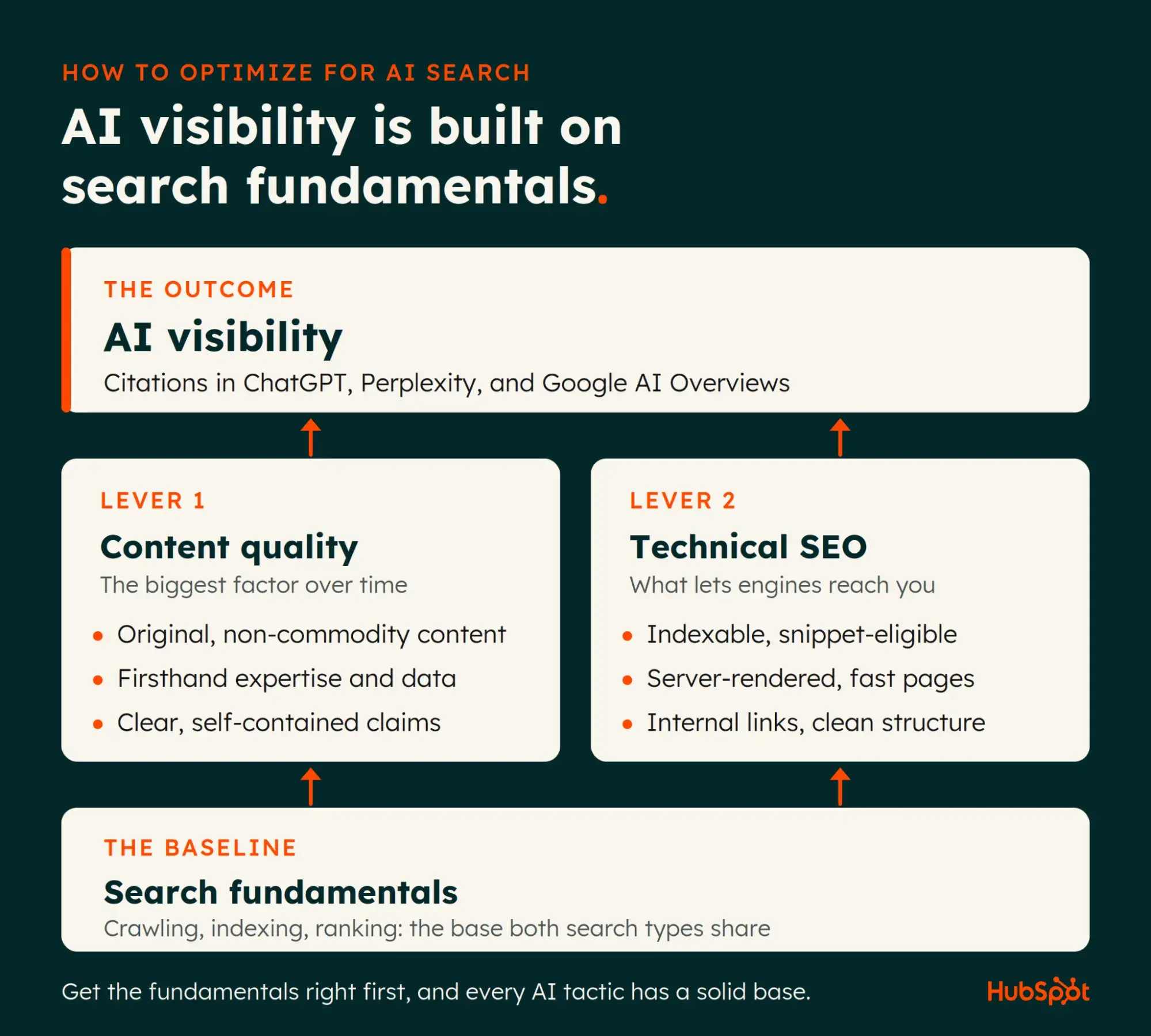
Crucially, AEO does not supersede SEO; rather, it builds upon its foundations. The underlying infrastructure for many AI search systems remains deeply intertwined with traditional search mechanisms. Google, for instance, has explicitly stated that its AI Overviews, powered by a customized version of Gemini, operate within the existing Search systems. Similarly, ChatGPT, a prominent AI answer engine, integrates web results through providers that include Bing in certain contexts. This shared foundation means that the fundamental principles governing traditional search rankings—such as crawlability, indexability, and content quality—are prerequisites for earning citations in AI-driven responses. As customers increasingly oscillate between classic search and answer engines, a dual strategy ensuring visibility across both channels is paramount for sustained business presence.
Foundational Principles: Why Traditional SEO Remains Paramount
Before embarking on any specialized AEO tactics, businesses must ensure their websites meet the baseline requirements of traditional SEO. An answer engine cannot cite a page it cannot discover, process, or trust. Therefore, a robust technical SEO framework and a commitment to high-quality content are non-negotiable.
Google’s guidelines explicitly state that for a page to appear in AI Overviews or AI Mode, it "must be indexed and eligible to be shown in Google Search with a snippet." This directive highlights that basic discoverability and rendering capabilities are not just helpful but essential. Pages that search engines struggle to crawl, render, or index will have significantly fewer pathways into an AI answer. Content quality also carries equal weight; engines prioritize sources they can reliably parse and deem trustworthy. The standards that secure high rankings in traditional search are the same standards that increase the likelihood of receiving AI citations.
Crafting Content for AI Visibility: The People-First Approach
At the heart of successful AI search optimization lies content quality, particularly "people-first" content. Google’s own recommendations emphasize the value of "unique, compelling, and useful" content, suggesting it has a more significant impact on a site’s presence in generative AI search than many other technical steps. The company draws a clear distinction between "commodity content," which merely repackages widely known information, and "non-commodity content," which is built on genuine expertise and firsthand experience.
An answer engine has limited incentive to cite a page that it could easily generate itself from its vast training data. Non-commodity content, however, offers what an AI model cannot inherently produce: original research, proprietary data, unique subject-matter expertise, and a distinct human perspective. This type of content significantly enhances citation potential. Supporting data from SE Ranking’s analysis of over 216,000 pages reinforces this: content quoting experts garnered an average of 4.1 ChatGPT citations, compared to 2.4 for content without such expertise. Similarly, pages containing 19 or more data points averaged 5.4 citations, versus 2.8 for data-light pages. To maximize quotability, insights should be stated plainly and clearly, making them easy for an engine to extract as self-contained claims.
Technical Excellence: The Underpinnings of AI Discoverability
Beyond content, robust technical foundations are indispensable for AI search visibility. Answer engines can only cite pages they can effectively reach and index.
- Crawlability, Indexing, and Speed: As reiterated by Google, the fundamental requirement for appearing in AI features is for a page to be indexed and eligible for a snippet. Page loading speed also plays a critical role. SE Ranking research indicates that pages with a First Contentful Paint (FCP) under 0.4 seconds averaged 6.7 ChatGPT citations, nearly three times more than the 2.1 citations for pages slower than 1.13 seconds. Faster loading times contribute to a smoother crawling and indexing process, signaling a positive user experience.
- Site Structure and User Experience: Effective internal linking helps AI crawlers discover related content, creating a comprehensive network of information. A clean, responsive page experience across all devices is also crucial. Main content should be presented as accessible text, clearly distinguishable from other page elements, and not overly reliant on scripts that crawlers might bypass.
- JavaScript Considerations: JavaScript often poses a significant challenge. While Googlebot is adept at rendering JavaScript when unblocked, many other AI crawlers may only process raw HTML, failing to execute client-side scripts. This can result in content appearing as a blank page to these crawlers, effectively excluding it from platforms like ChatGPT or Perplexity. Therefore, primary content should be served in server-rendered HTML, adhering to established JavaScript SEO best practices.
- Clear Page Structure: Google consistently recommends a clear and logical page structure, utilizing descriptive headings (H1, H2, H3) and well-defined sections. This not only aids human readers in navigation but also helps AI models parse and understand the page’s content more efficiently, making it easier to extract relevant information.
Structured Data and Snippet Management for Precision
Structured data and careful snippet controls are powerful tools for communicating intent and managing visibility within AI search results.
- Structured Data (Schema Markup): Structured data provides answer engines with a machine-readable map of your page’s content, reducing ambiguity about its meaning and trustworthiness. However, this map is only beneficial if it is accurate and honest. Google’s guidance is explicit: markup must genuinely reflect the text visible to a user. Employing schema to describe content that isn’t actually present on the page constitutes cloaking, a black-hat SEO tactic. Schema should amplify already clear and credible copy; it cannot salvage thin or misleading content.
- Snippet Controls: Snippet controls regulate how much of a page an engine can "lift" for display, making them critical gatekeepers for AI visibility. Google explicitly states that a page must be indexed and eligible for a snippet to appear in AI Overviews. Consequently, directives that limit snippets also limit AI answers.
Three primary controls are relevant:max-snippet:[number]: Sets the maximum character length for a text snippet. Amax-snippet:0effectively blocks all text snippets.nosnippet: Prevents any text snippet from being shown.data-nosnippet: An inline HTML attribute applied to a specific element within the page body. This allows granular control, withholding only a particular passage that might be sensitive or easily taken out of context, while the rest of the page remains eligible for citation.
The critical point is that these controls govern both classic search results and AI answers. A straynosnippettag or an overly restrictivemax-snippet:0can inadvertently exclude a strong page from AI responses. Marketers should review theirrobotsmeta tags in the HTML head or X-Robots-Tag HTTP headers, often accessible through CMS or SEO plugins, to ensure appropriate snippet allowances.
Optimizing for Multimodal and Local Search

Generative AI results are not limited to text; they can display images and videos alongside text links, creating additional avenues for website visibility.
- Images and Video: Pairing written content with relevant, high-quality image and video assets, optimized according to standard SEO best practices, also prepares them for AI features. Video, in particular, offers significant visibility: Fan Out’s off-site study identified YouTube as the second most-cited platform, accumulating 1,531 citations. Since AI systems may not "watch" videos in the same way humans do, accompanying text is crucial. Transcripts, descriptive summaries, and timestamps significantly aid AI understanding. Fan Out found that 13.7% of YouTube citations linked directly to a timestamped moment within a video.
- Local and Merchant Data: For queries with commercial or local intent, local and merchant data becomes paramount. Google indicates that its generative AI responses can integrate product listings, product information, and details about local businesses. To be eligible for these enhanced responses, businesses must maintain current Merchant Center feeds and updated Google Business Profiles. Google also highlights newer options like Business Agent, a conversational experience on Search that enables direct customer interaction with brands.
Strategic Content Formatting for Direct Answers
The way content is structured and presented significantly influences its likelihood of being cited by answer engines.
- Front-Loading Answers: Answer engines heavily reward pages that resolve the user’s question early. CXL’s analysis of AI Overview citations revealed that the majority of cited passages originated from the top third of a page, with only about a fifth coming from the bottom 40%. Therefore, leading with the answer is a critical strategy. HubSpot’s AEO guide recommends placing the main answer within the first 40 to 60 words of a section, then progressively layering in additional detail and context.
- Question-Led Subheadings: Phrasing H2 or H3 headings as direct questions that a user might ask reinforces this "answer-first" pattern. Kevin Indig’s study on ChatGPT citations found that cited text was twice as likely to contain a question mark, and headings accounted for 78.4% of citations linked to questions. This approach provides a clear prompt for the engine and a self-contained paragraph that can be easily lifted as a reply.
- Digestible Formats: Supporting bullet points, numbered lists, and short summaries make information easier for AI models to extract. A 2026 preprint on structural formatting found that lists and tables delivered 43% higher extraction accuracy than the same facts presented as continuous prose. This "answer-first" formatting transforms a page into a collection of quotable, self-contained units.
Navigating the Diverse Landscape of Answer Engines: Perplexity vs. ChatGPT
While the overarching goal is AI visibility, the specific behaviors and preferences of different answer engines can vary significantly. Treating each engine as a distinct channel is crucial for maximizing citation potential.
- Citation Volume and Preferences: Perplexity, for instance, is a much heavier citer than ChatGPT. Fan Out’s data shows Perplexity supplying 59% of off-site citations and drawing on an average of 10.8 sources per answer, whereas ChatGPT is more selective, averaging about 3.3 citations per query. Their content preferences also diverge. Wix Studio research indicates that Perplexity leans on discussion pages (e.g., LinkedIn, G2, Reddit), which account for 17.35% of its citations. In contrast, ChatGPT tends to favor traditional long-form articles. In a B2B SaaS query dataset from Fan Out, 96% of LinkedIn citations were attributed solely to Perplexity.
- Indexing Speed: Timing also separates these engines. A controlled experiment by SE Ranking and Search Engine Land demonstrated that Perplexity could push newly published pages to the top spot within one to three days, though citations often went to supporting test domains rather than the main brand site. ChatGPT, while slower to react, strengthened its citations for the fake brand over a longer period.
- Limited Overlap: These distinct habits rarely overlap. Fan Out found that only 7.7% of cited URLs appeared in more than one engine, underscoring that success on one platform does not guarantee similar performance on another. A tailored approach for each key answer engine is therefore advisable.
Implementing an Evolving AEO Strategy: Repeatable Workflows
Optimizing for AI search is an ongoing process, not a one-time fix. Implementing a repeatable workflow ensures continuous improvement and adaptability.
- Research and Map Entities: Begin by grouping common buyer questions into thematic clusters. Develop an entity map that illustrates the connections between your brand, products, and core topics, helping engines understand their relationships and relevance.
- Draft Answer-First Content: Structure each section to resolve its primary question within the opening lines, utilizing question-led subheadings and answer-first formatting. Always lead with the claim, then substantiate it with original data, expert insights, and credible evidence.
- Add Structured Data: Apply schema markup that accurately reflects the visible content on the page, adhering to structured data rules to ensure the markup supports comprehension rather than exaggerating claims.
- Quality Assurance Before Publishing: Before launch, confirm that the page is crawlable, renders its main content in server-side HTML, and validates correctly in a schema testing tool. A page that an engine cannot properly parse cannot be cited.
- Publish and Baseline: Upon publication, record the page’s initial standing in relevant answer engines to establish a benchmark for measuring future improvements.
- Set a Refresh Cadence: Schedule regular reviews to update statistics, examples, and claims. Prioritize pages whose information is most susceptible to becoming outdated.
Debunking Persistent Myths in AI Search Optimization
As with any emerging field, AI search optimization is subject to various misconceptions. Several widely circulated tactics lack supporting data or contradict official guidance.
- Special Markup for AI Overviews: Google has explicitly stated that its AI features do not require dedicated schema. A page merely needs to be indexed and eligible for a snippet. While structured data remains a valuable SEO practice, adding it solely to "earn" AI citations is not supported.
- The
llms.txtFile: The concept of anllms.txtfile, analogous torobots.txtbut for LLMs, has no proven efficacy. SE Ranking’s analysis across nearly 300,000 domains found no correlation between the presence of anllms.txtfile and AI citations; in fact, their prediction model became more accurate after removing consideration of this file.
Measuring Success and Iterating for Growth
Effective AEO requires diligent measurement and a commitment to iterative refinement. Success should be tracked through two primary lenses: visibility signals and conversion data.
- Visibility Signals: Monitor mentions and citations in answer engine results. Tools that track brand presence in AI overviews, snippets, and featured responses can provide valuable insights into where and how your content is being leveraged.
- Conversion Data: Ultimately, visibility must translate into business value. Analyze how AI-driven traffic contributes to conversions, leads, or sales. This data helps to quantify the return on investment for AEO efforts.
Just like traditional SEO, AI search optimization is a continuous journey. Establishing a fixed refresh cadence for content updates, prioritizing pages with time-sensitive information, and consistently monitoring performance are crucial. The initial 90 days should focus on setting up the AEO strategy, after which it can operate on a structured, iterative cycle. This approach, centered on adaptable processes, clear guardrails, and a focus on evolving user behavior, ensures that an AI SEO strategy remains effective even as the underlying engines continue to change and develop.
The Future of Search: A Continuous Evolution
The landscape of digital search is in a state of perpetual evolution, with AI-driven answer engines at its cutting edge. The rapid growth in their user base signifies a fundamental shift in information consumption. For marketers and businesses, this necessitates a proactive, informed, and adaptable approach to website optimization. By understanding the symbiotic relationship between SEO and AEO, prioritizing people-first content, ensuring technical excellence, strategically structuring information, and adapting to the nuances of different AI platforms, organizations can secure and expand their digital footprint. The blend of human expertise in content creation and strategic implementation, coupled with the power of technological advancements, will define success in this new era of search.








