Lina Irawan
The venerable adage, "those who fail to learn from history are doomed to repeat it," resonates profoundly within the dynamic realm of email marketing, especially as the crucial holiday sale season approaches. Each year, the high-stakes environment of events like Black Friday, Cyber Monday, and the broader festive shopping period offers invaluable lessons that directly shape the tactical approaches for the subsequent year, ideally fostering a continuous cycle of enhanced performance and increased revenue for businesses across all sectors. As the 2026 holiday season rapidly draws near, email marketers and strategists are diligently poring over past performance metrics and emerging trends to optimize their campaigns.
Validity, a global leader in email deliverability and data quality, has leveraged its extensive Validity Intelligence Network (VIN) to provide critical insights into last year’s key inbox placement rate (IPR) trends from 2025. This comprehensive analysis serves not only to predict potential repetitions of these trends in 2026 but also to equip senders across all industries with the necessary adaptive strategies to maximize their seasonal outreach efforts. The findings underscore a rapidly evolving email landscape where traditional approaches may no longer suffice, particularly in light of significant policy shifts from major mailbox providers.
The Intensifying Holiday Email Rush: A Background Context
The holiday shopping season, traditionally spanning from Black Friday through Cyber Monday and extending into the New Year, has become an indispensable period for retailers and service providers alike. Originating in the United States, Black Friday historically marked the day when retailers began to turn a profit ("in the black"), while Cyber Monday emerged as its online equivalent. Over the decades, these events have globalized, transforming into a multi-week, international phenomenon characterized by aggressive discounting, heightened consumer spending, and, consequently, an unprecedented surge in digital communications, with email marketing at its forefront.
Email remains a cornerstone of holiday marketing strategies due to its direct reach, cost-effectiveness, and measurable ROI. However, this ubiquity also contributes to a fiercely competitive and often congested inbox environment. Consumers are inundated with promotional messages, making it increasingly challenging for brands to cut through the noise and land their messages in the primary inbox rather than the spam folder or promotional tabs. This environment necessitates a sophisticated understanding of deliverability metrics, sender reputation, and recipient engagement to avoid being filtered out by increasingly intelligent mailbox providers (MBPs). The insights gleaned from Validity’s 2025 data provide a crucial roadmap for navigating this high-stakes period.
Unpacking the "Danger Window": 2025 Key Trends from the Validity Intelligence Network
The 2025 holiday season, as analyzed by the VIN, revealed several intriguing trends, some of which defied established conventions in email marketing. These observations paint a clear picture of the pressures and pitfalls faced by senders during the peak period.
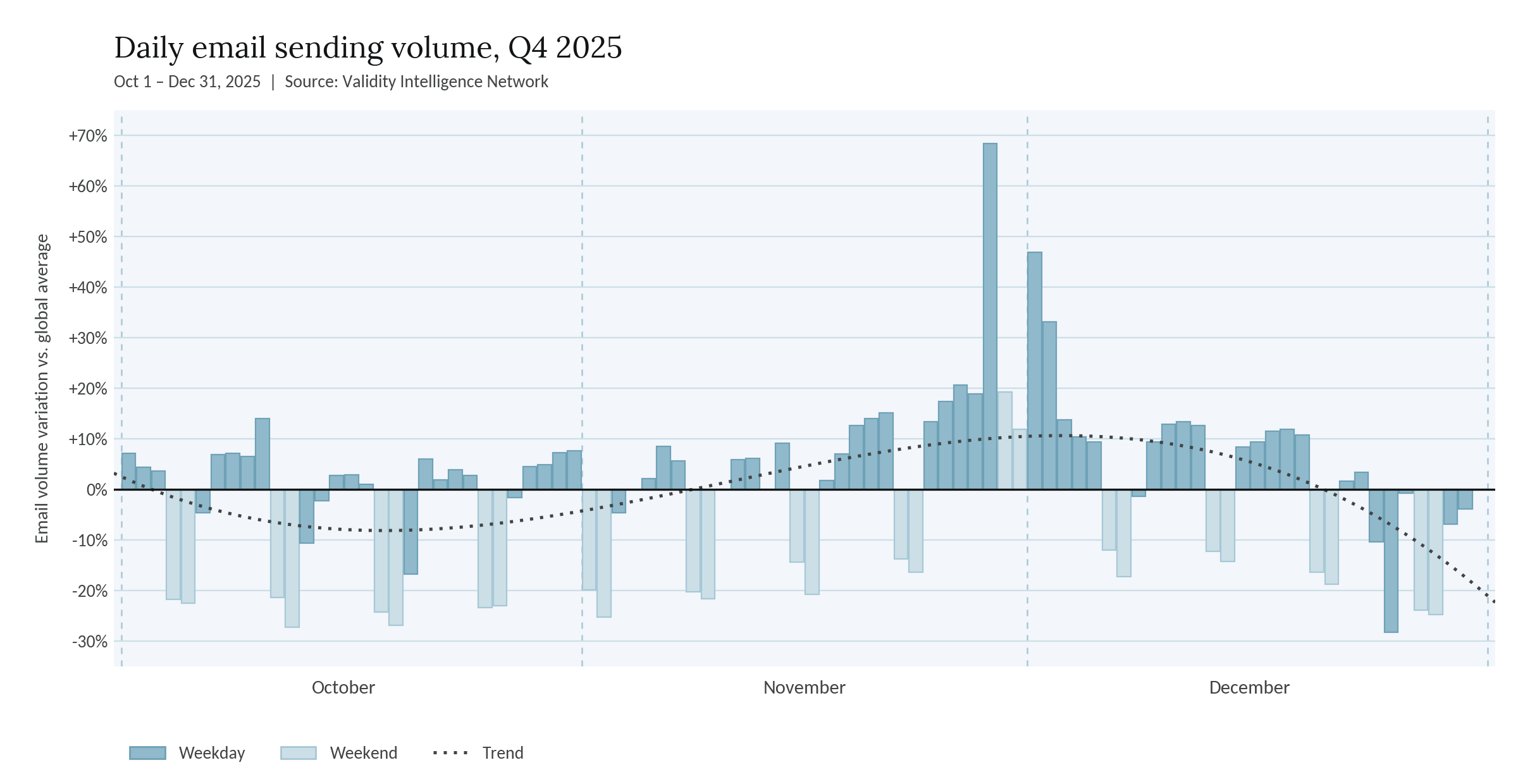
Sending Volume Spikes: In Q4 2025, leading up to and during the Black Friday/Cyber Monday week, Validity observed a dramatic increase in email sending volume. Average daily email volumes across the network surged by an estimated 175% compared to typical Q3 levels. During the Black Friday weekend itself, some sectors witnessed sending volumes explode by as much as 300%. This massive influx of emails places immense strain on both sender infrastructure and MBP filtering systems, simultaneously increasing the risk of recipient fatigue. While high volume is often intended to capture maximum attention, uncontrolled spikes can inadvertently trigger negative signals to MBPs.
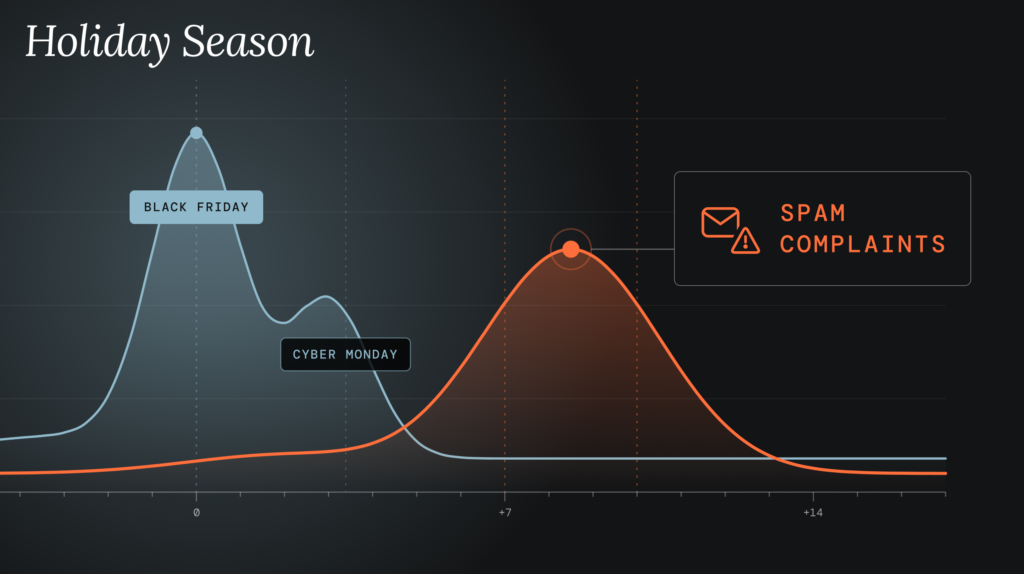
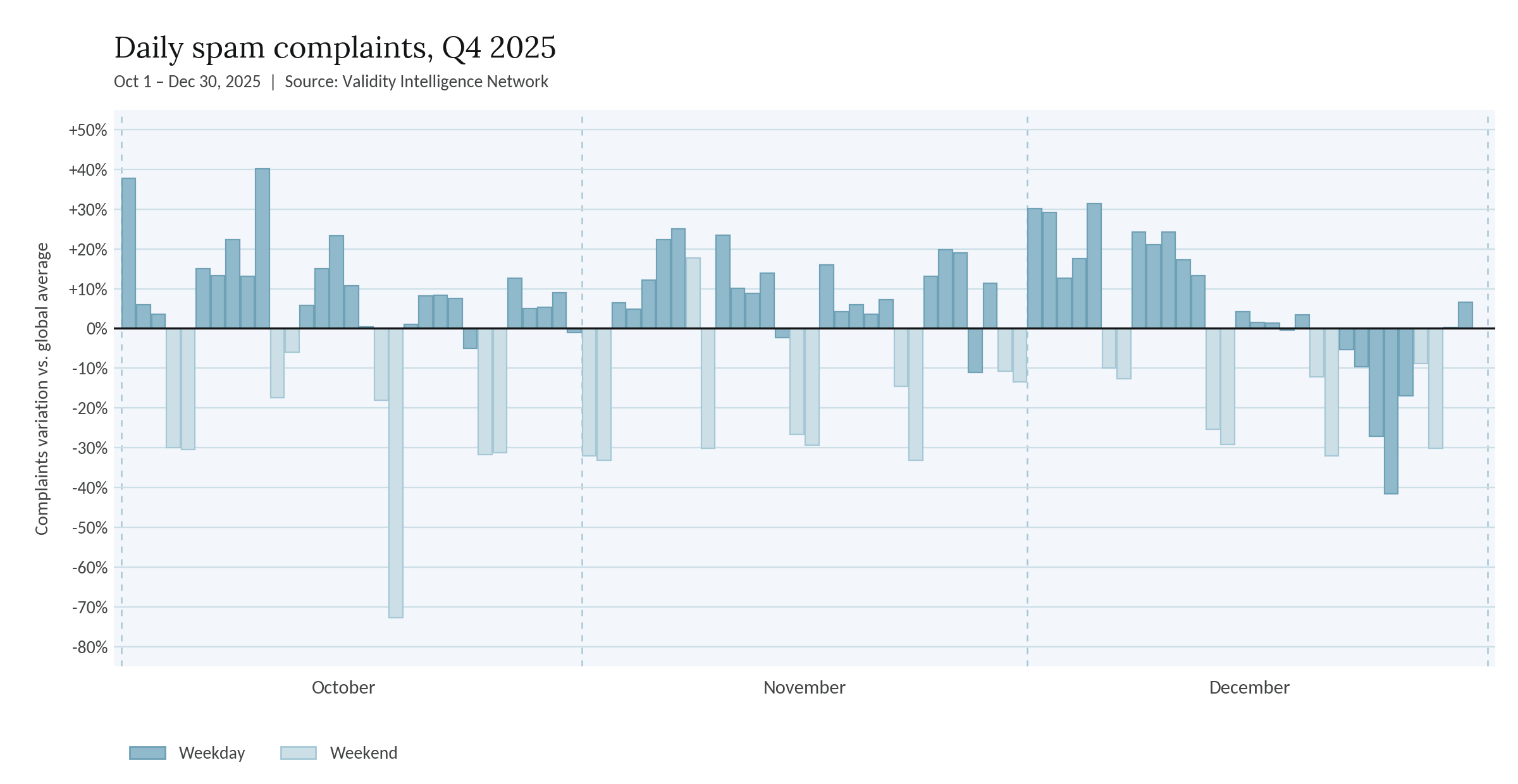
Elevated Spam Complaints: Directly correlated with the surge in sending volume, spam complaint rates saw a significant uptick in 2025. For many senders, complaint rates, which typically hover around 0.05% in calmer periods, doubled or even tripled to 0.1% or higher during the peak weeks. This escalation can be attributed to several factors: recipients feeling overwhelmed by promotional emails, less targeted or irrelevant content being sent to broader segments, and a general lowering of tolerance for unsolicited messages. High complaint rates are a critical red flag for MBPs, signaling poor engagement and potentially leading to reputation damage and future inbox placement issues.
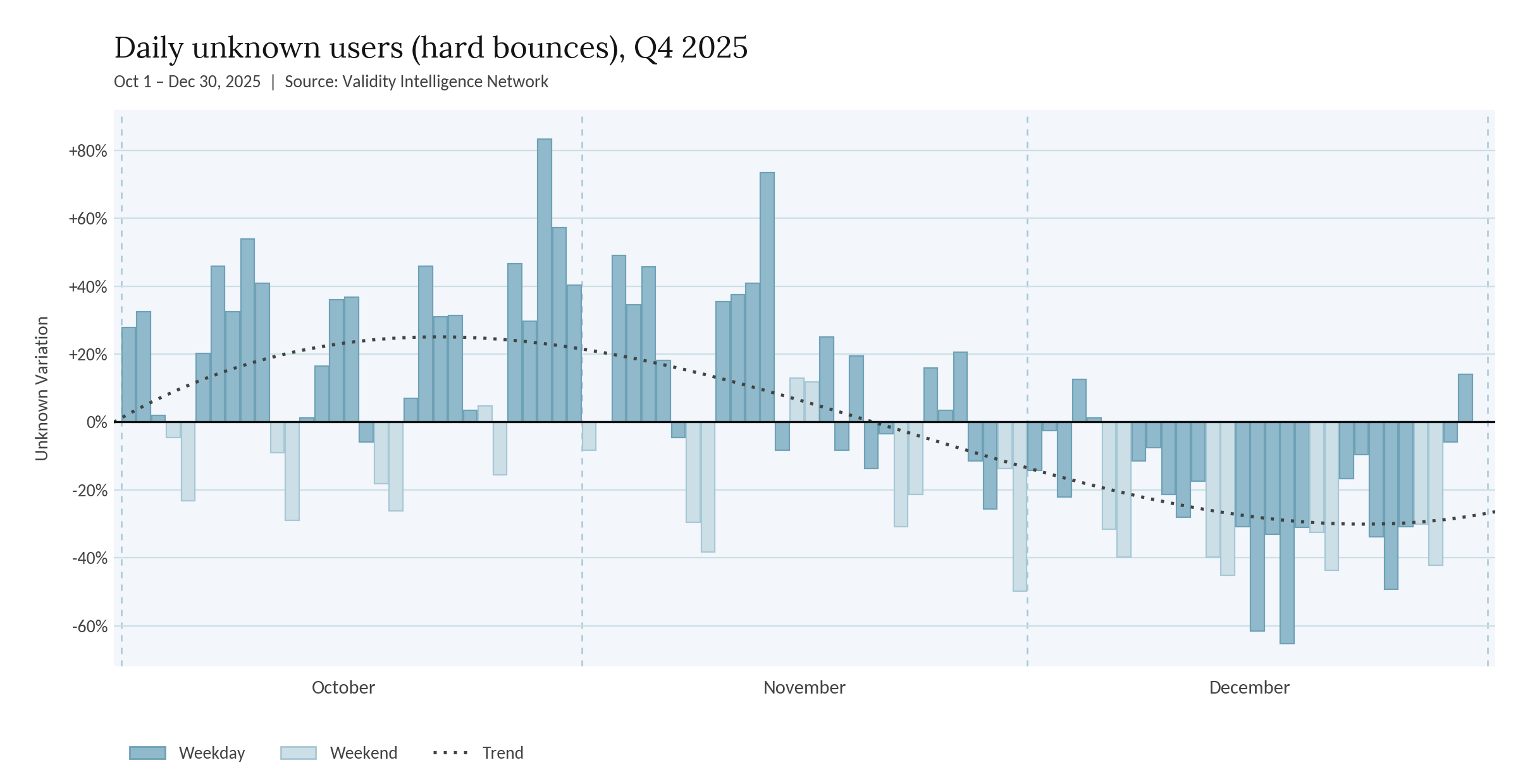
Rise in Unknown Users and Hard Bounces: The intense sending pressure of the holiday season often exposes underlying issues with list hygiene. In 2025, Validity’s data showed a subtle but consistent increase of 0.1-0.2% in hard bounce rates for senders who hadn’t diligently maintained their subscriber lists. While seemingly small, this rise indicates a higher proportion of emails being sent to invalid or non-existent addresses. This not only wastes sending resources but also negatively impacts sender reputation, as MBPs interpret high bounce rates as a sign of poor list management and potentially spammy behavior.
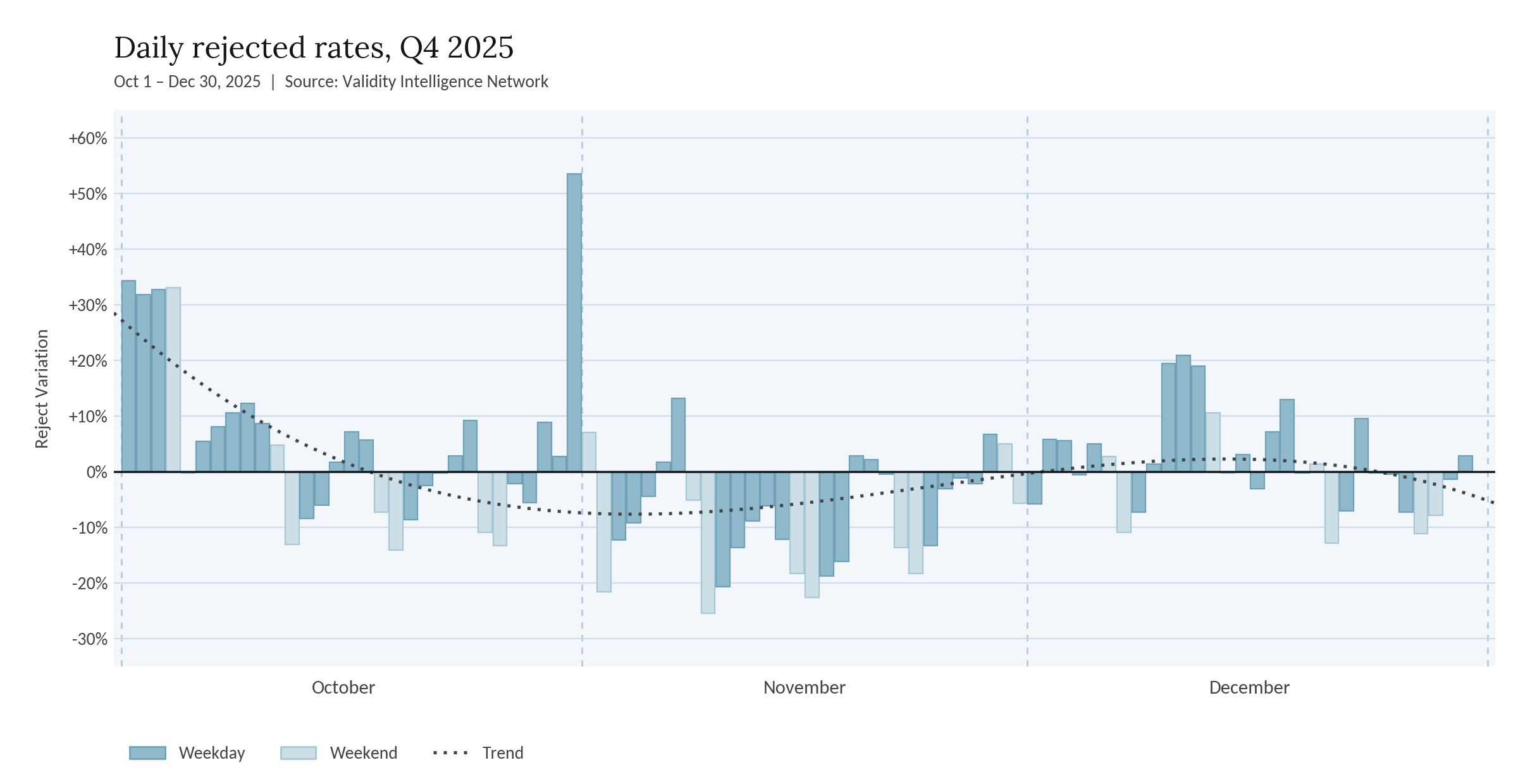
Increased Email Rejections: Overall email rejection rates also climbed during Q4 2025, increasing by an average of 1-2 percentage points, particularly for senders with inconsistent engagement metrics leading into the peak season. Rejections occur when MBPs outright refuse to accept an email, often due to severe reputation issues, blacklisting, or exceeding rate limits. This means the message doesn’t even make it to the spam folder, representing a complete loss of communication opportunity.
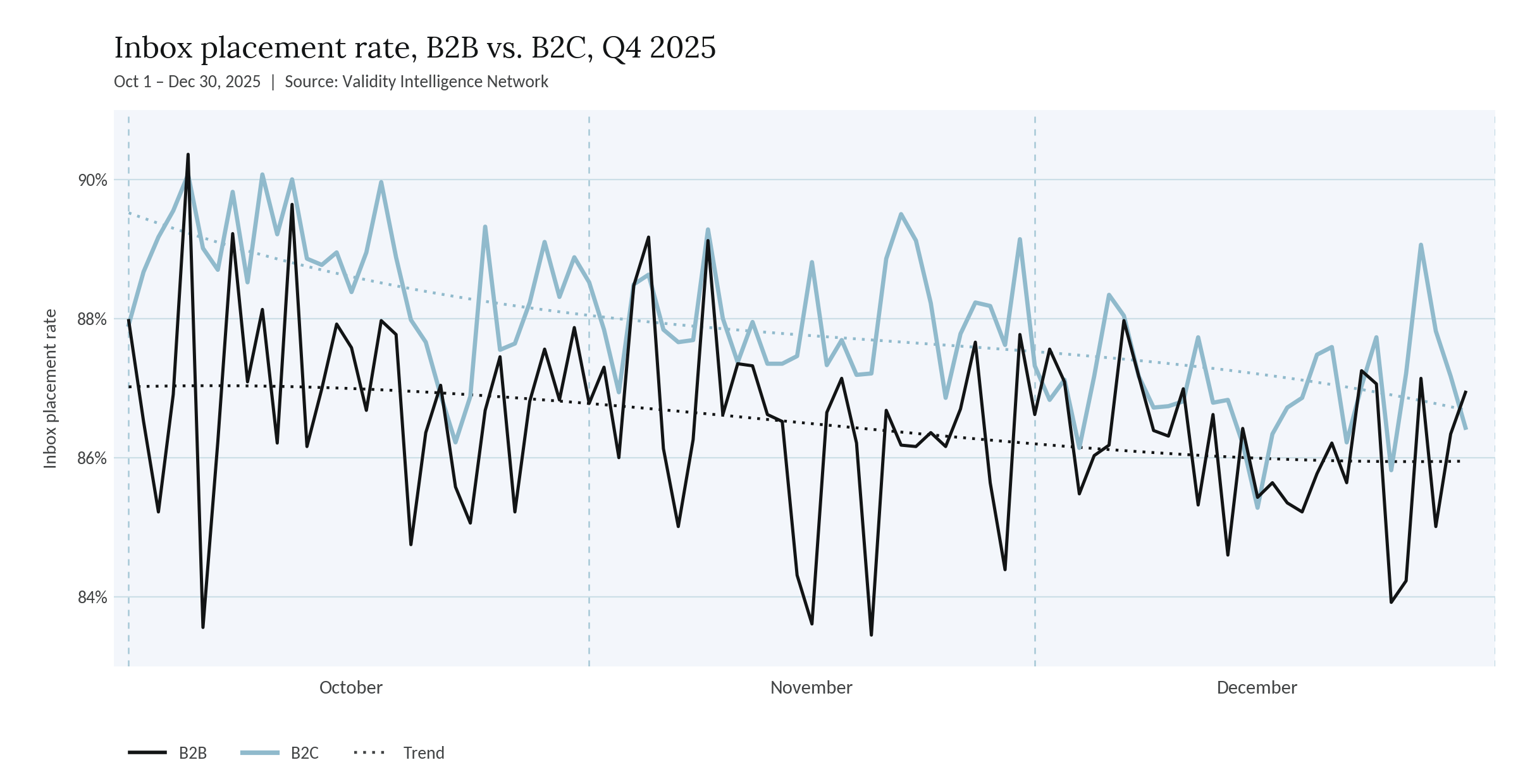
Overall Inbox Placement Rate (IPR) Decline: Across the board, Validity’s 2025 data indicated a general dip in average IPR during the November-December peak period. Compared to Q3 averages, many senders experienced an IPR reduction of 5-8 percentage points. This collective decline highlights the universal challenge of maintaining optimal deliverability when the entire email ecosystem is under stress. Even well-intentioned senders can see their IPR suffer simply due to the sheer volume of competing messages and the MBPs’ heightened filtering sensitivity.
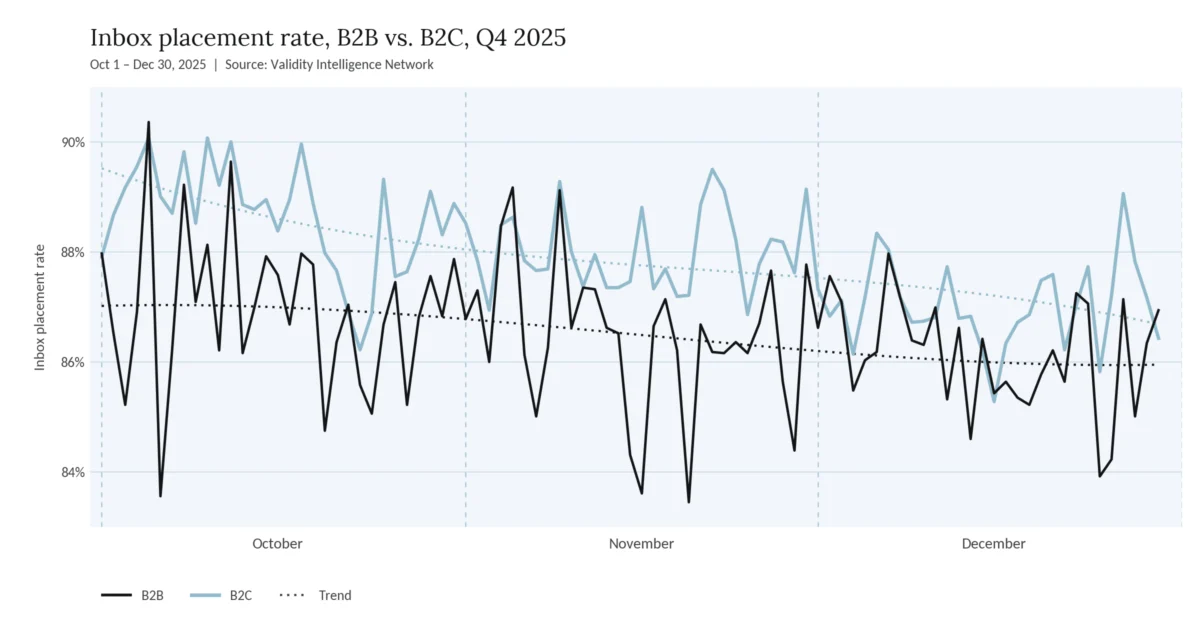
The B2B vs. B2C Divide: A particularly notable trend from 2025 was the divergent performance between B2C and B2B senders on Black Friday itself. While B2C inbox placement rates generally rose by approximately 3% on Black Friday, reflecting heightened consumer anticipation and engagement with retail promotions, B2B placement saw a contrasting decline of about 7%. This stark difference underscores the varying relevance of Black Friday promotions for business audiences and the distinct filtering mechanisms employed by corporate email systems, such as Proofpoint and other advanced spam filters that often sit atop Office 365 and Google Workspace environments.
Anticipating 2026: Navigating a Transformed Email Landscape
The question on every marketer’s mind is whether these 2025 trends will persist in 2026. While some patterns may echo, the email marketing landscape has undergone significant shifts that could make 2026 a distinctly different year. The most impactful changes stem from the new sender requirements introduced by major mailbox providers like Google and Yahoo in early 2024 (with full enforcement ramping up through 2025 and 2026).
The Google and Yahoo Mandates: These new requirements represent a monumental shift in email deliverability. They primarily focus on three pillars:
- Email Authentication: Requiring strong authentication standards like SPF, DKIM, and DMARC for all bulk senders. This is foundational for proving sender legitimacy.
- Spam Complaint Thresholds: Imposing strict limits on spam complaint rates (e.g., keeping them below 0.1-0.3%). Exceeding these thresholds can lead to messages being sent directly to spam or rejected entirely.
- Easy Unsubscribe: Mandating a one-click unsubscribe mechanism and processing unsubscribe requests within two days. This empowers recipients to easily opt-out, reducing the likelihood of them marking emails as spam.
These mandates, progressively enforced throughout 2025 and into 2026, are designed to create a cleaner, safer, and more user-friendly email environment. For senders, this means that foundational deliverability practices are no longer optional but mandatory. Validity’s 2026 year-to-date data for Gmail inbox placement already indicates a more sensitive filtering environment, with IPR showing more volatility or a plateauing trend compared to previous years for senders not fully compliant. This suggests that the "danger window" in 2026 could be even more perilous for those who have not adapted.
Continued B2B vs. B2C Dynamics: While the core deliverability challenges for B2B and B2C senders have converged due to the widespread adoption of Office 365 and Google Workspace, the specific holiday period still presents unique challenges. B2C senders are generally more accustomed to the intense reputation management required during high-volume periods. Their campaigns are typically designed with immediate consumer action in mind, often leveraging sophisticated segmentation and personalization to maintain engagement. Many B2B senders, conversely, may not have offerings that align with the Black Friday zeitgeist, and attempting to force promotional emails during this time can backfire, leading to higher complaint rates and lower engagement. This suggests that the divergence observed in 2025, where B2C IPR rose and B2B IPR fell on Black Friday, is likely to persist or even widen for unprepared B2B marketers.
The Enduring Penalty of "Panic Sending"
One of the most critical takeaways from 2025 is the lasting negative impact of what Validity terms "panic sending" – the aggressive, often unplanned, ramp-up of email volume and frequency during peak seasons. In prior years, this tactic demonstrably degraded sender reputation and deliverability well into the subsequent year. While the overall decline in deliverability made this effect harder to isolate in late 2025, the data still revealed a clear pattern.
For senders who engaged in higher-frequency, higher-volume Black Friday campaigns, the subsequent inbox placement decline was significantly greater: a daily reduction of 0.019% compared to 0.007% for more disciplined senders. While these figures appear small in absolute terms, their relative difference is almost threefold. Over the course of a year, this translates into an additional 4.6% loss of inbox placement for less disciplined senders (a total of 6.9% annual decline versus 2.6% for their more strategic counterparts).
Financial Implications for Revenue Leaders: These seemingly minor percentage dips carry a substantial financial cost. At an estimated five cents of revenue per email, the additional 4.6% loss in inbox placement costs these panic-sending organizations approximately $2,300 per one million emails sent by the end of the year. This figure underscores that poor deliverability is not merely a technical issue but a direct drain on marketing ROI and overall revenue.
The Role of Privacy Laws in Future-Proofing Deliverability: Validity’s separate research has consistently shown that email programs adhering to new-generation privacy laws, such as GDPR and CCPA, generally enjoy much better IPRs. The principles underpinning these regulations – stronger consent mechanisms, greater transparency in data usage, and broader recipient choice – align perfectly with what mailbox providers seek from responsible senders. By adopting these privacy-centric tactics, marketers can future-proof their deliverability, fostering trust and engagement rather than risking reputation damage.
Strategic Recommendations for a Successful 2026 Holiday Season
Leveraging the invaluable data from the Validity Intelligence Network, marketers can formulate a robust strategy for 2026 to not only survive but thrive during the holiday rush. These recommendations are designed to mitigate risks and capitalize on opportunities:
-
Prioritize List Hygiene and Segmentation: Proactively clean email lists by removing inactive or unengaged subscribers well before the peak season. Implement re-engagement campaigns to identify truly interested recipients. Segment audiences based on engagement levels, purchase history, and demographics to send highly relevant and personalized content, reducing the likelihood of spam complaints.
-
Bolster Sender Reputation Management: Consistently monitor sender reputation metrics through tools like Validity Everest or similar platforms. Warm up new IP addresses gradually if increasing sending volume significantly. Maintain a consistent sending cadence leading into the holidays to build a predictable reputation with MBPs.
-
Ensure Flawless Email Authentication: Verify that all sending domains are fully compliant with SPF, DKIM, and DMARC standards. With Google and Yahoo’s mandates, this is non-negotiable for achieving optimal inbox placement. Regularly audit authentication records to prevent errors.
-
Optimize Content for Relevance and Value: In a crowded inbox, content quality is paramount. Focus on delivering genuine value, compelling offers, and clear calls to action. Personalize messages beyond just the recipient’s name; tailor product recommendations, gift guides, or service solutions based on past interactions. A/B test subject lines, preheaders, and email creative to maximize open rates and engagement.
-
Strategize Frequency and Volume: Avoid sudden, drastic increases in sending volume or frequency. Instead, plan a gradual ramp-up if higher volumes are necessary. Consider sending fewer, but more impactful, emails to highly engaged segments rather than blasting the entire list. Analyze past engagement data to determine optimal sending times and days.
-
Implement Real-time Monitoring and Analytics: Utilize advanced analytics platforms to track key metrics like IPR, open rates, click-through rates, spam complaints, and bounce rates in real-time. Early detection of deliverability issues allows for swift corrective action, minimizing potential damage.
-
Embrace Pre-Send Checks: Before hitting "send," implement automated pre-send checks for data quality, email verification (to catch invalid addresses), and rendering across various email clients and devices. This proactive approach catches problems before they impact subscribers and, crucially, revenue.
-
Learn from B2C Best Practices (for B2B): B2B senders can gain valuable insights from B2C campaigns, particularly in areas like dynamic content, compelling calls-to-action, and the art of crafting urgent yet valuable offers. While B2B audiences may not be in a holiday shopping mindset, lessons in engagement and clarity are universally applicable. Consider offering year-end reviews, planning guides for the new year, or exclusive industry insights rather than direct product discounts.
The Imperative for Advanced Tools: Validity Engage
Managing this intricate web of strategy and execution can feel overwhelming, especially for marketing teams already stretched thin during peak seasons. This is where robust technology solutions become indispensable. Validity Engage offers a comprehensive platform designed to alleviate much of this burden, acting as a strategic partner for deliverability success.
Engage automates critical pre-send checks, ensuring data quality, performing real-time email verification to eliminate invalid addresses, and guaranteeing optimal rendering across diverse email clients. Crucially, it provides continuous deliverability monitoring across every send, allowing marketers to identify and address potential problems proactively, often before they even reach the subscriber’s inbox. By catching issues early, Validity Engage helps maintain peak season revenue and protect sender reputation, allowing marketers to focus on campaign content and strategy rather than technical deliverability crises.
In an era where inbox placement is increasingly challenging due to evolving MBP requirements and heightened competition, investing in intelligent deliverability solutions like Validity Engage is no longer a luxury but a strategic necessity. Marketers can learn more about the extensive capabilities of Validity Engage and how it empowers them to secure their holiday success by visiting Validity’s official resources. The lessons of 2025, combined with proactive strategies and advanced technology, pave the way for a more successful and profitable 2026 holiday season for all senders.


 Nana Wu

 Evan Lee Salim