The e-commerce landscape in 2026 continues its rapid evolution, pushing brands to constantly re-evaluate their marketing technology stacks for optimal efficiency and return on investment. Klaviyo, long a dominant player in the e-commerce email marketing and automation space, faces increasing competition and scrutiny, prompting many businesses to explore viable alternatives. This comprehensive analysis delves into the leading contenders, examining their value propositions, pricing structures, and unique features to assist e-commerce businesses in making informed decisions.
The Shifting Tides: Why E-commerce Brands Seek Alternatives
Klaviyo has established itself as a robust platform, particularly for its deep e-commerce integrations and sophisticated segmentation capabilities. However, a significant trend observed in 2026 indicates a growing number of e-commerce brands actively seeking alternatives. Research conducted across major review platforms like G2, Trustpilot, and Capterra, analyzing hundreds of user reviews, highlights several recurring pain points driving this migration.
Foremost among these concerns is pricing, cited in approximately 39% of negative feedback. The issue often isn’t the base price tier itself, but rather Klaviyo’s pricing model, which is predicated on "active profiles." This model can lead to inflated costs for businesses without diligent list hygiene and continuous management, as inactive or unengaged contacts still contribute to the monthly bill. This can quickly escalate expenses, particularly for growing businesses or those with large, older databases.

Customer support emerges as the second most frequent pain point, mentioned in roughly 19% of reviews. In a fast-paced e-commerce environment, timely and effective support is crucial for resolving technical issues, optimizing campaigns, and minimizing downtime. Perceived shortcomings in this area can significantly impact operational efficiency and user satisfaction.
Further concerns include reporting and attribution (13%), integrations (12%), and billing and account trust (11%). While Klaviyo offers extensive reporting, some users report challenges in customizing or deriving actionable insights from the data. Integration issues, though less common, can hinder seamless connectivity with other vital business tools. Concerns around billing transparency and account management also contribute to a growing sentiment of dissatisfaction among a segment of its user base. Less frequently, but still notable, are complaints about the platform’s learning curve and occasional technical bugs.
These collective concerns underscore a broader market demand for more cost-effective, user-friendly, and highly supportive marketing automation solutions that do not compromise on essential e-commerce functionalities.
Leading Klaviyo Alternatives: A Detailed Examination
In response to these market dynamics, several platforms have emerged as strong contenders, each offering distinct advantages tailored to specific business needs. Here’s an in-depth look at the top alternatives for 2026:

1. Omnisend: Enterprise-Level Omnichannel Automation at Competitive Pricing
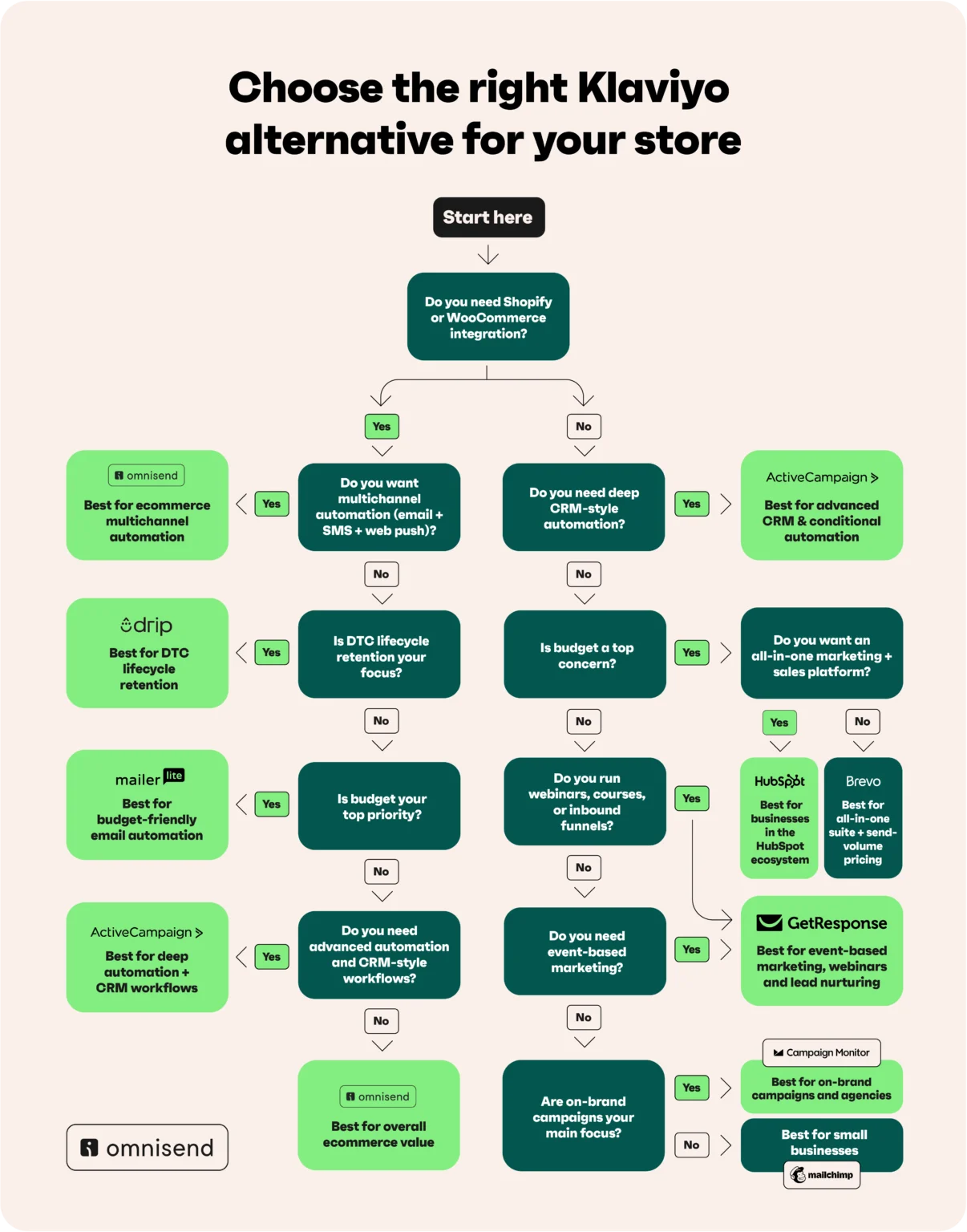
Omnisend positions itself as a direct and compelling alternative, particularly for Shopify and WooCommerce stores seeking robust omnichannel capabilities without Klaviyo’s higher price tag. At the 10,000-contact mark, Omnisend’s standard plan comes in at $132/month, compared to Klaviyo’s $150/month, offering a significant saving.
Key Advantages: Omnisend excels in integrating email, SMS, and web push notifications into unified, automated workflows. Unlike Klaviyo, which lacks native web push notifications, Omnisend allows all three channels to be seamlessly combined within a single automation, enabling truly personalized and multi-touch customer journeys. Its Pro plans offer unlimited emails and include SMS, starting at $59/month for 2,500 contacts, a notable value proposition for businesses with high send volumes. The platform’s automation builder is lauded for its intuitive design, facilitating the creation of complex sequences, including A/B tests and split paths, directly within the editor. Furthermore, Omnisend provides a free migration service for users with 250+ contacts, rebuilding existing setups, segments, forms, and email templates, which significantly reduces the barrier to switching.
Limitations: While strong in automation, Omnisend does not fully replicate Klaviyo’s advanced CRM contact profiles. It currently lacks features like predicted next order date and segment snapshots, and the ability to segment by predicted customer lifetime value (CLV), even though it displays historical and predicted CLV at the individual contact level. This might be a consideration for businesses relying heavily on those specific predictive analytics.
Best For: Shopify and WooCommerce e-commerce stores prioritizing omnichannel reach, seamless automation, and a strong value proposition, particularly those looking to reduce their monthly expenditure on marketing automation without sacrificing advanced features.
2. Drip: Unlimited Emails for Subscription-Based Businesses
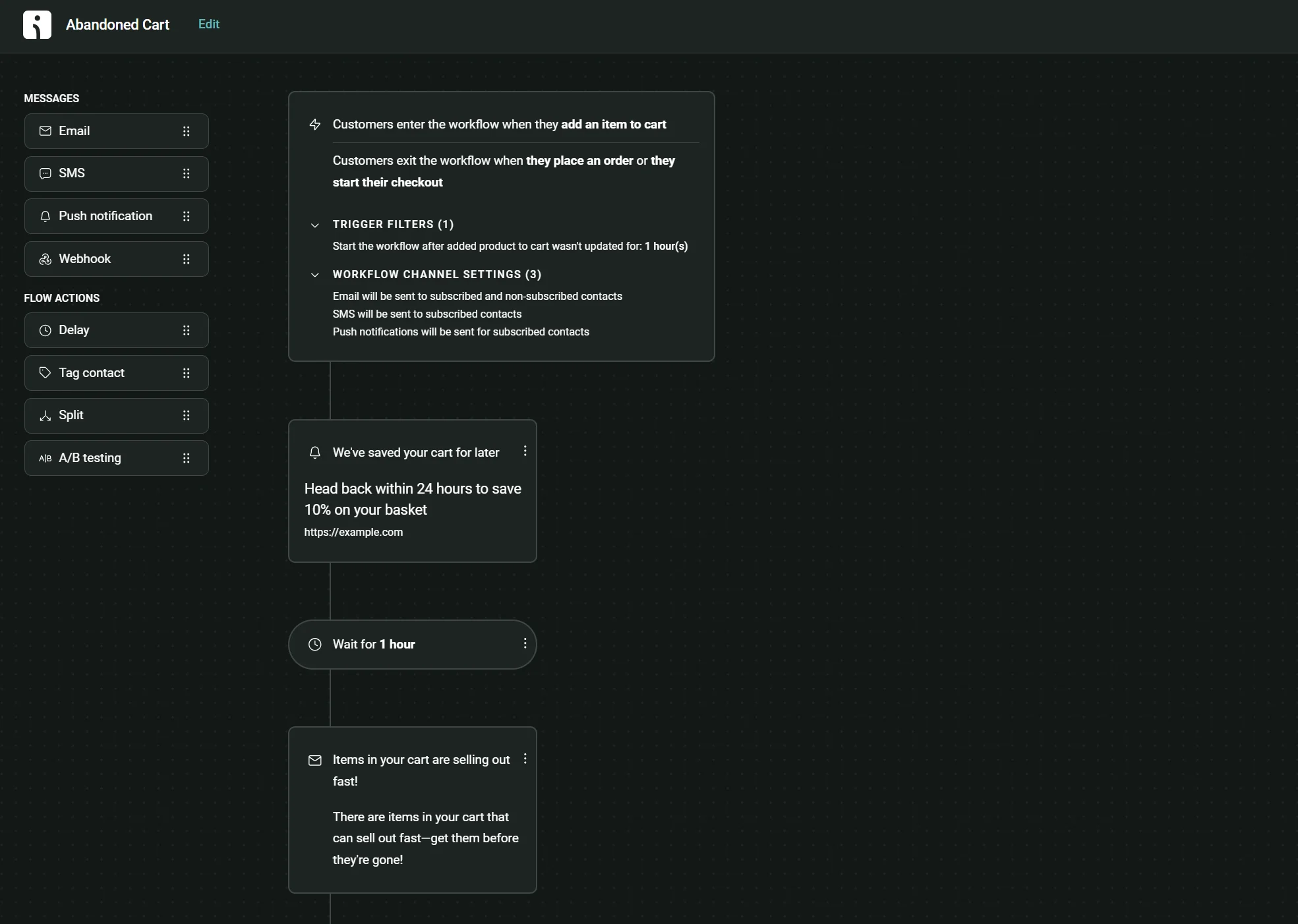
Drip emerges as a strong contender for subscription e-commerce businesses or those with high send-to-contact ratios, offering unlimited email sends across all contact tiers. This contrasts with Klaviyo’s 10x send limit per contact.
Key Advantages: Drip’s pricing model can be more economical for businesses that send more than 10 emails per contact monthly. For 10,000 contacts, Drip is priced at $154/month, comparable to Klaviyo but with the significant benefit of unlimited sends. It also provides a richer library of email templates specifically designed for subscription models, covering onboarding, soft sells, success stories, and reminders across various industries, surpassing Klaviyo’s e-commerce-centric template focus.
Limitations: Drip’s contact management and CRM capabilities are less developed than Klaviyo’s, lacking predictive analytics and the deep branching automation (up to 20 paths) found in Klaviyo. Drip relies on "Workflow Goals" for contact exit, which differs from Klaviyo’s re-checking of eligibility at every flow step.
Best For: Subscription-based e-commerce businesses that require extensive lead nurturing and customer journey automation without the constraint of email send limits.
3. Brevo (formerly Sendinblue): Volume-Based Pricing and Integrated CRM
Brevo offers a compelling alternative for businesses needing to store large contact lists cost-effectively and those integrating sales and marketing efforts through a comprehensive CRM.
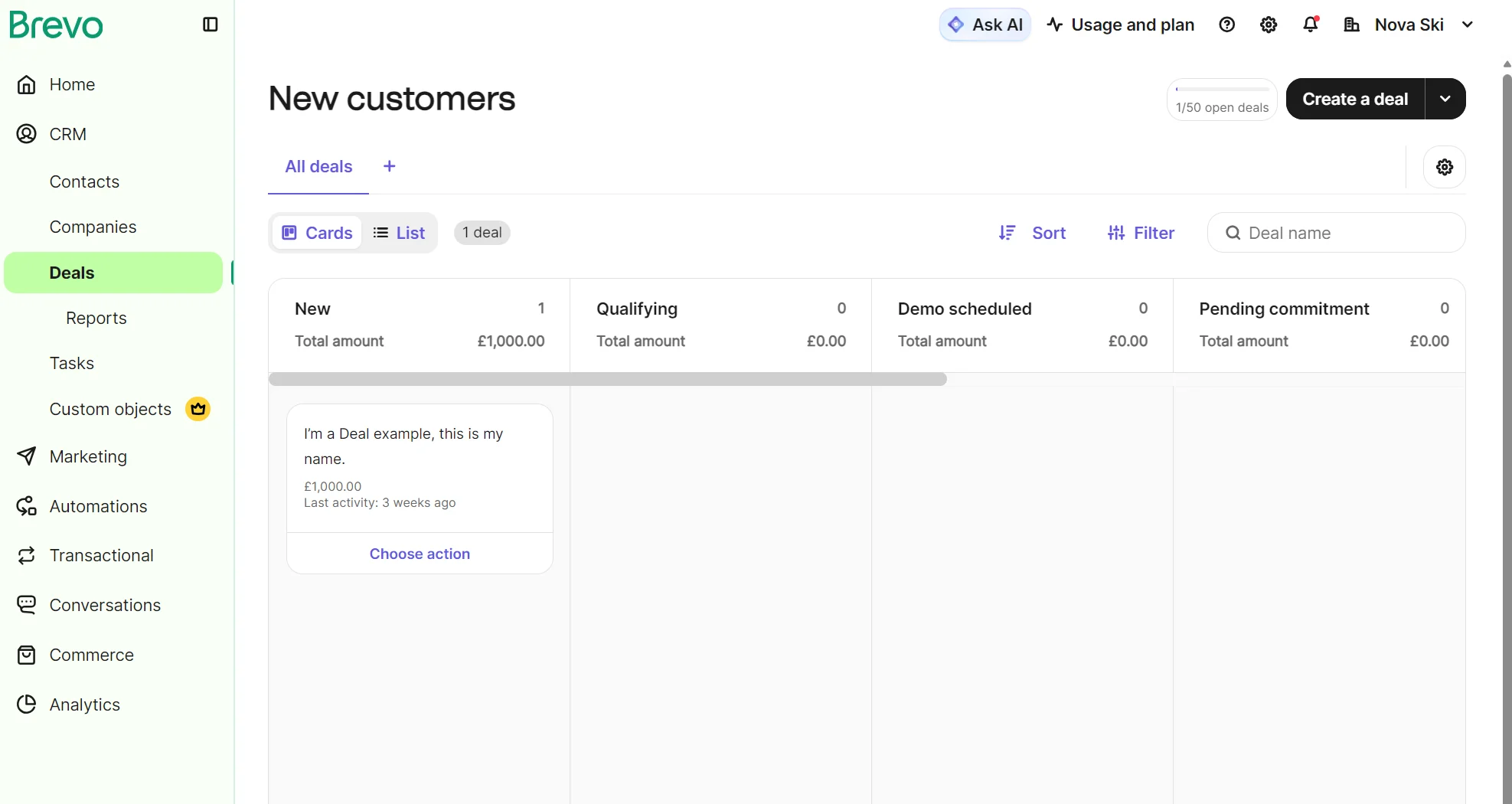
Key Advantages: Brevo’s pricing model is primarily volume-based, allowing for significantly cheaper contact storage. For instance, at 10,000 contacts, Brevo’s plan is $32/month (offering up to 500,000 contacts and 20,000 emails), a substantial reduction compared to Klaviyo’s $150/month. Its CRM goes beyond marketing, incorporating sales and business management features, including deal and pipeline tracking dashboards. This holistic CRM approach, combined with email, SMS, and chat features, makes it suitable for businesses with complex sales cycles.
Limitations: While initially cost-effective for large lists, Brevo’s pricing can become more expensive than Klaviyo if a business frequently sends more than 10 emails per contact per month. Its automation capabilities are also somewhat less sophisticated, with 10 branches in a single split restricted to Professional and Enterprise plans, whereas Klaviyo offers 20 paths on all plans.
Best For: B2B companies, service-oriented e-commerce businesses, and brands that require a robust CRM alongside email marketing, especially those with large contact databases that send emails less frequently.

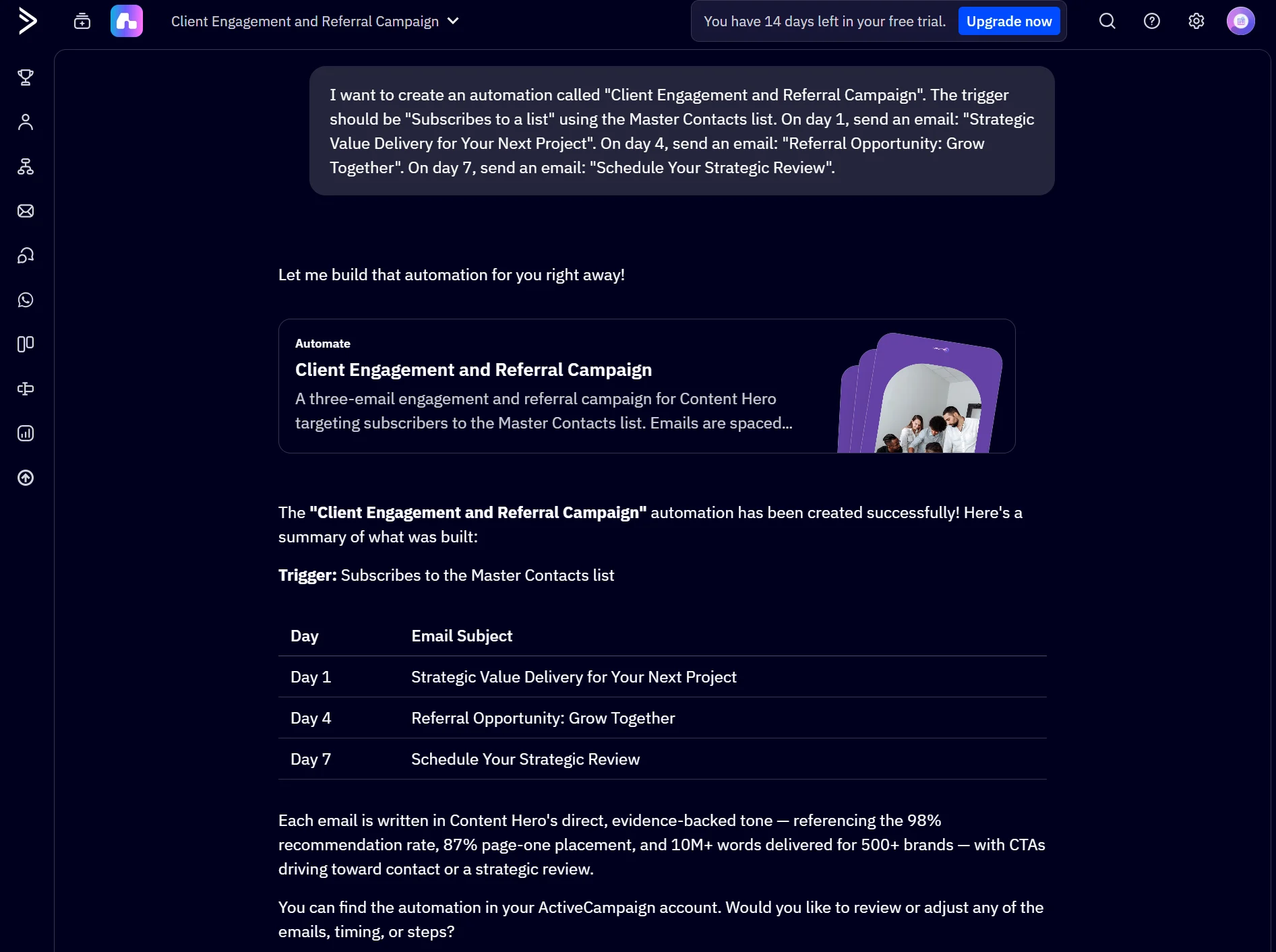
4. ActiveCampaign: AI-Driven Automation and Integrated CRM
ActiveCampaign distinguishes itself with an automation-first approach heavily leveraging AI, coupled with a comprehensive CRM that extends into deals and pipelines, a functionality Klaviyo lacks.
Key Advantages: ActiveCampaign offers an AI-assisted onboarding process that generates a personalized marketing strategy and campaign sequences. Its platform allows for building automations with AI or from a vast library of over 900 templates. At $149/month for 10,000 contacts, it is marginally cheaper than Klaviyo and provides a more integrated CRM experience. Features like predictive sending, win probability, and engagement tracking offer advanced insights for optimizing campaigns.
Limitations: The platform’s strong emphasis on AI and automation might not appeal to users who prefer more manual control over their campaign setup. Additionally, ActiveCampaign features are often tiered across its four plans, including segmentation capabilities, which can lead to feature restrictions depending on the chosen plan.
Best For: E-commerce stores and businesses with intricate customer sales cycles that require a single, powerful tool for both advanced marketing automation and comprehensive CRM functionalities.
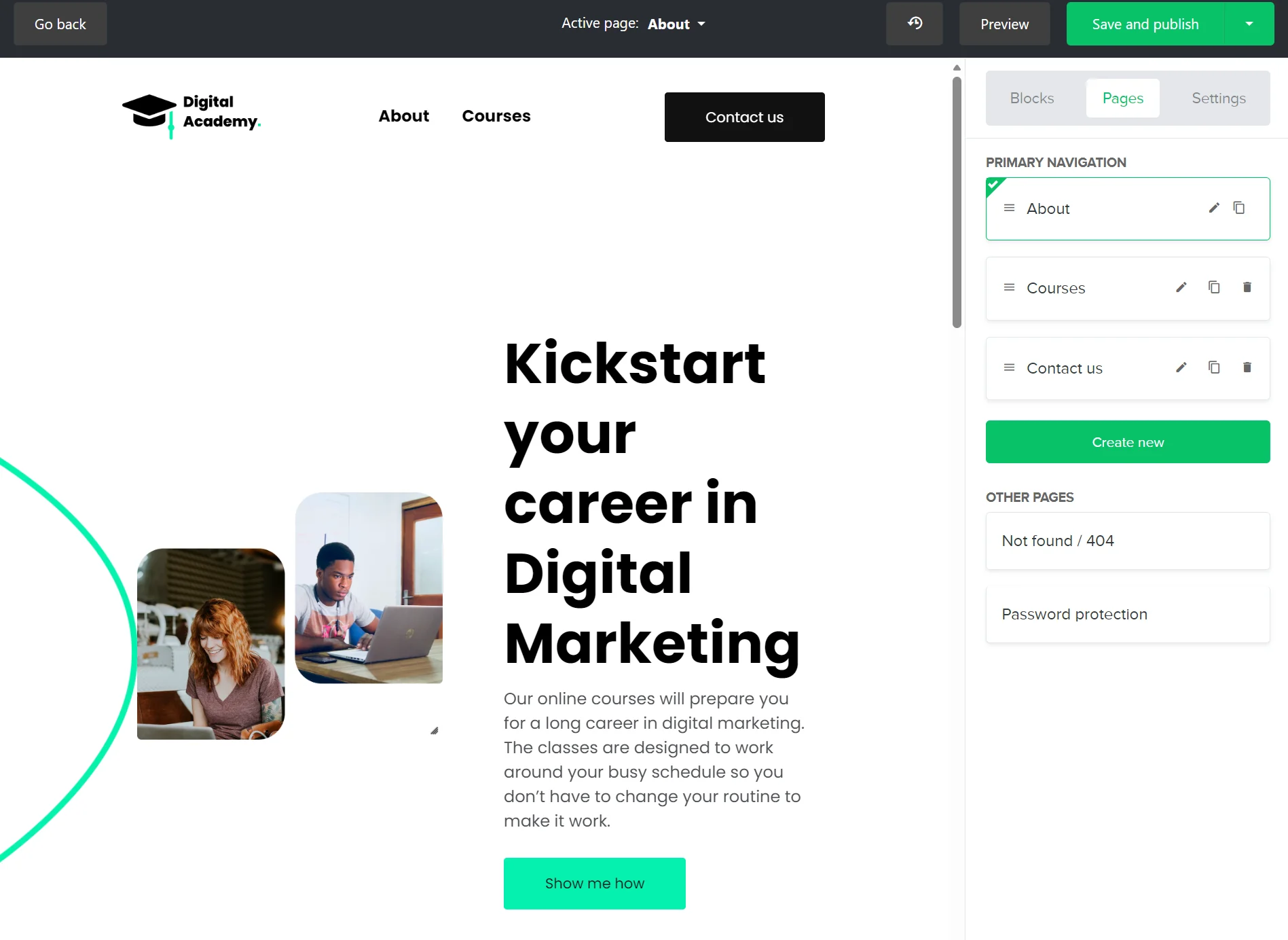
5. MailerLite: Website Builder and Simplified Marketing Campaigns
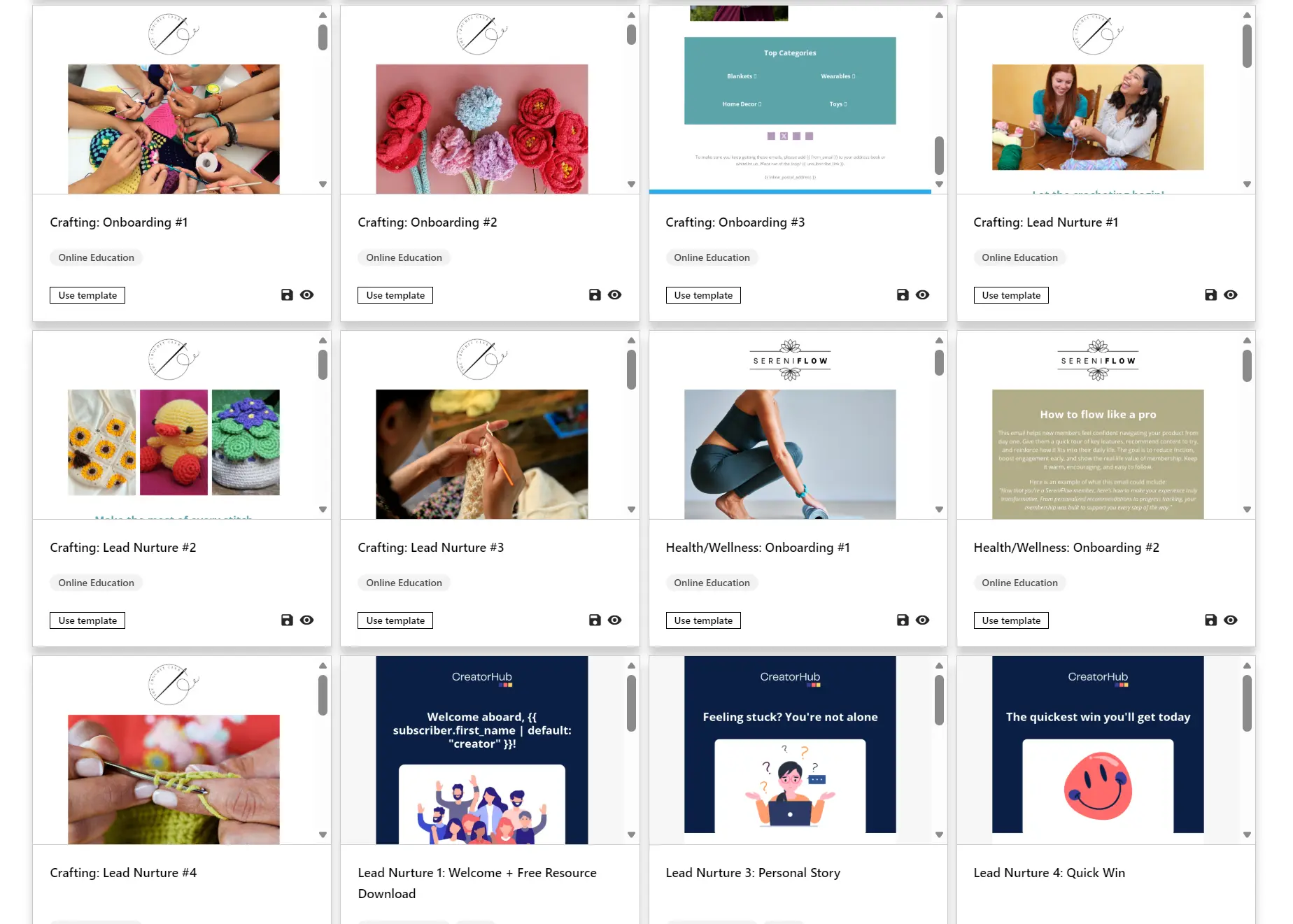
MailerLite presents itself as an all-in-one solution for solo marketers and small businesses, combining a website builder with straightforward email marketing capabilities at a lower price point.
Key Advantages: At $89/month for 10,000 contacts, MailerLite is significantly more affordable than Klaviyo. Its standout feature is an integrated website builder, offering 19 templates and an upcoming AI builder, which allows businesses to manage their online presence and marketing from a single platform. This includes forms, payments, and engagement tools that feed directly into segments and email workflows, eliminating the need for an external store builder for some businesses.
Limitations: MailerLite lacks the advanced CRM and predictive analytics features found in Klaviyo. It also requires a separate MailerSend plan for transactional emails, starting at $7/month, whereas Klaviyo includes transactional emails within its marketing plan send quota.
Best For: Solo entrepreneurs, small businesses, and content creators looking for an integrated solution for website building and basic email marketing campaigns, without the need for advanced e-commerce analytics.
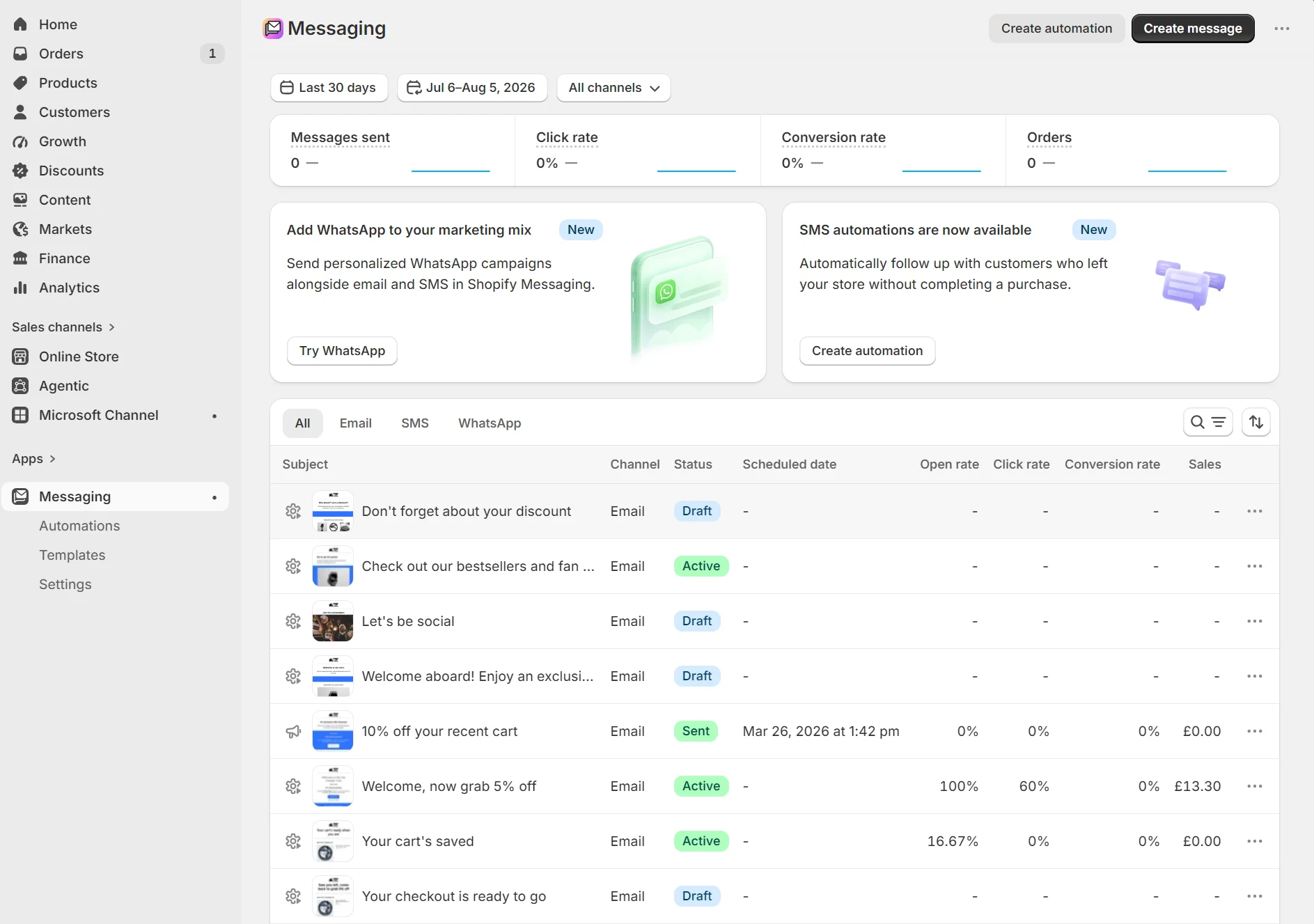
6. Shopify Messaging: Free Native Email Marketing for Shopify Stores
For Shopify merchants, Shopify Messaging offers a compelling, free-tier solution for basic email marketing directly within the Shopify ecosystem.
Key Advantages: Shopify Messaging provides free email marketing for up to 10,000 emails per month, with no contact limits. Beyond this threshold, pricing is a highly competitive $1 per 1,000 emails, substantially undercutting most competitors, including Klaviyo. Its native integration means all marketing assets and flows reside within the Shopify admin, streamlining workflows and eliminating the need to toggle between different platforms. It includes pre-built automations for common e-commerce scenarios like abandoned carts and welcome series.
Limitations: Shopify Messaging has fewer pre-built automations than Klaviyo and lacks a custom automation builder. For advanced, custom automations, users need to leverage the Shopify Flow app, which can add complexity to the marketing workflow setup. Its feature set is more basic compared to dedicated email marketing platforms.
Best For: Shopify stores, particularly those sending fewer than 10,000 emails per month, that prioritize cost-effectiveness, native platform integration, and straightforward email campaigns without requiring deeply advanced features.
7. HubSpot: Comprehensive Ecosystem for Sales, Marketing, and Service
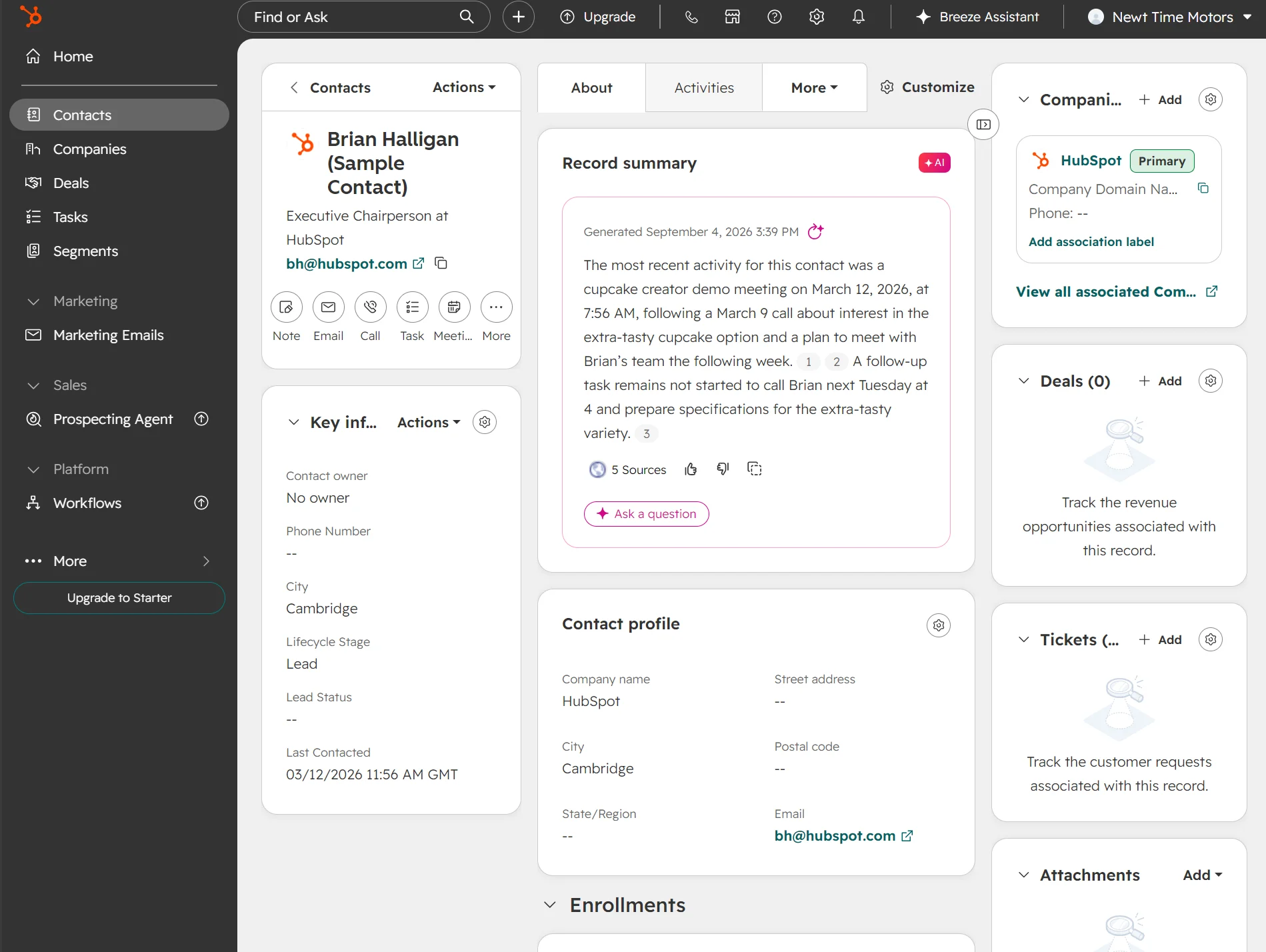
HubSpot stands as a powerful, integrated ecosystem encompassing CRM, sales, marketing, and customer service functionalities, offering a broad suite of tools that extends far beyond email marketing.
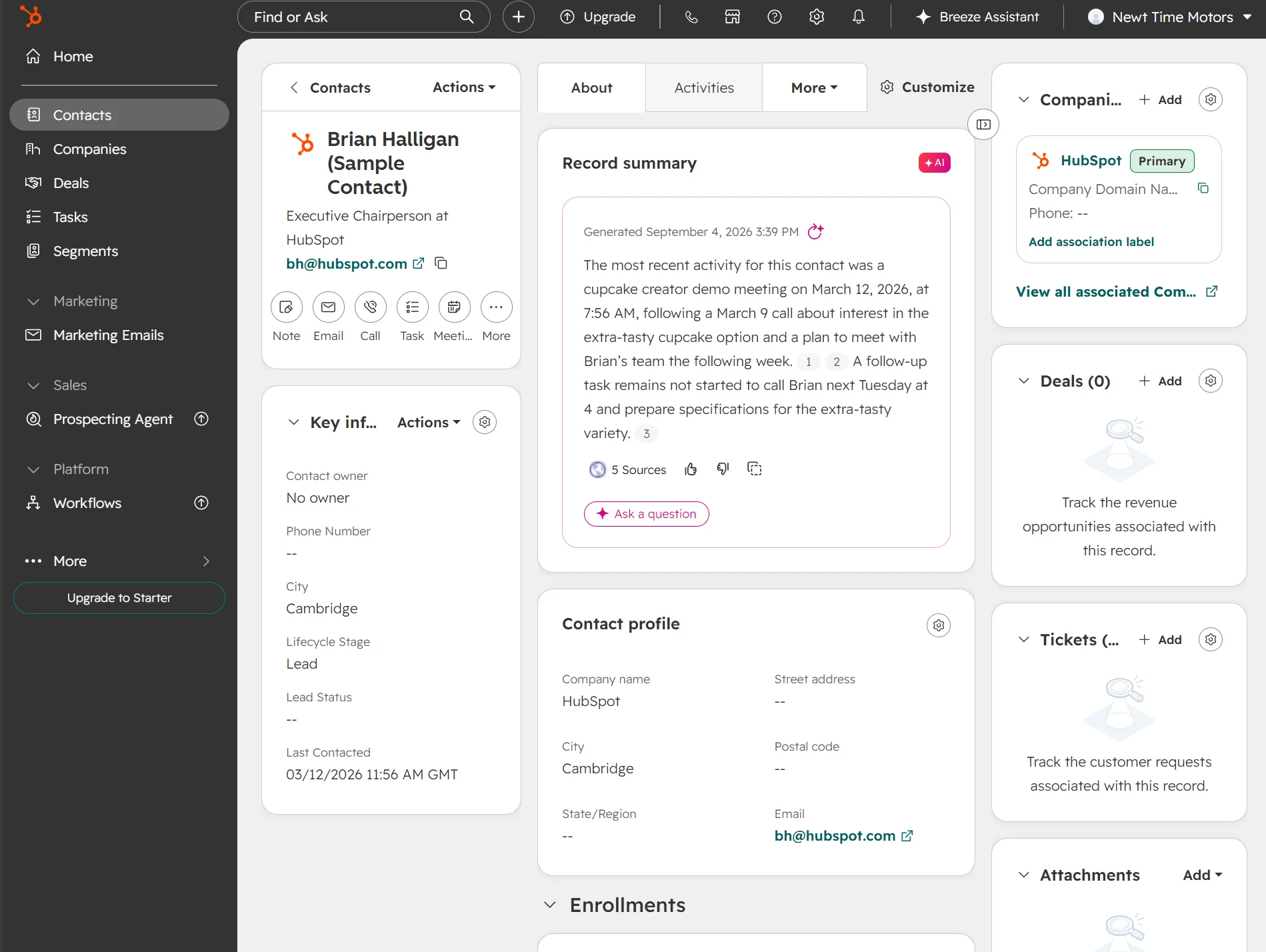
Key Advantages: HubSpot offers a free or low-cost entry point ($20/month per seat for 1,000 marketing contacts), making its comprehensive CRM accessible. Unlike Klaviyo’s marketing-focused CRM, HubSpot’s includes AI-generated record summaries, deal tracking, and associated company sections, providing a more holistic view of customer interactions across the sales cycle. This rich data environment enables highly personalized campaigns. Its extensive suite of tools, from content management to service desks, can consolidate multiple business functions into one platform.
Limitations: While the Starter plan offers value, HubSpot’s advanced features can quickly escalate costs, with 10,000 contacts priced at $410/month, significantly higher than Klaviyo. The sheer breadth of HubSpot’s ecosystem can also present a steeper learning curve and require more extensive setup compared to a more specialized e-commerce marketing platform.
Best For: Businesses requiring a unified platform for sales, marketing, and customer service, with a robust CRM at its core, and those looking to scale their operations within a single, integrated ecosystem.
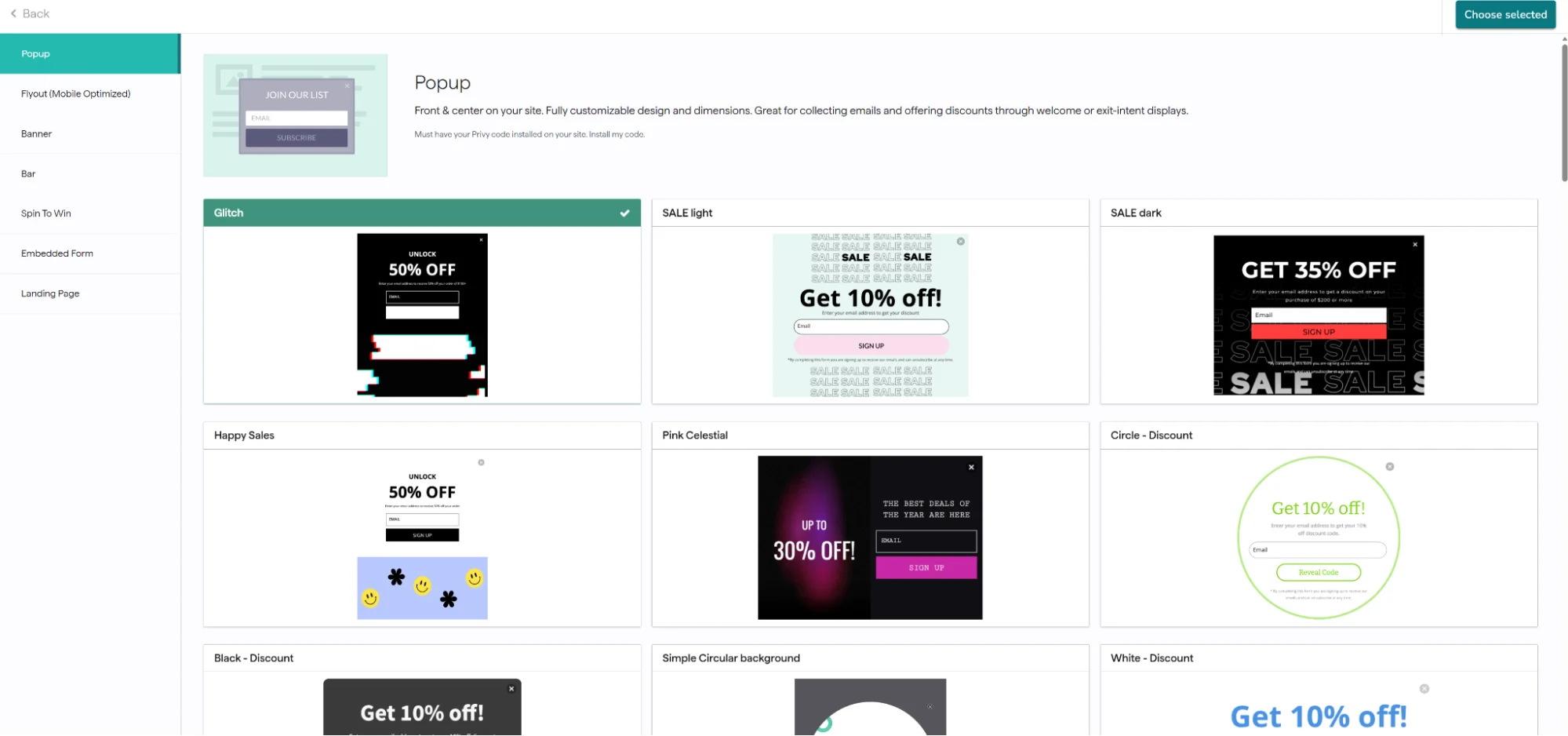
8. Privy: Advanced List Growth with Quizzes and Gamified Forms
Privy specializes in list growth and conversion, offering an extensive array of form templates and targeting options that surpass Klaviyo’s capabilities in this specific area.
Key Advantages: Privy excels in lead capture with over 240 form templates, including pop-ups, spin-to-win wheels, mini quizzes, bars, and flyouts, offering greater variety than Klaviyo’s 70+ form templates. Its advanced targeting features allow forms to be displayed based on day of the week or time of day, and it supports form chaining – showing or hiding forms based on prior interactions. At $165/month for 10,000 contacts, its pricing is slightly above Klaviyo, but its specialized list-building tools provide distinct value.
Limitations: Privy’s focus is on list growth and basic email sequences; it lacks the CRM and AI features for automation, segmentation, campaigns, and reporting that Klaviyo offers. While it supports SMS, it does not integrate with WhatsApp, a channel Klaviyo now includes.
Best For: Small Shopify stores primarily focused on aggressive list growth through highly engaging and customizable forms, along with sending basic welcome series and abandoned cart emails.
9. GetResponse: Digital Product and Content Monetization
GetResponse stands out for creators and digital product sellers, providing tools specifically designed for content monetization and marketing.
Key Advantages: GetResponse offers a course creator and premium newsletters, making it ideal for monetizing educational content, guides, and exclusive subscriptions. Its integrations with PayPal and Stripe allow for direct sales of digital products and newsletters, a functionality not present in Klaviyo. The Creator plan, at $134/month for 10,000 contacts, includes conversion funnels for leads, lead magnets, sales, and webinars, providing a comprehensive toolkit for content-driven businesses. The Starter plan offers a competitive $79/month for 10,000 contacts.
Limitations: GetResponse can be more expensive than Klaviyo for core e-commerce features. Its Starter plan notably lacks abandoned cart recovery and event-based automation, which are standard in Klaviyo’s offerings. To access these, users would need the Marketer plan, which costs $59/month for just 1,000 contacts, a higher price point than Klaviyo for similar functionalities.
Best For: Digital product sellers, content creators, and marketers who prioritize monetizing their content and require robust tools for webinars, courses, and sales funnels, alongside basic autoresponders and newsletters.
10. Mailchimp: Integrated Social Media and Email Marketing
Mailchimp is a strong contender for businesses whose marketing strategy heavily integrates email with social media, offering built-in tools for cross-channel promotion.
Key Advantages: Mailchimp offers robust social media integration, allowing users to automatically create and publish social media posts (to Facebook, Instagram, and X) when an email campaign is sent, eliminating manual steps. It also enables the inclusion of social posts within emails. At $110/month for 10,000 contacts, it is more cost-effective than Klaviyo, particularly for businesses leveraging social channels extensively. All plans include Social Posting, with Social Post Scheduling available in Standard plans from $20/month.
Limitations: Mailchimp offers fewer direct integrations than Klaviyo (300+ vs. 350+) and tends to restrict advanced features like custom reports, generative AI, and predictive analytics (including customer lifetime value) to its higher-tier plans, which are often included in Klaviyo’s paid plans.
Best For: Small businesses and general marketers who require a unified platform for both email and social media marketing, seeking lower costs for broad marketing campaigns rather than highly specialized e-commerce automation.
Strategic Considerations for Transitioning Platforms
While the appeal of cost savings and specialized features in alternative platforms is strong, the decision to switch from Klaviyo should be approached strategically. An existing investment in Klaviyo’s predictive analytics, peer benchmarks, or custom API integrations represents significant operational value that is not easily replicated. The cost and effort involved in rebuilding complex flows, migrating extensive data, and retraining teams can sometimes outweigh the projected savings on a new plan. Businesses should first evaluate if their core issues with Klaviyo stem from suboptimal list management or neglected automation flows, as these problems will persist regardless of the platform. Cleaning lists and optimizing existing flows should precede any migration decision.
For e-commerce brands, particularly those on Shopify and WooCommerce, Omnisend presents a compelling case as a top Klaviyo alternative in 2026. Its robust omnichannel toolkit, competitive pricing (up to 35% less than Klaviyo at comparable contact tiers for standard email and web push plans), and dedicated migration service make it an attractive option for businesses looking to enhance their marketing reach and efficiency. The free migration service offered by Omnisend for customers with 250+ contacts, which includes workflow recreation, segment builds, form setup, contact migration, and email templates, significantly lowers the operational friction of switching.
Ultimately, the optimal choice for a Klaviyo alternative hinges on a business’s specific needs regarding customer journey complexity, desired automation depth, segmentation requirements, reporting capabilities, and budgetary constraints. While some brands prioritize advanced, custom reports, others seek pre-built solutions, and many are looking for more predictable pricing models as their contact lists expand. The evolving landscape of e-commerce marketing automation tools offers diverse options, enabling businesses to find a platform that aligns perfectly with their strategic objectives and operational realities in 2026 and beyond.


 Ammar Sabilarrohman
 Asro
Asro