
May 13, 2026 – The days of relying on a village crier to broadcast your business’s message are a distant memory, replaced by a complex ecosystem of digital marketing services. As the business-to-business (B2B) marketing sphere continues its rapid evolution, understanding and strategically employing the right content marketing services has become paramount for brands seeking to cut through the noise and connect with their target audiences. While the ultimate objective of achieving market visibility remains constant, the pathways to success are more nuanced and data-driven than ever before. This comprehensive overview explores the critical B2B content marketing services available, examining their functions, their indispensable role in today’s market, and how they empower brands to become the definitive answer for their customers’ needs.
The AI Paradox: Amplifying Output, Diminishing Differentiation
The advent of Artificial Intelligence (AI) has undeniably revolutionized content creation, making it faster and more cost-effective. However, this accessibility has led to an unprecedented surge in content volume, paradoxically diluting its impact. A pivotal report, “AI-First, Buyer-Ready: the New Era of B2B Content Marketing,” published by 10fold, highlights this trend, revealing that 91% of marketers are increasing their content output. Alarmingly, nearly half of these professionals are producing three to five times more content than in the preceding year, often with modest budget increases of only one to ten percent. This scenario has resulted in an undifferentiated, hyper-saturated market where the sheer volume of content often overshadows its quality or relevance.
For B2B audiences, who typically engage in longer and more complex buying cycles, patience for content that fails to immediately capture attention is exceptionally scarce. In this environment, the most valuable content marketing services are those that enable brands to forge genuine credibility and distinctiveness. These services are crucial for capturing and retaining attention across the extended buyer’s journey, a process that often involves multiple decision-makers and influencers within an organization.
The Indispensable Role of Content Marketing Services in B2B
The B2B buying journey is inherently lengthy and multi-faceted, often involving a diverse array of stakeholders with varying roles and influences on decision-making. This complexity necessitates a strategic approach to building and maintaining ongoing relationships with potential buyers across a spectrum of job titles. To achieve this in-depth engagement, B2B marketers must skillfully deploy a variety of content types across multiple platforms and touchpoints, guiding prospects seamlessly through each stage of the buying funnel.
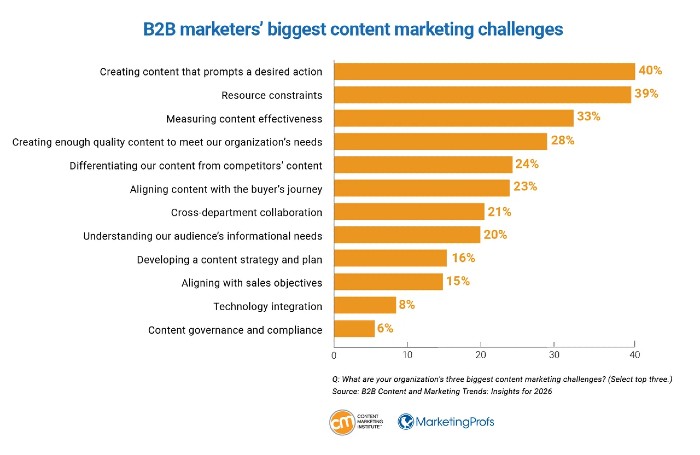
The challenges associated with this intricate process are well-documented. According to the Content Marketing Institute’s (CMI) “B2B Content and Marketing Trends” report, the top content marketing challenges consistently cited by B2B companies include:
- Producing engaging content: Many organizations struggle to create content that genuinely captures and holds the attention of their target audience amidst the digital clutter.
- Measuring content ROI: Demonstrating the tangible return on investment (ROI) for content marketing efforts remains a significant hurdle for a large percentage of B2B marketers.
- Creating content for lead generation: Developing content that effectively attracts and converts qualified leads is a persistent challenge.
These perennial challenges underscore a critical insight: more technology alone has not been the panacea. The fundamental gaps persist in strategy, specialized expertise, and effective execution – areas where a partnership with the right agency can prove transformative.
The Strategic Imperative of Outsourcing B2B Content Marketing
Engaging external expertise represents one of the most direct and effective methods for bridging these critical gaps. Outsourcing not only liberates internal marketing teams to concentrate on high-level strategic initiatives but also ensures that specialized tasks are handled by professionals deeply immersed in the latest trends, techniques, and analytical frameworks within their respective domains.
Data from CMI further supports this strategic advantage. Among B2B marketers who reported improvements in their content strategy effectiveness over the past year, the most significant driver was not new technology, but rather strategy refinement, cited by a substantial 74% of respondents. New technology implementation, while important, followed distantly at 51%. This statistic clearly illustrates that while tools can amplify efforts, they are most effective when wielded within the framework of a superior strategy. It is precisely in this crucial nexus that a qualified B2B content marketing agency partner can make a profound difference.

Eight Essential B2B Content Marketing Services and Their Evolving Roles
The modern B2B content marketing landscape is rich with specialized services, each addressing distinct needs within the buyer’s journey. Understanding their functions, and critically, what AI can and cannot achieve within them, is key to strategic outsourcing.
1. Content Strategy: The Blueprint for Success
In the B2B arena, a meticulously defined content strategy is not merely beneficial; it is foundational. It ensures that every piece of content, from a blog post to a white paper or a social media update, is strategically aligned with overarching business objectives and resonates deeply with the needs and pain points of the target audience.
- Why it’s popular: High-performing marketing teams consistently identify a documented content strategy as a cornerstone of their success. This strategic clarity provides direction and purpose to all content initiatives.
- AI’s contribution: AI excels at accelerating tasks like keyword research, gap analysis, and competitive audits, providing valuable data-driven insights.
- AI’s limitations: AI cannot inherently grasp the nuanced reasons behind audience skepticism towards a particular message, nor can it intuitively recognize when a market trend has reached saturation before significant investment is made. These require human interpretation, empathy, and market experience.
- Agency offerings: A B2B marketing agency’s content strategy services often encompass audience persona development, buyer journey mapping, content pillar identification, editorial calendar creation, and performance benchmarking.
2. Competitive Content Analysis: Understanding the Battlefield
A comprehensive competitive content analysis involves dissecting the content landscape occupied by rivals. This process reveals the types of content being published, the topics being covered, and the underlying strategies employed. By identifying trends and, crucially, gaps in competitor coverage within the industry, brands can carve out unique positioning.
- Why it’s popular: This analysis empowers marketers to make informed, data-backed decisions regarding content development, SEO optimization, and thematic focus, ensuring efforts are strategically directed.
- AI’s contribution: AI tools can rapidly crawl, catalog, and surface content gaps with unparalleled speed.
- AI’s limitations: While AI can identify opportunities within data, the critical skill lies in discerning whether to act upon these opportunities. This requires market experience, deep audience understanding, and strategic foresight – elements that AI cannot replicate.
- Agency offerings: Agencies typically offer competitor content audits, topic cluster identification, keyword gap analysis, and assessment of competitor content formats and distribution channels.
3. Concept Development: Crafting Compelling Ideas
Effective concept development is intrinsically linked to overarching business objectives, directly addressing the challenges and needs of the target audience, and critically, differentiating the brand within a crowded marketplace.
- Why it’s popular: This area is frequently cited as a leading challenge by B2B marketers, with a significant percentage reporting difficulty in generating truly resonant content ideas for their specific audience.
- AI’s contribution: Generative AI tools are adept at remixing and recontextualizing existing information, offering novel combinations of ideas.
- AI’s limitations: AI struggles to uncover the underlying frustrations of buyers or identify unmet needs within a category that have not yet been addressed. This requires direct engagement with real people, active listening, and a profound understanding of human psychology to move beyond generic content to truly impactful and helpful solutions.
- Agency offerings: Agencies provide ideation workshops, audience insight synthesis, unique selling proposition (USP) articulation, and thematic content campaign development.
4. Content Drafting: The Art of Persuasion
High-quality content creation is indispensable for building brand authority, fostering engagement with potential customers, driving lead generation, and ultimately, improving conversion rates. Skillful content drafting ensures that content is not only relevant and timely but also optimized for both search engines and user experience.
- Why it’s popular: Many marketing teams possess an abundance of content ideas but struggle with the bandwidth and expertise required to execute them consistently and to a high standard, without sacrificing brand voice or quality.
- AI’s contribution: AI can assist in generating initial drafts, summarizing information, and refining language.
- AI’s limitations: Crafting compelling, credible, and genuinely useful content for a B2B audience is a sophisticated skill honed over years of practice. The ability to shape language that resonates, persuades, and builds trust is not automatable and directly impacts content performance.
- Agency offerings: Agencies offer blog post writing, white paper and e-book creation, case study development, website copy, and email marketing content.
5. Thought Leadership and Influencer Content: Amplifying Expertise
This specialized form of content allows individual voices to inspire, educate, and challenge existing perspectives within an industry. Thought leaders and influencers, whether internal experts or external authorities, lend invaluable credibility to a brand’s messaging.
- Why it’s popular: Leveraging the unique voices and perspectives of recognized experts amplifies a brand’s authority and reach.
- AI’s contribution: AI can produce polished-sounding content that mimics a point of view.
- AI’s limitations: AI cannot generate an earned point of view. The credibility derived from an executive’s decades of experience or an analyst’s genuinely contrarian insight is something no language model can manufacture. As AI-generated content becomes more ubiquitous, the value of authentic, human-driven expertise will only increase.
- Agency offerings: Agencies facilitate expert interviews, ghostwriting for executives, influencer identification and outreach, and the development of opinion pieces and industry analyses.
6. Design Services: Visualizing Brand Value
Effective design is crucial for enhancing the impact of marketing efforts, making content more visually appealing, easier to comprehend, and more memorable. Design services are instrumental in establishing a consistent brand identity, ensuring that all marketing materials are cohesive, engaging, and aligned with business objectives.
- Why it’s popular: A lack of internal design resources is a significant challenge for many marketing teams. Outsourcing design ensures that content visually reflects the inherent value and professionalism of a brand.
- AI’s contribution: AI tools can rapidly generate assets and assist in early-stage concepting, offering a quick way to visualize ideas.
- AI’s limitations: AI often falls short in ensuring brand coherence and scalability. Building a visual system that is consistent across all formats and channels, and that communicates brand values at a glance, requires a human designer with a deep understanding of the business goals driving the aesthetics.
- Agency offerings: Agencies provide graphic design for social media, infographics, e-books, website banners, presentation decks, and branding collateral.
7. Video Content Creation: The Power of Visual Storytelling
Video content is exceptionally engaging, capable of significantly increasing website dwell time, which can translate into higher conversion rates. Videos are also more shareable across social media platforms, thereby expanding brand visibility and reach.
- Why it’s popular: Video represents a top area where marketers intend to increase their investment. Outsourcing video production to a qualified service can dramatically enhance ROI.
- AI’s contribution: AI-generated video is rapidly advancing and is increasingly viable for high-volume or short-form content.
- AI’s limitations: B2B videos that build genuine trust still rely on something AI cannot replicate: authentic individuals with demonstrable expertise conveying messages they genuinely believe. As synthetic video becomes more commonplace, this signal of credibility will become even more valuable.
- Agency offerings: Agencies offer explainer videos, customer testimonials, product demonstrations, webinar recordings, and social media video snippets.
8. Content Performance Analytics: Measuring Impact and Iterating
Content performance analytics is vital for understanding how effectively content resonates with the target audience and contributes to overarching business objectives. It is through these analytics that B2B marketers can conclusively prove the ROI of their marketing endeavors.
- Why it’s popular: A substantial portion of marketers express uncertainty about their ability to accurately measure content performance, indicating a significant opportunity for improvement and expert assistance.
- AI’s contribution: AI can efficiently process vast amounts of data and generate reports, identifying trends and anomalies.
- AI’s limitations: AI can present data, but it cannot provide strategic recommendations on how to act upon those findings. Human analysts bring essential context, understanding the brand’s unique position, the team’s capacity, and specific business goals to translate data into actionable insights.
- Agency offerings: Agencies provide performance tracking, ROI reporting, audience engagement analysis, conversion rate optimization recommendations, and data-driven strategy adjustments.
Selecting the Right Content Marketing Service Partner
The array of specialized services available can indeed spark daydreams about the potential for internal teams to reclaim time and energy through strategic outsourcing. When embarking on the search for a content marketing service provider, adherence to best practices is crucial for ensuring a fruitful partnership.
Define Your Goals and Needs: Begin by clearly articulating what you aim to achieve with your content marketing initiatives. Is the primary objective to increase brand awareness, generate qualified leads, establish thought leadership, or drive product adoption? A precise understanding of your objectives will guide the selection of services most aligned with your strategic vision.
Evaluate Content Quality: Request comprehensive samples of the agency’s work to rigorously assess the quality of their output. Engaging, informative, and meticulously crafted content is the bedrock of any successful content marketing campaign.
Understand Their Analytics Approach: A reputable content marketing service will possess robust methodologies for measuring and reporting on content performance. Inquire about their key performance indicators (KPIs), reporting tools, and how they translate data into actionable insights that inform future strategy.
Discuss Communication and Collaboration: Effective communication and seamless collaboration are paramount for a successful agency-client relationship. Establish clear protocols for communication frequency, preferred channels, and the collaborative process for content development and review.
Consider Scalability: Opt for a service provider that can adapt and grow alongside your business. They should possess the flexibility to accommodate evolving needs and maintain a high standard of delivery as your company expands.
Inquire About SEO Integration: Given that Search Engine Optimization (SEO) is an indispensable component of successful content marketing, ensure the chosen service possesses a profound understanding of SEO best practices and can integrate them seamlessly into your content strategy. This includes an awareness of emerging search trends and the implications of AI-driven discovery.
The Future of B2B Content Marketing: Becoming the “Best Answer Brand”
The ongoing discourse surrounding AI-generated content and shrinking buyer attention spans highlights a critical evolution in B2B marketing. The most effective content marketing agencies do more than simply produce assets at scale; they empower B2B brands to ascend to the position of the most trusted, discoverable, and credible source of answers for their customers – in essence, becoming “Best Answer Brands.”
From foundational strategy and SEO/AEO (AI Experience Optimization) to the cultivation of thought leadership, influencer collaborations, sophisticated video production, and rigorous analytics, the right content marketing agency transcends mere AI-driven efficiency. They integrate creativity, data-driven insights, and deep industry expertise to forge meaningful customer engagement and deliver measurable business impact. Whether the goal is enhanced visibility in search and AI discovery, deeper buyer trust, or comprehensive full-funnel demand generation, partnering with an experienced B2B content marketing agency is the strategic imperative for any brand seeking to truly stand out where it matters most.