

The global market for Conversion Rate Optimization (CRO) software is currently experiencing a period of rapid technological transformation, driven largely by the integration of artificial intelligence and a shift toward consolidated marketing stacks. In this competitive landscape, two platforms—Crazy Egg and Mouseflow—have emerged as industry leaders, each catering to distinct philosophies of user experience (UX) design and data analysis. While both tools aim to bridge the gap between quantitative metrics and qualitative user behavior, their feature sets, pricing models, and strategic focuses offer different value propositions for digital marketers and web developers.
Crazy Egg, co-founded by entrepreneurs Neil Patel and Hiten Shah, has evolved from a pioneering heatmap tool into a comprehensive optimization suite. Its current iteration emphasizes an "all-in-one" approach, integrating session recordings, A/B testing, and AI-driven insights under a single subscription. Conversely, Mouseflow has positioned itself as a high-fidelity diagnostic tool, focusing heavily on identifying on-page friction and complex user journeys. For organizations navigating the complexities of modern web performance, the choice between these two platforms often hinges on whether they require an integrated experimentation engine or specialized friction-detection capabilities.
The Evolution of Behavioral Analytics: A Chronology
The trajectory of website optimization tools has moved through several distinct phases over the last two decades. Understanding this timeline provides essential context for the current rivalry between Crazy Egg and Mouseflow.
In the mid-2000s, the "Heatmap Era" began. Crazy Egg launched in 2005, introducing the concept of visual click tracking to a mainstream audience. Prior to this, marketers relied almost exclusively on raw server logs and basic Google Analytics data. By 2010, the "Session Replay Era" took hold as Mouseflow entered the market, offering the ability to watch live user interactions as if viewing a movie of their screen.
By 2018, the industry shifted toward "Friction and Funnel Analytics," where tools began to automatically flag "rage clicks" and "dead clicks." Today, we have entered the "AI and Agentic Optimization Era." In this current phase, platforms are no longer just reporting data; they are using Large Language Models (LLMs) to analyze recordings and suggest specific design changes. Crazy Egg’s recent introduction of "Tasks"—an AI-guided workflow—and both companies’ adoption of the Model Context Protocol (MCP) reflect this latest technological leap.
Core Feature Comparison and Technical Capabilities
To provide a factual analysis of these platforms, it is necessary to examine their technical architectures across five critical domains: visualization, user monitoring, conversion tracking, feedback loops, and artificial intelligence.
Heatmap Visualization and Segmentation
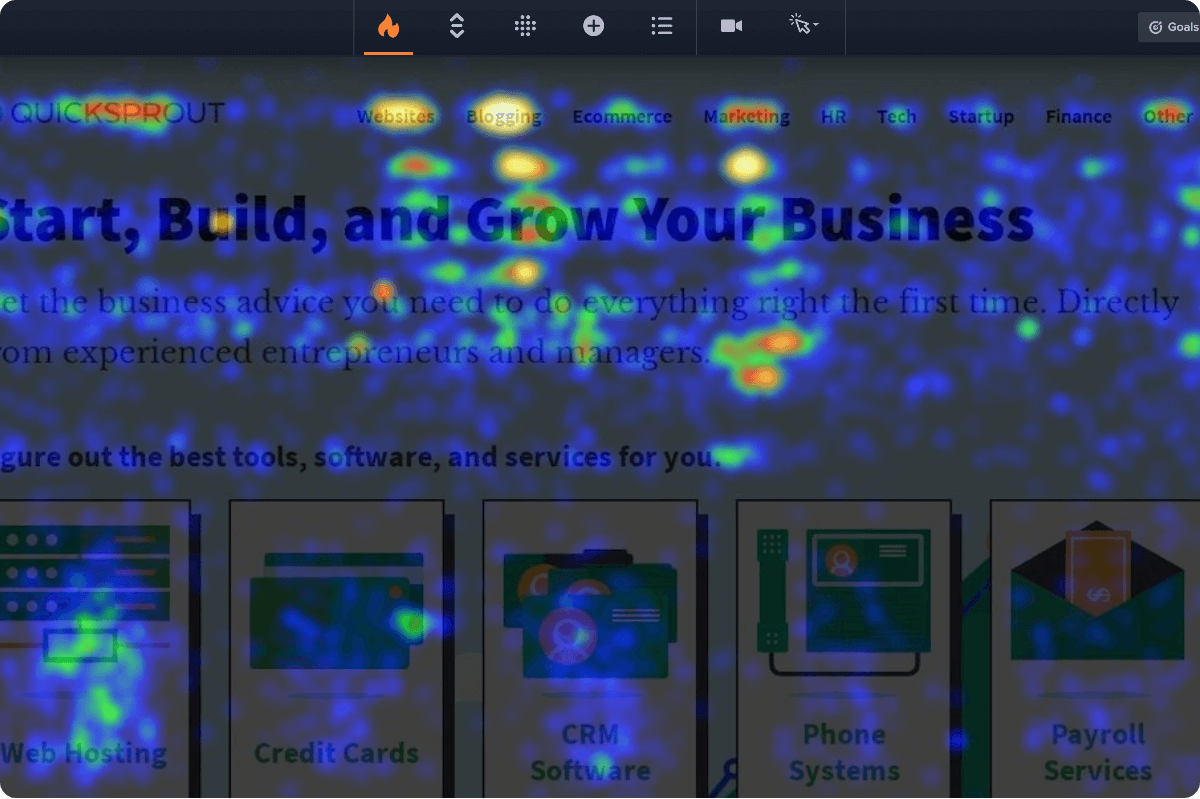
Heatmaps remain the foundational element of behavioral analytics. Crazy Egg provides five distinct map types, most notably the "Confetti Map." This feature allows for granular segmentation, enabling users to filter clicks by over 17 different metrics, such as referral source, search terms, or browser type, directly on the visual overlay. This is particularly useful for identifying how different traffic segments interact with the same landing page.
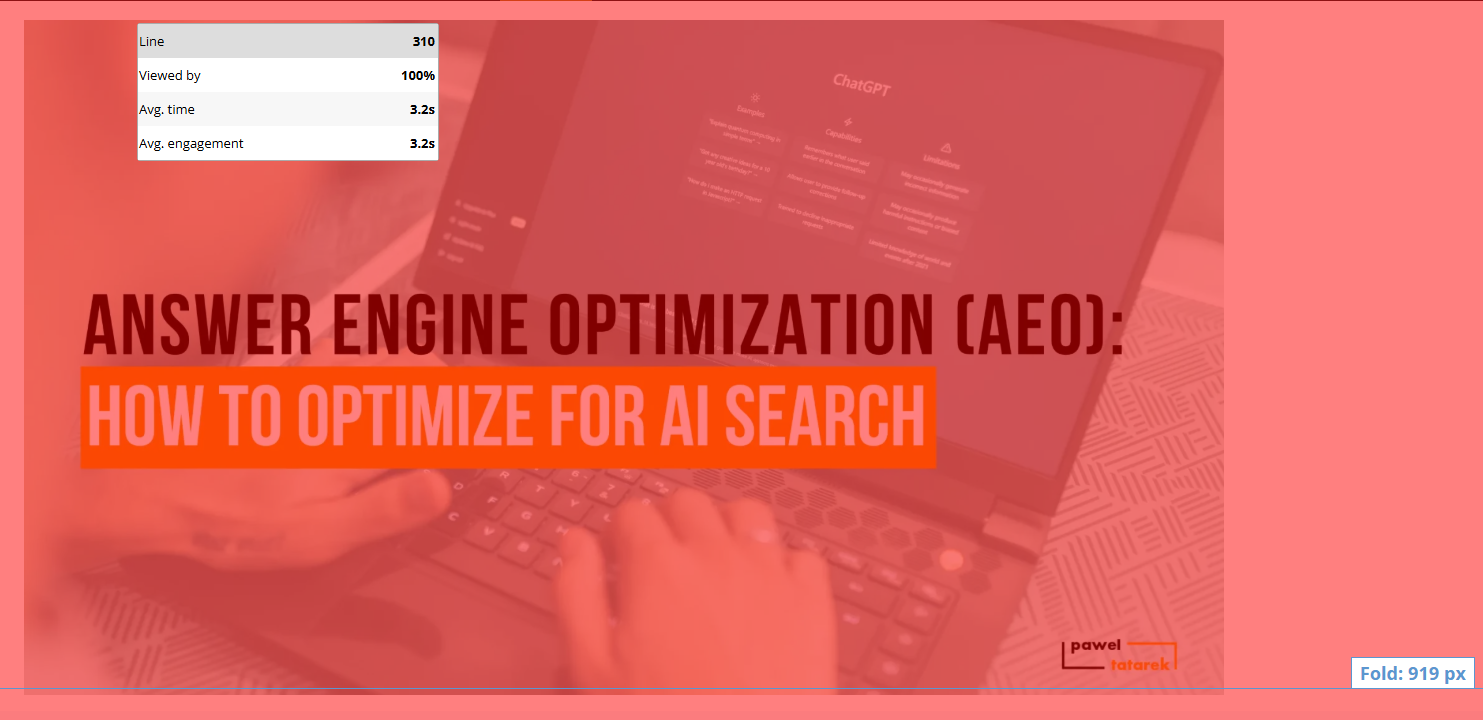
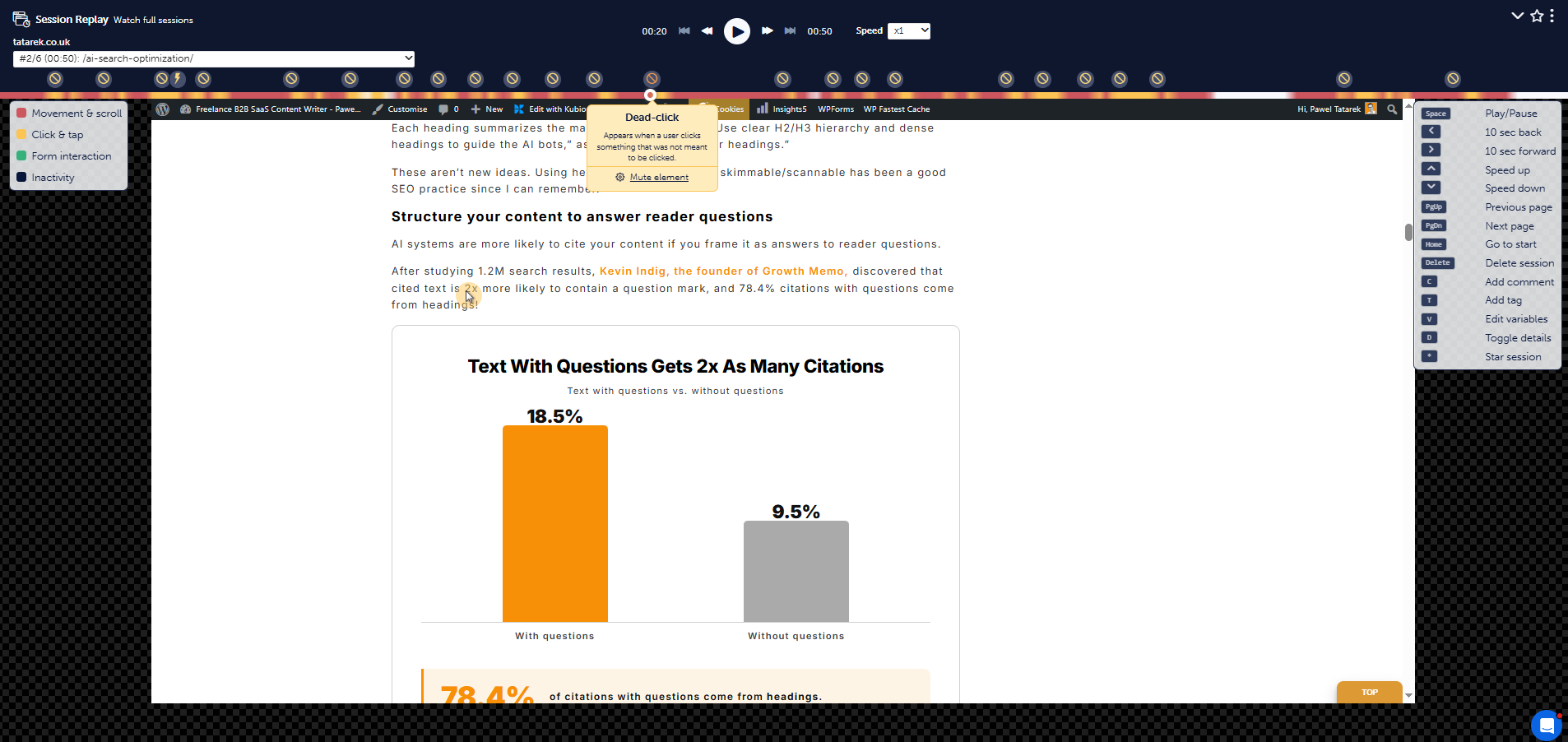
Mouseflow offers seven map types, including specialized views for "Attention" and "Geographic" data. While Mouseflow lacks the multi-segment Confetti view, it excels in cross-type comparisons, allowing analysts to overlay click data against scroll depth to see if users are engaging with content before they drop off. Mouseflow also includes a "Friction Heatmap," which visually highlights areas where users are experiencing technical or navigational frustration.
Session Recordings and Friction Detection
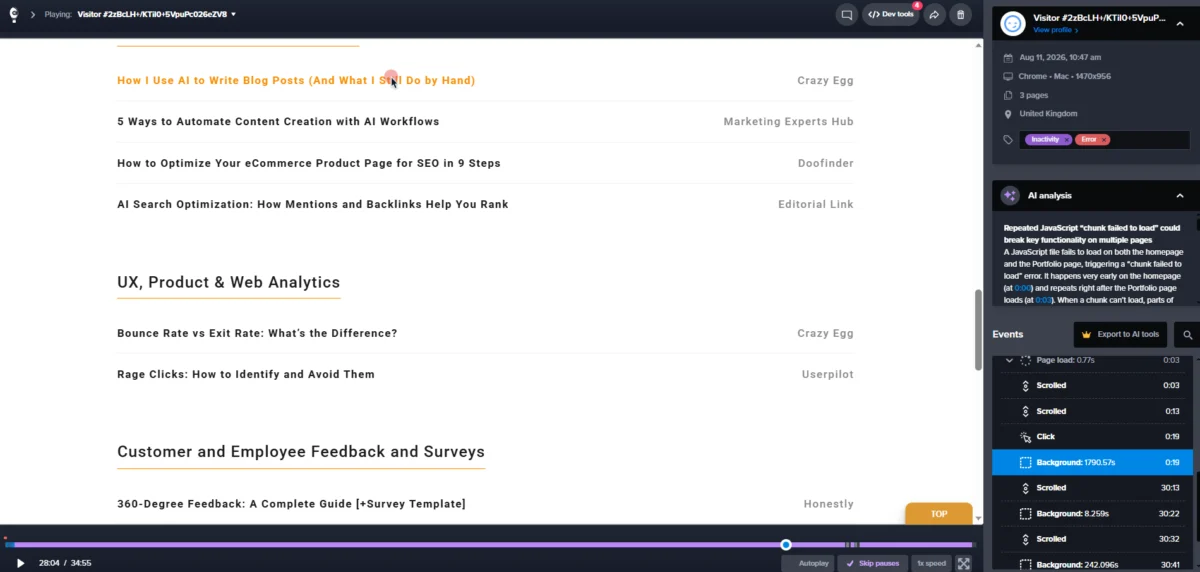
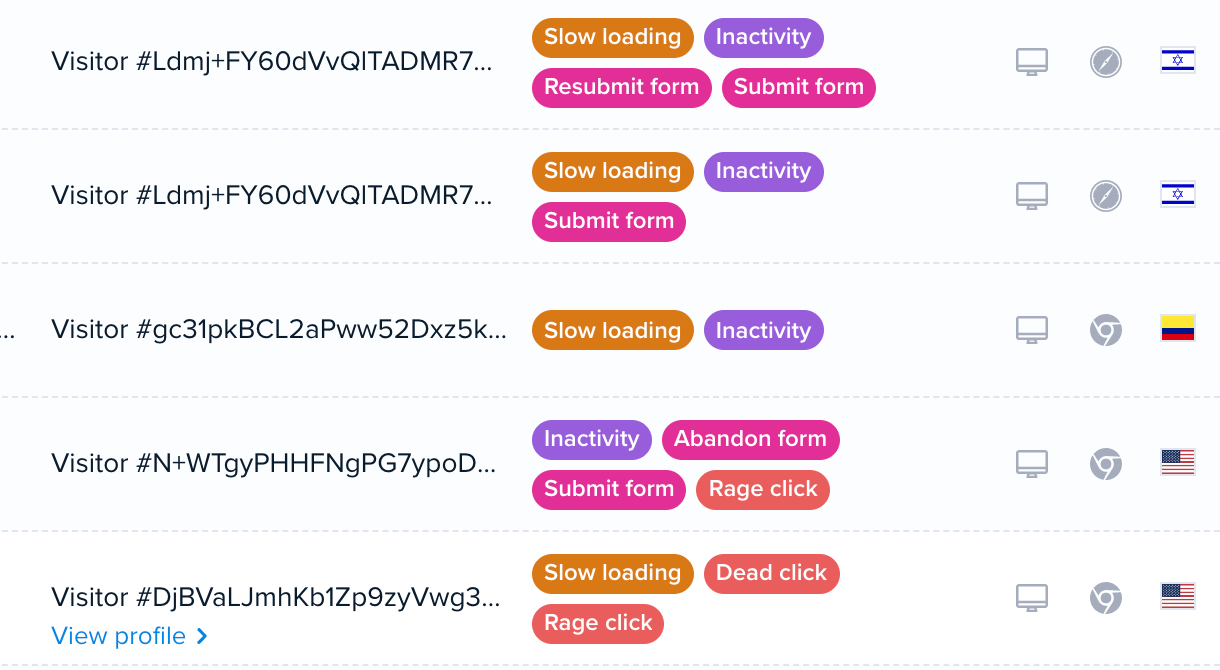
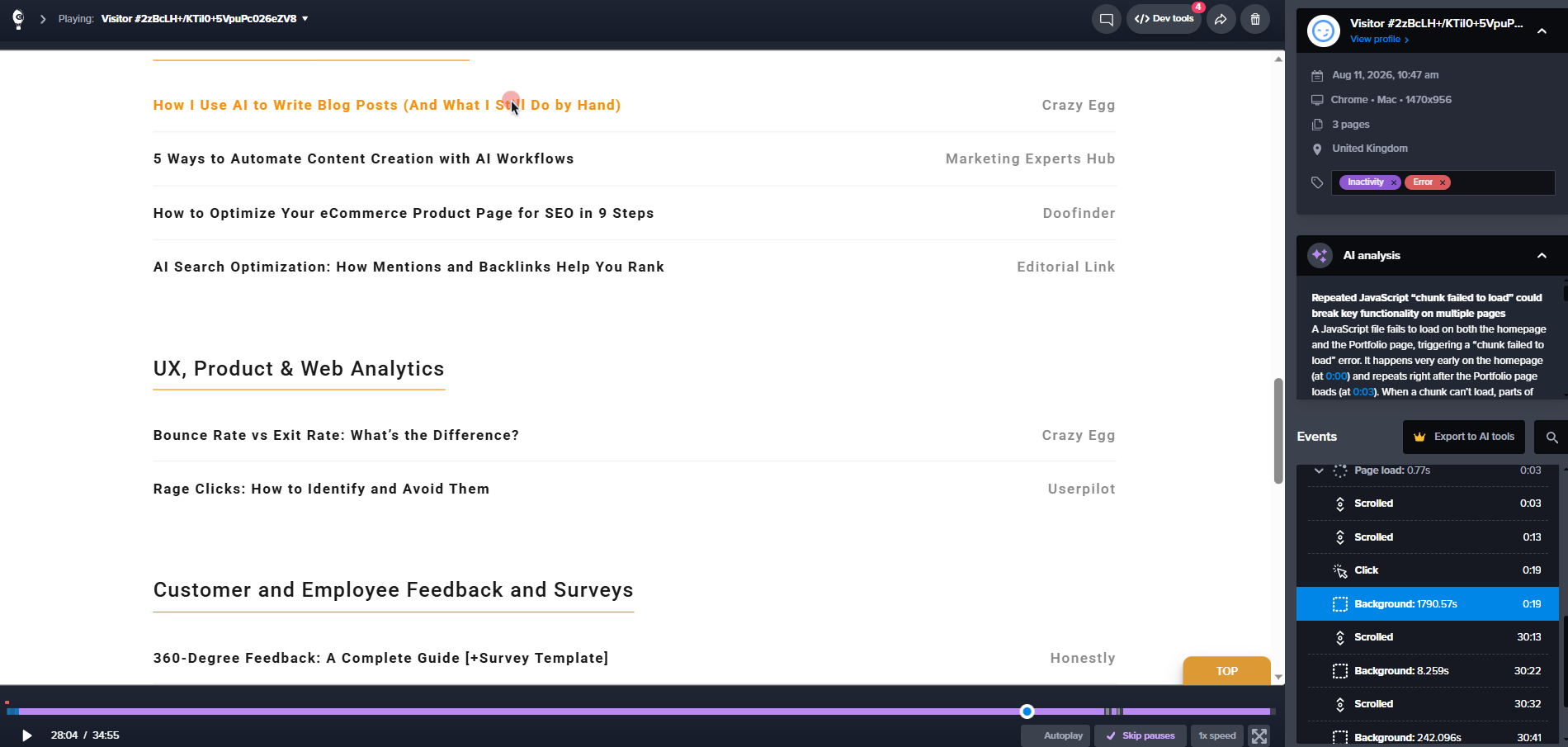
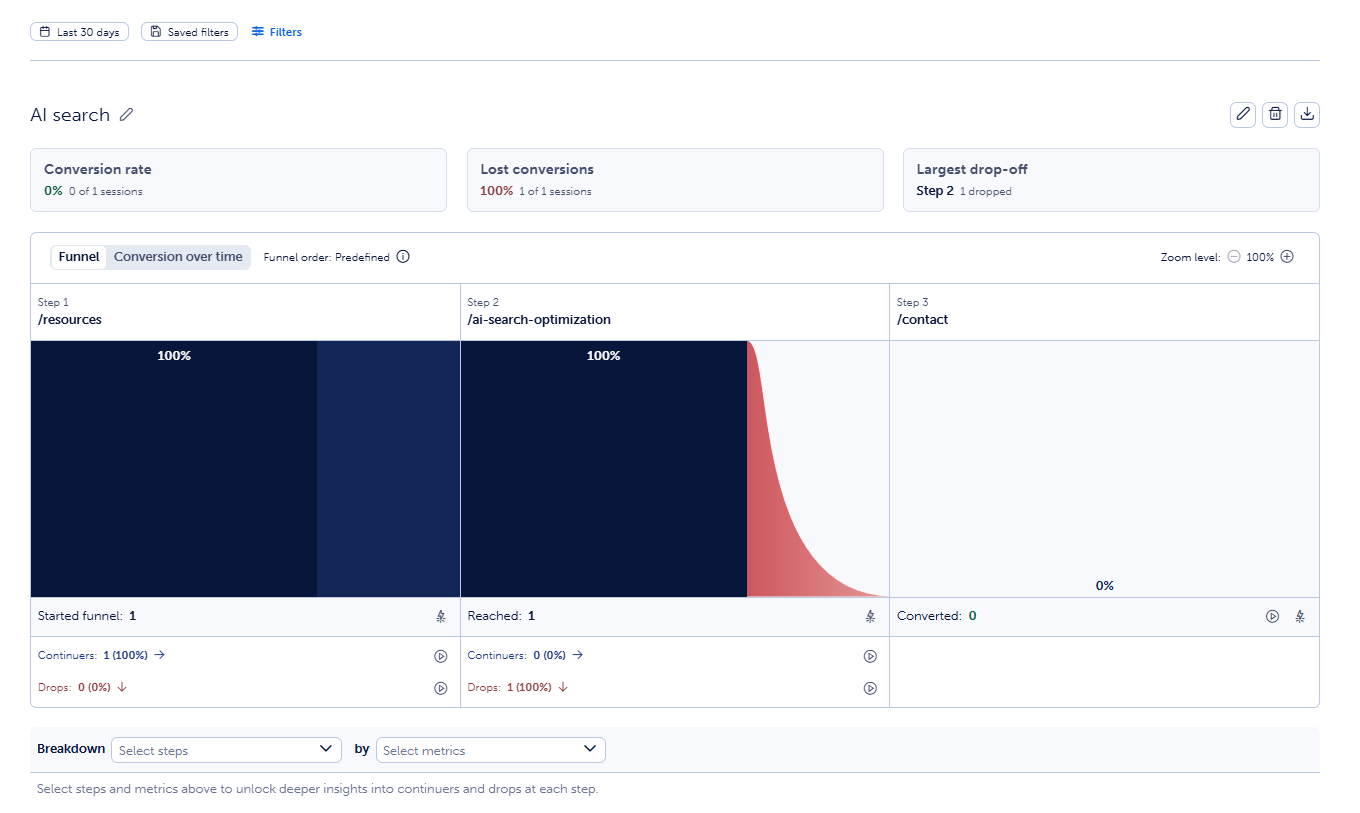
Both platforms offer session replays, but their diagnostic focus differs. Crazy Egg’s recordings are deeply integrated with its AI engine, which automatically summarizes findings and tags events like JavaScript errors or slow load times. This reduces the time analysts spend watching hours of footage.
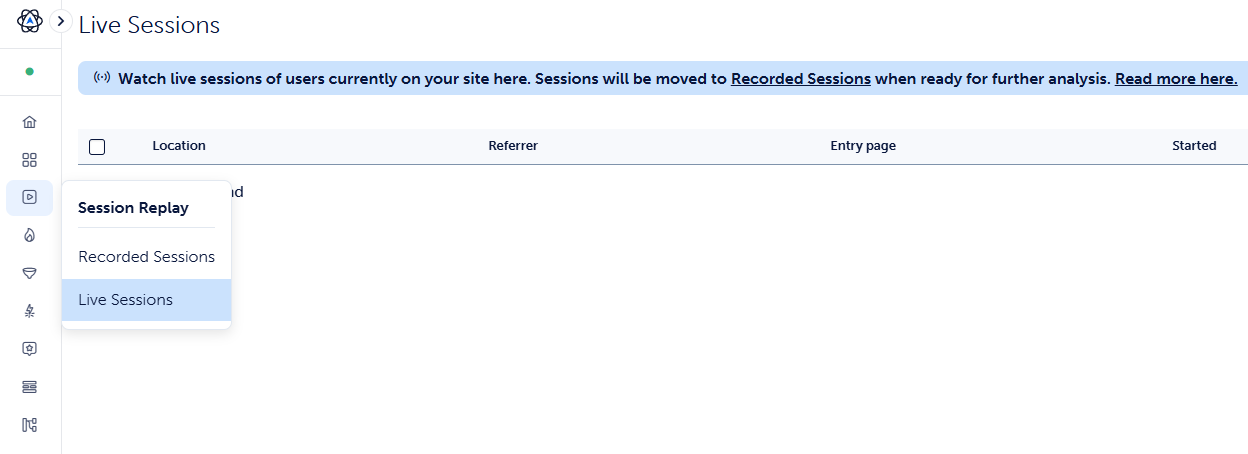
Mouseflow, however, offers "Live Session Viewing," a feature that allows site administrators to watch users in real-time. This is often cited by technical support teams as a vital tool for troubleshooting live bugs. Mouseflow also calculates a quantitative "Friction Score" for every session, aggregating signals like mouse thrashing and rapid clicking into a single metric that helps teams prioritize which sessions to review first.
The A/B Testing Divide
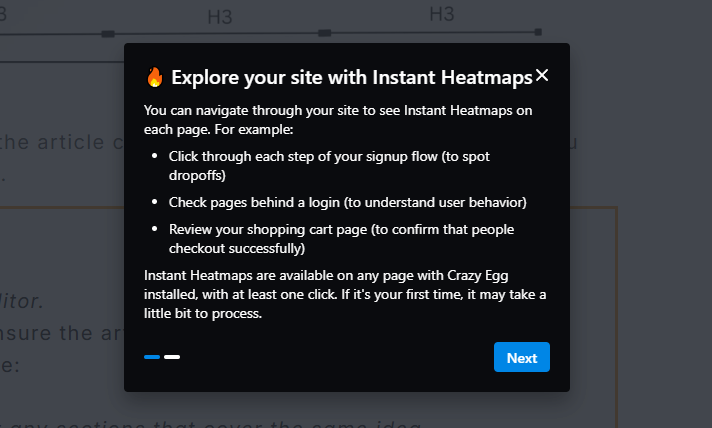
Perhaps the most significant functional divergence lies in experimentation. Crazy Egg includes a native A/B testing tool with a visual editor and URL split capabilities. This allows a team to identify a problem via a heatmap and immediately launch a test to fix it without leaving the platform. It utilizes a "multi-armed bandit" approach to traffic distribution, which automatically directs more visitors to the winning variant to minimize conversion loss during the test.
Mouseflow does not offer native A/B testing for web pages. Organizations using Mouseflow must maintain a separate subscription to a tool like Optimizely or VWO. While Mouseflow can integrate with these tools to record sessions of different test variants, the lack of a built-in testing engine makes the optimization loop more fragmented for smaller teams.
The Role of Artificial Intelligence in 2025
Artificial Intelligence has become the primary battleground for SaaS differentiation. Crazy Egg has moved toward an "agentic" model. Its "Tasks" feature acts as an automated consultant, setting up reports, analyzing data, and generating executive-ready PDF summaries with prioritized recommendations. Furthermore, Crazy Egg’s support for the Model Context Protocol (MCP) allows developers to query their website data directly from AI environments like ChatGPT or Claude without manually exporting files.
Mouseflow’s AI strategy focuses on its conversational assistant, "Mina AI." This tool allows users to ask natural language questions, such as "Show me why users are dropping off the checkout page," and receive a curated list of relevant recordings and trends. While powerful for data retrieval, it currently lacks the proactive "optimization loop" automation found in Crazy Egg’s latest updates.
Supporting Data and Pricing Structures
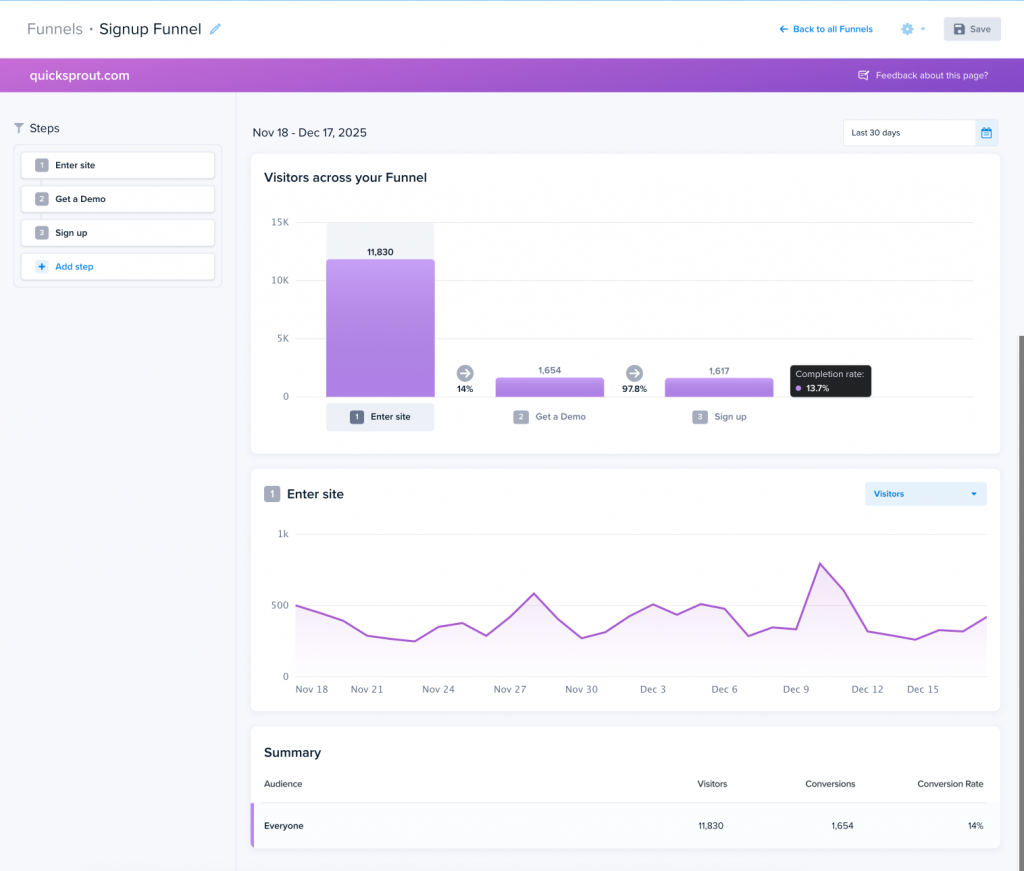
Market data suggests that the "tool fatigue" experienced by digital marketing departments is driving a preference for consolidated platforms. According to industry surveys, the average marketing team uses over 12 different tools; Crazy Egg’s strategy of combining six tools (Heatmaps, Recordings, Surveys, Errors, Analytics, and Testing) into one is a direct response to this trend.
The pricing models reflect different organizational needs:
- Crazy Egg: Uses a "monitored pageview" model. Users are only billed for the pages they choose to track with heatmaps or tests. This allows for high-traffic sites to monitor specific high-value funnels economically. Plans range from $29 to $599 per month.
- Mouseflow: Uses a "session-based" model. Every visitor to the site counts toward the monthly limit. This is simpler for budgeting but can become expensive for sites with high "junk" traffic (e.g., blog readers who never convert). Plans range from $25 to $319 per month, with custom Enterprise tiers.
Security, Privacy, and Compliance
In an era of stringent data protection laws, both companies have invested heavily in compliance. Crazy Egg and Mouseflow are both GDPR and CCPA compliant. Mouseflow holds an edge for highly regulated industries, such as healthcare or finance, by offering HIPAA compliance and PCI DSS certifications on its Enterprise plans. Both tools use "masking" technology to ensure that sensitive user data, such as passwords or credit card numbers, are never recorded or stored on their servers.
Industry Analysis and Broader Implications
The competition between Crazy Egg and Mouseflow illustrates a broader shift in the software-as-a-service (SaaS) industry. We are moving away from "point solutions" (tools that do one thing very well) toward "integrated platforms" (tools that handle the entire workflow).
Industry analysts suggest that for mid-market companies and agencies, the "all-in-one" model offered by Crazy Egg provides a higher Return on Investment (ROI) because it reduces the "integration tax"—the time and money spent making different software talk to each other. However, for enterprise-level UX researchers who require the most granular friction data possible, Mouseflow’s specialized toolset remains a formidable choice.
Final Assessment
The decision between Crazy Egg and Mouseflow should be governed by the existing technical stack of the organization.
Crazy Egg is the recommended choice for teams seeking to streamline their operations. By consolidating behavioral analytics with A/B testing and AI-led reporting, it provides a closed-loop system for conversion rate optimization. This is particularly advantageous for agencies managing multiple domains or lean marketing teams that need to move from "insight" to "action" quickly.
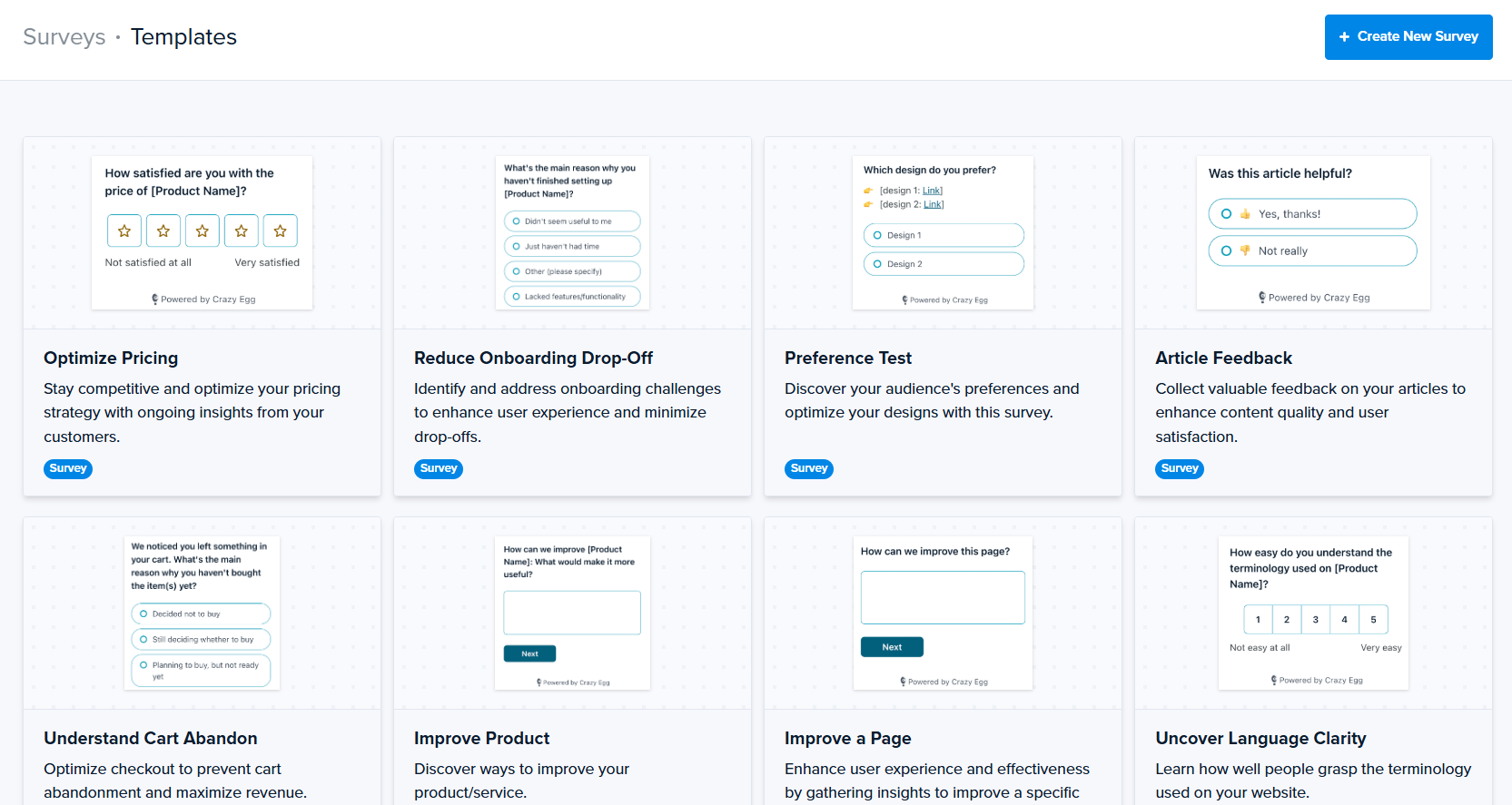
Mouseflow is the superior option for organizations that already have a dedicated experimentation platform and require deep-dive diagnostics. Its field-level form analytics, live session viewing, and quantitative friction scoring provide a level of technical detail that is essential for complex e-commerce environments and troubleshooting-heavy product teams.
As the industry continues to evolve, the integration of AI will likely further blur these lines, but for now, the distinction remains clear: Crazy Egg for breadth and execution, Mouseflow for depth and diagnostics. Both platforms continue to set the standard for how businesses understand and improve the digital human experience.







