rifanmuazin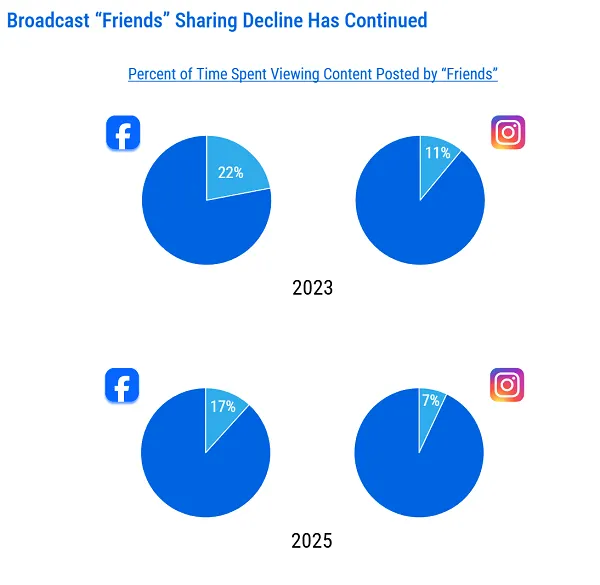
The pervasive declaration that "Facebook is dead" or, more broadly, "Meta is dying" has once again seized social media discussions, prompting a critical examination of the merits behind such proclamations. This renewed debate gained significant traction following an opinion piece published in the New York Times last week by Julia Angwin. In her commentary, Angwin posited that Meta’s recent dip in daily active users signals the impending demise of Facebook and potentially the broader Meta Platforms Inc. itself. She vividly described Facebook as entering its "zombie era," attributing this decline largely to younger demographics perceiving the platform as "peak cringe"—a term encapsulating profound disinterest and even aversion.
Angwin elaborated on her conceptualization of digital corporate mortality, stating, "Death is different on the internet. Lifeless companies like AOL and Yahoo are still technically with us. You can visit their websites. They have customers. They may even be profitable, as they cut staff and monetize their last remnants of traffic. … As a company’s brand ages, its founders leave. The excitement evaporates. The stock shrivels to a fraction of its former glory as the user base withers to those captured by an old email account or friend group." Based on these observations and Facebook’s perceived declining popularity, Angwin forecasted that Meta "is at the start of a long, slow decline that will trigger aftershocks to our economy and our society." This stark prediction, however, warrants a deeper, more nuanced analysis, moving beyond sensational headlines to examine the underlying data, Meta’s strategic pivots, and its undeniable financial fortitude.
The Recurring Narrative: A Brief History of Facebook’s Predicted Demise
The "death of Facebook" is not a novel concept; it’s a narrative that has resurfaced periodically throughout the platform’s nearly two-decade existence. From early criticisms regarding its interface, privacy concerns, and competition from emerging platforms, to more recent anxieties about data breaches and content moderation, Facebook has consistently faced predictions of its obsolescence. Each wave of alarm has, thus far, been met with the platform’s remarkable adaptability and Meta’s strategic maneuvers.
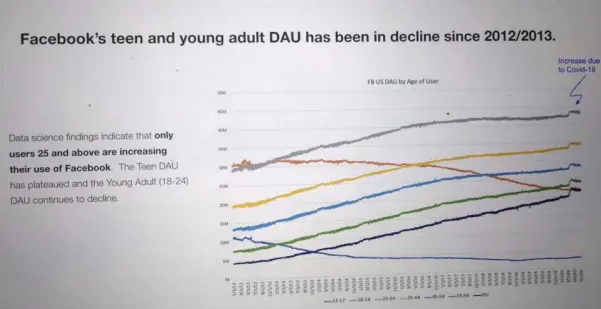
Born in 2004 from a Harvard dorm room, Facebook rapidly scaled to become a global phenomenon, revolutionizing social interaction. Its early growth was fueled by its innovative approach to online identity and connection. However, as it matured, challenges mounted. The "Facebook Files" expose in 2021, for instance, brought to light internal documents showing a steep decline in usage among younger users, confirming long-held suspicions about its diminishing appeal to Gen Z. This trend was further underscored by data presented during Meta’s defense against an antitrust case brought by the Federal Trade Commission, which revealed a significant drop in user-generated content and time spent viewing content posted by friends on both Facebook and Instagram. The shift in user behavior, particularly among younger audiences, from active sharing and deep connection to passive consumption and entertainment, has fundamentally altered the social media landscape. Platforms like TikTok, with their short-form video and algorithmic feeds, have successfully captured the attention of younger demographics, pushing Facebook, and to some extent Instagram, to recalibrate their offerings.
Recent User Declines: Context and Scale
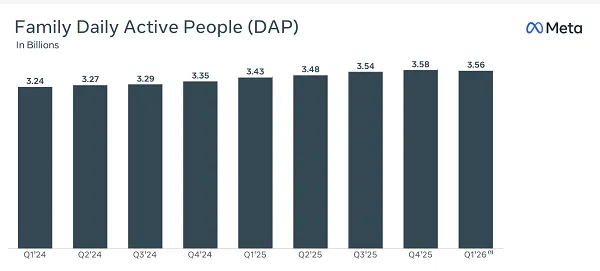
Angwin’s argument hinges significantly on Meta’s reported decline in daily active users (DAUs) in Q1 2026. Indeed, Meta’s daily active user count did decline in Q1 2026, marking the first such decline in the company’s history. This quarter saw a combined 20 million fewer people logging into Facebook, Instagram, WhatsApp, Messenger, and Threads compared to Q4 of the previous year. While a 20 million user drop is substantial in absolute terms, it must be contextualized within the colossal scale of Meta’s global audience. With approximately 3.56 billion daily active users across its family of apps, this decline represents only a tiny fraction of its overall user base. To put this into perspective, according to Worldometer, the global population is around 8.3 billion people, meaning nearly half of the planet’s inhabitants still engage with a Meta-owned platform every single day.
The raw user count, however, might not fully capture the essence of Angwin’s critique. Her point, as she articulated, is less about sheer numbers and more about "resonance"—the platform’s cultural relevance and depth of engagement. On this front, her argument holds more weight. Meta’s internal data has consistently shown a long-term decline in active usage among younger audiences. The 2021 "Facebook Files" exposé revealed that usage among individuals under 25 had been steadily falling, with less time spent viewing original content from friends and more time consuming passively curated feeds. This shift indicates that while people might still check into Facebook, their primary engagement often revolves around quick updates from family or groups, before migrating to other platforms for more extensive entertainment or interaction. The evolution of social media has increasingly favored entertainment over direct connection, transforming Facebook’s role from a primary social hub to a secondary touchpoint for many users. This transformation does suggest a decline in Facebook’s intrinsic relevance, at least in its traditional form, based on overall engagement per user per session.
Meta’s Strategic Pivot: From Metaverse Ambitions to AI Dominance
Recognizing these shifting tides, Meta has been aggressively pursuing its "next stage" of digital interactivity. For several years, this vision was singularly focused on the metaverse, a multi-billion-dollar gamble that saw the company rebrand from Facebook to Meta in 2021. The ambition was to build an immersive virtual world, requiring massive investments in virtual reality (VR) and augmented reality (AR) technologies. Meta spent over $100 billion on VR development through its Reality Labs division, envisioning a future where digital interactions would transcend flat screens. However, the initial rollout of metaverse platforms like Horizon Worlds faced significant challenges, including slow user adoption, technical glitches, and a general public skepticism about its immediate utility. The perceived failure or at least the slow gestation of the metaverse project led some critics to view it as another sign of the company’s impending decline.
Yet, Meta’s capacity to absorb such monumental investments and then strategically pivot underscores its exceptional fiscal strength and adaptability. Far from retreating, Meta has now shifted its primary focus to Artificial Intelligence (AI), positioning it as the next frontier of digital innovation. This pivot is evident in its massive infrastructure spending, reportedly committing $600 billion in the US to AI development. Mark Zuckerberg, Meta’s CEO, has articulated a clear vision for an AI-powered future, emphasizing the development of AI-driven wearables. The Ray-Ban Meta smart glasses, equipped with advanced AI capabilities and AR overlays, are central to this strategy. CNBC reported that Meta sold three times more pairs of these smart glasses in 2025 than in 2023 and 2024 combined, indicating a growing market acceptance and a potential paradigm shift in personal computing. Zuckerberg believes these AI glasses could eventually supersede smartphones as our primary connective devices, offering a seamless blend of digital information with the physical world.
Further solidifying its commitment to AI, Meta recently acquired Assured Robot Intelligence, a humanoid robot developer, eyeing another potential avenue for future technological dominance. These strategic moves illustrate a company not in decline, but actively investing in the technologies most likely to shape the next era of digital interaction and personal computing.
Financial Fortitude and Market Dominance
The most compelling counter-argument to the "Meta is dying" narrative lies in its robust financial performance. Despite the significant investments in speculative ventures like the metaverse and now AI, Meta’s core advertising business continues to generate immense revenue. In 2025, Meta reported a staggering $200.97 billion in revenue, representing a 22% year-over-year increase. This financial prowess allows Meta to simultaneously dominate the digital advertising market, often at the expense of local ad businesses in various regions, and fund ambitious, long-term technological bets.
The company’s ability to allocate tens of billions of dollars to R&D, absorb initial losses from experimental projects, and then re-prioritize its investments without jeopardizing its overall stability, is a testament to its unparalleled economic power. Furthermore, Meta is actively integrating AI systems not just into its products but also into its operational efficiency, leading to reduced staff costs and streamlined processes. This dual approach of aggressive innovation and strategic cost management positions Meta for sustained profitability and growth.
Economically, Angwin’s prediction of "aftershocks to our economy and our society" due to Meta’s decline seems premature. Meta remains a colossal economic engine, employing tens of thousands globally, driving advertising spend, and investing heavily in cutting-edge research that could yield significant societal advancements. Its market capitalization and consistent revenue growth underscore its continued influence in the global economy.
Broader Implications and Future Outlook
Meta’s strategic pivots have profound implications for the entire tech industry and the future of digital interaction. By aggressively pursuing AI and smart wearables, Meta is directly challenging the established order of mobile computing, currently dominated by Apple and Google. Should Zuckerberg’s vision for AI glasses replacing smartphones materialize, it would represent a monumental shift in how individuals access information, communicate, and interact with their digital environments.
The societal implications are equally significant. The widespread adoption of AI-powered wearables raises questions about privacy, data collection, and the blurring lines between the physical and digital realms. Meta’s role in shaping these future technologies means it will continue to be a central figure in ongoing debates about technology’s impact on human behavior and society.
In the competitive landscape, Meta faces ongoing battles. While Facebook itself contends with the sustained appeal of TikTok among younger users, Meta’s broader ecosystem of Instagram, WhatsApp, and Messenger continues to command vast user bases and high engagement levels globally. Instagram, in particular, remains a formidable force in visual social media, constantly evolving to integrate new features like Reels to compete directly with TikTok.
Ultimately, while Facebook’s specific role and cultural resonance are undeniably evolving, and in some segments, diminishing, equating this with the "death" of Meta Platforms Inc. is a substantial overstatement. Meta is not a static entity; it is a dynamic conglomerate with immense financial resources, a vast user base across multiple platforms, and a demonstrated capacity for strategic innovation and adaptation. The company is actively investing in the next generation of computing, from AI to advanced wearables, with the goal of leading the charge into the future. To suggest that such a powerful entity, generating hundreds of billions in revenue and spearheading cutting-edge technological development, is on the verge of obsolescence appears more akin to clickbait than a fact-based analysis. Meta’s journey is one of continuous transformation, ensuring its continued relevance as a dominant force in the digital world for years to come.