rifanmuazin
The efficacy of email marketing hinges on successful message delivery, a process frequently obstructed by phenomena known as email bounces. Distinguishing between a hard bounce and a soft bounce is paramount for marketers and businesses alike, as these delivery failures necessitate distinct actions and, if left unaddressed, can severely degrade a sender’s reputation, ultimately impacting inbox placement, skewing performance metrics, and even leading to blocklisting by internet service providers (ISPs). This article delves into the nuances of hard versus soft bounces, exploring their causes, practical implications, and actionable strategies for mitigation in an increasingly stringent email ecosystem.

Understanding Email Bounces: The Fundamentals of Delivery Failure
Email delivery is not always a straightforward process. When an email fails to reach its intended recipient, it “bounces” back to the sender, accompanied by an SMTP (Simple Mail Transfer Protocol) code that indicates the reason for the failure. These codes are critical diagnostics, categorizing bounces into two primary types: hard bounces, which signify permanent failures, and soft bounces, indicating temporary issues. The distinction between these two is not merely technical; it dictates the appropriate response and has profound implications for a sender’s long-term deliverability and overall email marketing strategy.
A hard bounce email represents a definitive, permanent delivery failure, characterized by an SMTP 5xx code. These “Permanent Negative Completion” replies signal that the message cannot be delivered now or at any future attempt. Common scenarios include an invalid email address (e.g., a typo during signup) or a non-existent domain. Conversely, a soft bounce email denotes a temporary delivery failure, returning an SMTP 4xx code, or a “Transient Negative Completion” reply. This indicates a “not right now” situation, suggesting that a retry might succeed later. Examples include a recipient’s mailbox being full or a temporary server outage. The fundamental difference lies in permanence: hard bounces demand immediate removal of the address from a mailing list, while soft bounces typically warrant retries by the sending email service provider (ESP) before any action is taken.
Hard Bounces: Permanent Obstacles to Delivery
Hard bounces are the most detrimental type of delivery failure, as they unequivocally signal that an email address is unreachable. Ignoring these permanent rejections is a clear indicator of poor list hygiene to mailbox providers, eroding sender reputation with each repeated attempt to deliver to a dead address. A diminished sender reputation translates directly into lower inbox placement rates for an entire mailing list, regardless of the quality of other addresses. Hard bounces typically fall into several categories:
-
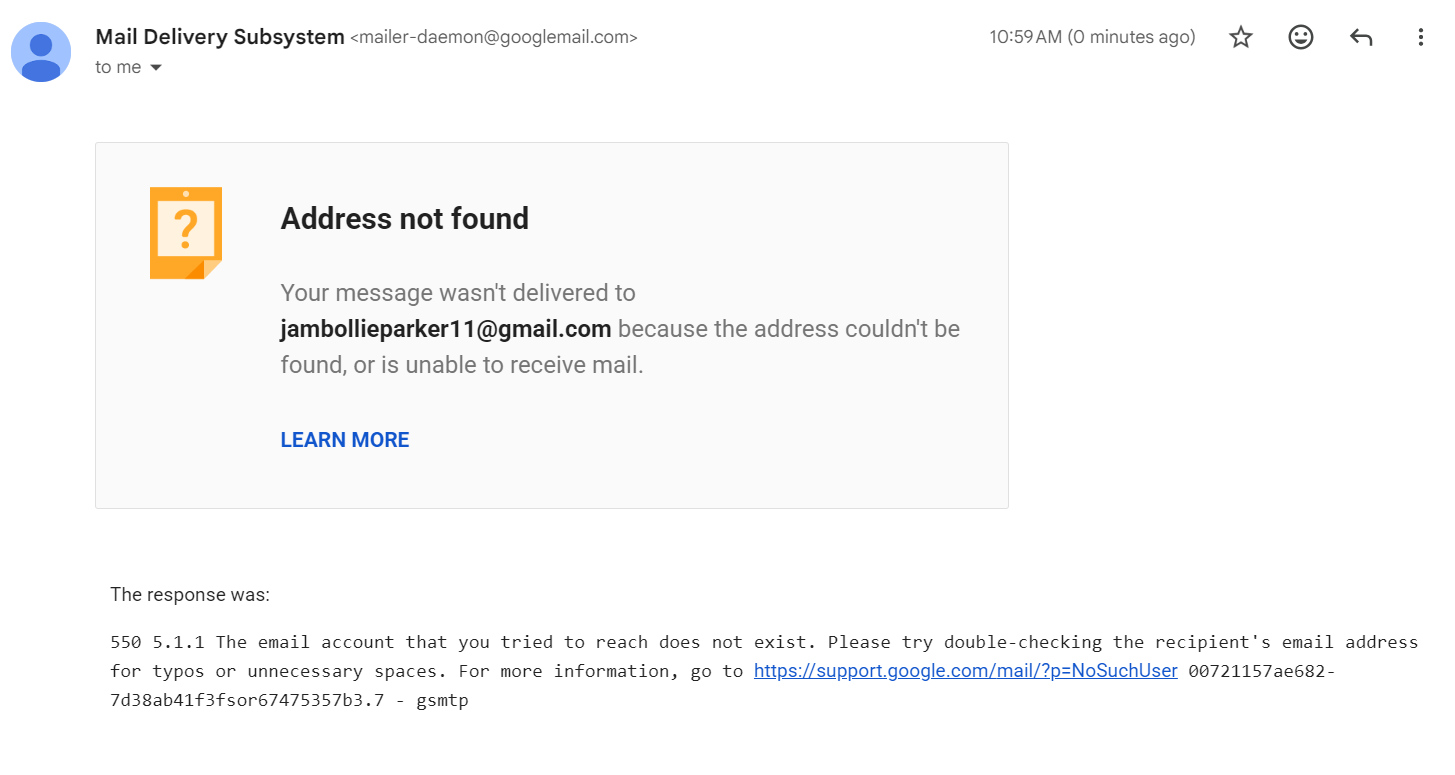
Invalid or Nonexistent Email Address (SMTP 5.1.1): This is the most prevalent form of hard bounce, often termed a “user unknown” error. It occurs when the specific mailbox does not exist on the receiving domain. This can result from simple typographical errors made during signup, or from accounts that have been closed or retired (e.g., an employee leaving a company or a personal account being deactivated). For instance, an email sent to an address like “[email protected]” might bounce back with a 5.1.1 error if that specific Gmail account is not active. Such addresses should be suppressed immediately upon the first bounce, as continued attempts will never succeed and only harm sender reputation.
-
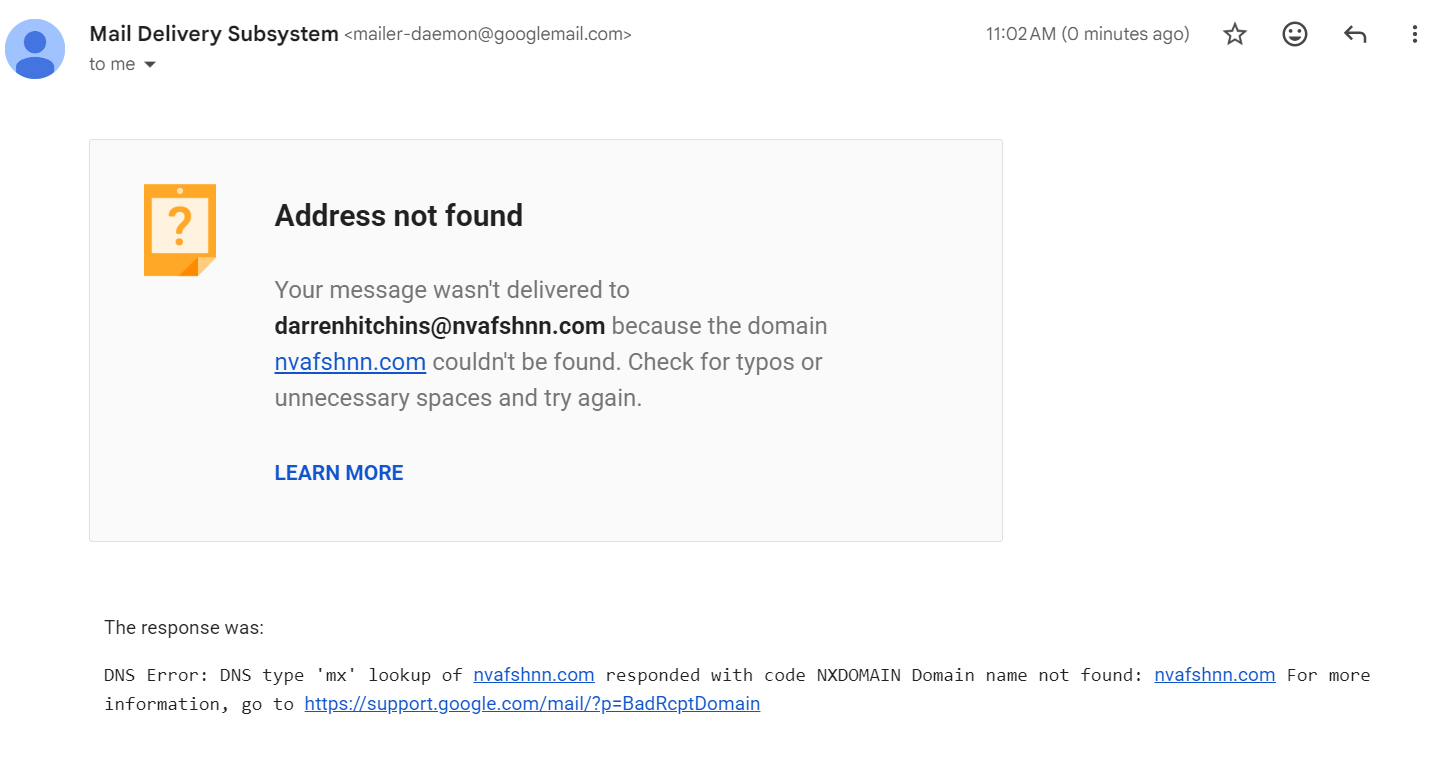
Non-existent Domain Name: A more fundamental issue than an invalid mailbox is a non-existent domain. If the domain part of the email address (e.g., “@gnail.com” instead of “@gmail.com”) is misspelled or has been decommissioned, there is no mail server to accept the message whatsoever. The failure occurs at the Domain Name System (DNS) stage, preventing the email from even reaching a specific mail server. These errors, often detected during address validation at signup, necessitate immediate removal from the list to prevent repeated, futile delivery attempts.
-
Recipient’s Server Permanently Blocks Delivery (Authentication Failures): This category has seen a significant increase in relevance due to recent policy changes by major ISPs. Previously, many hard bounces pointed directly to bad addresses. However, a receiving server can now permanently reject mail based on policy grounds, even if the recipient address is perfectly valid. This shift is largely attributed to the stricter authentication requirements implemented by Google, Yahoo, and Microsoft.
- The 2024-2025 ISP Enforcement Wave: A pivotal moment occurred in February 2024 when Gmail and Yahoo initiated stringent new requirements for bulk senders (those sending 5,000 or more messages per day). These requirements mandated the implementation of SPF (Sender Policy Framework), DKIM (DomainKeys Identified Mail), and DMARC (Domain-based Message Authentication, Reporting & Conformance) authentication protocols. Crucially, senders must also achieve DMARC alignment, meaning the visible “From:” domain in the email header must match the authenticated domain used for SPF and DKIM. Emails failing these authentication checks are no longer merely filtered into spam folders; they can be rejected outright, resulting in a hard bounce.
- Microsoft’s Adoption: Following suit, Microsoft adopted similar policies for its consumer domains (Outlook.com, Hotmail, Live