

The proliferation of generative artificial intelligence (AI) has fundamentally reshaped the digital search landscape, ushering in a new era where brands must optimize not just for traditional search engine results pages (SERPs) but also for AI-generated answers. This paradigm shift has given rise to Answer Engine Optimization (AEO), a critical discipline focused on ensuring brand visibility and favorable representation within AI models like ChatGPT, Google Gemini, and Perplexity. As businesses scramble to adapt, the central question for many marketing teams revolves around the tooling: Is a standalone monitoring solution sufficient, or is a more integrated platform that connects AEO insights directly to content and customer relationship management (CRM) workflows a necessity? This article delves into a comparative analysis of two prominent solutions, HubSpot AEO and Otterly, examining their features, integration capabilities, and implications for marketing strategy in this rapidly evolving environment.
The Rise of Answer Engine Optimization (AEO) in a Generative AI Era
The digital marketing ecosystem has been in constant flux, but the emergence of sophisticated large language models (LLMs) from late 2022 onwards marked a pivotal acceleration. These AI systems, capable of synthesizing information from vast datasets to generate direct answers, summaries, and creative content, have begun to displace traditional search results as primary information sources for a growing segment of users. Unlike conventional SEO, which focuses on ranking websites for specific keywords, AEO targets how a brand’s information, products, or services are cited, described, and recommended within these AI-generated responses. For businesses, this means not only having discoverable content but also ensuring that content is authoritative, clearly structured, and trusted by AI models. Industry analysts estimate that AI search could account for a significant portion of all online queries within the next five years, making AEO an indispensable component of a comprehensive digital strategy. The challenge lies in monitoring these opaque AI environments and then effectively acting on the insights gleaned.
HubSpot AEO: An Integrated Approach Within the CRM Ecosystem
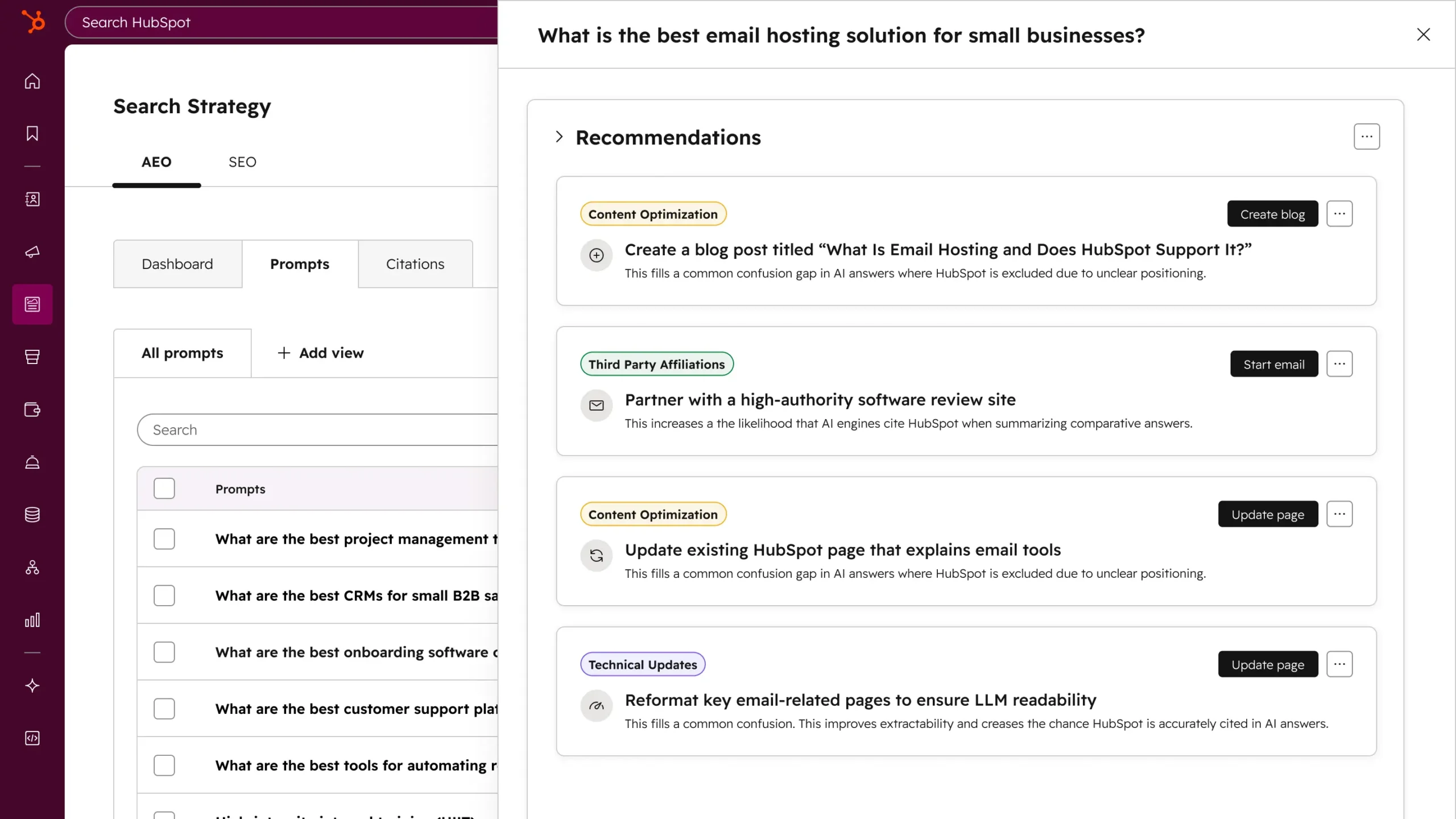
HubSpot AEO emerges as a solution deeply embedded within the HubSpot platform, offering a CRM-connected AEO experience. Designed for businesses already leveraging HubSpot’s extensive suite of marketing, sales, and service tools, its core strength lies in its seamless integration. It tracks brand presence across major AI engines, including ChatGPT, Gemini, and Perplexity. However, its true differentiation materializes after data ingestion. Rather than simply providing raw visibility insights, HubSpot AEO funnels this intelligence directly into existing content creation pipelines, campaign management tools, and even sales pipeline tracking, all within the familiar HubSpot interface. This native integration is critical for workflow efficiency, eliminating the need for context-switching between disparate systems.
For instance, if HubSpot AEO identifies a gap in brand visibility for a specific AI prompt, the platform can immediately suggest publishing a relevant blog post, scheduling a LinkedIn update, or engaging on platforms like Reddit. Crucially, the prompt suggestions offered are not generic templates but are intelligently generated based on the company’s existing CRM data, including insights into competitors, customer profiles, and historical interactions. This data-driven approach aims to ensure that content creation is precisely aligned with actual buyer questions and market dynamics. The platform transforms diagnostic insights into actionable recommendations, guiding marketers on the next steps rather than leaving them to interpret complex dashboards independently.

Otterly: A Specialized Content Intelligence Platform for AI Search
In contrast to HubSpot’s integrated ecosystem, Otterly positions itself as a purpose-built, "neutral and objective" content intelligence platform specifically for AI search. It offers a broader out-of-the-box coverage of AI engines, including ChatGPT, Google AI Overviews, Google AI Mode, Perplexity, and Microsoft Copilot, with Google Gemini and Claude available as paid add-ons. Otterly’s methodology emphasizes tracking from a first-person perspective on a daily basis, aiming to provide granular and timely data on brand mentions and sentiment within AI responses.
Otterly’s strengths lie in its robust standalone reporting and extensive data export capabilities. It integrates seamlessly with Looker Studio for custom dashboard creation, offers a public API for piping data into business intelligence (BI) stacks, and provides an MCP server for querying AI visibility data using natural language within other AI tools like Claude or Cursor. Beyond basic tracking, Otterly provides advanced diagnostic tools such as a Content Audit with a predictive Generative Engine Optimization (GEO) score and a Crawlability Checker. These features help identify potential issues that prevent AI bots from effectively processing a site’s content and offer actionable optimization tips. Furthermore, Otterly tracks AI-specific monetization elements, including ChatGPT Ads, Shopping cards, and AI Overviews, providing a more comprehensive view of the commercial landscape within AI search. While powerful in its monitoring and reporting, Otterly’s design philosophy means that the execution of insights—such as creating new content or updating campaigns—occurs outside its platform, requiring users to integrate it into their existing, separate content and CRM workflows.
Feature-by-Feature Comparison: A Deep Dive into Capabilities
To make an informed decision, organizations must scrutinize the specific features and their operational implications.
- AI Engines Tracked: Otterly boasts a wider native coverage with ChatGPT, Google AI Overviews, Google AI Mode, Perplexity, and Microsoft Copilot. HubSpot AEO currently focuses on ChatGPT, Gemini, and Perplexity. The choice here depends on the critical AI environments for a brand’s target audience, with Otterly offering more breadth, albeit with some engines as paid add-ons.
- Brand Visibility and Competitive Analysis: Both platforms offer core metrics like a brand visibility score (Otterly calls its "Brand Visibility Index") and share of voice/competitor tracking ("Share of AI Voice" in Otterly). These are fundamental for benchmarking performance and understanding market position.
- Sentiment Analysis: HubSpot AEO provides a sentiment score on a -100 to +100 scale, indicating the positivity or negativity of AI mentions. Otterly categorizes sentiment as enthusiastic, caveated, or dismissed, offering a qualitative perspective. The granularity of HubSpot’s numeric scale might appeal to data-driven teams, while Otterly’s categorical approach could be more intuitive for quick qualitative assessment.
- Prompt Management and Discovery: This is a key differentiator. HubSpot AEO leverages CRM data to suggest relevant prompts, significantly reducing setup time and ensuring alignment with actual buyer intent. This direct link to customer data is invaluable for crafting highly targeted AEO strategies. Otterly’s Query Fan Out Tool, conversely, takes a single user prompt and expands it into a full range of related queries an AI engine might generate, aiding in prompt discovery and comprehensive gap analysis, especially for teams building prompt libraries from scratch.
- Citation Analysis: Both tools track citations. HubSpot provides filters by source type (owned, competitor, third-party, social, affiliate) and content type (blog, news, product, social), offering a nuanced view of content effectiveness. Otterly provides weekly URL-level tracking, which is precise for identifying specific content assets being cited.
- Diagnostic Tools and Optimization Guidance: Otterly offers a Content Audit with a predictive GEO score and a Crawlability Checker. These are powerful diagnostic features that help identify technical and content-related issues hindering AI readability and citation. HubSpot AEO, while lacking these specific diagnostic tools, compensates by transforming visibility gaps directly into prioritized, actionable recommendations that can be executed within its platform.
- Monetization and Ad Tracking: Otterly includes tracking for AI-specific monetization elements like ChatGPT Ads, Shopping cards, and AI Overviews. This provides valuable intelligence for brands operating in or planning for monetized AI environments, a feature not currently offered by HubSpot AEO.
- Workflow Integration and Actionability: This is arguably the most significant divergence. HubSpot AEO’s native integration means AEO insights flow directly into content creation, marketing automation, and sales workflows. A visibility gap can immediately trigger content updates or new campaigns within the same system. Otterly provides comprehensive data and reports but requires users to export this data and act upon it using external tools. For teams with existing, well-established, but separate content and CRM systems, Otterly’s data-rich approach might fit, but it necessitates manual bridging of insights to action.
Pricing and Capacity Considerations
Pricing models reflect the differing philosophies of these platforms. HubSpot AEO is available as a standalone tool at $50/month (or $45/month annually), including a 28-day free trial with 25 prompts across its tracked engines. For businesses seeking a fully integrated marketing and content platform, HubSpot for Marketers (Marketing Hub + Content Hub + AEO) starts at $900/month.

Otterly offers a 7-day free trial, followed by tiered pricing: Lite ($29/month for 15 prompts), Standard ($189/month for 100 prompts), and Premium (custom pricing for 500+ prompts). It’s crucial to remember that Gemini and Claude tracking are add-ons for Otterly, increasing the total cost for comprehensive coverage. Otterly also offers an Agency Partner tier for enhanced prompt limits and white-labeled reports.
In terms of capacity, Otterly Lite’s 15 prompts at $29/month provide a low-cost entry for basic monitoring. HubSpot AEO, at $50/month, offers CRM-connected insights and workflow integration for a potentially unspecified prompt volume (25 in trial). For higher prompt volumes (100+) and API access, Otterly Standard at $189/month offers greater depth in monitoring and data access, though without the integrated workflow of HubSpot. The decision hinges on the scale of monitoring required and the preference for integrated action versus external data management.
Strategic Implications: Workflow Efficiency and ROI Measurement
The choice between HubSpot AEO and Otterly ultimately boils down to a strategic decision about workflow efficiency and the holistic measurement of AEO’s impact.
For HubSpot users, AEO offers a compelling advantage through native integration. AEO data coexists with campaign metrics, contact records, and content performance. This unified view allows marketers to directly trace visibility shifts to specific content initiatives or changes in competitor presence, all without leaving the platform. This streamlined workflow minimizes context-switching, which can significantly improve productivity and accelerate response times to market changes. Furthermore, the CRM connectivity of HubSpot AEO (especially with Marketing Hub Pro or Enterprise) enables a powerful alignment of AEO metrics with sales and service outcomes. Brands can directly link AI visibility to lead volume, conversion rates, and pipeline generation. HubSpot’s internal data suggests that leads from AI search can convert at three times the rate of traditional search leads, making the ability to track this connection within a unified CRM invaluable for demonstrating ROI and optimizing marketing spend.
Otterly, with its robust API and Looker Studio integration, caters to teams with sophisticated data infrastructure and a preference for custom reporting and analysis. Its strength lies in providing a deep, granular layer of AI visibility data that can be pulled into existing BI tools. While this offers immense flexibility for data scientists and analysts, it places the onus on the user to build the reporting layer and integrate insights into marketing automation or CRM systems. For teams that prioritize a "best-of-breed" approach and are comfortable with orchestrating data across multiple specialized tools, Otterly’s power in pure monitoring and data export is a significant asset. However, connecting these insights to tangible sales outcomes would require additional development and integration work to join Otterly’s data with CRM platforms.
AEO and SEO: Complementary Pillars of Digital Strategy
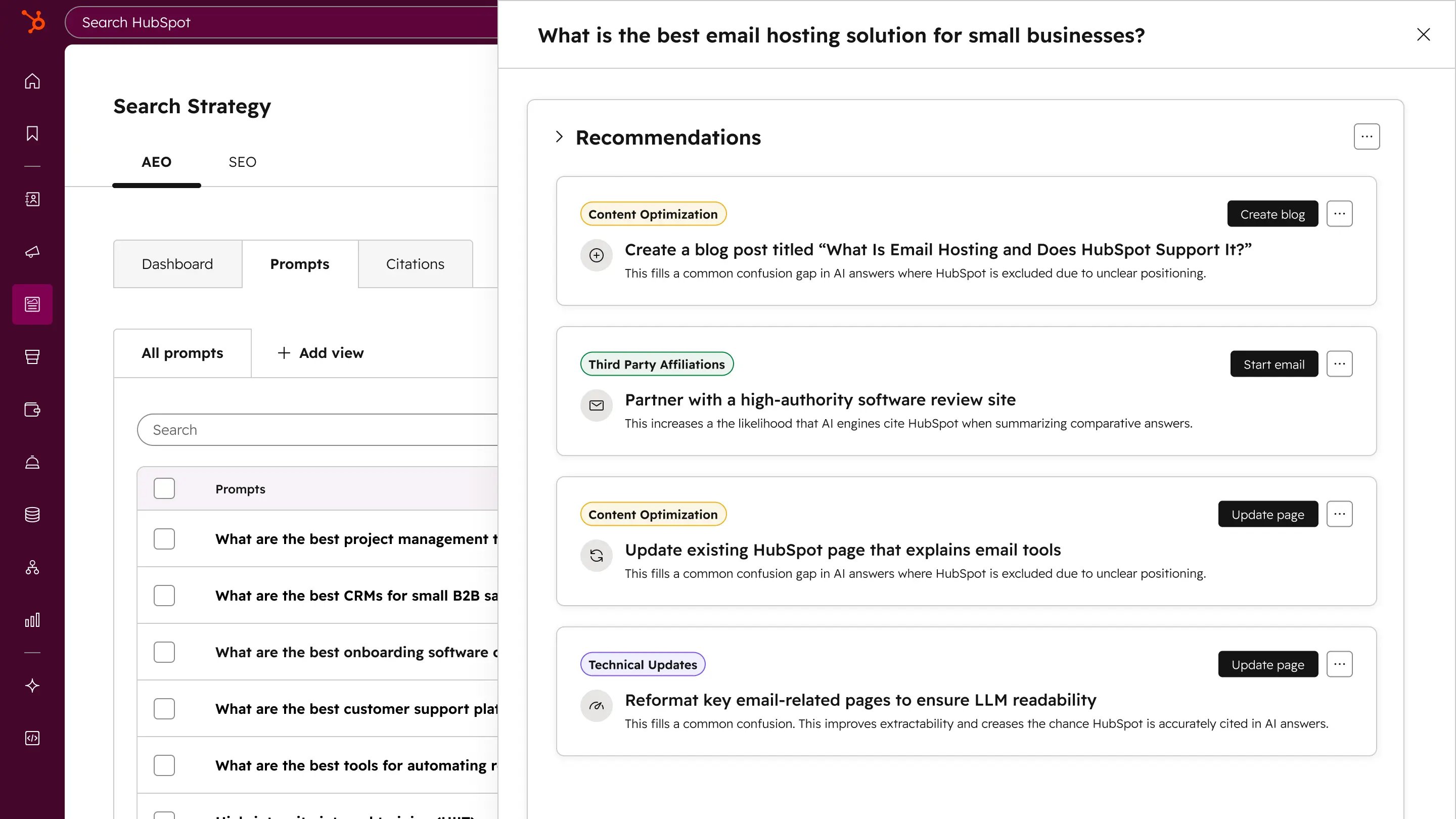
It is imperative to understand that AEO does not replace SEO; rather, the two disciplines are complementary. SEO continues to be vital for optimizing content for traditional search engine rankings, focusing on crawlability, keywords, backlinks, and structured data. AEO, conversely, optimizes for how brands appear in AI-generated answers, which often prioritize clear, concise responses, first-person source authority, and structured data. A well-structured, authoritative piece of content is more likely to be cited by AI and rank well in traditional search, demonstrating a significant overlap in content strategy. The practical application involves using AEO prompt data to identify buyer questions posed to AI, then creating or optimizing content that answers these questions clearly and in a format conducive to AI citation. Gaps in AEO visibility frequently mirror gaps in an organic content strategy, reinforcing the synergy between the two. HubSpot AEO facilitates this alignment by providing specific recommendations and enabling content creation within its Content Hub, while Otterly’s Content Audit and GEO score guide external content optimization efforts.
Navigating the Initial Steps in AEO Adoption
For businesses new to AEO, the journey should begin with a focused, iterative approach. It is advisable to start by identifying a small, specific set of 10-15 prompts that directly reflect real buyer questions during their evaluation phase. These prompts should be informed by sales calls, support tickets, and customer interviews, focusing on queries like "What’s the best [tool category] for [use case]?" or "How does [your product type] work?" Both tools offer assistance in prompt discovery: HubSpot AEO with its CRM-powered suggestions and Otterly with its Query Fan Out Tool. Regular review and refinement of these prompts (e.g., every 30-60 days) are crucial as buyer questions and AI engine responses evolve.
The decision to move from basic monitoring to a full platform typically occurs when visibility gaps are identified, but the existing workflow is too slow to act on these insights effectively. If a team finds itself spending excessive time switching between monitoring, content creation, and CRM tools to close these gaps, the efficiency gains from a unified platform like HubSpot’s become increasingly compelling. HubSpot’s 28-day free trial offers a substantial period to establish a baseline and evaluate the practicality of its integrated recommendations without initial financial commitment, serving as a valuable first step for AEO newcomers.
Conclusion: The Evolving Imperative of AI Visibility
The shift towards AI-powered search is an undeniable force reshaping digital marketing. Brands can no longer afford to ignore their presence in these new answer engines. The choice between HubSpot AEO and Otterly hinges on an organization’s existing technology stack, strategic priorities, and the desired level of workflow integration. HubSpot AEO offers a powerful, CRM-native solution that integrates AI visibility directly into marketing, content, and sales workflows, making it ideal for teams already invested in the HubSpot ecosystem seeking seamless actionability and direct ROI measurement. Otterly, on the other hand, provides a robust, specialized monitoring and intelligence platform with broader AI engine coverage and sophisticated diagnostic tools, appealing to organizations that prefer a best-of-breed approach with strong data export capabilities and custom reporting. Regardless of the chosen tool, proactive engagement with Answer Engine Optimization is no longer an option but a strategic imperative for maintaining brand relevance and driving demand in the AI-first digital future.








