Meta’s advertising platform, while a powerful engine for e-commerce and lead generation, is replete with default settings and intricate toggles that often prioritize Meta’s spending objectives over advertiser effectiveness. This article delves into the critical configurations and campaign settings that advertisers must meticulously manage to ensure their ad spend translates into tangible business results, rather than merely increasing Meta’s revenue. The insights provided are crucial for businesses seeking to optimize their presence on the platform, moving beyond superficial metrics to achieve genuine return on investment.
The Default Dilemma: Understanding Meta’s Algorithmic Incentives
The digital advertising landscape, particularly within the behemoths like Meta, is characterized by a complex interplay of algorithms designed to maximize engagement and, consequently, ad revenue. As observed by industry professionals, the default settings within Meta’s advertising manager are not always aligned with an advertiser’s ultimate goals of acquiring high-quality leads or driving profitable sales. Instead, these defaults are frequently engineered to encourage broader reach and higher spend, which, while boosting platform metrics, can dilute the quality of traffic and conversions.
This tendency is a significant concern for new clients and even seasoned advertisers when they embark on campaigns. A thorough audit of existing campaign setups consistently reveals the prevalence of these default configurations. For instance, unchecked settings can lead to significant expenditure on bot traffic or unqualified leads who express no recollection of engaging with the brand’s promotional materials. This underscores the necessity of a granular approach to campaign management, moving beyond a superficial understanding of the platform to a deep dive into its operational intricacies.
The objective of this comprehensive guide is to demystify the most impactful toggles and configurations within Meta’s advertising ecosystem, spanning from the initial campaign objective selection down to the individual ad level. By understanding and strategically adjusting these elements, businesses can pivot from generating mere platform activity to attracting traffic that genuinely contributes to their bottom line, ensuring that Meta’s platform serves their business objectives, not the other way around. This exploration will distinguish between the nuances of lead generation and e-commerce strategies, offering tailored advice for each.
Strategic Campaign Objectives: Beyond Awareness and Engagement
Meta offers a diverse array of campaign objectives, including Awareness, Traffic, Engagement, Leads, App Promotion, and Sales. While each serves a specific purpose, the prevailing wisdom among seasoned digital marketers is that for the majority of businesses, focusing on either Leads or Sales objectives is paramount. Other objectives, while seemingly beneficial, can often act as distractions, consuming valuable budget without a clear path to revenue generation.
Awareness and engagement campaigns, though they have their place in broader marketing strategies, are typically more suited for large-scale brands with extensive budgets. These objectives aim to increase brand visibility and interaction, which can be valuable for long-term brand building. However, for advertisers seeking immediate and measurable business outcomes, these broad objectives can inadvertently lead to spending on reach or engagement metrics that do not translate into tangible conversions or revenue. Many growing advertisers find themselves in these campaigns by accident, driven by the platform’s suggestions, only to realize their budget is being spent on impressions rather than qualified prospects.
Key Consideration for Campaign Objectives:
- Prioritize Leads or Sales: For most businesses, these two objectives offer the most direct route to achieving measurable business growth.
- Evaluate Awareness/Engagement Carefully: These objectives are generally less effective for direct response marketing and require significant budget and a long-term strategic vision to yield indirect benefits.
When setting up a campaign, Meta often prompts advertisers to select multiple conversion types. This can lead to an optimization towards bot visibility or low-quality traffic, as the algorithm attempts to satisfy a broad set of objectives. This dilution of focus hinders the identification of individuals genuinely interested in the products or services being offered. The platform’s encouragement to diversify conversion goals can inadvertently lead to a scattering of resources, diminishing the effectiveness of each individual goal.

Optimizing Lead Generation: The Pursuit of Quality Over Quantity
Instant Forms, a feature allowing lead capture directly within Facebook and Instagram, are often presented as a convenient solution. However, Meta may sometimes encourage a blended approach, incorporating website visits and calls alongside Instant Forms. While these methods can inflate lead volume, they often do so at the expense of lead quality. The inherent friction of directing users to a dedicated website or landing page, while seemingly adding a step, is crucial. This friction acts as a natural filter, attracting individuals who are more committed to learning about or purchasing a product or service.
While Instant Forms might yield higher numbers for reporting purposes, they frequently fail to translate into actual revenue when subjected to rigorous revenue checks. The common refrain from sales teams encountering leads generated through such methods is, “I never filled out a form,” highlighting a disconnect between the platform’s reported leads and genuine customer intent.
Strategic Lead Generation Practices:
- Direct Traffic to Your Website: Encourage users to visit your website or a dedicated landing page. This creates a more committed lead pool.
- Leverage CRM Integration: Connect your Customer Relationship Management (CRM) system to Meta Ads. This enables a critical shift in your performance goal from simply maximizing the number of leads to maximizing the number of conversion leads.
- Define Qualified Leads: To achieve this, two conversion events are necessary: a standard “lead” event and a secondary event that signifies a lead reaching a qualified status within your CRM. This advanced configuration tells Meta to prioritize users who are more likely to convert into paying customers, moving beyond mere form submissions. This is one of the most underutilized yet powerful settings in Meta’s lead generation tools.
Mastering Attribution Models: Pinpointing True Conversion Drivers
Attribution modeling is a cornerstone of digital advertising, dictating how credit for conversions is assigned across various touchpoints in the customer journey. In Meta’s platform, this is particularly critical as it directly influences which ads are deemed successful and subsequently allocated more budget. The default attribution settings often include both view-through and engaged-view attributions, which can significantly inflate the perceived effectiveness of certain ads.
- View-through attribution: Credits a conversion to an ad if a user saw it but did not click, and later converted.
- Engaged-view attribution: Credits a conversion if a user watched a video ad for a certain duration but did not click, and later converted.
While these broader attribution windows can be useful for capturing the influence of upper-funnel activities, they can obscure the direct impact of click-through actions. Over-reliance on these broader models can lead to metrics that appear strong on paper but do not reflect the actual revenue generated from direct engagement with ads. This discrepancy can misguide budget allocation and strategic decisions, making campaigns seem more successful than they are in reality.
Recommended Attribution Settings:
- Click-Through Only: For most campaigns, it is advisable to set view-through and engaged-through attribution to “none” and opt for “on click-through only.” This ensures that credit is given only when a user actively clicks on an ad.
- Appropriate Time Window: A 7-day click, 1-day view attribution window is often the optimal balance, ensuring that Meta receives credit for conversions that stem directly from ad clicks within a reasonable timeframe.
Nuance in Conversion Counting:
It is also crucial to differentiate between total and unique conversions, particularly for e-commerce and lead generation. For e-commerce, multiple purchases by the same individual represent distinct revenue streams and should be counted as total conversions. In contrast, for lead generation, a user submitting the same form multiple times typically represents a single contact and a single potential deal, making unique conversions the more relevant metric unless separate forms cater to distinct services or contracts.
Audience Targeting and the Advantage+ Trap

Meta’s Advantage+ campaign settings are designed to automate and optimize campaign delivery by treating user-defined audience selections more as suggestions than strict parameters. While this can be beneficial in certain contexts, it poses a significant risk for advertisers, especially in lead generation.
For E-commerce: Advantage+ often excels in e-commerce campaigns where the system can track real purchase events and revenue. In these scenarios, allowing Meta to leverage its data to find customers who are likely to buy can lead to faster, more efficient scaling. The system’s ability to follow revenue signals can be a powerful asset when used judiciously, especially when combined with robust conversion tracking.
For Lead Generation: The scenario shifts dramatically for lead generation. Form submissions, unlike actual purchases, do not guarantee a paying customer. When Advantage+ settings are applied broadly to lead generation campaigns, advertisers risk paying to reach a vast audience, a significant portion of whom may never convert into paying clients. This can lead to a substantial waste of advertising budget.
Strategic Audience Management:
- Retain Control for Lead Generation: For lead generation campaigns, it is imperative to switch from Advantage+ broad targeting to the original audience selection options. This allows for precise control over who is targeted.
- Define Audiences Precisely: Utilize specific interests, demographics, and custom/lookalike audiences built from your highest-value customer segments. This ensures that your ad spend is directed towards individuals with a demonstrated propensity to become valuable customers.
Creative Enhancements and AI-Generated Variations
Meta’s sophisticated AI capabilities now extend to automatically generating creative variations and enhancements for ads. This includes tasks such as image manipulation, ad copy refinement, and the creation of entirely new ad versions optimized for different placements. While these tools offer significant potential for efficiency and testing, they come with inherent risks if not managed with careful oversight.
These AI-driven “enhancements” are not always improvements. The power of these tools can be seductive, but relinquishing creative control to the system without stringent review can lead to brand dilution. AI-generated variations may not consistently align with a brand’s established voice, visual identity, or the specific messaging intended to resonate with the target audience. Furthermore, because these enhancements are frequently enabled by default, many advertisers remain unaware that their creative assets are being altered or generated by AI.
Best Practices for Creative Management:
- Manual Review and Approval: Always manually review and approve any AI-generated creative variations before they go live. The system should serve as a tool to assist, not replace, human oversight in maintaining brand integrity.
- Brand Consistency: Ensure that all automated creative elements accurately reflect your brand’s unique selling proposition and aesthetic.
- Language Translation Oversight: Similarly, Meta offers automatic language translation. While useful, these translations should be tested and validated to ensure accuracy and cultural appropriateness.
Placement Settings and Brand Safety Concerns
Advantage+ Placements, by default, distribute ads across Meta’s entire network, encompassing Facebook, Instagram, Messenger, and the Audience Network. The Audience Network extends Meta’s reach to third-party apps and websites outside of Meta’s owned properties. This broad distribution, while maximizing reach, necessitates careful monitoring of placement performance.
Not all placements deliver the same quality of traffic, and some may not be suitable for every brand. Underperforming placements or those that feel misaligned with brand values should be excluded. The Audience Network, in particular, warrants close scrutiny. Analogous to Google’s Search Partners, it can often attract a disproportionately high volume of low-quality clicks and conversions. While these might appear satisfactory on a dashboard, they frequently fail to withstand a rigorous revenue check, indicating a significant drain on advertising budgets. This is often one of the first areas examined when campaign performance metrics do not align with actual business outcomes.

Strategic Placement Management:
- Monitor Performance: Regularly analyze the performance of ads across different placements to identify which are driving the most valuable results.
- Exclude Underperforming Placements: Proactively remove placements that consistently deliver low-quality traffic or fail to meet conversion goals.
- Audience Network Scrutiny: Pay special attention to the Audience Network. Consider excluding it if it contributes significantly to ad spend without delivering proportionate, high-quality results.
E-commerce Specifics: Sales Campaigns and Catalog Management
For businesses operating in the e-commerce sector, optimizing Sales campaigns requires attention to several critical elements:
- Dynamic Product Ads (DPAs): These ads automatically showcase relevant products from a business’s catalog to people who have shown interest in those products on the website, app, or elsewhere. Effective DPAs rely on a well-structured and up-to-date product catalog.
- Catalog Quality: Ensure that product titles, descriptions, images, and pricing are accurate and compelling. A high-quality catalog is the foundation for effective DPAs and overall sales campaigns.
- Conversion Tracking Accuracy: Implement robust conversion tracking to accurately measure purchases, add-to-carts, and other key e-commerce events. This data is essential for Meta’s algorithms to optimize for sales.
- Pixel Implementation: A properly configured Meta Pixel on your website is crucial for tracking user behavior and enabling retargeting and optimization for sales.
The Path Forward: Reclaiming Control of Your Ad Spend
Meta’s platform is designed to appear intuitive, but its ultimate beneficiaries are often Meta itself. Many advertisers and agencies default to the platform’s suggestions because they represent the path of least resistance. These defaults are fundamentally geared towards facilitating Meta’s ability to spend an advertiser’s budget efficiently for Meta, not necessarily for the advertiser.
To ensure that your time and resources invested in Meta advertising yield genuine business growth, a proactive and informed approach is essential. This involves a commitment to understanding the platform’s intricacies and making deliberate choices that align with your business objectives.
Actionable Steps for Advertisers:
- Conduct a Comprehensive Audit: Regularly review all active Meta ad campaigns. Scrutinize every setting, from the campaign objective down to individual ad creatives.
- Prioritize Conversion-Focused Objectives: Ensure that your campaigns are primarily set up for Leads or Sales, depending on your business model. Avoid broader objectives unless they are part of a well-defined, high-budget strategic initiative.
- Refine Attribution Settings: Adjust attribution windows to focus on click-through conversions, minimizing the influence of view-through and engaged-view metrics unless strategically warranted.
- Guard Against Advantage+ Overreach: For lead generation, disable Advantage+ audience targeting and implement precise, data-driven audience segmentation. For e-commerce, use Advantage+ judiciously, with a clear understanding of how it impacts your revenue goals.
- Maintain Creative Control: Implement a rigorous process for reviewing and approving all AI-generated creative variations to ensure brand consistency and messaging integrity.
- Monitor Placement Performance: Actively manage ad placements, excluding underperforming options like the Audience Network if they do not contribute to measurable business results.
- Optimize for Qualified Leads and Revenue: Leverage CRM integrations and advanced conversion tracking to guide Meta’s algorithms towards users who are most likely to become valuable, paying customers.
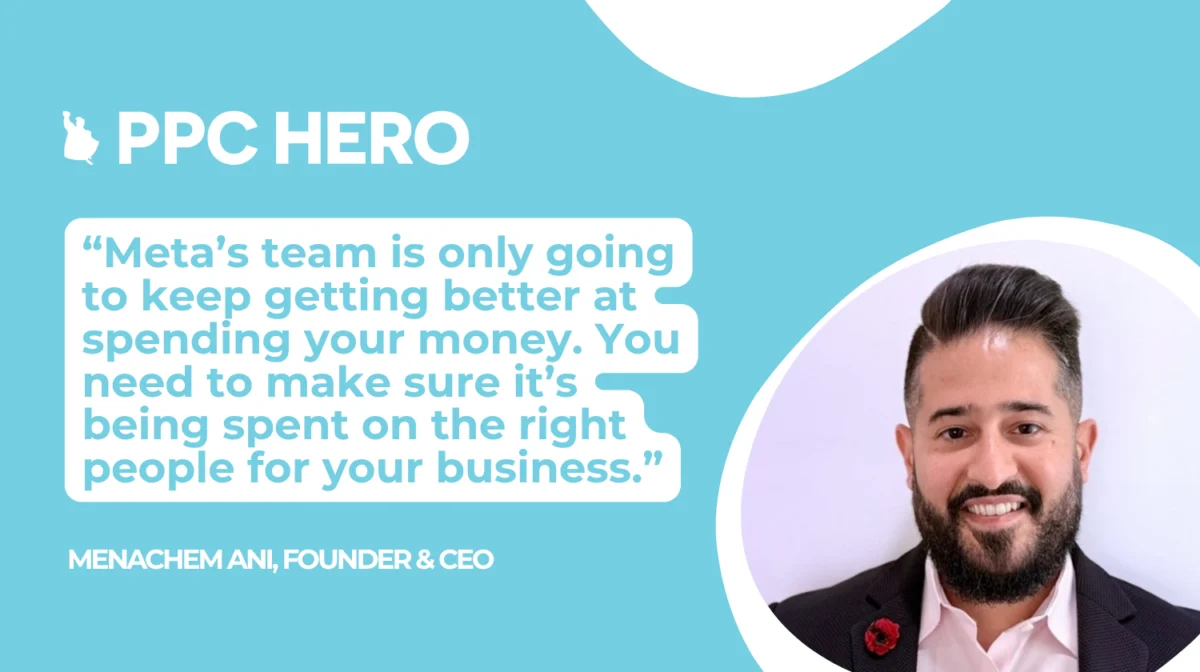
Meta’s advertising team will continue to refine its algorithms, becoming increasingly adept at optimizing ad spend. It is incumbent upon advertisers to ensure that this optimization is directed towards the right individuals for their specific business needs, transforming the platform from a potential cost center into a reliable engine for growth and profitability.