rifanmuazin
The "Eligible (Limited)" status within Google Ads accounts can initially spark confusion and concern for advertisers. This designation signifies that while an ad campaign is approved to run, it operates under specific policy constraints that restrict certain targeting options or advertising language. It is not an indication of a failing campaign, nor does it necessitate immediate corrective action to "fix" it. Rather, it highlights the advertiser’s operation within a "sensitive category," a classification that imposes nuanced limitations on advertising strategies. This article aims to demystify these limitations, particularly concerning sensitive categories, by exploring their origins, the specific restrictions they entail, and actionable strategies for advertisers to achieve significant results despite these constraints.
Understanding Sensitive Categories in Google Ads
A "sensitive category," also referred to as a sensitive ad category or sensitive interest category, represents an industry sector that Google Ads identifies as requiring heightened privacy considerations and adherence to local regulations. Consequently, personalized advertising features are restricted within these sectors. The primary driver behind these restrictions is to safeguard user privacy and comply with a complex web of international and regional laws. For instance, in many jurisdictions, discriminating in employment based on age or gender is illegal. Therefore, advertisers in the employment sector are prohibited from excluding specific age ranges or genders in their campaigns to prevent potential discriminatory practices.
It is crucial to understand that classification within a sensitive category does not equate to an outright ban on advertising. Instead, it curtails access to advanced, personalized advertising tools. These typically include features like remarketing (targeting users who have previously interacted with a website or app), custom intent and affinity audiences (targeting based on specific search queries or user interests), and lookalike audiences (targeting users similar to an advertiser’s existing customer base). While these exclusions may seem substantial, advertisers can still leverage a range of Google Ads functionalities to reach their target audiences effectively.
The Rationale Behind Google’s Sensitive Category Policy
Google’s policy on sensitive categories stems from a broader commitment to responsible advertising and user trust. The company aims to prevent the misuse of its advertising platform for discriminatory purposes, to protect vulnerable user groups, and to ensure compliance with evolving digital privacy regulations worldwide. This approach is not static; it is a dynamic response to societal expectations and legal mandates. The evolution of digital advertising has presented new challenges in maintaining user privacy while enabling businesses to connect with potential customers. Google’s sensitive categories policy is a direct manifestation of its efforts to strike this delicate balance.
The "Eligible (Limited)" status serves as a transparent signal to advertisers that their campaigns are subject to these specific policy considerations. It encourages a more thoughtful and compliant approach to campaign creation and management within these sensitive sectors. By understanding the underlying principles and the specific limitations, advertisers can adapt their strategies to maintain campaign effectiveness while upholding ethical advertising standards.

Identifying Businesses Within Sensitive Categories
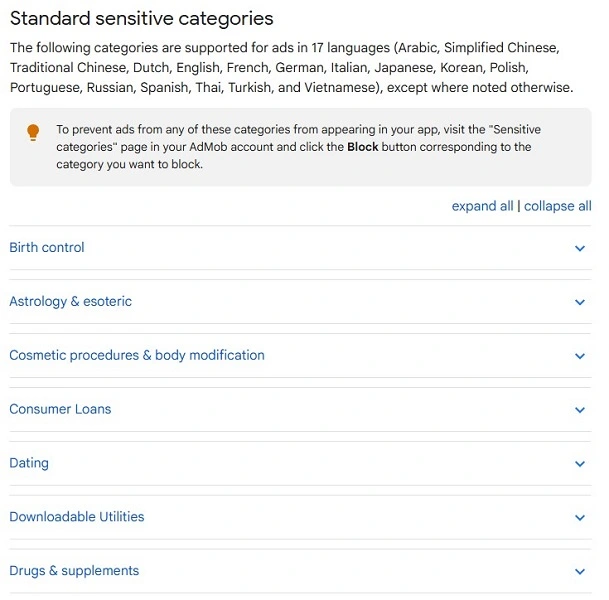
Google classifies businesses into sensitive categories based on five primary areas, each with distinct implications for advertising. While Google provides detailed explanations in its Ads Help Center, a simplified understanding is crucial for advertisers.
-
Personal Hardships: This category encompasses businesses and services that cater to individuals facing significant personal challenges. Examples include debt relief services, bankruptcy assistance, addiction treatment centers, and certain types of legal services related to personal crises. The restriction here aims to prevent predatory practices or exploitative advertising targeting individuals in vulnerable situations. Advertisers in this space must ensure their messaging is empathetic, accurate, and does not prey on desperation.
-
Sexual Interest: This is a broad category that includes any advertising directly related to adult content, sexual health products, dating services with explicit adult themes, or any content that is sexually suggestive or explicit. Google’s restrictions are stringent here to protect minors and to maintain a safe advertising environment across its platforms. Campaigns in this category often face significant limitations on ad creative, targeting, and placement.
-
Access to Opportunities: This category is particularly relevant for industries that influence significant life decisions, such as employment, housing, and credit. For instance, job recruitment platforms, real estate listings, and financial services offering loans or credit are classified here. The restrictions are in place to prevent discrimination. Advertisers cannot use demographic targeting (like age, gender, or parental status) or specific interest-based targeting that could lead to exclusionary practices. The goal is to ensure fair access and prevent bias in crucial opportunities.
-
Substance Abuse and Addiction: Similar to personal hardships, this category specifically addresses services and products related to the treatment of substance abuse, alcohol dependence, and addiction. The focus is on responsible advertising that guides individuals towards professional help without making unsubstantiated claims or promoting potentially harmful substances.
-
Sensitive Social Issues and Politics: Advertising related to highly debated social issues, political campaigns, or advocacy groups often falls under this classification. Google implements specific policies to ensure transparency and prevent the spread of misinformation or the manipulation of public discourse. This can include restrictions on targeting, ad content, and the verification of advertisers.
The full list of sensitive ad categories is maintained by Google and can be accessed through their official support documentation. It is imperative for advertisers to consult these guidelines to accurately assess their classification and understand the associated policy implications.
Restrictions and Limitations for Sensitive Categories
When a business is classified within a sensitive category, advertisers are precluded from using a suite of targeting features collectively known as "personalized advertising." These restrictions are designed to foster a more generalized and less intrusive advertising experience for users in these sensitive sectors.
Key Restrictions Include:
- Remarketing Lists for Search Ads (RLSA): Advertisers cannot target users who have previously visited their website or engaged with their app when they search on Google.
- Custom Affinity Audiences: The ability to create custom audiences based on users’ online browsing habits and interests is disabled.
- Custom Intent Audiences: Advertisers cannot target users based on specific keywords they have searched for or websites they have visited, which are indicative of their intent to purchase.
- Similar Audiences (Lookalike Audiences): Creating audiences that mirror the characteristics of existing customer lists is not permitted.
- Customer Match: Uploading customer data (like email addresses or phone numbers) to target or exclude those specific individuals is unavailable.
- Demographic Targeting (in certain contexts): For categories like "Access to Opportunities," advertisers are prohibited from targeting or excluding specific age, gender, parental status, or household income groups. This is to prevent discriminatory practices in crucial areas like employment and housing.
- Detailed Demographics: Granular targeting based on factors like education, marital status, or homeownership is also restricted in certain sensitive categories.
- Location Targeting Nuances: While broad location targeting is usually permitted, specific granular targeting within sensitive categories might be limited to prevent discriminatory exclusions.
However, it is vital to recognize that these limitations do not render Google Ads ineffective for businesses in sensitive categories. A significant range of targeting options remains accessible. These include:
- Keyword Targeting: The foundational element of search advertising, allowing advertisers to bid on specific search terms users enter into Google.
- Placements: For display and video campaigns, advertisers can choose specific websites, apps, or YouTube channels where their ads will appear.
- Topics: Targeting users who are browsing content related to specific themes or subjects.
- Contextual Targeting: Showing ads on web pages that contain content relevant to the advertiser’s products or services.
- Optimized Targeting (Display Network): Allowing Google’s algorithms to find audiences that are likely to be interested in the advertiser’s products or services, based on broader signals.
- Performance Max Campaigns: These automated campaigns leverage Google’s AI to reach customers across all of Google’s channels and inventory, though their effectiveness can be influenced by the sensitive category.
It is important to note that Google’s enforcement of these policies can vary across its platforms. For instance, ads that might be approved for the Google Display Network could face disapproval on platforms like YouTube or Google Discover. This discrepancy often arises from the differing content moderation policies and user expectations on these platforms. While Demand Gen campaigns might be usable for advertisers in "personal hardships" or "access to opportunities" categories, advertisers dealing with "sexual interest" categories have historically faced more stringent limitations, often preventing successful deployment of Demand Gen campaigns. This underscores the need for advertisers to meticulously review Google’s specific policies for each campaign type and platform.
Three Proven Strategies for Success in Sensitive Categories
Navigating the landscape of sensitive categories in Google Ads requires a strategic shift from direct, personalized audience targeting to more creative and indirect approaches. The key to success lies in adaptability and a deep understanding of how to leverage the available tools effectively. Here are three proven strategies that can help advertisers achieve outstanding results:
-
Content Targeting for Precision Placement:
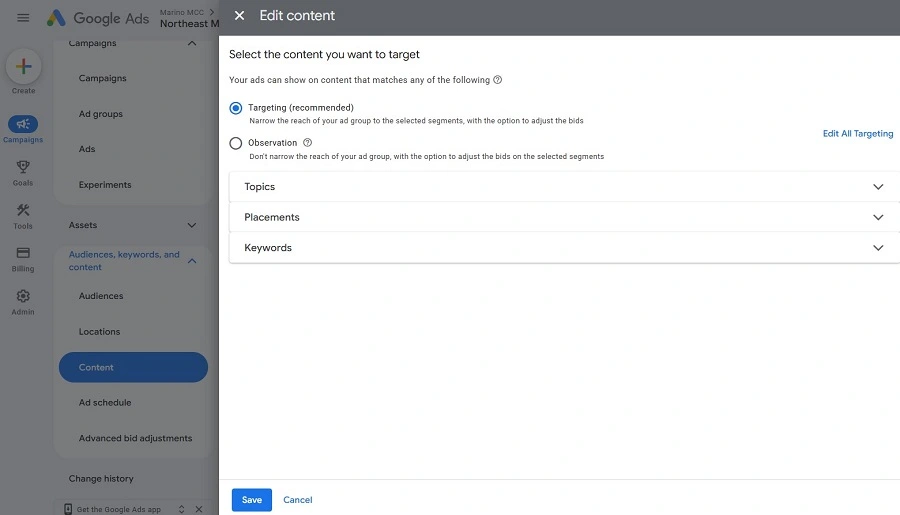
While custom segments, which rely on user behavior and search history, are unavailable, advertisers can effectively utilize content targeting. This strategy involves strategically placing ads on specific websites, apps, or YouTube channels that are relevant to the target audience. For display campaigns, advertisers can meticulously select placements from the vast Google Display Network, identifying sites and apps where their ideal customers are likely to consume content. Similarly, for video campaigns, advertisers can pinpoint specific YouTube channels or individual videos that align with their brand and target demographic.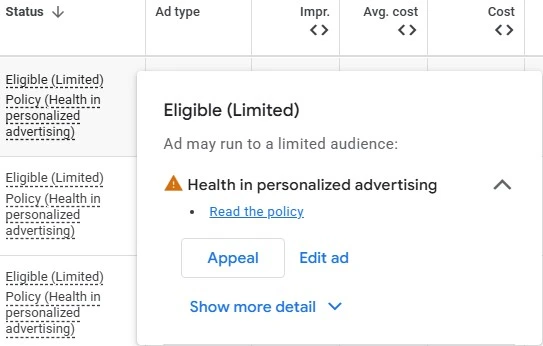
For example, a mental health service provider could target display ads on health and wellness blogs, online support group forums, or websites offering resources for coping with stress. A financial advisor specializing in retirement planning might place ads on reputable finance news websites, investment strategy blogs, or platforms discussing economic trends. The power of content targeting lies in its ability to surround potential customers with relevant advertising within a context they are already engaged with. This approach ensures that ads are seen by users who are actively consuming content related to the advertiser’s offerings, thereby increasing the likelihood of engagement and conversion.
- Example Applications:
- Employment Services: Place ads on job boards, career advice websites, and industry-specific news portals.
- Financial Planning: Target display ads on personal finance blogs, economic news sites, and forums discussing investment strategies.
- Health and Wellness: Appear on health magazines’ websites, fitness blogs, and platforms dedicated to mental well-being resources.
- Example Applications:
-
Non-Linear Targeting: Leveraging Broad Audiences Creatively:
"Non-linear targeting" is a strategic approach that focuses on reaching target audiences by utilizing Google’s pre-built audience segments, even if these segments are broader than ideal. The core principle is that while these segments may encompass non-target individuals, the advertiser’s ideal customers are undeniably contained within them. Since direct personalized targeting is restricted, the strategy involves casting a wider net and relying on compelling creative to attract the right audience.This strategy involves exploring broad audience categories such as:
- In-Market Audiences: Users who are actively researching or intending to purchase products or services within a specific category. For example, an advertiser selling educational courses might target users in the "Online Education" in-market segment.
- Affinity Audiences: Users with long-standing interests and hobbies. While less direct than in-market, these can still capture individuals with a propensity for certain types of offerings. For instance, a sustainable fashion brand might target users interested in "Eco-conscious living" or "Sustainable fashion."
- Demographic Segments: While granular demographic targeting is restricted in some sensitive categories, broader demographic segments like age groups or gender (where permitted) can still be utilized.
The critical element of non-linear targeting is understanding that these broader segments contain the desired audience. The challenge then shifts to crafting ad creative that resonates with the target demographic while simultaneously being unappealing or irrelevant to those outside the target market. This requires a sophisticated understanding of audience psychographics and a creative approach that speaks directly to the needs, desires, and pain points of the ideal customer.
- Example Applications:
- Job Placement Services: Target broad "Career Development" or "Job Seekers" in-market segments, with ad creative specifically highlighting opportunities for recent graduates or experienced professionals.
- Retirement Planning: Utilize "Financial Planning" or "Investment" in-market segments, with creative focused on long-term financial security and legacy planning.
- Mental Health Support: Target broad "Health & Wellness" affinity audiences, with messaging that emphasizes specific conditions like anxiety or depression and directs users to specialized support.
-
Creative-Led Targeting: The Power of Compelling Ad Design:
When direct audience targeting options are significantly limited, the ad creative itself becomes the primary engine for attracting the right audience and, crucially, deterring the wrong one. This strategy places immense emphasis on the ad’s text, imagery, and video assets to draw in the intended customer while naturally repelling those who are not a good fit. This is particularly vital when employing broader targeting methods like optimized targeting, Performance Max campaigns, or the aforementioned non-linear targeting.A broader targeting strategy inherently means reaching a wider audience. Therefore, the ad creative must be exceptionally narrow and precise in its appeal. This selective engagement serves a dual purpose: it ensures that the target audience interacts with the ads, thereby providing valuable data to train Google’s bidding and targeting algorithms for better performance. Simultaneously, it discourages engagement from non-target audiences, which also refines the algorithms and prevents wasted ad spend.
Effective creative-led targeting involves:
-
Hyper-Specific Messaging: Crafting ad copy that speaks directly to the unique pain points, aspirations, and language of the target audience. Avoid generic claims and focus on benefits that are highly relevant to your ideal customer.
-
Visual Storytelling: Using imagery or video that visually communicates the core value proposition and appeals to the emotional or practical needs of the target demographic. The visuals should be carefully chosen to resonate with the intended audience and perhaps even feel alien or unappealing to those outside of it.
-
Clear Calls to Action (CTAs): Ensuring that the CTA is unambiguous and guides the user towards the desired next step, further filtering engagement.
-
Brand Voice Consistency: Maintaining a consistent and authentic brand voice that builds trust and connection with the target audience.
-
Example Applications:
- Specialized Legal Services: An ad for a niche legal service focusing on intellectual property rights for tech startups would use technical jargon and highlight specific challenges faced by tech entrepreneurs, making it irrelevant to a general consumer.
- High-End Luxury Goods: Advertising for luxury watches would feature sophisticated imagery, premium materials, and aspirational lifestyle cues, appealing to a discerning clientele while not attracting casual browsers.
- Niche Educational Programs: An ad for an advanced certification in data science would detail specific technical skills and career advancements, resonating with aspiring data scientists but not with individuals seeking general vocational training.
-
Conclusion: Embracing Creativity for Compliance and Success
Navigating the restrictions imposed by sensitive interest categories in Google Ads presents a significant challenge for advertisers. However, it is far from an insurmountable obstacle. By shifting focus from direct, personalized audience targeting to more creative and strategic approaches, advertisers can not only comply with Google’s policies but also build highly effective and successful advertising campaigns. Embracing content targeting allows for precise ad placement within relevant contexts. Non-linear targeting, when coupled with a broader understanding of audience segments, enables advertisers to reach potential customers indirectly. Finally, creative-led targeting empowers advertisers to use their ad assets as the primary tool for audience attraction and refinement.
In an increasingly competitive digital landscape, where every industry faces unique hurdles, creativity is the indispensable currency for success on Google Ads. Whether operating in a niche market, managing a limited budget, or contending with sky-high cost-per-clicks, the principles of innovative thinking and strategic adaptation are paramount. For businesses categorized within sensitive areas, this means understanding the nuances of Google’s policies, leveraging the available tools with ingenuity, and allowing compelling creative to bridge the gap left by restricted targeting options. By adopting these strategies, advertisers can ensure their Google Ads campaigns remain compliant, impactful, and ultimately, deliver outstanding results.