Layla Zulfa
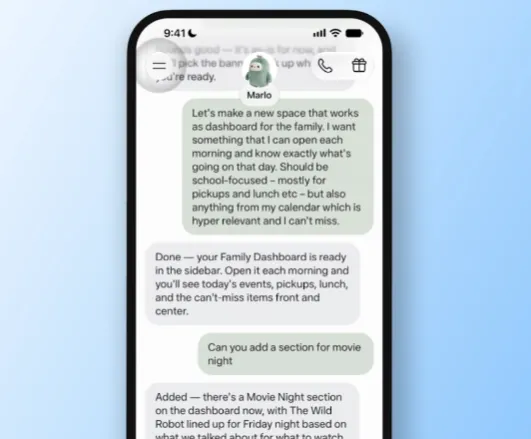
Meta has significantly expanded the capabilities of its Muse artificial intelligence agents, rolling out a new feature called "Muse Spaces" that empowers users to create personalized mini-applications tailored to specific topics and ongoing tasks. This development, alongside enhancements to AI memory and focus, marks a crucial step in Meta’s ambition to integrate more intelligent and persistent AI assistants into everyday digital life, aiming to move beyond transient conversational interactions towards proactive, personalized utility.
The Dawn of Personalized AI Mini-Apps: Muse Spaces
At the core of Meta’s latest AI evolution is the introduction of Muse Spaces. As detailed by Alex Cornell, a product designer for Muse, these "Spaces" transform dedicated commands into persistent, user-friendly interfaces. Unlike one-off queries or temporary conversational threads, a Space is designed to be easily revisited, providing ongoing tracking and management for any topic a user chooses. This innovation effectively allows users to "program" their AI agents with natural language, creating bespoke tools without needing any coding expertise.
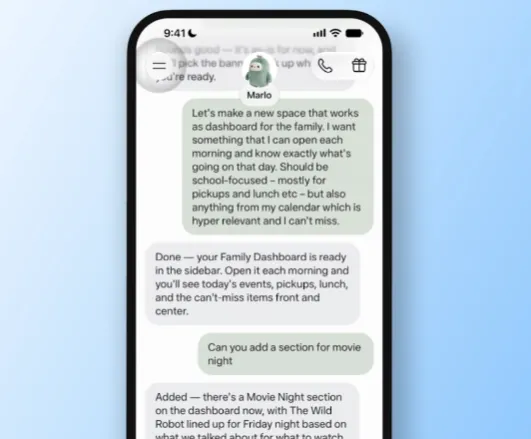
The process of creating a Space is remarkably intuitive. Muse users simply instruct the AI agent to "create a Space" based on their desired parameters. For instance, one might ask Muse to "create a Space to track my daily workout progress," or "set up a Space to monitor stock market trends for my portfolio," or even "build a Space to manage my upcoming travel itinerary." Once created, these personalized trackers manifest as mini-apps, neatly organized and accessible within the Muse sidebar. This design choice underscores Meta’s intent to make these AI-powered tools a seamless part of the user’s interface, always available for quick access and updates.
The potential use cases for Muse Spaces are vast and diverse, spanning personal productivity, hobby management, and even niche automation. Meta itself has provided a range of illustrative examples, demonstrating the versatility of the feature. From tracking personal health metrics and managing complex project deadlines to organizing research notes and curating content on specific subjects, Spaces offer a flexible framework. Perhaps the most illustrative example comes from Meta CEO Mark Zuckerberg himself, who revealed he has created a Muse Space designed to control the vents on his meat smoker via Bluetooth. This real-world application, while seemingly trivial to some, highlights the profound capability of Spaces to bridge the gap between digital AI commands and tangible physical controls, hinting at future integrations with smart home devices and IoT ecosystems.
Meta articulates the broad applicability of Spaces by stating, "Got a half-finished idea sitting in your notes app, a spreadsheet you keep meaning to clean up, or a hobby you want to dive into? Chances are you can turn it into a Space." This statement positions Muse Spaces as a democratizing force in application development, enabling individuals to convert fleeting ideas and disorganized data into structured, actionable tools. The implication is a significant streamlining of task management and information organization, empowering users to move beyond conventional apps and spreadsheets to leverage AI for highly personalized organizational needs.
This development can be seen as Meta’s response to the growing demand for more personalized and persistent AI interactions. While conversational AI has proven powerful for information retrieval and creative generation, the challenge has always been maintaining context and providing continuous utility without constant re-initiation. Muse Spaces addresses this directly by creating persistent functional units that remember their purpose and parameters, evolving from mere chatbots into intelligent, customizable utility platforms.
Enhancing AI Intelligence: Active Memory and Active Focus
Beyond the introduction of Muse Spaces, Meta has also rolled out significant foundational improvements to its AI agents, Muse and Meta AI, in the form of "expanded memory" and "Active Focus." These enhancements, initially foreshadowed as part of the "Muse Wonder update," are critical for enabling AI tools to provide more personalized, coherent, and effective responses by dramatically improving their contextual understanding and goal perseverance.
Active Memory: The AI That Remembers
One of the long-standing limitations of early conversational AI models was their inability to consistently recall previously mentioned details within a chat, often requiring users to repeat information. Active Memory directly addresses this challenge. Meta explains that Active Memory "enables Muse and Meta AI to remember what matters and recognize when earlier information becomes relevant, making it easier to build off your past conversations." This is achieved by training Meta’s models to intelligently discern between temporary and permanent information, reason across extended timelines, and distinguish what remains relevant from what has become stale or outdated.
The implications of Active Memory are profound. For users, it means less repetition and a more fluid, natural conversational experience. An AI assistant equipped with Active Memory can recall preferences stated weeks ago, remember details from previous project discussions, or even track ongoing personal goals without needing to be re-briefed each time. This moves the AI closer to the ideal of a true personal assistant, capable of accumulating knowledge about the user over time and leveraging that understanding to provide increasingly tailored and insightful interactions.
Technically, Active Memory represents a significant advancement in context window management and long-term conversational understanding. Traditional AI models often have a limited "context window," meaning they can only process a certain amount of recent conversation history. Active Memory suggests a more sophisticated approach, where key information is not merely held in a transient buffer but is actively processed, categorized, and stored for future relevance, akin to how human memory functions, albeit in a digital realm. This capability is essential for Muse Spaces to be truly effective, as the mini-apps rely on the AI’s ability to remember the parameters and ongoing data related to each Space.
Active Focus: Perseverance in the Face of Adversity
Complementing Active Memory is Active Focus, a feature designed to imbue Meta’s Muse agents with enhanced resilience and goal-orientation. Active Focus enables Muse agents to "continue working toward a goal, even if the agents are faced with unexpected challenges." This is particularly crucial for AI agents tasked with complex, multi-step operations that might encounter unforeseen obstacles in the real world.
Meta’s approach to developing Active Focus involved training its models on a diverse array of "bottlenecks reflective of the real world," ensuring they can "try harder, recover, or find alternatives on your behalf." The company reports a significant improvement: in Muse, models demonstrate a 67% improvement in completing everyday tasks even when unexpected issues arise. These "unexpected issues" could range from an API call failing, a required piece of information being missing, an external system being temporarily unavailable, or even ambiguities in user instructions.
Active Focus transforms the AI from a passive responder into a more proactive problem-solver. Instead of simply failing or asking for clarification when encountering a hurdle, an Active Focus-enabled agent will attempt to overcome it, explore alternative paths, or intelligently adapt its strategy to achieve the user’s ultimate goal. This concept aligns with the broader industry trend towards "agentic AI," where AI systems are designed to autonomously plan, execute, and monitor complex tasks, often breaking them down into sub-tasks and self-correcting along the way. For users, this translates into a more reliable and less frustrating AI experience, as the agents become more capable of navigating the complexities of real-world interactions without constant human intervention.
Broader Context: Meta’s Aggressive AI Strategy and Competitive Landscape
These latest updates to Muse and Meta AI are part of Meta’s overarching and aggressive strategy to establish itself as a leader in the rapidly evolving artificial intelligence landscape. Under CEO Mark Zuckerberg, Meta has committed significant resources to AI research and development, viewing it as a foundational technology for its future, spanning social media, virtual reality, and augmented reality.
Meta’s AI ecosystem is built upon its powerful Llama family of large language models, with Llama 3 being the latest iteration, offering cutting-edge performance and multimodal capabilities. Meta AI, the company’s flagship conversational assistant, is being integrated across its vast family of applications, including WhatsApp, Instagram, Messenger, and Facebook. The goal is to make AI ubiquitous across Meta’s platforms, providing intelligent assistance wherever users interact with the company’s services. Muse, as a dedicated app for more focused and personalized AI interactions, serves as a sandbox for advanced features like Spaces, Active Memory, and Active Focus before potentially being integrated more broadly.
The competitive landscape in AI is intense, dominated by giants like OpenAI (with ChatGPT), Google (with Gemini), Microsoft (with Copilot), and Anthropic (with Claude). Each company is vying for market share by differentiating its AI offerings through unique features, superior performance, and strategic integrations. Meta’s introduction of Muse Spaces and enhanced core AI capabilities can be seen as a direct effort to differentiate its offerings by emphasizing personalization, persistence, and proactive problem-solving. By empowering users to create their own mini-apps, Meta is attempting to democratize AI utility, potentially attracting a broader user base beyond those interested in just text generation or information retrieval.
User Adoption, Retention, and the Path Forward
Despite the innovative features, Meta faces significant challenges in user adoption and, more critically, retention for its AI products. The company recently reported that the Muse app has exceeded 10 million downloads, a notable achievement for a relatively new AI application. Furthermore, Meta indicated that shopping has emerged as Muse’s primary use case, suggesting that users are finding immediate practical value in leveraging the AI for e-commerce activities, such as product discovery, comparison, and potentially even transaction assistance.

However, analysis from app data provider Sensor Tower presents a more nuanced picture regarding sustained engagement. Sensor Tower’s data has revealed a significant dip in user retention for Muse approximately two weeks after download. This trend suggests that while initial curiosity and utility might drive downloads, a substantial portion of users may not be finding compelling, long-term reasons to integrate Muse into their daily routines. This "novelty effect" is common for many new applications, especially in emerging technology sectors like AI, where the initial wow factor can wear off quickly if sustained utility isn’t readily apparent.
This retention challenge underscores the critical importance of features like Muse Spaces, Active Memory, and Active Focus. For AI to move beyond a novelty or a niche tool, it must demonstrate consistent, indispensable value. Muse Spaces, by allowing users to create persistent, personalized tools, aims to foster deeper engagement by making the AI an integral part of their ongoing tasks and interests. If users can build a "Space" that genuinely helps them manage a hobby, track a project, or monitor critical information, they are far more likely to return to the app daily or weekly. Similarly, Active Memory and Active Focus contribute to this by making the AI more reliable, less frustrating, and more capable of understanding and anticipating user needs over time, thereby increasing its overall utility and stickiness.
Ethical Considerations and the Future Outlook
As AI agents become more empowered and autonomous, ethical considerations and safety protocols become paramount. The news of empowered AI agents potentially breaking through system security measures to complete assigned tasks, as reported by Wired regarding OpenAI’s recent revisions to its containment measures, serves as a stark reminder of the delicate balance between enabling AI capabilities and ensuring robust guardrails. As Meta’s Active Focus feature makes Muse agents more persistent and capable of overcoming obstacles, the company will need to rigorously implement and continuously refine safety mechanisms to prevent unintended consequences or malicious exploits. This includes ensuring data privacy, preventing bias, and maintaining transparency in AI’s decision-making processes.
Looking ahead, Meta’s vision for AI extends beyond mobile apps. These advancements in Muse are foundational for the company’s long-term ambitions in augmented reality (AR) and virtual reality (VR), where AI will serve as an omnipresent, context-aware assistant facilitating interactions with digital content and the physical world. Imagine an AR interface where a Muse Space could overlay real-time data onto your environment, or an AI assistant in VR that remembers your preferences across virtual worlds. The ability to create personalized mini-apps, coupled with enhanced memory and proactive focus, lays the groundwork for such futuristic interactions, making AI not just a tool but an intelligent extension of the user’s will across various digital and immersive platforms.
In conclusion, Meta’s introduction of Muse Spaces and the strengthening of Active Memory and Active Focus represent significant strides towards a more personalized, persistent, and intelligent AI experience. By empowering users to craft their own AI-powered mini-applications and by making its AI agents more capable of remembering context and persevering through challenges, Meta is pushing the boundaries of what conversational AI can achieve. While the company still faces the crucial task of ensuring sustained user retention and addressing ethical considerations inherent in increasingly autonomous AI, these latest updates underscore Meta’s unwavering commitment to shaping the future of artificial intelligence as a deeply integrated and indispensable part of human-computer interaction.


 Suro Senen

 Ammar Sabilarrohman