
 rifanmuazin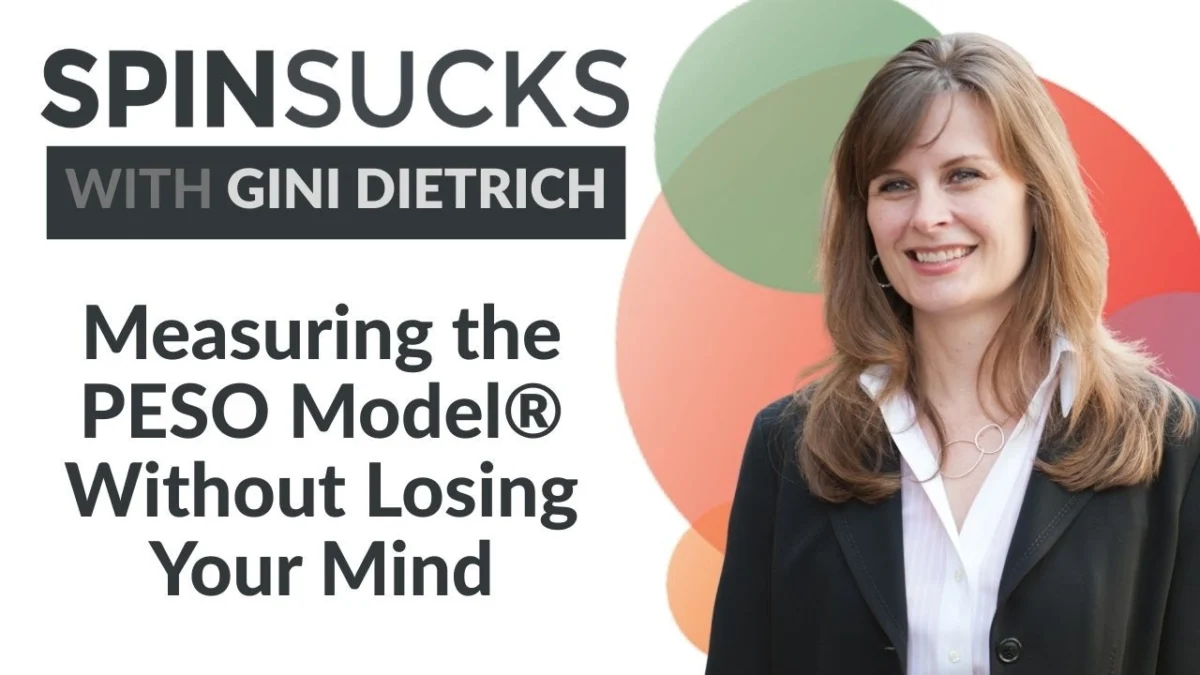
The evolution of strategic communication has reached a critical juncture where traditional public relations metrics are no longer sufficient to justify marketing expenditures. As digital ecosystems become increasingly fragmented and artificial intelligence begins to dominate how information is discovered, the PESO Model—an industry-standard framework encompassing Paid, Earned, Shared, and Owned media—has undergone a significant transformation in its approach to measurement. The modern communication professional is now tasked with moving beyond "math homework" and toward a narrative-driven approach that uses numbers to tell a story of business impact. This shift represents a transition from reporting activities and outputs to demonstrating tangible outcomes that influence organizational behavior and financial health.
The Shift from Output to Outcome-Based Measurement
For decades, the communications industry relied on vanity metrics such as media impressions, "likes," and total reach. However, in the current landscape of AI-driven discovery and zero-click visibility, these figures often fail to correlate with business success. The PESO Model, originally developed by Gini Dietrich, has been recalibrated to function as an integrated operating system rather than a collection of four separate silos. Under this new paradigm, measurement is defined by one central question: "What changed?"
This approach distinguishes between three levels of reporting: activities, outputs, and outcomes. Activities are the foundational tasks, such as writing a blog post or pitching a journalist. Outputs are the immediate results of those activities, such as the publication of an article or the distribution of a newsletter. Outcomes, however, are the specific shifts in business performance or audience behavior that occur as a result of the integrated system. For instance, while an output might be "publishing six articles this month," a meaningful outcome would be "an 18% increase in qualified demo requests because the articles addressed specific prospect pain points."
The Chronology of Measurement Standards in Public Relations
The push for sophisticated measurement in the PESO Model does not exist in a vacuum; it is the latest stage in a decades-long evolution of industry standards.
- The Era of Advertising Value Equivalency (Pre-2010): Historically, PR professionals used Advertising Value Equivalency (AVE) to assign a dollar value to earned media based on what an equivalent advertisement would cost. This practice was widely criticized for failing to account for the qualitative nuances of third-party endorsements.
- The Barcelona Principles (2010–2020): In 2010, a global coalition of PR researchers established the Barcelona Principles, which explicitly stated that AVEs are not the value of communication. The principles were updated in 2015 and 2020 (Barcelona Principles 3.0) to emphasize that measurement must focus on the "why" and the "so what" of communication efforts.
- The Integration of Digital Analytics (2014–2022): With the rise of Google Analytics and social media insights, the PESO Model began incorporating data-driven tracking. However, many organizations still treated the four pillars as separate reports rather than a unified system.
- The AI and Zero-Click Pivot (2023–Present): The current era is defined by "AI-driven discovery," where Large Language Models (LLMs) synthesize information from across the web. Visibility is no longer just about clicks; it is about ensuring that an organization’s "proof signals" are consistent across the entire PESO ecosystem so that AI tools can accurately represent the brand.
Supporting Data: The Reality of Modern Visibility
The necessity for a more robust measurement system is underscored by recent shifts in digital behavior. Data from SparkToro and other search analysis firms indicates that over 50% of Google searches now end in a "zero-click" result, meaning the user finds the information they need on the search engine results page without clicking through to a website. This reality renders traditional traffic-based measurement incomplete.
Furthermore, a 2023 report on integrated marketing communications found that brands using a unified measurement framework across paid, earned, shared, and owned channels saw a 20% higher ROI than those using siloed reporting. The data suggests that when the PESO pillars amplify one another—such as using Paid media to accelerate a high-performing Shared signal or using Earned media to validate Owned content—the resulting "visibility engine" produces more durable results than any single channel could achieve in isolation.
Implementing the 90-Day Outcome Cycle
To manage the complexity of modern measurement, experts suggest adopting a 90-day window for evaluating the PESO operating system. This timeframe is long enough to generate momentum and collect statistically significant data, yet short enough to allow for agile adjustments. The 90-day strategy involves four critical steps:
1. Setting a Baseline and Realistic Target
Before a campaign begins, organizations must identify where they currently stand. This requires finding a baseline that is accessible and verifiable. A target is then set to increase or decrease a specific metric over the 90-day period.
2. Choosing a Single Primary Outcome
One of the most common mistakes in measurement is attempting to track too many Key Performance Indicators (KPIs) at once. By focusing on one primary outcome—such as reducing sales friction, increasing trial-to-active conversion, or shifting audience intent—the PESO system becomes more focused. Everything created, distributed, and amplified must point back to this singular goal.
3. Applying Decision Rules
A functional measurement system provides the data necessary to make leadership decisions. If an activity does not move the needle on the primary outcome within the 90-day window, leaders have the "permission" to stop that activity. This prevents the accumulation of "zombie tasks" that consume resources without providing value.
4. The Outcome Quality Check
To ensure an outcome is worth measuring, it must pass a four-point filter:
- Is it tied to a specific business or behavior shift?
- Is there a clear baseline?
- Is the target realistic for a 90-day window?
- Does the leadership team agree that this specific change matters?
Industry Perspectives and Professional Standards
The shift toward outcome-based measurement has been met with both enthusiasm and apprehension within the marketing community. Professional bodies, such as the Public Relations Society of America (PRSA) and the International Association for the Measurement and Evaluation of Communication (AMEC), have long advocated for the rigor now being integrated into the PESO Model Certification.
Industry analysts note that when communication professionals present "stories with numbers" rather than "math homework," they gain greater credibility in the boardroom. Chief Financial Officers (CFOs) and Chief Marketing Officers (CMOs) are increasingly looking for "proof of impact" rather than "proof of work." By operationalizing the PESO Model as a system that produces consistent signals across human and AI touchpoints, communicators can demonstrate how their work reduces business risk and accelerates growth.
Broader Impact and Future Implications
The long-term implications of this measurement shift are profound. As AI continues to evolve, the traditional "funnel" of marketing is being replaced by a more complex web of discovery. In this environment, the PESO Model serves as a safeguard for brand reputation and visibility. Measurement is no longer a post-mortem activity performed at the end of a quarter; it is a steering mechanism that allows organizations to navigate market shifts in real-time.
Furthermore, the emphasis on outcomes over activities is likely to lead to more sustainable workloads for communication teams. By identifying and eliminating low-impact activities, teams can focus on high-value strategy and creative work that actually drives the organization forward. The future of the PESO Model lies in its ability to prove that integrated communication is not just a cost center, but a primary driver of business value.
In conclusion, measurement in the modern era is an exercise in leadership. It requires the courage to move away from easy-to-track vanity metrics and toward the more challenging, yet rewarding, work of tracking business shifts. By treating the PESO Model as a unified operating system and focusing on 90-day outcome cycles, organizations can ensure that their communication efforts are not just loud, but effective. As visibility becomes more difficult to capture, the ability to tell a clear, data-backed story of "what changed" will be the ultimate competitive advantage for brands and agencies alike.










