rifanmuazin
In the fiercely competitive realm of digital advertising, precise audience targeting on platforms like Meta’s Facebook remains a cornerstone for businesses aiming to maximize their return on investment. As ad prices continue their upward trajectory—with Meta reporting a 9% increase in average ad prices in 2025—the ability to reach the most receptive audiences efficiently is not merely an advantage, but a necessity. Facebook ad targeting, facilitated through Meta Ads Manager, provides advertisers with sophisticated tools to define exactly who sees their promotional content, moving beyond broad campaigns to highly personalized engagements that drive conversions and reduce overall costs. This strategic approach ensures that advertising budgets are spent on individuals most likely to engage with a brand, purchase a product, or utilize a service, thereby enhancing relevance scores and delivering stronger ROI.

Understanding Facebook Ad Targeting: A Foundational Overview
Facebook ad targeting encompasses a sophisticated system designed to allow advertisers to specify their ideal audience based on a multitude of characteristics. Instead of broadcasting messages to the entire user base, businesses can segment audiences by demographics, geographic location, interests, online behaviors, past interactions with their business, or even similarities to their most valuable existing customers. This granular control is paramount in an advertising landscape where user attention is fragmented and competition for visibility is intense.

The effectiveness of Facebook’s targeting mechanisms stems from Meta’s vast repository of user data, accumulated from billions of active users across its family of apps, including Facebook, Instagram, Messenger, and Audience Network. This data, combined with advanced machine learning algorithms, allows advertisers to craft campaigns that resonate deeply with specific segments. The fundamental goal is to achieve high ad relevance, which translates into better engagement, lower cost per conversion, and ultimately, greater profitability for the advertiser.
The Four Pillars of Meta’s Ad Targeting Ecosystem
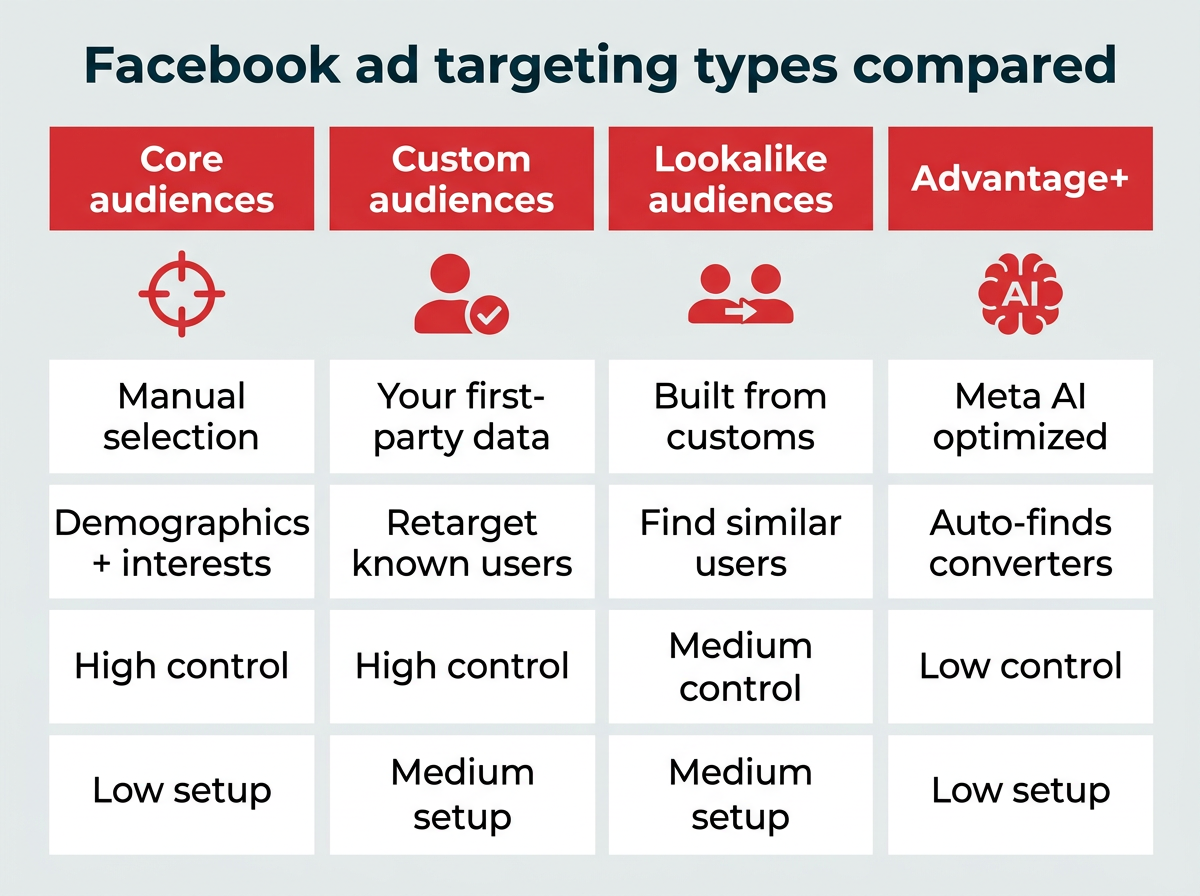
Meta Ads Manager provides four primary approaches to audience targeting, each serving distinct strategic purposes within a comprehensive marketing funnel. Understanding these options—Core Audiences, Custom Audiences, Lookalike Audiences, and Advantage+ Audiences—is crucial for developing effective campaigns.
Core Audiences: Demographics, Interests, and Behaviors
Core audiences represent the most traditional form of targeting, allowing advertisers to manually construct an audience profile using a blend of demographic, interest, and behavioral data. This method is ideal for prospecting new customers who may not yet be familiar with a brand but fit the profile of its ideal customer.

- Demographics: This category enables filtering based on fundamental personal attributes. Advertisers can specify age ranges (e.g., 25-40), gender, educational attainment, relationship status, job titles, employer, and even parental status (e.g., parents with toddlers). These data points are primarily derived from information users provide in their profiles or from inferred attributes based on their activity.
- Interests: Leveraging user engagement patterns, interest targeting allows campaigns to reach individuals based on their hobbies, affinities, and passions. This includes everything from broad categories like "fitness" or "travel" to highly specific interests such as "vegan cooking" or "antique car collecting." Meta infers these interests from pages users have liked, content they interact with, groups they join, and keywords in their posts. For instance, a brand promoting a new line of sustainable outdoor gear might target individuals interested in "environmental conservation," "hiking," and "adventure travel."
- Behaviors: This advanced segment categorizes users based on their actions and online patterns. Behavioral targeting can include shopping habits (e.g., online purchasers, luxury shoppers), device usage (e.g., mobile device type, internet browser), travel frequency (e.g., frequent international travelers), and even residential status (e.g., recent movers). These insights are derived from user activity both on and off Meta’s platforms, where permissible.
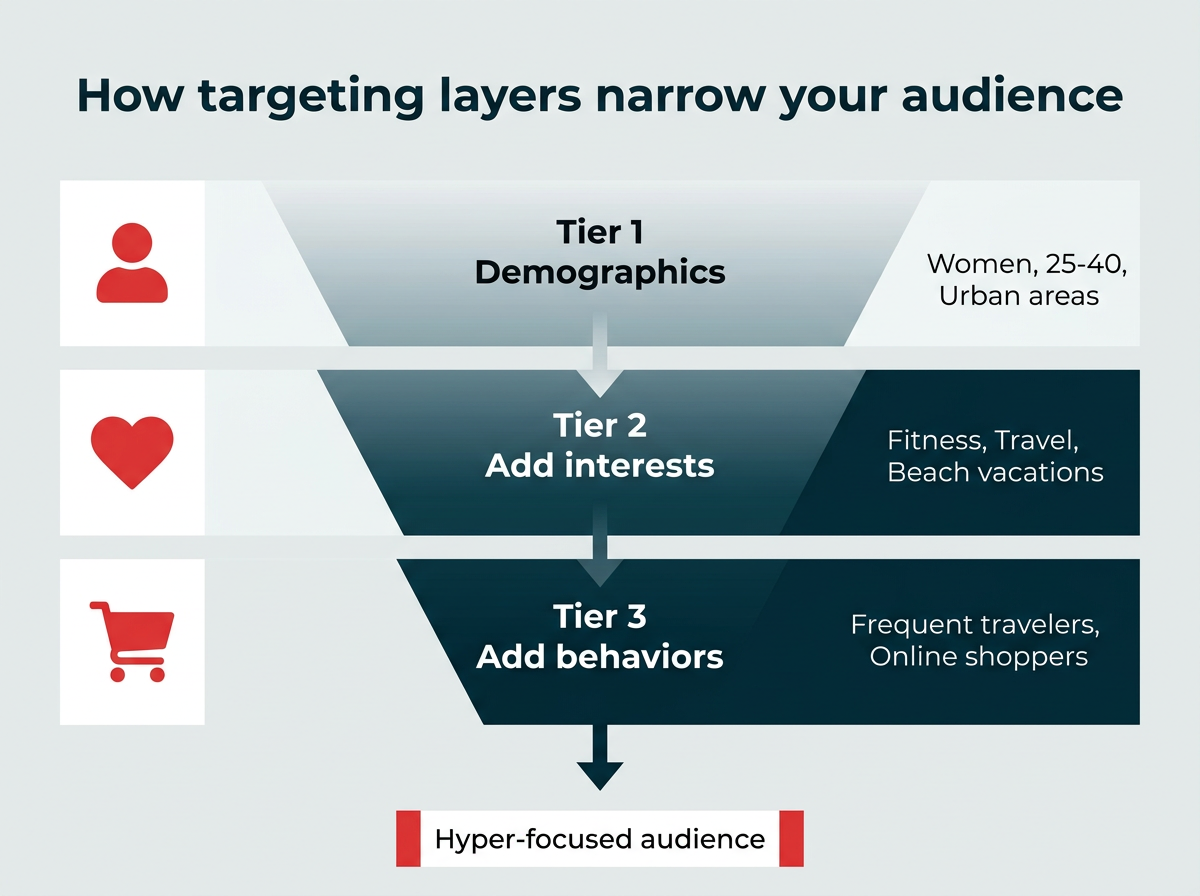
The true power of Core Audiences lies in the ability to layer these criteria, creating highly specific segments. For example, a campaign for premium fitness apparel might target women aged 25-40 living in urban areas who have expressed an interest in fitness-related pages and exhibit online shopping behaviors.
Custom Audiences: Re-Engaging Your Existing Base
Custom Audiences are a cornerstone of effective remarketing strategies, enabling businesses to re-engage individuals who have already demonstrated some form of interaction with their brand. This is where first-party data—information collected directly by the business—becomes invaluable.
Advertisers can create Custom Audiences from various sources:
- Website Visitors: By installing the Facebook Pixel on their website, businesses can track visitors and their actions (e.g., pages viewed, products added to cart, time spent). This allows for retargeting individuals who visited a product page but didn’t complete a purchase.
- Customer Lists: Uploading customer email addresses or phone numbers from a Customer Relationship Management (CRM) system allows Meta to match these contacts to existing Facebook user profiles. This is particularly effective for nurturing leads or cross-selling to existing customers.
- App Users: For businesses with mobile applications, Custom Audiences can be built from individuals who have installed, used, or performed specific actions within the app.
- Offline Activity: Data from in-store purchases or other offline interactions can also be uploaded to create Custom Audiences, bridging the gap between physical and digital engagement.
- Meta Content Engagement: Users who have engaged with a brand’s content on Facebook or Instagram (e.g., watched a video, interacted with a post, submitted a lead form, visited a Facebook Shop) can also be grouped into Custom Audiences.
The Conversions API (CAPI) is a critical enhancement to the Facebook Pixel, especially in the post-privacy era. CAPI allows advertisers to send web events directly from their server to Meta, offering a more reliable and privacy-centric data stream less susceptible to browser-based tracking restrictions or ad blockers. This robust data collection ensures that Custom Audiences remain comprehensive and accurate, enabling effective retargeting campaigns that drive higher conversion rates from "warm" prospects.
Lookalike Audiences: Expanding Your Reach with Precision
Lookalike Audiences represent a powerful tool for customer acquisition, allowing advertisers to find new users who share similar characteristics with their most valuable existing customers. Built directly from Custom Audiences, Meta’s algorithms analyze the common attributes of a "seed" audience and then identify a broader pool of users who exhibit comparable profiles but have not yet interacted with the brand.
The quality of a Lookalike Audience is directly proportional to the quality and size of its source Custom Audience. Meta generally recommends a source audience of at least 1,000 people for optimal results, with larger, more diverse seed audiences (up to 50,000) providing the algorithm with more robust data for accurate matching.
A particularly effective variant is Value-Based Lookalike Audiences. By uploading a customer list that includes a customer lifetime value (LTV) score, advertisers can instruct Meta’s AI to prioritize finding new users who resemble their highest-spending customers. This strategic targeting focuses on acquiring new customers who are more likely to generate substantial revenue, significantly improving campaign ROI. For a SaaS company, this might mean creating a lookalike audience from current enterprise clients to attract new leads from similar industries or with comparable software preferences.
Advantage+ Audiences: The Future of AI-Driven Prospecting
Advantage+ audience targeting is Meta’s advanced, AI-powered system designed to automate and optimize audience selection. Instead of granular manual configuration, advertisers provide Meta’s algorithm with a broad initial audience or minimal parameters, allowing the AI to dynamically identify the most receptive users based on real-time conversion data, Facebook Pixel signals, and past ad interactions. This approach represents a significant shift towards leveraging Meta’s sophisticated machine learning capabilities to drive campaign performance.

Meta’s AI continuously learns and evolves, adapting ad delivery based on observed user behavior and conversion events. This means ads are increasingly shown to individuals most likely to engage and convert, often outperforming manually configured audiences, particularly for broad prospecting campaigns. Internal Meta studies have demonstrated compelling results for Advantage+ campaigns, reporting a 13% lower median cost per product catalog sale, a 7% lower median cost per website conversions, and a 28% lower average cost per click, lead, or landing page view.
While Advantage+ emphasizes automation, advertisers retain some control, such as setting age and geographic exclusions. However, its optimal performance is achieved when given a broad audience to start, allowing the AI maximum flexibility to discover high-value segments. This tool is particularly effective for sales and app promotion campaigns, with dedicated Advantage+ shopping and app campaigns offering even more comprehensive AI optimization across multiple campaign steps. A/B testing Advantage+ against manual targeting is recommended to ascertain its effectiveness for specific business objectives.

Navigating the Post-Privacy Landscape: iOS 14.5 and Beyond
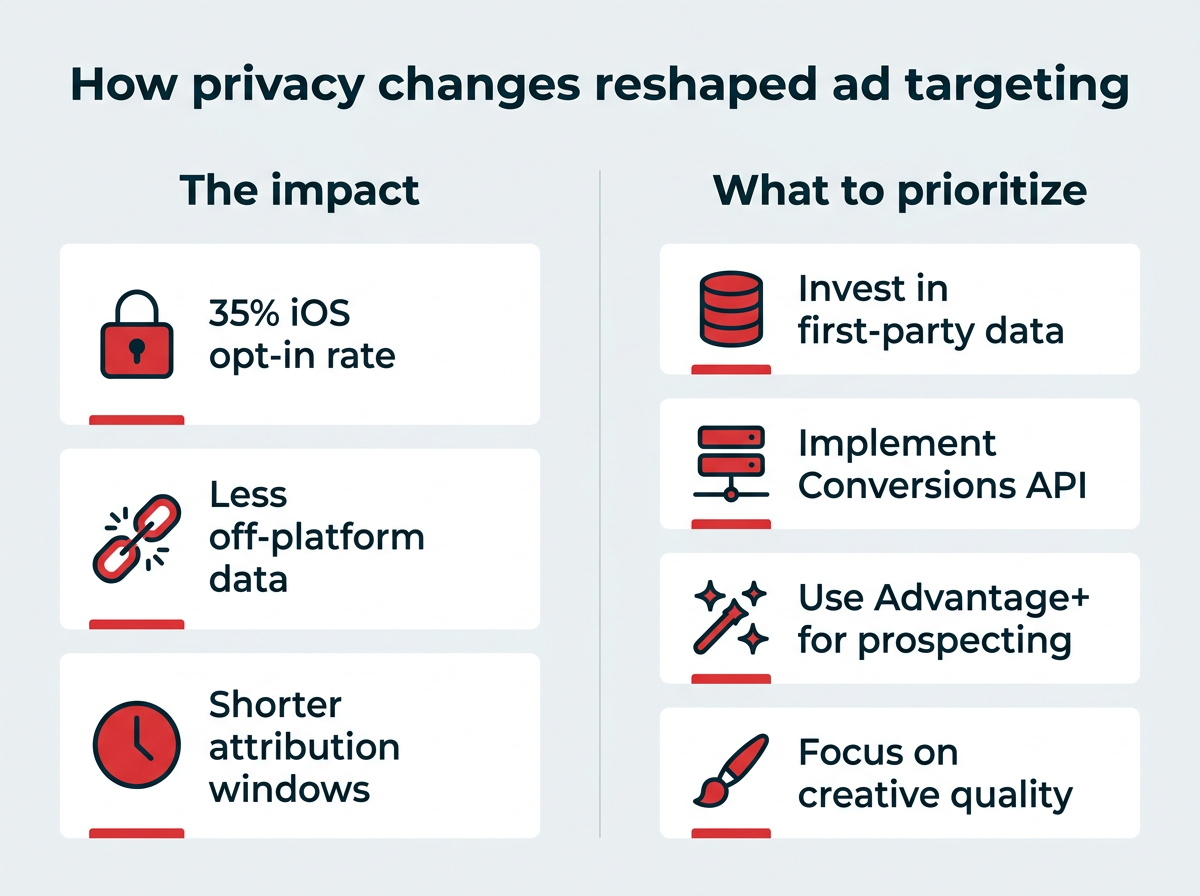
The digital advertising ecosystem has undergone significant transformations due to evolving privacy regulations and platform changes. A pivotal moment was Apple’s iOS 14.5 App Tracking Transparency (ATT) update in April 2021, which introduced mandatory opt-in for app-level tracking. With an industry-wide opt-in rate hovering around 35%, Meta’s ability to receive granular data about user behavior off-platform was significantly curtailed. Concurrently, Meta itself has removed certain sensitive targeting categories related to health, race, political affiliation, and religion, further emphasizing a privacy-first approach.

A Shifting Paradigm: The Impact of App Tracking Transparency
The practical implications for marketers have been profound. Behavior-based and third-party data targeting options have become less effective due to reduced data availability. Attribution windows, which define the timeframe within which an ad impression or click is credited for a conversion, have also shortened, making it more challenging to accurately track the full customer journey and attribute conversions to specific ad interactions. This shift necessitates a greater reliance on first-party data and more sophisticated measurement strategies.
Strategic Adaptations for Enterprise Marketers
In response to these privacy changes, enterprise marketing teams must prioritize several key areas:

- Reinforce First-Party Data Collection: Maximizing the effectiveness of the Facebook Pixel and implementing the Conversions API are paramount. This ensures reliable data flow from owned properties directly to Meta, mitigating the impact of third-party cookie deprecation and app tracking limitations.
- Focus on Robust Measurement: With shorter attribution windows, advertisers need to adopt more holistic measurement frameworks that consider incrementality and broader business outcomes, not just last-click attribution.
- Invest in Creative Excellence: As targeting precision becomes more challenging, the quality and relevance of ad creative become even more critical. Highly engaging and persuasive creative can compensate for broader targeting, capturing audience attention more effectively.
- Embrace AI-Driven Solutions: Leaning into Meta’s Advantage+ tools allows the platform’s AI to optimize campaigns with the available data, often finding efficiencies that manual targeting cannot.
- Prioritize A/B Testing: Continuous experimentation with different audiences, creatives, and bidding strategies is essential to adapt to the dynamic advertising environment and identify what works best in the new privacy landscape.
These adaptations do not diminish the value of Facebook ad targeting but rather reshape the strategies required for success, shifting the focus towards owned data, intelligent automation, and compelling creative.
Implementing Effective Targeting: A Step-by-Step Guide

Configuring audience targeting within Meta Ads Manager follows a clear, structured process, applicable whether building Core, Custom, or Lookalike Audiences.
- Access Ads Manager: Begin by navigating to the Audiences section within Meta Ads Manager or via Meta Business Suite.
- Navigate to the Ad Set Level: Audience targeting is configured at the ad set level of a campaign, which sits between the campaign level (where objectives are set) and the ad level (where creative is managed).
- Choose Audience Type: In the Audience section, select whether to create a new audience, use a previously saved audience, or select an existing Custom or Lookalike Audience. For Custom and Lookalike audiences, these must first be established in the Audiences tool before being applied to an ad set.
- Configure Parameters: For Core Audiences, manually define location, age, gender, and then utilize the "Detailed Targeting" field to add specific demographics, interests, and behaviors. The "Narrow Audience" button is crucial for layering criteria (e.g., users must match interest A and behavior B).
- Review Audience Size: As criteria are added, the audience definition meter on the right provides an estimated reach. It’s important to ensure the audience is neither too broad (leading to inefficient spending) nor too narrow (limiting reach and potential conversions). Meta will flag audiences that are excessively narrow.
- Save Audience: Once configured, save the audience for future use, promoting consistency and saving time across multiple campaigns.
Advanced Strategies for Maximizing Ad Spend in 2026

With the foundational understanding and setup complete, specific strategies can further amplify Facebook ad campaign performance.
Strategic Retargeting with Custom Audiences
Retargeting remains one of the highest-impact strategies due to its focus on individuals who have already shown interest. Beyond simple website visitors, advanced segmentation allows for highly personalized retargeting:

- Cart Abandoners: Target users who added items to their cart but didn’t complete the purchase, with ads offering discounts or free shipping.
- Specific Product Viewers: Show ads for related or complementary products to those who viewed a particular item.
- High-Engagement Users: Create Custom Audiences of users who spent significant time on your site or watched a large portion of your video content, then target them with conversion-focused ads.
- Exclusion Targeting: Crucially, exclude recent purchasers from ongoing sales campaigns to avoid ad fatigue and ensure budgets are spent on new conversions. This requires robust website tracking via the Facebook Pixel and Conversions API.
Competitive Intelligence: Targeting Competitors’ Audiences
Leveraging Meta Business Suite’s Audience Insights can reveal valuable information about a brand’s competitive landscape and potential new audiences. By selecting "Potential audience" and applying demographic filters, advertisers can identify "Top pages" that their target users already follow. While directly targeting a competitor’s page as an interest is not always possible (as not all pages are recognized as an interest category), this intelligence informs broader interest targeting. If a competitor’s page is available as an interest, this allows for direct targeting of their fanbase, offering a unique opportunity to present an alternative solution. This strategy requires careful analysis and A/B testing against existing audiences to ensure efficacy.
Leveraging Value-Based Lookalike Audiences
As previously noted, Value-Based Lookalike Audiences amplify the power of Lookalikes by weighting highest-spending customers. This ensures that the algorithm prioritizes finding new prospects with similar high-value characteristics. The process involves creating a Custom Audience from a customer list that includes a customer lifetime value column. Subsequently, this Custom Audience serves as the source for a Lookalike Audience, directing Meta’s AI to find individuals most likely to become high-value customers, thus optimizing customer acquisition costs and long-term revenue.

The Power of Layered Detailed Targeting
Detailed targeting allows for the creation of hyper-focused audiences by combining multiple criteria across demographics, interests, and behaviors. For instance, an advertiser could target "divorced parents of toddlers who work in management, are interested in beach vacations, and are frequent international travelers." Each layer, added via the "Narrow Audience" option, refines the audience, ensuring that only individuals matching all specified criteria are reached. This strategy is highly effective for niche products or services and specific promotions where the target demographic is exceptionally precise. However, advertisers must balance specificity with audience size to avoid overly narrow segments that limit reach.
Capturing Intent: Targeting Engaged Shoppers
Within Facebook’s detailed targeting options, the "Engaged Shoppers" behavior is a powerful tool. This option specifically targets individuals who have clicked the "Shop Now" button on a Facebook ad within the last week, indicating recent intent to purchase. By focusing on these high-intent users, advertisers can bypass individuals who merely scroll past ads and instead reach a segment already primed for conversion, significantly improving the likelihood of a sale.

Optimizing with Ad Relevance Diagnostics
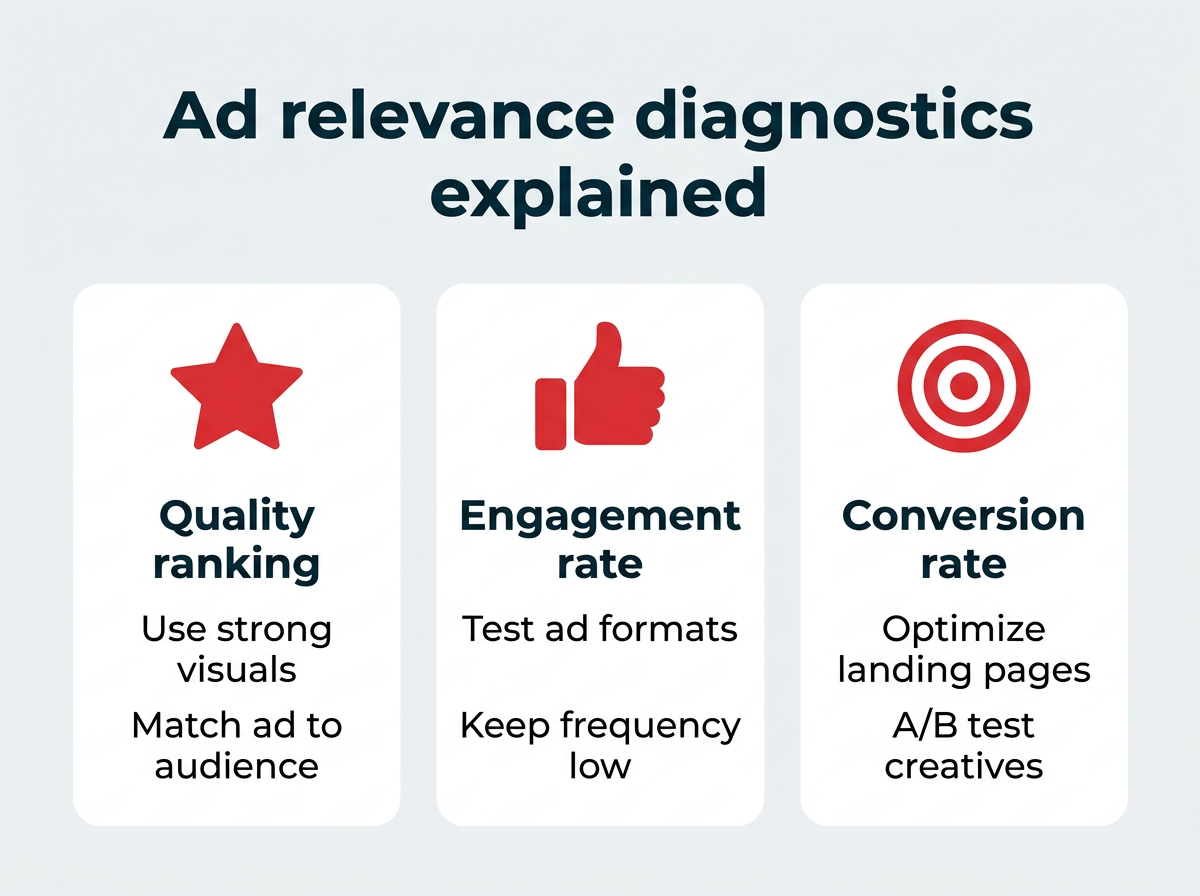
Facebook provides three key ad relevance diagnostics to help advertisers understand and improve their campaign performance:
- Quality Ranking: Measures the perceived quality of an ad compared to others targeting the same audience.
- Engagement Rate Ranking: Assesses an ad’s expected engagement rate against others in the same competitive pool.
- Conversion Rate Ranking: Indicates an ad’s expected conversion rate relative to other ads targeting the same audience.
These metrics are crucial because they directly influence ad delivery and cost. Ads with higher relevance rankings are generally shown more frequently and at a lower cost. To improve these scores, advertisers should focus on:
- High-Quality Creative: Engaging visuals and compelling ad copy.
- Clear Call-to-Action: Guiding users directly to the desired action.
- Optimized Landing Pages: Ensuring a seamless post-click experience that aligns with ad messaging.
- Continuous A/B Testing: Experimenting with different ad variations to identify top performers.
- Audience-Creative Match: Ensuring the ad creative is highly relevant to the specific audience segment being targeted.
Conclusion: The Evolving Art and Science of Facebook Ad Targeting
Facebook ad targeting remains an indispensable tool for marketers seeking to achieve superior campaign performance in a complex and evolving digital landscape. From the foundational Core Audiences to the sophisticated AI-driven Advantage+ solutions, Meta provides a comprehensive suite of tools to connect businesses with their ideal customers. The shift towards greater privacy, notably catalyzed by iOS 14.5, has underscored the critical importance of first-party data, robust measurement through tools like the Conversions API, and a strategic embrace of AI-powered optimization.
Successful Facebook ad campaigns in 2026 and beyond will be characterized by a blend of data-driven precision, creative excellence, and continuous adaptation. Marketers must commit to ongoing A/B testing, refine their Custom and Lookalike Audiences, and leverage Meta’s AI to navigate the nuances of audience engagement effectively. By mastering these strategies, businesses can not only boost conversions and lower costs but also build stronger, more meaningful connections with their target consumers, securing a competitive edge in the digital marketplace.