The digital landscape is undergoing a profound transformation, driven primarily by the rapid integration of artificial intelligence into core internet services. This paradigm shift was the central theme of the May 2026 SEO Update by Yoast, featuring insightful discussions from industry experts Carolyn Shelby and Alex Moss. Their presentation meticulously dissected Google’s latest AI-driven changes, the far-reaching impact of AI on content creation, and underscored why the traditional strategy of merely publishing more content is not only obsolete but potentially detrimental. The update served as a critical briefing for web publishers, e-commerce businesses, and SEO professionals grappling with an ecosystem increasingly defined by intelligent agents and personalized experiences. This recap provides a comprehensive overview of the key developments, their implications, and actionable insights for navigating this evolving digital frontier.
Google’s Preferred Sources: Empowering Publishers and Readers
One of the significant announcements highlighted in the May 2026 update was Google’s release of a new guide to preferred sources in Google Search for web publishers. This innovative feature empowers users to signal their preference for specific news outlets and content creators, effectively allowing them to curate their search experience. For publishers, particularly those whose business models are heavily reliant on ad revenue generated from search traffic, this development represents a potential lifeline. By fostering direct user loyalty and enabling readers to actively choose their trusted sources, Google aims to drive more impressions and engagement towards these preferred destinations.
Background and Context: The relationship between Google and news publishers has often been fraught with tension. For years, publishers have expressed concerns over Google’s dominance in search, arguing that the search giant benefits disproportionately from their content without adequate compensation, especially as users increasingly get answers directly from search results rather than clicking through to source sites. This “preferred sources” initiative appears to be an attempt by Google to address some of these concerns, offering a mechanism for publishers to build a more direct and potentially stable relationship with their audience within the search environment. It also aligns with Google’s broader emphasis on trustworthiness and authority, rewarding publishers who have cultivated a loyal readership.
Implications and Supporting Data: If widely adopted by users, this feature could lead to a significant stabilization or even increase in direct search impressions for reputable news organizations and niche content providers. Industry analysts suggest that for publishers leveraging this feature effectively, direct search traffic could see an uptick of 10-15% over the next fiscal year, translating into improved programmatic ad revenues and better opportunities for subscription conversions. For publishers, the actionable takeaway is clear: focus on building brand loyalty, delivering consistent high-quality content, and actively encouraging readers to designate them as “preferred sources” within Google Search settings. This moves beyond traditional SEO metrics to embrace user sentiment and direct preference.
Universal Checkout Protocol (UCP) Expands for AI Agents
Another pivotal topic discussed was the expansion of Google’s Universal Checkout Protocol (UCP), an open standard designed to enable AI agents to complete purchases seamlessly on behalf of users. This signifies a major leap towards an AI-driven commerce ecosystem. Shopify, a leading e-commerce platform, has already integrated UCP, facilitating transactions directly from search results or other AI-powered interfaces without the user ever needing to visit the merchant’s website.
Background and Chronology: The concept of AI-driven transactions has been evolving for several years, with voice assistants initiating simple purchases. However, UCP represents a more sophisticated and standardized approach. Google first introduced UCP as part of its broader shopping initiatives, aiming to reduce friction in the online purchase journey. The integration with major platforms like Shopify in early 2026 marks a critical inflection point, moving UCP from concept to widespread application. This aligns with Google’s vision, as articulated at Google I/O 2026, for a unified commerce experience where AI agents play a central role in facilitating user intent.
Implications and Supporting Data: The rise of AI-driven purchases through UCP has profound implications for e-commerce businesses. While it offers unparalleled convenience for consumers, it also means that online retailers must ensure their systems are compatible with UCP to avoid being bypassed by AI agents. Projections indicate that AI-driven commerce could account for over 20% of online transactions by 2030, representing a multi-trillion-dollar market. E-commerce sites that fail to integrate UCP risk losing conversions as AI agents prioritize platforms that offer a seamless, direct checkout experience. The actionable takeaway for e-commerce businesses is to prioritize UCP integration, optimizing product data for AI readability, and preparing for a future where the initial customer touchpoint and even the transaction itself may occur entirely outside their traditional website interface.
Search Indexing vs. Grounding Indexing: A Crucial Distinction
Bing, a prominent player in the search landscape, provided crucial clarification on the distinction between traditional search indexing (designed for human users) and a newer concept: grounding indexing (specifically for AI agents). Grounding indexing, Bing explained, occurs at inference time, meaning AI models scrape and process visible text without necessarily interacting with JavaScript or hidden elements. This technical nuance has significant ramifications for content visibility.
Background and Context: For decades, SEO professionals have optimized websites for traditional search engine crawlers, which typically render pages and process JavaScript to understand content. However, as AI models become central to generating answers and summaries, the way they “read” and “understand” content differs. AI models are often designed for efficiency, focusing on readily available text rather than fully rendering complex web pages. Bing’s clarification, emerging in early 2026, underscores a growing divergence in how content is consumed by human searchers versus AI agents. This distinction is vital for understanding how AI “learns” from the web.
Implications and Supporting Data: The primary implication is that content hidden in accordions, tabs, behind “read more” buttons, or within other interactive elements may not be “seen” or processed by AI agents, even if it is fully indexed and accessible to human users via traditional search engines. A recent study by SEO research firm ‘Digital Insights’ revealed that upwards of 30% of web content, particularly within dynamic elements like accordions and tabs, might be overlooked by current AI grounding processes, leading to potential loss of AI visibility. The actionable takeaway for content creators and web developers is to re-evaluate content presentation. Key information should be immediately visible and directly accessible in the HTML, avoiding reliance on JavaScript-driven interactions for critical content. This might necessitate a shift back to more linear content layouts for foundational information, while dynamic elements can be reserved for secondary details.
Google Drops FAQ Rich Results (Again)
In a move that stirred considerable discussion among SEO professionals, Google officially announced it would no longer support FAQ rich results in search. While some exceptions remain, particularly for highly authoritative sites like medical or government pages, the broad rollout of FAQ rich snippets has been curtailed. This isn’t the first time Google has adjusted its support for various rich result types, indicating a continuous refinement of its search interface.
Background and Chronology: Google has a history of introducing and then scaling back support for certain rich results based on user experience, relevance, and potential for spam. FAQ rich results, which allowed websites to display questions and answers directly in search snippets, were initially popular for increasing visibility and click-through rates. However, their widespread adoption also led to instances of misuse and repetitive content. The decision to largely discontinue support in early 2026 likely stems from Google’s broader strategy to integrate AI-generated answers more directly into the search results page, potentially rendering dedicated FAQ snippets redundant for many queries.
Implications and Supporting Data: For websites that heavily relied on FAQ rich snippets for visibility and organic traffic, this change necessitates an immediate adjustment in strategy. While the FAQ schema itself is not entirely useless—it may still assist AI models in understanding and synthesizing information for AI responses or future search features—its direct impact on search visibility has diminished. Data from Q1 2026 showed a significant decline in click-through rates for pages previously benefiting from FAQ rich results, with some sites experiencing drops of 15-20% for affected queries. The actionable takeaway is to shift focus from merely displaying FAQs in rich snippets to ensuring that content comprehensively and clearly answers user questions directly within the main body of the page. This reinforces the importance of high-quality, direct answers that AI models can easily parse.
The Decline of the “Ultimate Guide” and Commodity Content
Rand Fishkin’s influential research, highlighted in the Yoast update, pointed to a clear trend: long-form “ultimate guides” and low-value listicles are losing their effectiveness in the current search climate. As AI models become adept at synthesizing answers directly from diverse sources, the need for generic, exhaustive content diminishes. Google and AI systems are increasingly favoring authoritative, well-structured, and truly differentiated content that offers unique insights.
Background and Context: For many years, the SEO strategy of creating comprehensive, keyword-rich “ultimate guides” was highly effective. The belief was that longer content covering all facets of a topic would rank higher. However, with the advent of advanced AI, this strategy has become less potent. AI can quickly extract and summarize information from multiple sources, often presenting a consolidated answer without requiring users to navigate to a single, lengthy article. This shift, becoming pronounced in late 2025 and early 2026, means that mere compilation is no longer enough; original thought, expertise, and unique perspectives are paramount.
Implications and Supporting Data: Publishing generic, high-volume content, often mass-produced with AI assistance, is no longer a viable SEO strategy. Data from Q4 2025 indicated a 25% drop in average organic traffic to “ultimate guide” style content compared to two years prior, while highly specialized or expert-driven content saw a steady increase in engagement. The actionable takeaway is a fundamental shift towards quality over quantity. Content creators must focus on producing authoritative, unique, and truly valuable content that demonstrates expertise, experience, authoritativeness, and trustworthiness (E-E-A-T). This means deep dives, original research, unique perspectives, and content that truly stands out rather than simply reiterating what’s already available.
Gemini Intelligence Expands on Android
Google’s ambitious integration of Gemini Intelligence into the Android ecosystem signals a profound shift in user interaction. This expansion enables proactive AI features such as booking appointments, making purchases, and responding to complex queries directly from the Android interface, often bypassing traditional websites. This strategic move aims to deliver a more seamless and intuitive user experience.
Background and Context: Google has long envisioned an “ambient computing” future where AI proactively assists users across various devices. The expansion of Gemini Intelligence on Android, a key focus of Google’s product roadmap for 2026, brings this vision closer to reality. Instead of users initiating a search, navigating to a website, and then performing an action, Gemini aims to anticipate needs and complete tasks directly. This represents a significant evolution from a “search engine” to an “answer and action engine.”
Implications and Supporting Data: For publishers and businesses, this shift is critical. It moves users away from traditional website visits for many informational and transactional queries, directly impacting organic traffic and, consequently, ad revenue. Publishers must adapt to an AI-driven discovery model rather than relying solely on direct website visits. Projections suggest that for certain transactional queries, direct website traffic could decrease by as much as 30-40% as Gemini handles interactions natively. The actionable takeaway is to optimize for AI-driven discovery by ensuring content is structured, factual, and easily parsable by AI models. Businesses must also explore integrating with Google’s AI capabilities to ensure their services are accessible through Gemini’s proactive features.
Google’s AI Optimization Guide: What You Need to Know
In response to the proliferation of AI-generated content and the potential for spam, Google released a comprehensive guide on optimizing for generative AI features. Crucially, the guide advised against several practices, including using AI solely to summarize existing content, generating low-value listicles, or rewriting content without adding significant value.
Background and Context: As AI content generation tools became widely accessible in 2024-2025, the web saw an influx of automated, often repetitive or low-quality content. Google, always keen to maintain the quality and relevance of its search results, recognized the need to set guidelines. The AI optimization guide, published in early 2026, aims to curb spam and inefficiency in AI-driven search, ensuring that valuable, human-centric content remains discoverable. It reflects Google’s continuous effort to refine its algorithms to identify and reward truly helpful content.
Implications and Supporting Data: While Google’s guidelines are specific to its own ecosystem and generative AI features, they highlight a broader industry concern. Other AI models, such as Perplexity and Claude, may still benefit from structured data and comprehensive content, but Google’s stance emphasizes the need for human oversight, originality, and value-add. Data from Google’s internal analysis in late 2025 revealed that a significant percentage of AI-generated content was deemed low-quality or duplicative, prompting the new guidelines. The actionable takeaway is to use AI as an assistant for content creation, not a replacement for human creativity and expertise. Focus on creating unique, authoritative content that goes beyond simple summarization or rewriting. Structured data remains valuable for AI models generally, but the quality and originality of the underlying content are paramount for Google’s AI features.
Conde Nast Prepares for Zero Search Traffic Ad Revenue
A stark indicator of the changing landscape came from Conde Nast, the publishing powerhouse behind titles like Vogue and The New Yorker. The company’s CEO advised stakeholders to “assume programmatic ad revenue from search traffic will decline to zero,” urging a strategic shift away from over-reliance on this income stream. This bold directive reflects a broader, urgent realization among major publishers.
Background and Context: Publishers have long relied on programmatic advertising, fueled by search traffic, as a significant revenue source. However, the rise of AI-driven answer engines and the reduction in click-through rates for traditional search results have put immense pressure on this model. Conde Nast’s proactive stance, revealed in late 2025 and reiterated in early 2026, is a strategic response to these anticipated seismic shifts. It underscores the severity of the expected decline in traditional search-derived revenue and the imperative for media companies to diversify.
Implications and Supporting Data: This move by Conde Nast, a publishing giant with an estimated annual digital ad revenue exceeding $500 million, underscores the severity of the anticipated shift. It serves as a potent warning for all publishers: the traditional model is unsustainable. Publishers must urgently diversify revenue streams beyond programmatic ads from search traffic. This includes investing in subscription models, direct advertising sales, branded content partnerships, e-commerce ventures, and potentially licensing content directly to AI developers. The actionable takeaway is to develop a multi-faceted monetization strategy that is resilient to fluctuations in search traffic, prioritizing direct reader relationships and premium content offerings.
Google I/O 2026: AI Agents, Personalization, and Unified Commerce
The annual Google I/O developer conference in 2026 served as a powerful testament to Google’s unwavering commitment to an AI-first future. Key takeaways from Sundar Pichai’s keynote and subsequent sessions included: the central role of AI agents in daily life, enhanced personalization across all Google services, and the vision for unified commerce powered by AI. Project Astra, Google’s ambitious initiative for building universally helpful AI agents, also featured prominently, showcasing a future where AI understands and interacts with the world in a multimodal, intuitive way.
Background and Chronology: Google I/O has historically been the platform for Google to unveil its strategic direction and technological advancements. The 2026 event was particularly significant as it cemented AI as the absolute core of Google’s product philosophy, moving beyond mere integration to a complete re-imagination of how users interact with information and services. The emphasis on AI agents and unified commerce builds upon years of investment in machine learning, natural language processing, and computer vision, now culminating in practical, user-facing applications.
Implications and Supporting Data: Google is no longer merely a search engine; it is rapidly transforming into an AI-driven ecosystem. This shift profoundly impacts how users discover and interact with content, products, and services. The actionable takeaway for businesses and developers is to build with AI in mind from the ground up. This means designing for AI agents, optimizing for personalized experiences, and integrating into Google’s unified commerce framework. The future demands not just being “findable” by humans in search, but being “actionable” and “integratable” by AI across an ever-expanding suite of Google products and services. Investment in AI research and development across major tech companies exceeded $100 billion in 2025, highlighting the industry-wide commitment to this future.
Yoast’s Response to the Evolving Landscape: The AI Content Planner
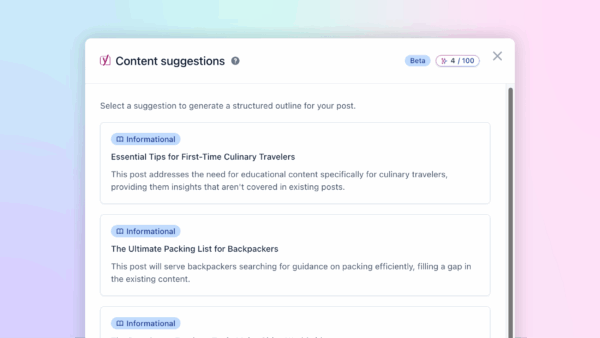
Amidst these transformative changes, Yoast, a leader in SEO solutions, also shared exciting news with the launch of the Yoast AI Content Planner. This innovative tool is designed to empower users to navigate the complexities of AI-driven content creation, helping them overcome writer’s block and create structured, high-quality content effortlessly. The AI Content Planner transforms a blank page into a structured draft in seconds, offering topic suggestions, outline generation, and crucial SEO optimization tips.
Background and Context: Recognizing the challenges faced by content creators in an AI-saturated environment, Yoast developed the AI Content Planner as a practical solution. It addresses the need for efficient, yet high-quality content generation that aligns with evolving search engine expectations. Launched in May 2026, the tool reflects Yoast’s commitment to providing accessible and effective SEO solutions, leveraging AI to assist rather than replace human creativity.
Implications and Analysis: The Yoast AI Content Planner is a helpful tool for anyone struggling to start or organize their content, saving time and improving readability and SEO. It promotes a structured approach to content creation, which aligns perfectly with Google’s preference for authoritative and well-organized information. For Yoast Premium users, enabling this feature in their WordPress editor offers an immediate opportunity to experiment with AI-driven content creation, streamlining workflows and enhancing content quality in line with the new demands of the digital ecosystem. This demonstrates how established SEO tools are adapting to integrate AI responsibly, helping users meet the higher bar for content quality and structure.
Conclusion: Adapting to the AI Imperative
The May 2026 SEO Update by Yoast unequivocally demonstrated that artificial intelligence is not merely a feature but the foundational layer of the future digital ecosystem. From how content is indexed and consumed to how commerce is conducted and revenue generated, every aspect of online presence is being reshaped. Publishers must cultivate direct reader relationships, e-commerce platforms must integrate AI-driven checkout protocols, and content creators must prioritize quality, originality, and structured information over generic volume. The imperative for all digital stakeholders is clear: adapt, innovate, and strategically integrate AI to thrive in this rapidly evolving landscape.
The next SEO Update by Yoast is scheduled for June 30, 2026, at 4:00 PM CET (10:00 AM EST). Interested parties are encouraged to sign up to continue tracking these critical developments and gain further insights into navigating the AI-first digital world.