


The Google Display Network (GDN) presents a formidable opportunity for businesses seeking to expand their reach and engage a vast online audience. However, without a clear understanding of its mechanics, potential pitfalls, and strategic implementation, it can also become a significant drain on advertising budgets with minimal return. This comprehensive guide aims to demystify the GDN, providing advertisers with the knowledge and tools necessary to craft successful campaigns that align with their overarching business objectives.
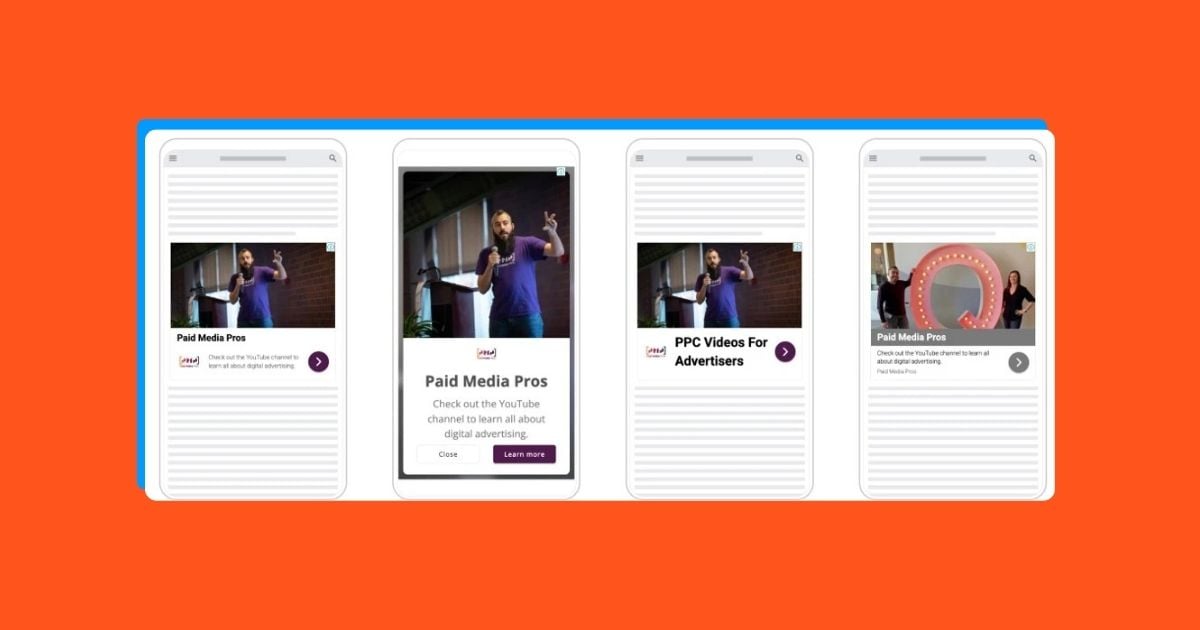
At its core, the Google Display Network is not a monolithic entity owned and operated solely by Google. Instead, it is an expansive ecosystem comprising millions of websites, mobile applications, and videos, including YouTube, that allocate ad space. These placements are made available by individual website owners and businesses who partner with Google, sharing in the advertising revenue generated. Essentially, a digital marketplace is created where advertisers can showcase their products and services to relevant audiences while website publishers earn income from their online real estate. Google acts as the intermediary, facilitating the connection between advertisers and publishers, and leveraging sophisticated targeting mechanisms to ensure ads are displayed to the most receptive viewers. This intricate network allows for unparalleled reach, with the GDN estimated to reach over 90% of global internet users across more than two million websites and apps.
The strategic advantages of leveraging the Google Display Network are multifaceted and can significantly contribute to a business’s growth trajectory.
Driving Brand Awareness: Making a First Impression
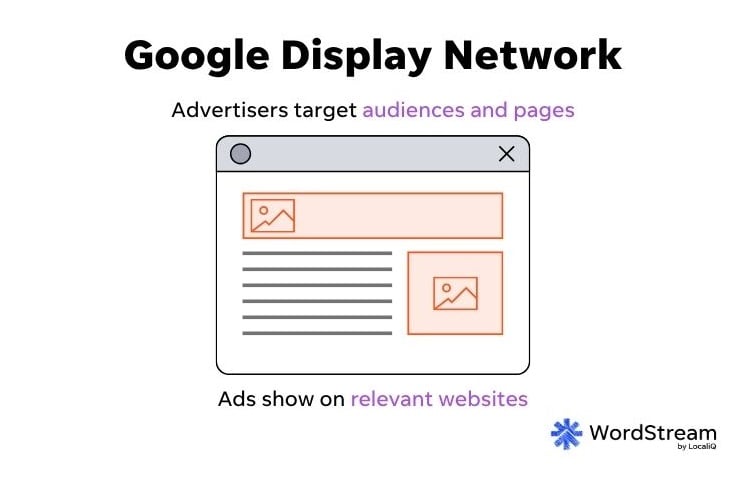
One of the primary benefits of the GDN is its capacity to cultivate brand awareness. In today’s competitive landscape, capturing the attention of potential customers is paramount. While word-of-mouth and search engine visibility are crucial, the GDN offers a distinct advantage by introducing brands to users before they actively begin searching for a product or service. By appearing on websites and within apps that align with a user’s interests, browsing history, or demographic profile, businesses can create an initial touchpoint that plants the seed of brand recognition. This proactive approach ensures that when a need arises, the advertised brand is already in the consumer’s consideration set. Studies have shown that display advertising can significantly increase brand recall, with some research indicating a lift of up to 80% in aided brand recall among audiences exposed to display ads.
Nurturing Existing Relationships: Re-engagement Strategies
Beyond initial introductions, the GDN serves as a powerful tool for nurturing relationships with existing users and customers. The customer journey is rarely linear; it often involves multiple interactions before a conversion occurs. The GDN allows businesses to re-engage individuals who have previously interacted with their brand, whether through website visits, app usage, or previous ad clicks. By providing further information, showcasing new offers, or reminding users of the brand’s value proposition, the GDN can guide them along the conversion path. Retargeting campaigns, a staple of GDN advertising, are particularly effective in this regard, allowing businesses to serve tailored ads to users who have shown interest, thereby increasing the likelihood of conversion.

Fueling Conversions: Beyond Brand Building
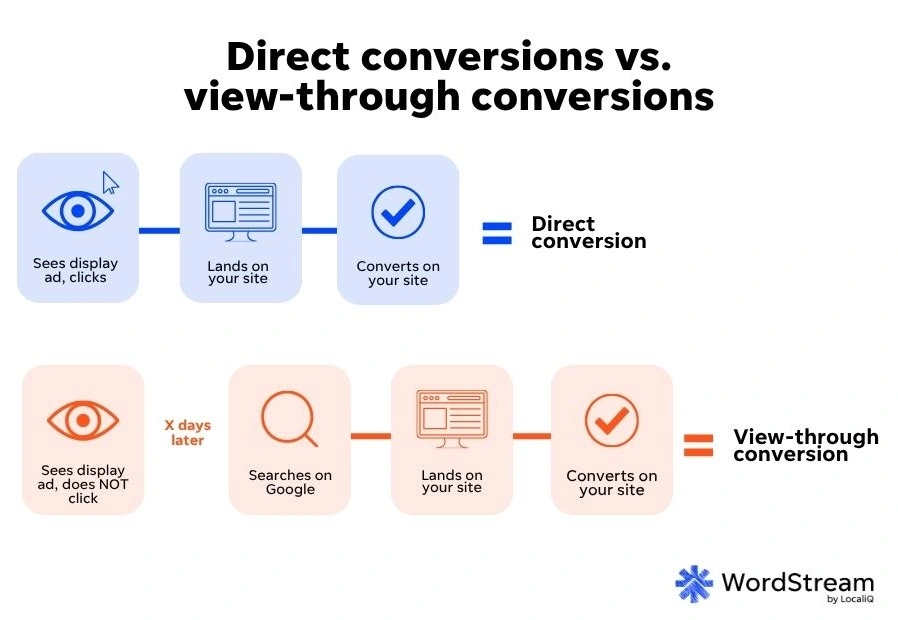
While often lauded for its brand-building capabilities, the Google Display Network can also be a significant driver of conversions, especially when implemented with a strategic approach. While it might not be the primary channel for solely conversion-focused marketers, its potential to generate sales cannot be overlooked. When combined with robust conversion tracking, sophisticated automated bidding strategies, and a clear understanding of the target audience’s buyer cycle, the GDN can deliver incremental conversions. A key metric in this context is “view-through conversions,” which attributes a conversion to a display ad that was seen but not clicked, indicating its influence on the user’s decision-making process. This metric is particularly valuable for understanding the broader impact of display advertising beyond direct click-throughs.
Navigating Google’s Display Advertising Landscape: Campaign Types
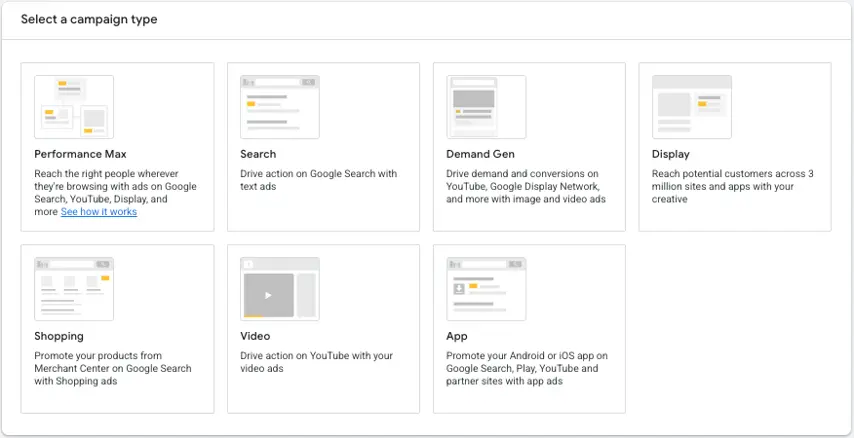
Google offers a variety of campaign types that can facilitate ad placements across the Google Display Network, each with its own set of functionalities and strategic applications. Understanding these options is crucial for selecting the approach that best aligns with campaign objectives.
1. Standard Display Campaigns: The Foundation
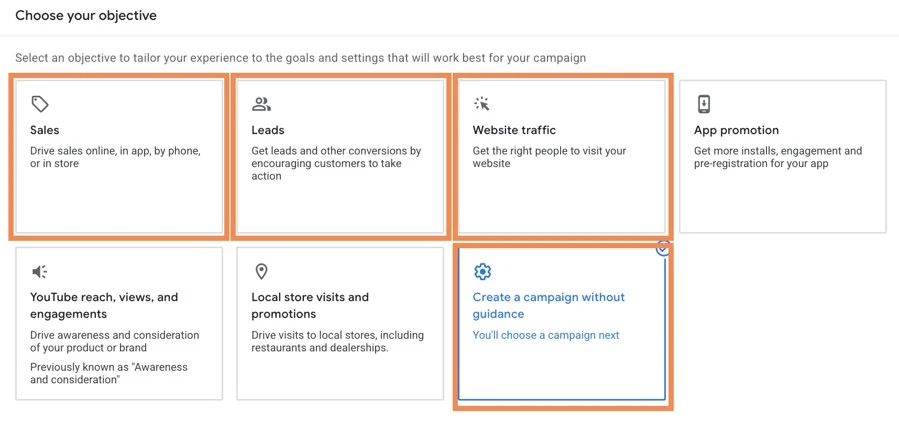
Historically, standard Display campaigns have been the most direct way to advertise exclusively on the Google Display Network. These campaigns focus on reaching users across the vast network of websites, apps, and videos that participate in the GDN. While Google has indicated a phasing out of these traditional “Display-only” campaigns in favor of more advanced solutions, they remain a relevant option for advertisers seeking granular control over GDN placements. When setting up a new campaign, selecting objectives such as Sales, Leads, or Website Traffic and then specifically choosing the “Display” network allows for this targeted approach. These campaigns support a range of ad formats and offer extensive targeting options, providing advertisers with a high degree of flexibility in managing their GDN presence.
2. Performance Max Campaigns: The All-Encompassing Solution
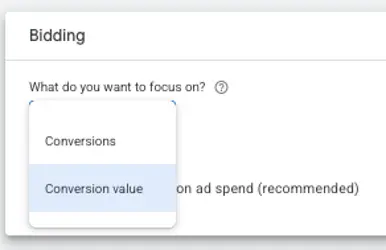
Performance Max (PMax) campaigns represent Google’s most automated campaign type, designed to leverage machine learning across all of Google’s owned properties, including Search, YouTube, Gmail, Discover, Shopping, Maps, and the Google Display Network. PMax campaigns dynamically create ads tailored for each placement, relying heavily on Google’s Smart Bidding strategies. Manual bidding is not an option; advertisers must choose between optimizing for Conversions or Conversion Value, which then defaults to “Maximize Conversions” or “Maximize Conversion Value” bidding strategies. While PMax campaigns can drive significant impressions and clicks, their broad reach across multiple networks means they may draw performance away from other campaigns, such as Search. Furthermore, PMax campaigns offer less transparency and can be more challenging to gain insights from compared to other campaign types. For businesses focused on sales with substantial conversion volume, PMax can be a worthwhile experiment, but careful consideration of its cross-network impact and potential for less granular control is advised.
3. Demand Gen Campaigns: The Future of Demand Creation
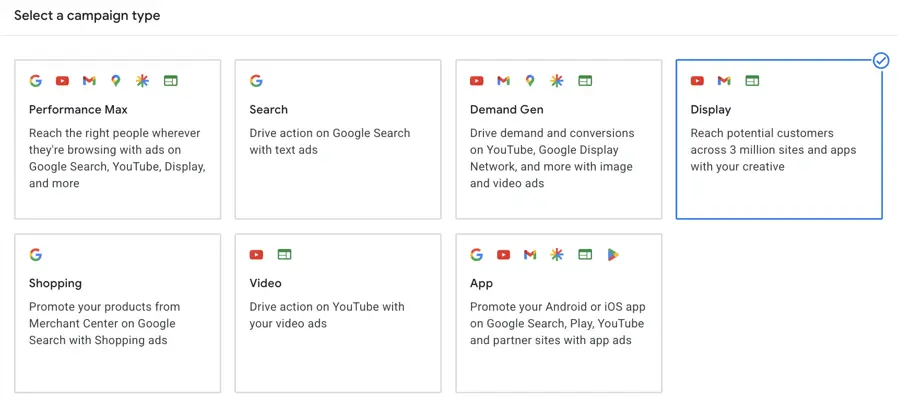
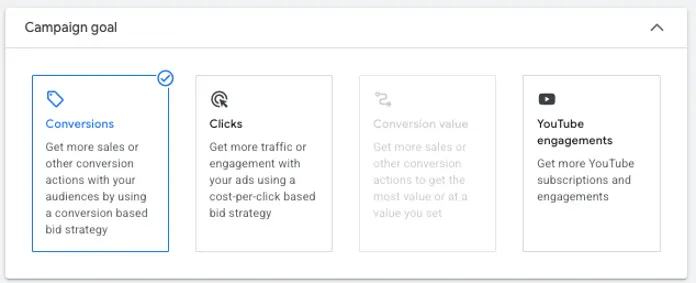
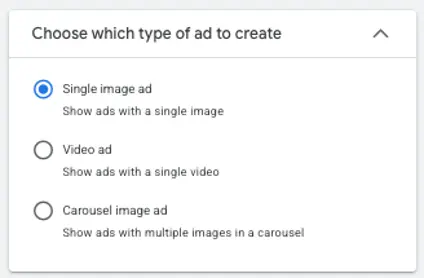
Demand Gen campaigns are Google’s latest innovation, designed to engage users earlier in their buying journey and create demand for products and services before active searching begins. These campaigns target placements across YouTube, Discover, Gmail, and the GDN, but notably exclude Search, which is typically a lower-funnel channel. Crucially, Demand Gen campaigns are slated to become the default campaign type when standard Google Display Campaigns are fully phased out in 2027, positioning them as the future of GDN advertising. Demand Gen campaigns offer greater flexibility in goal optimization than PMax, allowing advertisers to optimize for conversions, clicks, conversion value, or YouTube engagements. They support various ad formats, including single image ads, video ads, and carousel image ads, offering a structured approach to creative development. While not exclusively a display campaign, its anticipated role as the successor to traditional GDN campaigns makes it a vital consideration for advertisers looking to maintain a strong presence on the network in the coming years.
Crafting Your Visual Message: GDN Ad Formats
The effectiveness of a GDN campaign hinges significantly on the quality and relevance of its creative assets. Google offers several ad formats to cater to different needs and levels of advertiser involvement.
1. Responsive Display Ads (RDAs): Dynamic and Effortless
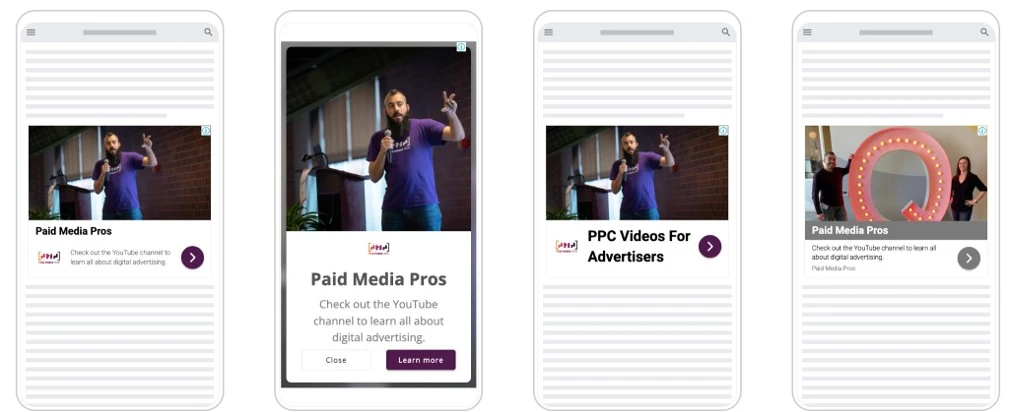
Responsive Display Ads are Google’s most recommended and automated ad format for the GDN. Instead of requiring advertisers to design individual ads for every banner size, RDAs allow for the upload of a collection of assets – headlines, descriptions, images, logos, and videos. Google then dynamically combines these elements to create ad units that automatically adjust to fit various placements. The primary advantage of RDAs is their accessibility; they eliminate the need for extensive design skills and resources while enabling broad reach. However, this automation comes at the cost of granular control over brand aesthetic. While Google strives to optimize for marketing goals, the resulting ad units may not always perfectly align with a brand’s specific look and feel. Advertisers can utilize ad preview options to ensure combinations are brand-safe, but for brands where precise visual control is paramount, static or HTML5 ads might be a better fit.
2. Static Banner Ads: Traditional Control
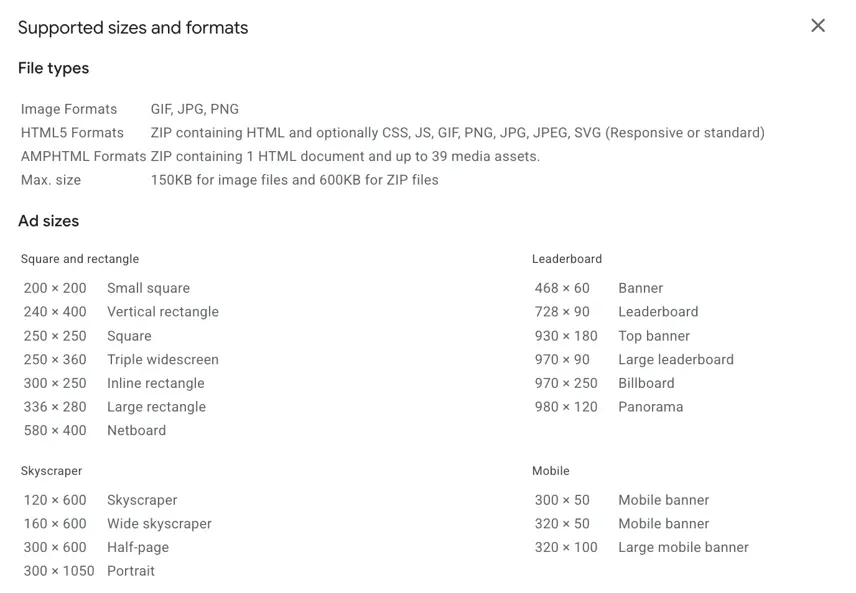
Static banner ads represent the more traditional approach to display advertising. These are fully designed creatives that adhere to specific dimensions, such as 300×250 or 728×90 pixels. This format appeals to brands that demand complete creative control, ensuring their ads appear exactly as intended. However, the benefit of control comes with a significant investment in design. Creating compelling banner ads that perform well can be challenging, and the need to design for approximately 20 different ad sizes represents a substantial undertaking. For teams with the resources and design expertise, static banner ads offer a way to maintain a consistent and polished brand presence across the GDN.
3. HTML5 Ads: Interactive Engagement
HTML5 ads offer a more dynamic and interactive advertising experience. These ads utilize animation, motion, and can support advanced user interactions, making them highly engaging. When executed effectively, HTML5 ads can surpass static banner ads by offering compelling user experiences like interactive product showcases. They also allow advertisers to retain full creative control. However, this advanced format requires a higher level of technical expertise and creative know-how. Consequently, HTML5 ads are typically employed by larger brands looking to promote e-commerce sales or prioritize user attention and interaction as key campaign objectives.
Strategic Targeting: Reaching the Right Audience
Effective targeting is the cornerstone of any successful GDN campaign, ensuring that ad spend is directed towards the most relevant and receptive audiences. Google offers two primary avenues for targeting users on the GDN: audience targeting and contextual targeting.
1. Audience Targeting: Who You Want to Reach
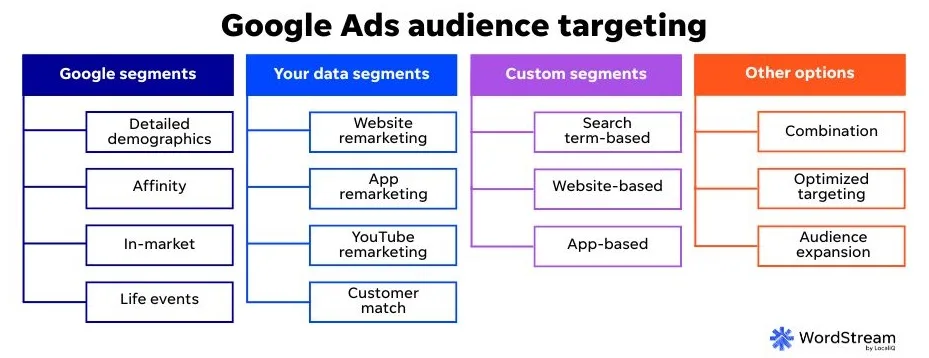
Audience targeting involves defining specific groups of users based on their characteristics, interests, and behaviors. This allows advertisers to reach individuals who are more likely to be interested in their products or services. Key audience targeting options include:
- Affinity Audiences: These target users based on their long-term interests and passions, such as “foodies” or “sports fans.”
- In-Market Audiences: These focus on users who are actively researching or considering purchasing products or services similar to yours.
- Custom Audiences: This allows advertisers to create highly specific audiences based on keywords, URLs, or app usage that indicate user intent.
- Your Data Segments: This enables remarketing to users who have previously interacted with your business, such as website visitors or app users.
- Demographic Targeting: This allows for targeting based on age, gender, parental status, and household income.
- Life Events: This targets users undergoing significant life changes, such as getting married or moving.
2. Contextual Targeting: Where Your Ads Appear
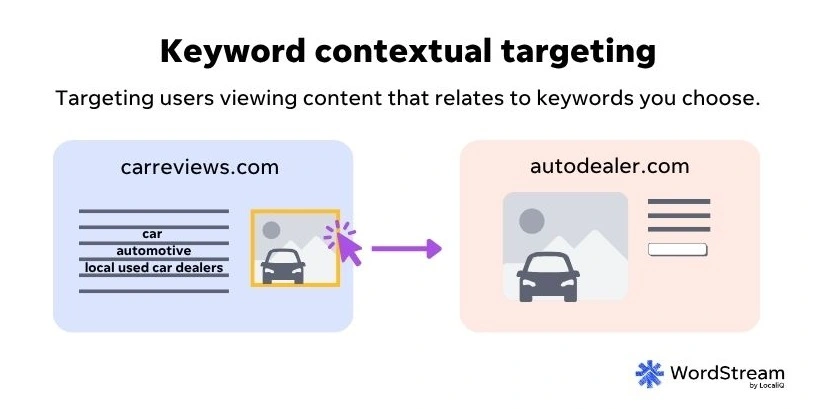
Contextual targeting focuses on placing ads alongside content that is relevant to the advertised product or service. This ensures that ads are displayed in environments that align with the user’s current interests. Key contextual targeting options include:
- Keywords: Ads are shown on websites and apps that contain specific keywords relevant to your business.
- Topics: Ads are displayed on web pages and apps that fall under broad thematic categories.
- Placements: This allows advertisers to select specific websites, apps, or YouTube channels where their ads will appear.
Enhancing Brand Safety and Control
A common concern among advertisers regarding the GDN is maintaining brand safety and ensuring ads appear in appropriate contexts. Google provides several robust controls to address these issues.
Content Controls: Limiting Ad Exposure
Google offers various content control settings designed to limit ad placements in undesirable environments.
Inventory Type: Defining Content Reach
This setting, applied at the account level, allows advertisers to broadly define the type of content their ads will appear alongside. Options typically range from “Limited” to “Moderate” and “Maximum” inventory, enabling advertisers to set a desired level of conservatism or openness in their ad placements. For most businesses, “Moderate” inventory is often a suitable starting point.
Advanced Settings: Granular Exclusions
At the account or campaign level, advertisers can implement more granular content controls. These include excluding sensitive content categories, specific content themes, keywords, and even individual placements that are deemed unsuitable for the brand. This meticulous approach ensures that ad spend is not wasted on irrelevant or potentially damaging placements.
Brand Guidelines: Maintaining Visual Consistency
Google has progressively enhanced its brand guidelines features, allowing advertisers to input custom colors, fonts, logos, and qualitative text guidelines. This ensures that even dynamic ad formats, like RDAs, adhere to the brand’s established visual identity, reinforcing brand recognition and professionalism.
Best Practices for GDN Success
To maximize the effectiveness of Google Display Network campaigns, advertisers should adhere to several best practices:
Regular Placement Monitoring
The GDN is a dynamic environment with new placements constantly emerging and others becoming obsolete. It is crucial to regularly review where your ads are appearing and to set up exclusions for any placements that are not performing well or are not brand-safe. Establishing a consistent monitoring cadence, whether weekly, bi-weekly, or monthly, is essential for maintaining campaign health.
Strategic Bidding Strategies
Choosing the right bidding strategy is paramount and depends heavily on campaign objectives. Whether optimizing for impressions, clicks, conversions, or conversion value, selecting a strategy that aligns with your goals will significantly impact campaign performance. Google’s automated bidding strategies, when properly configured, can effectively drive desired actions.
Investment in Quality Creative
The GDN is a visual medium, and compelling creative assets are key to capturing user attention. Investing sufficient time and resources in designing high-quality, engaging ads, whether static, responsive, or HTML5, will directly influence click-through rates and overall campaign success.
Expanding Beyond the GDN
While the Google Display Network is powerful, exploring other ad networks can further amplify reach. Platforms like the Microsoft Audience Network or the USA TODAY Network offer additional opportunities to serve image and video ads, expanding brand visibility across a wider digital landscape.
In conclusion, the Google Display Network offers a potent platform for businesses to achieve a diverse range of marketing objectives, from building brand awareness to driving conversions. By understanding its intricate workings, strategic campaign types, diverse ad formats, and robust targeting options, advertisers can unlock its full potential. Coupled with diligent monitoring, strategic creative development, and a commitment to best practices, the GDN can become an invaluable engine for customer acquisition and business growth in the digital age.









