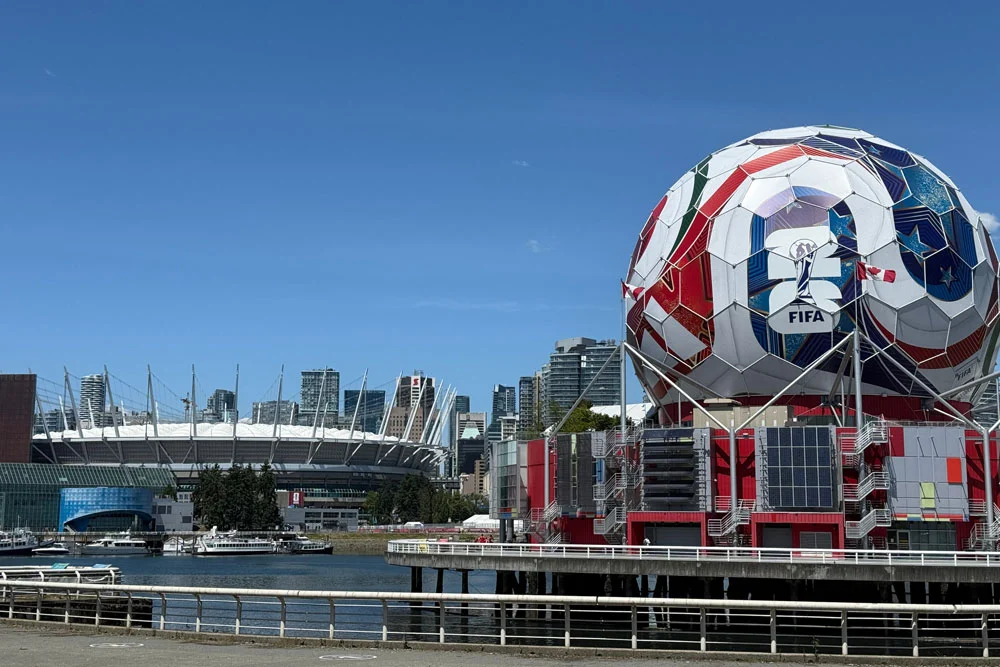
The FIFA World Cup 2026, a historic tournament hosted across Canada, Mexico, and the United States, has provided more than just a spectacle of elite athleticism and national pride. As the first iteration of the tournament to feature an expanded 48-team format, it has become a masterclass in logistics, resilience, and strategic evolution. While the roar of the crowds in stadiums from Vancouver to Mexico City captures the world’s attention, the tournament offers profound insights for the global digital economy, particularly within the sector of affiliate marketing. The parallels between world-class soccer and performance-based marketing are becoming increasingly evident as the competition progresses through its knockout stages.
The 2026 Tournament: A New Era of Global Competition
The 2026 FIFA World Cup represents a significant departure from previous editions. By increasing the number of participating nations from 32 to 48, FIFA has fundamentally altered the competitive landscape. This expansion has allowed smaller nations and "underdogs" a seat at the table, mirroring the low barriers to entry but high barriers to sustained success found in the digital marketing world.
The tournament’s structure—comprising 104 matches over 39 days—demands a level of endurance and strategic depth that few other sporting events can match. For marketers observing from the sidelines, the drama of the group stages and the heartbreak of the Round of 16 serve as reminders that in a hyper-competitive environment, reputation alone is insufficient to guarantee results.
The Power of Synergy: Why Teamwork Trumps Individual Genius
One of the most striking lessons from the 2026 pitch is the limitation of individual stardom. Soccer history is replete with "talismans"—players whose individual brilliance can change a game. However, the current World Cup has demonstrated that even the most decorated individuals cannot carry a team to the podium without a cohesive system.
In the early stages of the tournament, the world watched as Luka Modrić, the midfield maestro for Croatia, displayed technical prowess that defied his age. Yet, despite his individual efforts, Croatia struggled to overcome a highly organized Portuguese side. Similarly, the legendary Cristiano Ronaldo, playing in his final World Cup campaign, found himself unable to pierce the disciplined Spanish defense in the Round of 16. These instances highlight a critical reality: individual skill is a prerequisite, but teamwork is the multiplier.
In the realm of affiliate marketing, this principle is equally foundational. An affiliate management agency is only as effective as the collective expertise of its team members, ranging from account managers and data analysts to creative directors. Furthermore, the success of an individual affiliate program depends on the "team" of affiliates it recruits. Relying on a single "super-affiliate" creates a point of failure. To protect revenue and ensure a high quality of referrals, modern affiliate programs must diversify their bases.
A robust program requires a mix of marketing channels:
- Content Creators: Providing top-of-funnel awareness and educational value.
- Coupon and Deal Sites: Driving conversions at the bottom of the funnel.
- Loyalty and Cashback Portals: Ensuring customer retention and repeat purchases.
- Influencers: Leveraging social proof and niche audience trust.
Just as a soccer coach balances a roster with defenders, midfielders, and strikers, an affiliate manager must balance their program to ensure that no single channel’s fluctuations can jeopardize the entire campaign’s performance.
The Rise of the Underdog: Disrupting Established Markets
The 2026 World Cup has been defined by the "underdog" narrative. With the expanded format, debutants and lower-ranked teams have seized the opportunity to challenge the traditional hierarchy of international soccer. The group stage saw Curaçao, a nation making its tournament debut, hold a powerhouse like Ecuador to a stunning 0-0 draw. In the Round of 16, the world stood still as Egypt took a 2-0 lead against Argentina, the defending champions, for the majority of the match.
These upsets are not merely coincidences; they are the result of tactical preparation and the refusal to be intimidated by a brand’s history. This phenomenon is a direct parallel to the competitive dynamics of affiliate marketing.
Consider the case of Nectar Sleep. When the brand entered the "mattress-in-a-box" market in early 2017, the industry was already dominated by well-funded giants such as Casper, Saatva, and Purple. To many observers, Nectar was an underdog with little chance of unseating the incumbents. However, through a highly aggressive and meticulously managed affiliate program, Nectar Sleep achieved the impossible. Within one year and five days of its launch, its affiliate program rose to the number one spot on the ShareASale network, surpassing over 5,000 other brands, including household names like Wayfair and Reebok.
The lesson for the industry is clear: being an underdog is not a sentence to mediocrity. In both sports and business, the underdog often possesses greater agility and a higher appetite for risk. For established brands, the 2026 World Cup serves as a warning against complacency. For new entrants, it is a testament to the fact that with the right strategy, the "giant" is always beatable.
Chronology of Shocks: A Timeline of the 2026 World Cup Upsets
The 2026 tournament has followed a timeline of unexpected results that have reshaped the knockout bracket:
- Group Stage (Week 2): Curaçao stuns the CONMEBOL region by securing a point against Ecuador, proving that defensive discipline can neutralize offensive star power.
- Round of 32 (Week 4): The Netherlands, a perennial European powerhouse, is eliminated by Morocco. The Moroccan side’s high-press tactics overwhelmed the Dutch tactical setup.
- Round of 16 (Week 5): Norway, a team that had not qualified for a World Cup in nearly three decades, eliminates Brazil. The Norwegian victory was characterized by a clinical use of data-driven set pieces.
- Round of 16 (Week 5): Egypt pushes Argentina to the brink, leading for 80 minutes before a late Argentinian comeback forced the game into a tense conclusion.
This timeline illustrates that momentum is temporary. In affiliate marketing, a brand that leads the market in Q1 may find itself struggling by Q4 if it fails to adapt to new search engine algorithms, shifting consumer behaviors, or the entry of a disruptive competitor.
The Peril of Stagnation: Never Rest on Your Laurels
Perhaps the most sobering lesson of the 2026 World Cup is the fall of the traditional titans. Italy, a four-time World Cup champion, failed to even qualify for the tournament—a shocking development that sent ripples through the sporting world. Brazil and the Netherlands, both favored to reach the final, were eliminated before the quarterfinals.
The common thread in these failures is often a reliance on past glory rather than future innovation. In the dynamic landscape of the internet, resting on one’s laurels is a recipe for obsolescence. Affiliate marketing is an industry characterized by constant evolution. The strategies that generated significant ROI five years ago—such as basic banner ads or unoptimized landing pages—are largely ineffective today.
The modern affiliate marketer must navigate a complex environment involving:
- Regulatory Changes: Navigating GDPR, CCPA, and evolving privacy laws.
- Technological Shifts: The deprecation of third-party cookies and the rise of AI-driven attribution models.
- Platform Volatility: Adjusting to the frequent updates in Google’s search algorithms and social media ad policies.
To survive, professionals must embrace a culture of continuous education. The 2026 World Cup has shown that "legacy" teams can be surpassed by those who study the modern game and adapt their tactics accordingly.
Official Responses and Industry Analysis
Industry analysts suggest that the 2026 World Cup will be remembered as the "Data World Cup." Teams that have succeeded, such as Norway and Morocco, have reportedly utilized advanced biometric tracking and predictive modeling to optimize player performance and tactical positioning.
FIFA officials have noted that the expansion of the tournament has "democratized" soccer, allowing more voices and styles of play to reach the global stage. From an affiliate marketing perspective, this democratization is mirrored in the rise of the "creator economy." Small-scale influencers and niche content creators now hold as much, if not more, sway over consumer purchasing decisions than traditional mass-media outlets.
Broader Impact and Implications
The convergence of sports and marketing strategies in 2026 points toward a future where "agile management" is the most valuable asset a company can possess. The World Cup has proven that the gap between the elite and the emerging is closing.
For affiliate managers and agency owners, the takeaway is twofold. First, diversity in recruitment—whether of team members or affiliate partners—is the only true hedge against market volatility. Second, the "underdog mindset" must be maintained even after success is achieved.
As the 2026 FIFA World Cup heads toward its final match, the lessons learned on the pitches of North America will continue to resonate in boardrooms and marketing departments worldwide. Success is not a destination but a continuous process of adaptation, teamwork, and the relentless pursuit of improvement. Whether on the grass or in the digital marketplace, the winners will be those who recognize that the game is always changing.


 Basiran
 Neng Nana