Sagoh
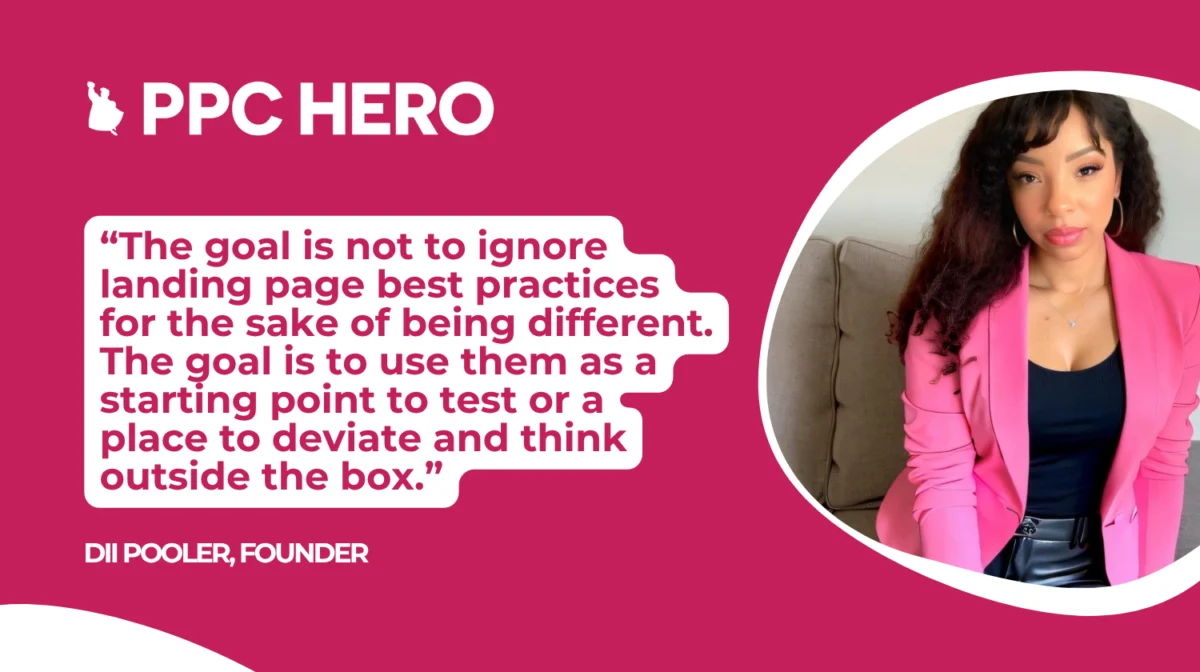
Landing page best practices are built upon a foundation of global A/B testing data, meticulously gathered over years to identify patterns that consistently yield higher conversion rates. These established guidelines, often cited in digital marketing circles, offer a strategic framework for designing pages intended to capture user interest and drive desired actions. They typically encompass principles such as ensuring a clear alignment between ad copy and landing page content, employing color psychology to foster trust, minimizing distractions, and strategically positioning crucial information "above the fold" – the portion of the page visible without scrolling.
PPC Hero, a prominent voice in the paid search industry, further delineates these effective practices. Their guidance, exemplified by contributions from experts like Alexandria Nixon, emphasizes elements such as optimal font sizes, textual simplicity, and the judicious use of taglines or phrases that clarify, rather than obscure, the primary product or service offering. While these principles are invaluable, the critical juncture for marketers lies in recognizing that these successful case studies should serve as informed hypotheses, not immutable laws.
The genesis of these best practices lies in A/B tests conducted under highly specific conditions. Each published success story is a snapshot, reflecting a unique confluence of audience demographics, product specifics, industry nuances, budget constraints, traffic sources, pricing models, competitive landscapes, and consumer buying cycles. These variables can diverge significantly from the unique ecosystem of any given PPC account. Therefore, blindly applying a universally proven tactic without considering the distinct context of one’s own campaign can lead to suboptimal results.
For nascent PPC campaigns or those lacking substantial historical landing page A/B testing data, best practices offer a crucial starting point. They provide a grounded baseline, a statistically supported foundation upon which to build initial testing strategies. This approach mitigates unnecessary guesswork, allowing marketers to launch with a defensible control version and a realistic benchmark against which to measure performance.
However, the efficacy of adhering strictly to best practices diminishes when an account possesses a wealth of historical data and accumulated landing page insights. In such scenarios, the established best practice should not ossify into a permanent strategic model but rather evolve into a point of departure for more nuanced experimentation.

Challenging the Standard: When to Scrutinize Best Practices
The established wisdom of landing page best practices warrants critical examination when a business’s unique characteristics or market position present a stark contrast to the conditions under which a particular best practice was validated. This necessitates a deeper dive into the "why" behind the best practice and how it aligns with the specific objectives and audience of the current campaign.
Several scenarios signal the need to question conventional wisdom:
- Industry Specificity: Certain industries possess unique communication norms, aesthetic preferences, or regulatory requirements that might contradict general best practices. For example, a highly technical B2B software solution might require a more detailed and information-rich landing page than a direct-to-consumer e-commerce product.
- Audience Demographics and Psychographics: The age, cultural background, technological savviness, and purchasing motivations of a target audience can significantly influence their response to design elements, calls to action, and messaging. A demographic accustomed to minimalist design might respond differently to a visually dense page than one that appreciates a more comprehensive presentation.
- Brand Identity and Tone: A brand’s established identity and tone of voice can either reinforce or clash with typical best practice recommendations. For instance, a brand known for its bold and unconventional approach might find that a conservative, by-the-book landing page design alienates its core audience.
- Product Complexity or Uniqueness: Products or services that are novel, complex, or require significant consumer education may benefit from landing pages that deviate from simplicity to provide more in-depth explanations and address potential objections upfront.
- Competitive Landscape: In highly saturated markets, standing out might require a more unconventional approach to design or messaging. If competitors are all adhering to similar best practices, a departure could be a strategic advantage.
Kate Wilcox, another contributor to PPC Hero, has previously detailed her experiences where established landing page best practices faltered under real-world testing. This sentiment resonates across distinct PPC accounts, underscoring the notion that empirical results can and often do defy theoretical guidelines.
Case Studies: When Data Defied Conventional Wisdom
Two distinct PPC accounts provided compelling evidence that best practices are not universally applicable and can, in fact, be detrimental if rigidly adhered to.
In the first instance, a niche B2B SaaS company specializing in trucking and logistics saw a significant performance uplift from a dark-themed landing page. Over a four-week period, this visually darker design outperformed its lighter counterpart by a notable 32% in conversion rates across both Google Search and Meta advertising platforms. Customer feedback provided a crucial qualitative insight into this phenomenon. Users described the black background as conveying a sense of luxury and premium quality, aligning with the brand’s positioning. Furthermore, a red-outlined, black call-to-action button, while potentially deviating from standard contrast recommendations, did not deter conversions; instead, it harmonized with the company’s established brand colors, reinforcing brand recognition and trust.
The second account presented a different, yet equally insightful, challenge to conventional wisdom. Here, the test involved a broad, platform-agnostic landing page versus a highly personalized page tailored to a single, specific product. The expectation, based on best practice principles of message match and relevance, was that the personalized page would excel. Indeed, it offered a tighter alignment with original search queries. However, the broader landing page, which showcased the full spectrum of available products, generated a remarkable 71% more conversions over a six-week period, and importantly, also drove more actual sales.

The underlying reason for this divergence lay in user behavior and traffic volume. While search queries might have been feature-specific, the ultimate purchasing decision was not always singular. Potential customers might initiate a search for a particular product, but the comprehensive nature of the broad landing page allowed them to grasp the entirety of the platform’s capabilities before committing to an inquiry. This highlights a critical factor often overlooked in general best practices: the influence of traffic volume on landing page strategy. In this particular account, certain ad groups received fewer than 1,000 clicks per week. When limited traffic is fragmented across multiple highly personalized landing pages, each page can become "underfed." This scarcity of data hinders the ability of advertising platforms, such as Google Ads or Bing, to effectively optimize the ad group for conversions. Jacob Baadsgaard of PPC Hero has previously addressed strategies for optimizing landing pages in low-traffic environments, a pertinent concern in such scenarios.
It is crucial to clarify that these findings, whether from personal experience or the documented cases of industry peers like Kate Wilcox, do not invalidate the foundational principles of landing page best practices. Rather, they underscore that these standards do not inherently account for the complex interplay of audience behavior, nuanced buying decisions, industry-specific dynamics, and the unique operational context of each individual account.
The Intersection of Best Practices and AI-Generated Landing Pages
The advent of Artificial Intelligence (AI) has introduced a new dimension to landing page creation, offering the potential to expedite research, copy development, design conceptualization, and production. Marketers can leverage AI by feeding it their specific account data and personalized parameters to guide its output. However, the sheer volume of context provided to an AI does not guarantee that every recommendation will translate into improved performance or increased conversions and sales.
AI-generated landing pages are inherently influenced by the patterns and elements they are trained on. While AI can efficiently produce a polished page that adheres to all established landing page standards, it may still fall short if it fails to grasp the subtler aspects of human psychology and interaction. The nuance that AI might miss can include understanding specialized industry jargon, identifying emerging trends, or recognizing socio-economic factors that shape consumer preferences and behaviors.
To navigate this evolving landscape, a structured approach to A/B testing landing pages is essential. The proposed SIGNAL strategy offers a framework for consideration:
- Specificity: Ensure your landing page is precisely tailored to the ad group and keywords driving traffic. This means avoiding generic messaging and focusing on direct relevance.
- Insight: Leverage all available historical data, user feedback, and market intelligence to inform your hypotheses. What do you already know about your audience and their motivations?
- Goal-Oriented: Define clear, measurable conversion goals for your landing page. Every element should be designed to drive users towards achieving this objective.
- Nuance: Go beyond surface-level best practices to understand the subtle psychological triggers and contextual factors that influence your specific audience. This might involve qualitative research or deep dives into user personas.
- Analysis: Rigorously test variations of your landing page and analyze the data to understand what works and why. Be prepared to iterate based on these findings.
- Leverage: Utilize your learnings to continuously optimize your landing pages. This is an ongoing process, not a one-time fix.
The ultimate objective is not to dismiss landing page best practices wholesale, but to employ them as a strategic starting point for rigorous testing or as a foundation from which to venture into more innovative, outside-the-box approaches. The dynamic nature of digital marketing demands a blend of proven methodologies and adaptive experimentation, ensuring that landing pages remain effective tools for achieving business objectives in an ever-changing digital ecosystem.

 Nana Muazin

 Laily UPN