rifanmuazin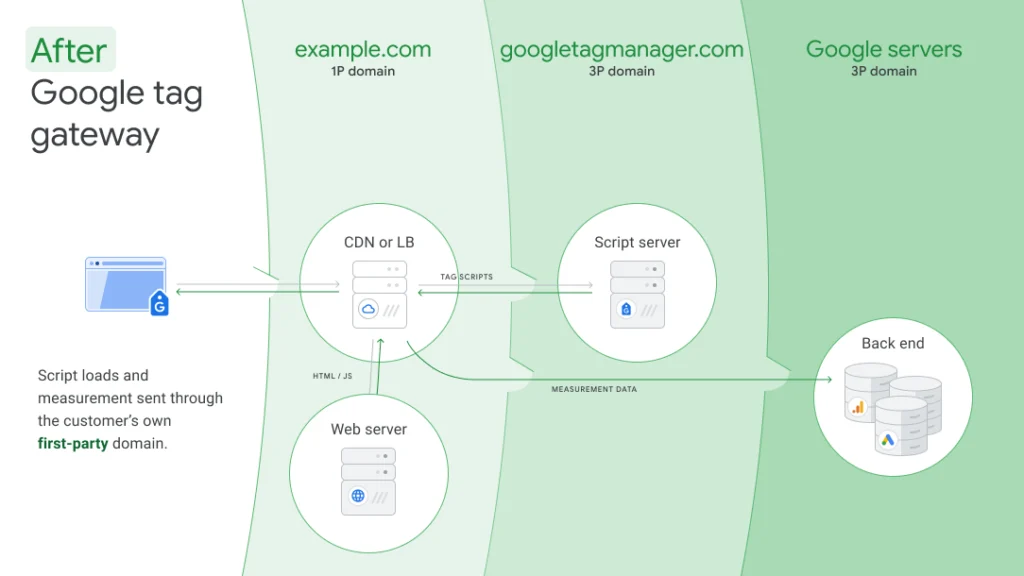
Google AI’s effectiveness is directly correlated with the quality and completeness of the data it receives. This is not an abstract concept but a fundamental operational reality for advanced advertising tools such as Smart Bidding, Performance Max, and Demand Gen. When conversion signals are fragmented, obstructed, or entirely absent, the AI is compelled to optimize towards inaccurate objectives or, in the worst-case scenario, cease effective optimization altogether. This inherent dependency on data integrity forms the crux of Google’s “Data Strength” framework, a strategic initiative designed to bolster first-party measurement capabilities and restore the comprehensive view of customer journeys that fuels growth. Advertisers who prioritize building robust data foundations are reporting significant gains, observing an uplift of 10 to 20% in conversions, while those lagging behind are inadvertently ceding a competitive advantage to their more data-resilient counterparts.
This analysis delves into the intricacies of Data Strength, underscoring its critical relevance in the current digital advertising climate and outlining a practical approach to its implementation. Drawing upon Google’s published research and extensive practical experience in deploying these solutions for clients, including a notable case study with a home improvement retailer that achieved a remarkable 27% recovery of previously lost conversions, this guide aims to demystify this essential framework.
The Unfolding Measurement Crisis: A Gradual Erosion of Visibility
A significant number of advertisers remain unaware of the extent to which their conversion data is being lost. This degradation has been a gradual process, making it insidious and easily overlooked. The landscape of digital privacy has dramatically shifted over the past few years, with major browser providers and operating systems implementing stricter controls on data tracking.
Safari and Firefox, which collectively command approximately 21% of global internet traffic, have significantly curtailed the use of third-party cookies. This means that a substantial segment of the online audience is now being measured with diminished accuracy compared to just three years ago, and this trend is projected to continue its trajectory of increased privacy controls. Apple’s App Tracking Transparency (ATT) framework, launched with considerable public attention, has revealed sobering opt-in rates for user tracking, typically falling between 15% and 25%. Consequently, the vast majority of users on Apple devices are effectively rendered invisible to conventional in-app tracking mechanisms.
Adding another layer of complexity, ad blockers further disrupt the flow of conversion signals. Tag blockers, in particular, are designed to intercept and strip away critical performance data from a meaningful portion of every advertising campaign. The Google Tag, by default, loads from a third-party domain, making it a prime target for browser privacy tools designed to prevent such cross-site tracking.
The ramifications of this pervasive signal loss extend far beyond mere inaccuracies in reporting. Google’s Smart Bidding algorithms, the automated systems designed to optimize ad spend, are fundamentally reliant on conversion data to learn and adapt. When this data stream is incomplete, the AI struggles to accurately identify which clicks, audience segments, or advertising placements are genuinely driving desired outcomes. In essence, the algorithms are forced to “bid in the dark,” leading to campaigns that underperform their potential. Budgets allocated to these AI-powered tools quietly yield suboptimal results, failing to achieve the efficiency and effectiveness they are engineered to deliver.
The disparity between businesses that have proactively established durable measurement foundations and those that have not is widening at an accelerating pace. Each month of delayed action translates into a compounding loss of critical signals, thereby depriving the AI of the comprehensive input it requires to perform at its peak. This erosion of data visibility is not a future concern; it is an ongoing crisis that demands immediate attention.
Deconstructing Data Strength: A Framework for Comprehensive Measurement
The term “Data Strength” has become increasingly prevalent in industry discussions, particularly within Google’s agency-facing communications over the past year. While often accompanied by a series of acronyms such as GTG, EC4W, EC4L, and CM, its underlying purpose is to consolidate a suite of products under a unified and clear strategic framework.
At its core, Data Strength can be conceptualized as the fuel that powers Google AI. The AI itself, encompassing tools like Smart Bidding, Performance Max, and sophisticated audience targeting, operates on conversion signals. The robustness and completeness of these signals directly dictate the engine’s performance. Weaker signals lead to diminished returns, leaving valuable performance on the table.
What distinguishes Data Strength from earlier messaging around first-party data is its pronounced emphasis on comprehensiveness. The framework acknowledges that no single product can adequately address the multifaceted challenges of modern digital measurement. Instead, it champions the strategic integration of all data sources – both online and offline – into a unified, coherent input. This holistic approach aims to provide Google’s AI with the most complete and nuanced understanding of the customer journey possible.
Furthermore, a critical competitive dimension cannot be overlooked. Google AI is programmed to optimize for the advertiser that provides it with the superior data. If competitors are building stronger measurement foundations, their campaigns will learn more rapidly, bid more efficiently, and ultimately gain a sustained advantage over time. An advertiser’s Data Strength, therefore, acts as a proprietary “moat” – a unique competitive advantage that is inaccessible to rivals.
The Five Pillars of Data Strength: Building a Resilient Measurement Foundation
The Data Strength framework is built upon five key components, each designed to address specific challenges in the data measurement ecosystem:
3.1. Google Tag and Google Tag Gateway (GTG)
The Google Tag serves as the fundamental mechanism for collecting website and app data. However, its default loading from a third-party domain can make it susceptible to privacy-related blocking. The Google Tag Gateway (GTG) addresses this by enabling the Google Tag to be served from the advertiser’s own domain. This seemingly minor shift significantly enhances the tag’s resilience against browser privacy settings and ad blockers.
Advertisers who implement GTG have reported an average uplift of 14% in observed conversions. This improvement is not isolated; it creates a multiplier effect across all other Google Tag features that rely on accurate tagging, thereby enhancing the overall reliability of the entire measurement ecosystem.
The implementation of GTG varies depending on an advertiser’s existing infrastructure. For clients utilizing Cloudflare as their Content Delivery Network (CDN), GTG can be enabled with minimal effort – often fewer than five steps, without requiring any code modifications or re-tagging. For other CDN providers, server-side Google Tag Manager (GTM) implementations, and various Content Management Systems (CMS), the process may be more involved but is thoroughly documented to guide advertisers through the necessary steps.
3.2. Enhanced Conversions for Web (ECW)
Once the Google Tag is successfully loaded, Enhanced Conversions for Web (ECW) steps in to bridge the gap when a conversion event occurs without an accompanying cookie to identify the user. This scenario is increasingly common due to cookie restrictions and user privacy preferences.
ECW operates by securely capturing consented first-party data at the point of conversion. Typically, this involves a hashed email address. This hashed data is then sent alongside the standard conversion event. In instances where a cookie-based match fails, Google leverages this hashed identifier to accurately attribute the conversion to the appropriate campaign. The system is inherently privacy-safe by design. The data is hashed within the user’s browser before it ever leaves their system. Crucially, Google only ever receives an encrypted identifier, never the raw personal information of the user.
The performance enhancements offered by ECW are substantial. It has been shown to drive an 8.5% uplift in observed Search conversions and a remarkable 15% uplift in YouTube conversions. Given that YouTube has historically presented greater attribution challenges, ECW represents a significant step towards closing that measurement gap.
3.3. Enhanced Conversions for Leads (ECL)
While ECW addresses online conversions, Enhanced Conversions for Leads (ECL) focuses on the crucial offline component of the customer journey. For businesses that operate on a lead generation model, the true commercial value often resides in these offline interactions, such as sales calls and deal closures.
The challenge for lead generation advertisers is a familiar one. Google Ads can track the initial form submission, but it typically lacks visibility into the subsequent stages of the sales funnel: lead qualification, sales engagement, and ultimately, the closed deal. Standard Offline Conversion Import (OCI) allows advertisers to upload this data, but it comes with significant limitations. It is exclusively click-based, does not support cross-device attribution, and relies heavily on the GCLID (Google Click ID), an identifier that is slated for deprecation following the phasing out of Link Decoration.
ECL adopts a hybrid approach to overcome these limitations. It captures hashed Personally Identifiable Information (PII) at the point of lead form submission, in addition to the GCLID. When the offline conversion data is uploaded later, Google can match it using multiple identifiers, rather than relying on a single, potentially unstable, identifier. This leads to a higher volume of successful matches and, consequently, more attributed conversions and improved bidding data.
The performance lift achieved with ECL compared to Standard OCI is impressive: a 10% increase in Search conversions and a 22% increase in YouTube conversions. For businesses where the sales cycle for a single lead can span weeks or months, this is not a marginal improvement; it represents a fundamentally more accurate understanding of what is truly driving revenue.
3.4. Customer Match
Customer Match represents a pivotal shift in the measurement layer, moving towards audience activation. By uploading consented first-party customer data – such as hashed email addresses, phone numbers, or physical addresses – advertisers can have Google match this data against users who are signed into their Google accounts across various platforms, including Search, Shopping, YouTube, Gmail, and Display. This enables advertisers to directly target their existing customer base, suppress them from prospecting campaigns to avoid wasteful ad spend, or use them as a seed audience for creating lookalike segments of individuals who share similar characteristics with their most valuable customers.
3.5. Data Manager
Data Manager serves as the central integration hub for all the individual components of the Data Strength framework. It is Google’s consolidated platform for connecting diverse data sources – encompassing website analytics, app usage, physical store transactions, and CRM data – into a single, unified repository. This centralized approach ensures that Google AI receives the most comprehensive possible view of each customer. Notably, advertisers who integrate offline and app data through Data Manager have reported an average increase of 26% in incremental Return on Ad Spend (ROAS).
A significant update in 2026 has made Data Manager universally accessible directly within Google Ads, Search Ads 360, and Campaign Manager 360, with Google Analytics integration to follow. Furthermore, new integrations with popular platforms like Mailchimp, Klaviyo, and TripleWhale are streamlining the process of feeding data from additional sources with reduced friction. For agencies managing multiple client accounts, Data Manager’s map view provides a clear visualization of each client’s data journey, from connection to activation. This allows for straightforward identification of areas where data signals are strong and where persistent gaps may still exist.
Performance Impact: Quantifiable Gains Through Data Strength
Google’s extensive research consistently demonstrates a direct correlation between data completeness and AI performance. More comprehensive data leads to more effective AI-driven advertising, which in turn translates into higher conversion volumes from existing budgets.
| Product | Performance Uplift | |
|---|---|---|
| Google Tag Gateway | +14% observed conversions | |
| Enhanced Conversions for Web | +8.5% Search conversions | +15% YouTube conversions |
| Enhanced Conversions for Leads (vs Standard OCI) | +10% Search conversions | +22% YouTube conversions |
These figures represent median uplifts derived from Google’s internal data. It is important to note that individual results can vary significantly based on account specifics, industry sector, and the advertiser’s existing measurement maturity. However, the underlying pattern is consistent: each layer of Data Strength successfully adds valuable signals, and these additional signals compound over time, leading to progressively better outcomes.
The competitive framing of Data Strength is also a crucial consideration. Google AI is not a neutral observer; it actively optimizes for the advertiser that provides it with the most robust data. If a competitor within the same market category has fully implemented Data Strength while an advertiser has not, the competitor’s campaigns will benefit from faster learning cycles with each conversion. This creates a silent, compounding advantage that can eventually manifest as a significant disparity in impression share or market position.
In the realm of AI-powered advertising, establishing a strong measurement foundation is no longer an optional enhancement; it is an absolute prerequisite for success.
Real-World ROI: Case Studies in Conversion Recovery
The challenges posed by signal loss have been acutely felt by businesses across various sectors. One prominent example is a home improvement retailer that partnered with Brainlabs, a digital marketing agency, to address significant declines in lead volume. These declines were directly attributable to the erosion of conversion signals within their advertising campaigns.
The Approach:
The retailer prioritized a “Data Strength” roadmap, focusing on a swift and effective implementation. This involved leveraging a “one-click” Cloudflare integration for the Google Tag Gateway (GTG). Simultaneously, they implemented Consent Mode, which respects user privacy preferences regarding consent for cookies and tracking, and Enhanced Conversions for Web (ECW) to capture valuable conversion data even in the absence of cookies.
The Results:
The immediate impact of the GTG implementation alone was a substantial 15% uplift in observed conversions. However, the full integration of the Data Strength suite, encompassing GTG, Consent Mode, and ECW, led to a more comprehensive and impressive outcome: a total conversion recovery of 27%. This case vividly illustrates the power of a layered, integrated approach to data measurement.
Conclusion: The Unavoidable Future is First-Party Data
Discussions surrounding artificial intelligence in advertising often gravitate towards the algorithmic aspects: the optimal campaign types, bidding strategies, and creative formats. While these elements are undoubtedly important, they represent only one half of the equation.
The other, equally critical, half is data. And for a vast majority of advertisers today, this data is inherently incomplete. Conversion signals are being systematically blocked, resulting in unattributed conversions and an AI working with a fundamentally partial understanding of campaign performance. The shortfall often goes unnoticed because the missing data, by its very definition, does not appear in dashboards or reports. This inherent invisibility makes it remarkably easy to overlook and leave unaddressed.
Data Strength offers a comprehensive solution to this pervasive problem. It is not a quick fix achievable through a single product or a one-time effort. Rather, it is a strategic measurement foundation that is built iteratively over time, incorporating multiple components. Each layer added to this foundation successfully recovers more of the essential signals that the AI requires to learn, optimize bidding, and ultimately drive business growth. The businesses that commit to building this robust data infrastructure now will secure a compounding competitive advantage over those that delay or neglect this critical imperative.
For organizations seeking to understand the precise extent of their current conversion data loss and to chart a course towards a more resilient measurement strategy, engaging with specialized data services teams is a prudent next step. A thorough Measurement Audit can provide invaluable insights into existing data gaps and illuminate the path forward to harness the full potential of AI-driven advertising.
Disclaimer: Individual results may vary. Performance data is sourced from Google Internal Data, Global, covering periods from July-December 2024 versus January-June 2025. Data Strength adoption scores reflect the Brainlabs Digital portfolio as of May 2026. All reported uplifts are median figures; actual results can differ based on account specifics, industry vertical, and existing measurement implementations. The Google Tag Gateway uplift figure is based on Google Data, Global, Performance, January-June 2025. The Enhanced Conversions for Leads uplift compared to Standard OCI is derived from Google Internal Data for Search campaign types in May 2024.