Lina Hope
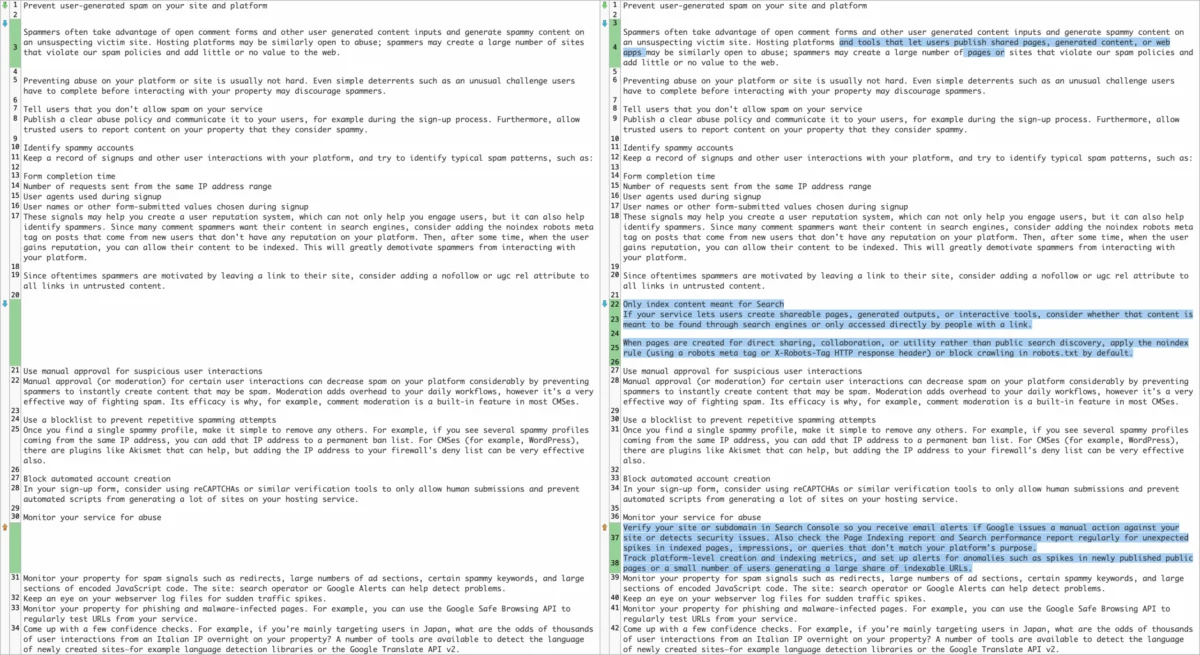
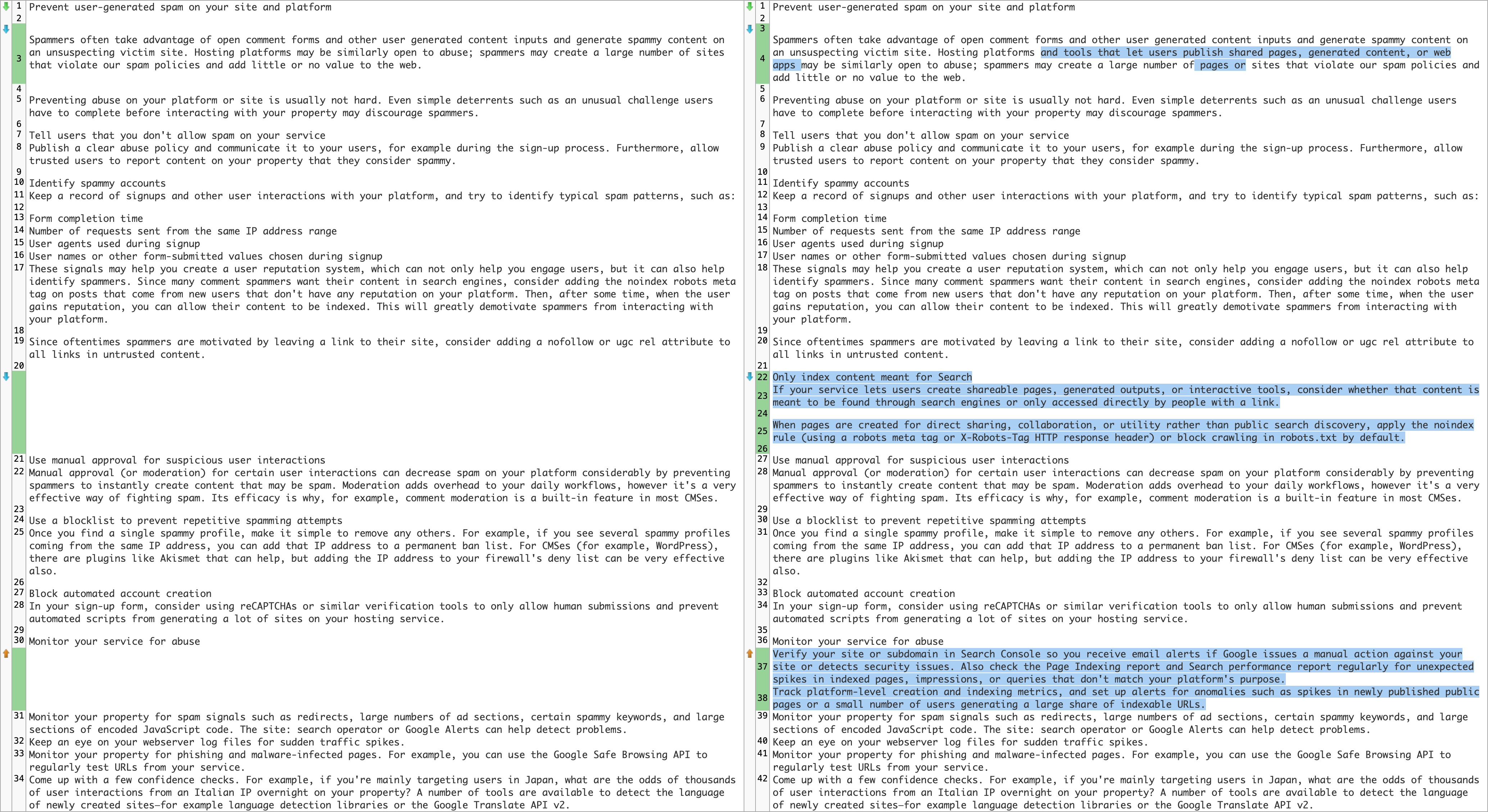
Google has significantly updated its "Prevent user-generated spam on your site and platform" help documentation, broadening its scope to explicitly include "tools that let users publish shared pages, generated content, or web apps." This crucial revision signals an intensified focus on managing the proliferation of user-generated content (UGC) and content generated by artificial intelligence (AI) tools, particularly that which is not intended for public search discovery. The update introduces a new directive, "Only index content meant for Search," urging platforms to implement stricter indexing controls to maintain search quality and prevent the influx of irrelevant or low-value content into its search index.
The Evolving Landscape of User-Generated Content and Spam
For years, Google has battled various forms of spam aimed at manipulating search rankings, from keyword stuffing and hidden text to link farms and comment spam. User-generated content, while often a valuable source of information and community interaction, has consistently presented a unique challenge. Forums, blogs with open comments, and wikis can easily become targets for spammers attempting to inject low-quality links or irrelevant text, thereby degrading the user experience and Google’s search results.
The advent of highly accessible generative AI tools has dramatically escalated this challenge. Platforms allowing users to create pages, articles, images, or even entire websites with minimal effort now face an unprecedented volume of content generation. While AI-generated content is not inherently spam, its ease of production can lead to a deluge of low-quality, repetitive, or unoriginal material if not properly managed. This can quickly overwhelm search engines, making it harder for users to find authoritative and genuinely helpful information. Google’s previous efforts, such as the Helpful Content Update introduced in August 2022 and its subsequent iterations, have underscored a consistent commitment to prioritizing high-quality, human-centric content over content primarily created for search engine rankings. This latest update to the spam prevention guide can be seen as a direct extension of that ongoing commitment, specifically addressing the infrastructure and mechanisms that facilitate the creation and indexing of vast amounts of potentially low-value content.
Key Updates to Google’s Guidance
The core of Google’s revised guidance lies in its explicit inclusion of platforms and tools that facilitate the creation of "shared pages, generated content, or web apps." This significantly widens the net beyond traditional forums or comment sections, encompassing a new generation of collaborative documents, AI-powered content creation tools, and application builders.
The most prominent addition is the section titled "Only index content meant for Search." This section provides clear instructions for platform owners:
"If your service lets users create shareable pages, generated outputs, or interactive tools, consider whether that content is meant to be found through search engines or only accessed directly by people with a link. When pages are created for direct sharing, collaboration, or utility rather than public search discovery, apply the noindex rule (using a robots meta tag or X-Robots-Tag HTTP response header) or block crawling in robots.txt by default."
This recommendation marks a crucial shift towards a proactive approach. Instead of merely advising on how to detect and remove spam after it has been indexed, Google is now guiding platforms to prevent the indexing of content that was never intended for public search discovery in the first place. This includes content meant for private collaboration, internal tools, temporary outputs, or pages accessible only via a direct link share. By suggesting noindex or robots.txt as default for such content, Google aims to reduce the sheer volume of pages that could otherwise dilute the quality of its search index.
Furthermore, the updated guidance places a greater emphasis on active monitoring and reporting through Google Search Console. Platforms are now advised to:
"Verify your site or subdomain in Search Console so you receive email alerts if Google issues a manual action against your site or detects security issues. Also check the Page Indexing report and Search performance report regularly for unexpected spikes in indexed pages, impressions, or queries that don’t match your platform’s purpose."
This expanded advice also extends to internal platform metrics:
"Track platform-level creation and indexing metrics, and set up alerts for anomalies such as spikes in newly published public pages or a small number of users generating a large share of indexable URLs."
These monitoring recommendations are designed to empower platforms to identify potential spam or abuse patterns early. An unexpected surge in indexed pages, particularly if those pages do not align with the platform’s core purpose or if a disproportionately small number of users are responsible for a large volume of indexable content, could be indicative of automated spamming attempts or misuse of the platform. By linking these observations to potential manual actions, Google is reinforcing the importance of platform owners taking responsibility for the content they host and allow to be indexed.
Chronology of Google’s Anti-Spam Efforts and AI Integration
Google’s fight against spam is an ongoing process, evolving with the internet itself.
- Early 2000s: Initial focus on basic spam techniques like keyword stuffing and hidden text, leading to updates like Florida.
- Mid-2000s: Addressing link schemes and manipulative link building, culminating in updates like Penguin (2012).
- Late 2000s – Early 2010s: Emphasis on content quality and user experience, with Panda (2011) targeting low-quality content farms. User-generated content on forums and blogs started receiving more attention regarding spam.
- Mid-2010s – Late 2010s: Continuous refinements to core algorithms, focusing on mobile-friendliness, site speed, and secure browsing (HTTPS). Spam updates become more integrated into the overall ranking system.
- 2020-2022: Introduction of the Helpful Content Update (August 2022) marked a significant strategic shift, explicitly targeting content created primarily for search engines rather than users. This period also saw the rapid acceleration of AI capabilities and widespread public access to generative AI tools like ChatGPT (late 2022).
- 2023-Present: Google reiterates its stance that AI-generated content is not inherently against guidelines, but quality, helpfulness, and originality remain paramount. This current update to the user-generated spam guidance directly addresses the operational challenges posed by the scale of AI-assisted content generation, irrespective of its quality, if it’s not intended for public discovery. It represents a proactive measure to manage the index and prevent dilution by content that serves a different purpose than public search.
Reactions from Industry Experts
The updated guidance has quickly drawn attention from prominent figures in the SEO community, who see it as a significant indicator of Google’s evolving priorities and concerns. Marie Haynes, a renowned SEO expert, took to X (formerly Twitter) to inquire whether these changes foreshadow new manual actions specifically targeting AI tools and app-building platforms. Her question underscores the immediate concern among platform operators about potential penalties for non-compliance.
Lily Ray, another respected voice in the SEO space, echoed these sentiments, explicitly naming potential targets. She posted on X, "My first thought was Claude artifacts, ChatGPT pages/sites, FB posts, and other social/AI tools that make it easy to churn out indexable UGC at scale. Another clue from Google about new types of spam they are dealing with (likely at a big enough scale to warrant changing their documentation) and … another clue about what they’ll be targeting in the future?"
Ray’s analysis highlights several critical points:
- Specific Examples: Her mention of "Claude artifacts, ChatGPT pages/sites, FB posts" provides concrete examples of the types of content and platforms that might be impacted. These are platforms where users can easily generate and share content, often with public-facing URLs, regardless of whether that content is intended for broad search discovery.
- Scale of the Problem: The phrase "likely at a big enough scale to warrant changing their documentation" suggests that Google is not merely making a minor tweak but responding to a significant and growing challenge. The volume of potentially indexable, low-value UGC, amplified by AI tools, has reached a point where it warrants explicit guidance.
- Future Targeting: Ray’s inference about "what they’ll be targeting in the future" implies that this update is not an isolated event but part of a broader, ongoing strategy to refine search quality in the age of generative AI. It serves as a warning shot to platforms that might be inadvertently contributing to index bloat or spam.
These reactions collectively emphasize the industry’s recognition of this update as a crucial development, indicating a potential shift in enforcement and a clear signal of Google’s proactive measures against emergent forms of spam.
Broader Impact and Implications
The implications of Google’s updated guidance are far-reaching, affecting platform developers, content creators, SEO professionals, and the overall quality of the search ecosystem.
For Platforms and Developers:
This update places a greater burden of responsibility on platforms that host user-generated content or offer content creation tools. They must now:
- Implement Robust Indexing Controls: Platforms will need to develop and integrate sophisticated mechanisms to differentiate between content meant for public search and content intended for private sharing or utility. This could involve defaulting
noindexfor certain content types or requiring explicit user action to make content publicly discoverable and indexable. - Enhance Monitoring and Alert Systems: The emphasis on Search Console verification and tracking platform-level metrics means platforms must invest in better internal analytics to detect anomalies indicative of spam or misuse. Proactive identification of issues can help avoid manual actions.
- Educate Users: Platforms may need to educate their users on how content visibility works and the implications of making content publicly indexable versus privately shared.
- Potential for Manual Actions: Failure to adhere to these guidelines could lead to manual actions against a site or subdomain, resulting in de-indexing or reduced visibility for affected content. This could have significant economic consequences for platforms reliant on organic search traffic.
For SEO Professionals:
SEO practitioners must stay abreast of these changes to advise their clients effectively. For clients running UGC platforms, this means:
- Auditing Indexing Strategies: Reviewing existing
robots.txtfiles andnoindeximplementations to ensure they align with Google’s new recommendations. - Search Console Vigilance: Setting up comprehensive Search Console monitoring, including custom alerts for indexing anomalies and potential manual actions.
- Consultation on Platform Design: Working with development teams to incorporate
noindexby default for non-public content and to design user interfaces that clearly distinguish between content intended for search and content intended for sharing.
For Content Creators (Especially AI-Assisted):
The guidance reinforces the principle that content intended for public discovery must be of high quality and genuinely useful. Creators using AI tools must be mindful that simply generating content at scale, without curation or a clear purpose for public search, could result in that content being noindexed or otherwise excluded from search results. This pushes creators towards more thoughtful and strategic use of AI, focusing on enhancing human-created content rather than merely automating content production.
For Google Search Quality and the Internet Ecosystem:
Ultimately, Google’s objective is to improve the quality and relevance of its search results. By preventing the indexing of vast amounts of unintended or low-value UGC, Google aims to:
- Reduce Index Bloat: A leaner, more relevant index allows Google’s algorithms to focus on higher-quality content, potentially leading to more accurate and useful search results.
- Combat Spam More Effectively: This proactive stance helps Google get ahead of emerging spam vectors, particularly those enabled by generative AI.
- Maintain User Trust: By ensuring that search results are not diluted by irrelevant content, Google reinforces its commitment to providing a valuable service to its users.
This update can be seen as part of Google’s continuous algorithmic evolution, adapting to new technologies and user behaviors. As AI tools become more prevalent and powerful, the lines between human-generated and machine-generated content, and between public and private content, become increasingly blurred. Google’s latest guidance is a decisive step towards bringing clarity and control back to its search index, ensuring that the vast ocean of online information remains navigable and helpful for its billions of users. The coming months will reveal how widely these guidelines are adopted and their ultimate impact on the digital content landscape.


 Nila Kartika Wati

 Ali Ikhwan