

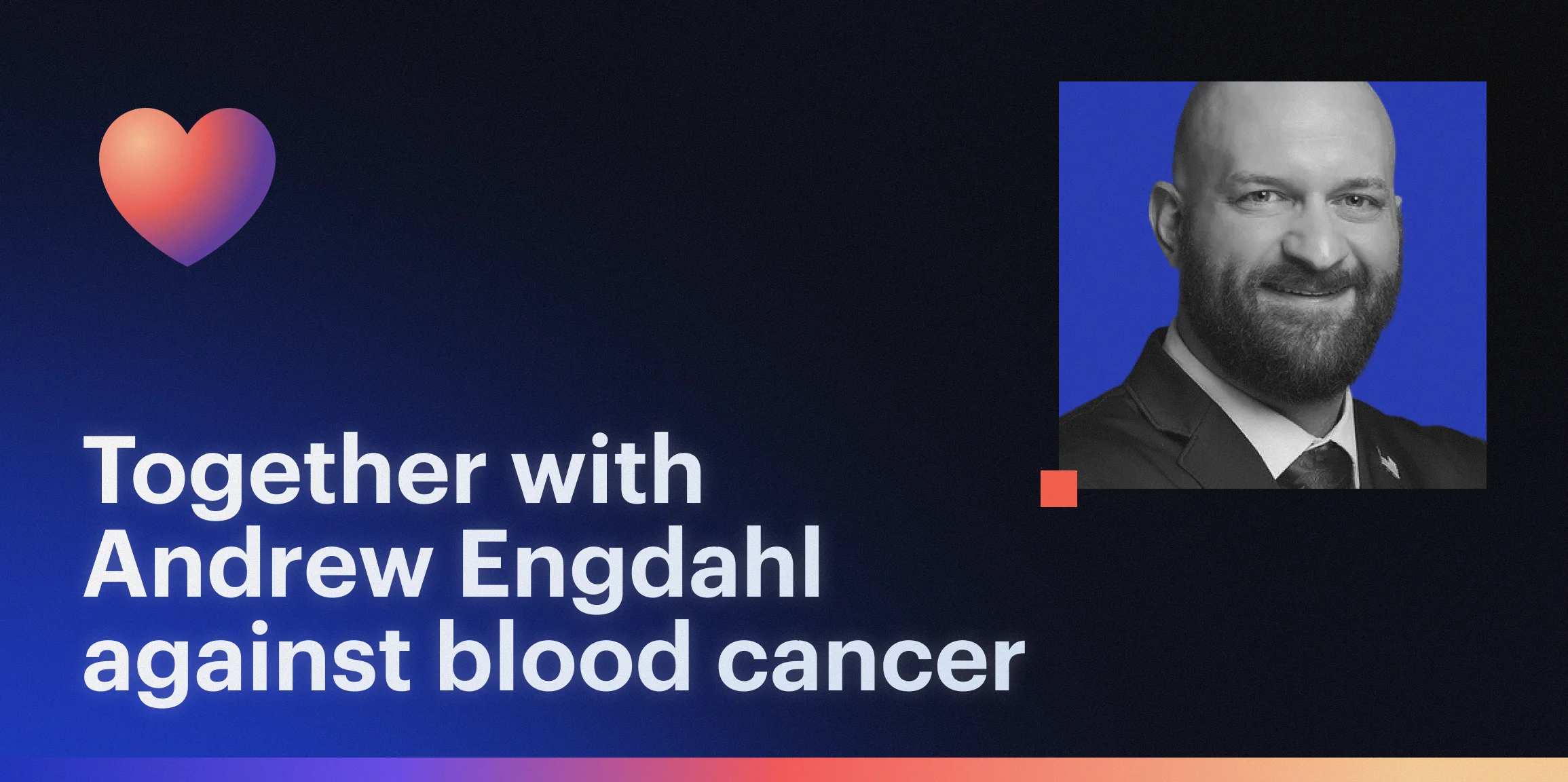
The intersection of corporate leadership and philanthropic advocacy has found a prominent figure in Andrew Engdahl, the Head of Sales at Instapage, who was recently nominated as a candidate for the prestigious Visionaries of the Year campaign. This initiative, spearheaded by Blood Cancer United—a movement closely associated with the Leukemia & Lymphoma Society (LLS)—recognizes influential leaders who leverage their professional platforms to drive significant advancements in the fight against blood cancers. Engdahl’s nomination is not merely a recognition of his professional accolades at the digital advertising firm but serves as a testament to a harrowing personal odyssey that saw him transition from a terminal-grade diagnosis to a position of renewed health and strategic influence.
At Instapage, Engdahl has been instrumental in the company’s aggressive market expansion, securing some of the organization’s most substantial contracts and eventually ascending to lead the global sales division. However, his professional trajectory was nearly derailed in 2022 when a sudden health crisis forced a pivot from corporate strategy to physical survival. His current campaign, launched officially on World Cancer Day, seeks to raise $50,000 to fund critical research and provide support systems for families currently navigating the complexities of oncological treatment.
A Chronology of Resilience: From Diagnosis to Remission
The summer of 2022 began for Andrew Engdahl like any other, characterized by the fast-paced demands of the technology sector. What he initially dismissed as routine muscle tension—a common complaint for high-performing executives—rapidly deteriorated into a debilitating medical emergency. Subsequent diagnostic imaging and biopsies revealed a devastating reality: Stage 4 Non-Hodgkin’s Lymphoma (NHL). At Stage 4, the cancer had disseminated beyond the lymph nodes to distant organs or, in Engdahl’s specific case, the skeletal structure, necessitating immediate and aggressive intervention.
The timeline of his treatment serves as a stark reminder of the intensity required to combat advanced-stage blood cancers. The diagnosis necessitated major spinal surgery to address complications arising from the malignancy, followed by a grueling regimen designed to eradicate the systemic spread of the disease. Over the ensuing months, Engdahl underwent four lumbar punctures—procedures involving the insertion of a needle into the spinal canal to check for cancerous cells in the cerebrospinal fluid or to deliver intrathecal chemotherapy—and six comprehensive chemotherapy infusions.
By late 2022 and early 2023, Engdahl entered a recovery phase that was as demanding as the treatment itself. He committed to six months of intensive physical therapy and yoga to regain the mobility and strength compromised by spinal surgery and the toxicity of chemical treatment. Today, nearly three years into remission, Engdahl’s recovery is viewed by his peers and medical team as a profound success story. His transition back into a high-level leadership role at Instapage highlights a rare level of resilience, as he now manages global teams with a perspective reshaped by the proximity of mortality.
Understanding the Landscape of Non-Hodgkin’s Lymphoma
Engdahl’s battle mirrors a broader public health challenge. Non-Hodgkin’s Lymphoma is one of the most common cancers in the United States, accounting for about 4% of all cancer diagnoses. According to data from the American Cancer Society, an estimated 80,620 people are diagnosed with NHL annually, with approximately 20,140 deaths attributed to the disease each year.
While the five-year relative survival rate for NHL is approximately 74%, these figures fluctuate significantly based on the stage at diagnosis and the specific subtype of the lymphoma. Stage 4 diagnoses, such as Engdahl’s, represent the most advanced clinical category, where the cancer has reached the bone marrow, liver, or lungs. The advancement in treatment protocols over the last decade—ranging from targeted therapies to improved bone marrow transplant techniques—has significantly improved the prognosis for Stage 4 patients, yet the journey remains one of the most taxing experiences in modern medicine.
The Visionaries of the Year campaign aims to address these statistics by funding the next generation of treatments. Research funded by such initiatives has historically led to breakthroughs in immunotherapy and CAR-T cell therapy, which reprogram a patient’s own immune system to recognize and attack cancer cells. By setting a $50,000 goal, Engdahl is contributing to a financial engine that has seen the Leukemia & Lymphoma Society invest over $1.7 billion in research since its inception.
The Visionaries of the Year Campaign: Strategic Philanthropy
The Visionaries of the Year competition is a rigorous 10-week philanthropic challenge where nominated leaders compete to raise the most funds for blood cancer research. Candidates are selected based on their leadership qualities, their community standing, and their personal connection to the cause. For Engdahl, the campaign is a platform to "pay it forward," a sentiment he expressed upon the announcement of his candidacy.
"I feel that I owe it to my physicians, my friends, family, and teammates, and all those affected by the scourge of blood cancer to pay it forward and make a difference while I still have the strength and ability to do so," Engdahl stated. This philosophy of stewardship is central to the campaign’s ethos. Rather than a passive fundraiser, the program encourages candidates to utilize their professional networks and marketing acumen to maximize impact.
The funds raised during Engdahl’s campaign are earmarked for several key areas:
- Research: Accelerating the discovery of life-saving treatments and potential cures.
- Patient Support: Providing financial assistance and educational resources to patients who may not have the same support infrastructure that Engdahl credits for his survival.
- Advocacy: Influencing public policy to ensure cancer patients have access to affordable and high-quality care.
Corporate Culture and the Impact of Survivor Leadership
Instapage’s public endorsement of Engdahl’s campaign reflects a growing trend in corporate social responsibility (CSR) where companies rally around the personal causes of their leadership. In an official statement, the company noted that Engdahl’s journey from navigating a life-threatening diagnosis to leading a global sales team has infused the workplace with a "genuine sense of joy and optimism."
From a corporate analysis perspective, Engdahl’s presence provides a unique case study in "post-traumatic growth" within a business environment. Leaders who have survived significant personal crises often exhibit higher levels of emotional intelligence, better stress management, and a more profound sense of purpose—qualities that are highly sought after in the volatile tech industry. By sharing his story, Engdahl has humanized the leadership at Instapage, potentially fostering a more empathetic and resilient organizational culture.
His colleagues have noted that his approach to sales—a field often defined by aggressive metrics and high pressure—is now tempered with a broader perspective on what constitutes a "crisis." This shift in mindset can lead to more sustainable business practices and stronger client relationships built on authenticity and trust.
The Global Implications of Blood Cancer Advocacy
The fight against blood cancer is not localized to any single region, though the resources available to patients vary wildly across the globe. By launching his campaign on World Cancer Day, Engdahl aligned his personal mission with a global movement that seeks to close the "care gap." World Cancer Day, led by the Union for International Cancer Control (UICC), emphasizes the need for equitable access to cancer services.
While Engdahl’s campaign is primarily focused on the United States through the LLS framework, the research funded by these initiatives often has a global reach. Medications and protocols developed through American-funded research frequently become the standard of care worldwide, helping patients in countries with less robust domestic research capabilities.
Furthermore, the involvement of tech leaders like Engdahl highlights the role of the private sector in solving public health crises. As government funding for medical research can be subject to political and budgetary fluctuations, the role of private philanthropy and individual-led campaigns becomes a vital stabilizer for the scientific community.
Conclusion and Future Outlook
As Andrew Engdahl moves forward with his $50,000 fundraising goal, his story serves as a bridge between the clinical reality of cancer and the hope offered by modern medicine and community support. His transition from a patient receiving lumbar punctures to a "Visionary of the Year" candidate underscores the efficacy of current treatment protocols while highlighting the work that remains to be done.
The campaign continues to accept donations through Engdahl’s official portal, with the final results of the Visionaries of the Year competition expected to be announced later this year. Regardless of the final fundraising total, the awareness generated by Engdahl’s transparency regarding his Stage 4 diagnosis provides a powerful narrative of survival that resonates far beyond the walls of Instapage.
In a world where corporate leadership is often measured solely by quarterly earnings and market share, Engdahl’s campaign serves as a reminder that the most significant impact a leader can make often lies in their ability to turn personal adversity into a collective benefit for others. His journey from the summer of 2022 to the present day stands as a definitive example of resilience, proving that a "second chance at life" can be the most powerful motivator for professional and philanthropic excellence.







