rifanmuazin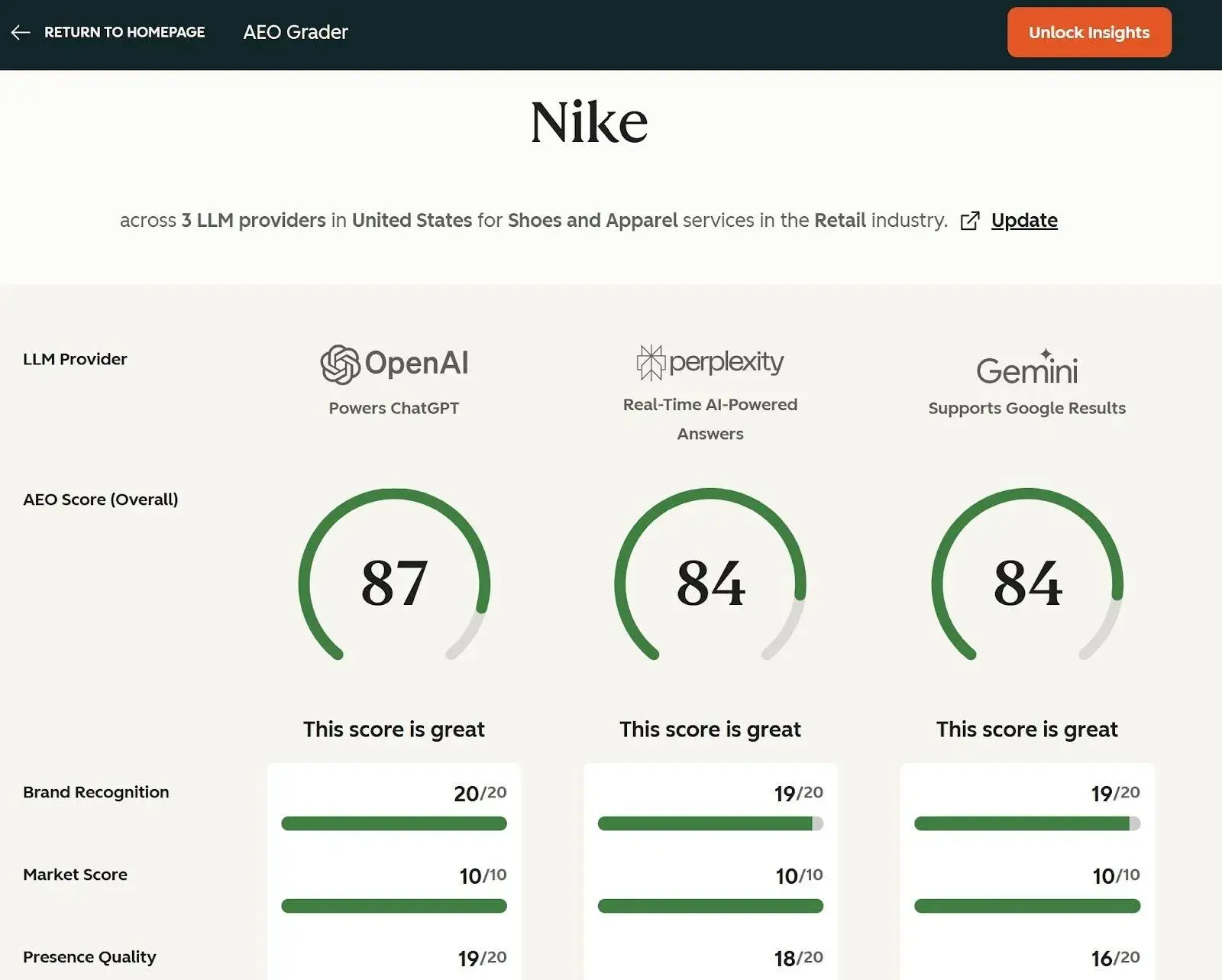
The Genesis of AEO: A Paradigm Shift in Information Retrieval
For decades, SEO professionals have meticulously analyzed search volume, keyword difficulty, and click-through rates to optimize content for Google’s ranked lists. Tools like Ahrefs and Semrush became indispensable, providing insights into what users typed into search bars. However, the landscape began to change dramatically with the mainstream emergence of large language models (LLMs) such as OpenAI’s ChatGPT in late 2022, followed swiftly by Google’s Bard (now Gemini) and Perplexity AI. These platforms introduced a new mode of information access: conversational, direct-answer generation.

Instead of a list of blue links, users now increasingly encounter AI Overviews, synthesized answers, and conversational responses directly addressing their queries. This evolution is not merely an incremental update; it represents a foundational shift in user expectation and information consumption. Industry reports indicate a significant year-over-year increase in the number of queries triggering AI-generated summaries across major search engines, with some projections suggesting that over half of all online information discovery could soon involve AI interfaces. For content creators and marketers, the objective is no longer solely to rank on the first page but to be the trusted, authoritative source from which an AI model synthesizes its answer.
Distinguishing AEO from Traditional SEO Keyword Research
While SEO keyword research historically prioritized metrics like monthly search volume, keyword difficulty, and estimated organic traffic, AEO keyword research places emphasis on different, more nuanced factors:

- Prompt Patterns: Understanding the conversational queries, question formats, and semantic structures users employ when interacting with AI.
- Answer Engine Visibility: Tracking direct citations, mentions, and inclusions within AI-generated responses across various platforms (Google AI Overviews, ChatGPT, Perplexity, Gemini).
- Topical Authority and Entity Recognition: Ensuring content comprehensively covers a topic, clearly defines entities, and signals expertise, experience, authoritativeness, and trustworthiness (E-E-A-T) in a way that AI models can readily parse and validate.
- Fanout Queries: Identifying the secondary, tertiary, and comparative questions an AI model might internally generate and answer after an initial user prompt, even if those sub-queries aren’t explicitly typed by the user.
The practical implication is stark: when a user asks ChatGPT, "What’s the best CRM for a small marketing team?", the AI doesn’t present a ranked list of websites. Instead, it processes vast amounts of indexed content, identifies authoritative sources, and synthesizes a concise, direct answer. The goal of AEO is to ensure that your content is among those trusted sources.
A Comprehensive Toolkit for the AEO Professional
Successfully navigating this new terrain requires a specialized toolkit, often a combination of traditional SEO stalwarts adapted for AEO, alongside newer, AI-native solutions. There isn’t a single "AEO keyword tool"; rather, a strategic stack combines question-discovery capabilities, answer engine visibility trackers, and synthetic query generators.
1. Traditional Keyword Research Tools (Reimagined for AEO)
These tools remain foundational but require a shift in application. Instead of focusing on broad, high-volume terms, AEO practitioners leverage them to uncover question-based queries, extract "People Also Ask" clusters, and identify long-tail conversational prompts.
- Semrush: Its Keyword Magic Tool is invaluable for AEO, allowing filtering by question types (who, what, how, why, when). The "Questions" filter reveals how topics branch into multiple user intents, a precursor to fanout query mapping. Semrush’s Topic Research feature further aids in identifying semantically related questions and content gaps. Best for enterprise teams needing broad question discovery and competitive analysis.
- Ahrefs: Content Explorer and Site Explorer help identify competitor pages that signal authority for AEO-style content (FAQs, guides). The "Questions" filter in Keywords Explorer provides a solid source of conversational queries, while the "Also rank for" report helps uncover semantic neighborhoods around target AEO topics. Ideal for deep keyword data, competitor analysis, and reliable search volume estimates.
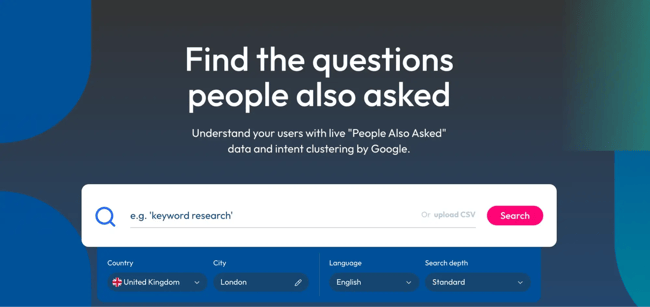
- AlsoAsked: This tool directly scrapes Google’s "People Also Asked" data, visualizing how initial questions branch into related sub-questions. This hierarchical representation offers direct input for AEO content structure, mirroring how LLMs might expand an initial query. Excellent for mapping question hierarchies and understanding user query progression.
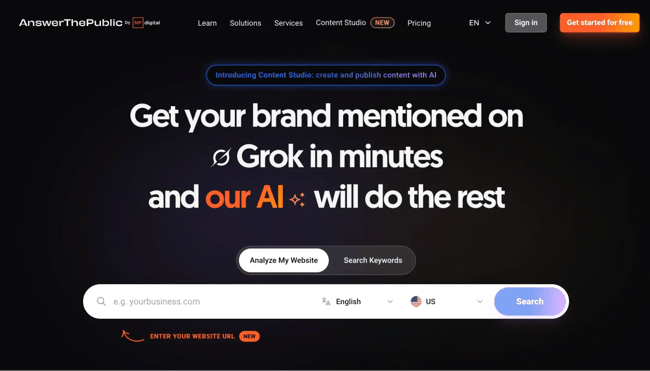
- AnswerThePublic: Visualizing question-based and preposition-based queries, AnswerThePublic rapidly generates a large pool of AEO candidates categorized by question type. Its export function facilitates easy integration with other tools for prioritization based on search demand. Useful for broad question discovery and generating extensive query variants.
2. Tools for Finding Fanout Queries: Understanding AI’s Internal Monologue
LLM query fan-outs are crucial for AEO. They reveal the related prompts, comparisons, and follow-up questions an AI model might generate internally from a single user input. This layer of understanding is often the most underutilized lever in AEO keyword research.
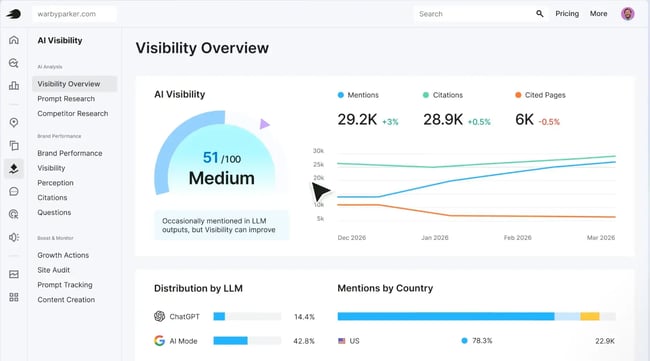
- Otterly.ai: This platform monitors visibility across leading answer engines like ChatGPT, Perplexity, and others. By tracking which prompts lead to content inclusion, marketers can reverse-engineer the fanout clusters most relevant to their brand. Its platform-specific prompt visibility highlights actionable gaps. Recommended for teams seeking multi-AI platform visibility and data-driven prompt targeting.
- Dejan.ai: Offering sophisticated tools for semantic analysis and entity mapping, Dejan.ai helps understand how AI systems interpret content. Its focus on entity relationships improves content clarity and the likelihood of citation by AI. Suited for advanced practitioners aiming to model semantic query expansion and structured AEO content.
- Screaming Frog + Gemini/Other LLM: A powerful DIY approach involves using Screaming Frog to extract existing content elements (H2s, H3s, meta descriptions) and feeding them into an LLM like Gemini via API. A prompt like, "What follow-up questions would users ask after reading about [topic]? List 10 specific, conversational questions," generates synthetic fanout queries, approximating how AI models might expand the topical footprint of existing content. Best for technical SEO teams leveraging existing infrastructure for AI-generated question expansion.
3. AEO Visibility Trackers: Measuring Success in the New Arena
Traditional rank trackers are insufficient for AEO. New tools are needed to measure mentions, citations, and overall visibility within AI-generated answers.
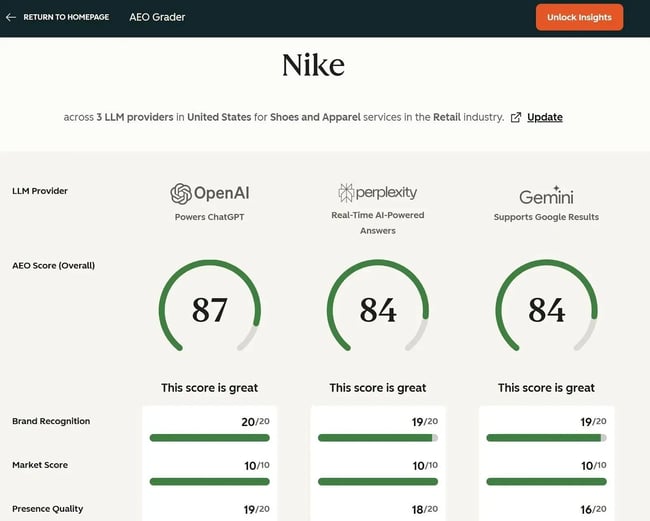
- HubSpot AEO Grader: A valuable free tool for an initial assessment of answer engine visibility. It provides insights into brand appearance across AI-powered search results, highlighting areas of authority and content gaps. Ideal for teams new to AEO seeking a fast, free baseline assessment and leadership buy-in.
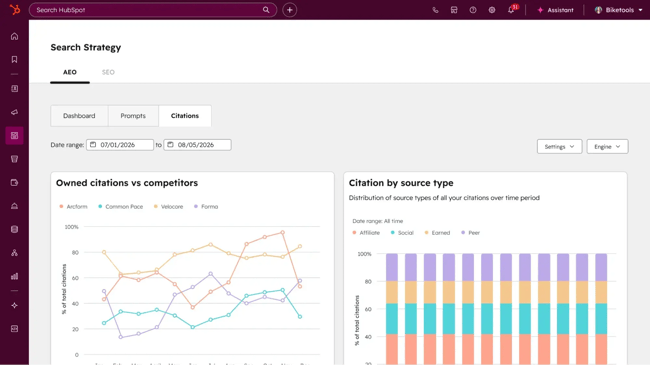
- HubSpot AEO (Prompt Tracking & AI-Powered Suggestions): This integrated product offers prompt tracking across ChatGPT, Perplexity, and Gemini, coupled with AI-powered suggestions for new prompts to track. It quantifies answer engine visibility into a single score and translates data into actionable recommendations, effectively automating a significant part of fanout discovery. Excellent for marketing teams needing an integrated solution for tracking, gap analysis, and content roadmap generation.
- HubSpot Marketing Hub Pro and Enterprise: AEO capabilities are built into these tiers, integrating visibility scores, prompt tracking, and recommendations directly with CRM, content, and reporting tools. Leveraging CRM data, prompt suggestions can be auto-tuned to specific industries, competitors, and customer segments, refining recommendations over time. Best for marketing teams desiring a unified platform for AEO research, tracking, and execution, connecting insights directly to business outcomes.
4. Tools for Ideating AI Prompts with Synthetic Query Generation
Synthetic query generation allows approximation of user prompts without waiting for organic search data. This is particularly useful for nascent products, emerging categories, or topics with low existing search volume.
- Claude: An excellent LLM for generating high-quality synthetic queries. Prompts such as, "You are an expert in [topic]. Generate 20 distinct questions a user might ask an AI assistant about [topic], ranging from beginner to advanced, including comparison questions and follow-ups," yield rich starting inventories. Claude excels at generating comparative and consideration-stage queries, reflecting how users prompt AIs during purchasing decisions. Perfect for generating rich synthetic prompt sets and validating content against likely AI questions.
A Step-by-Step Workflow for AEO Keyword Discovery
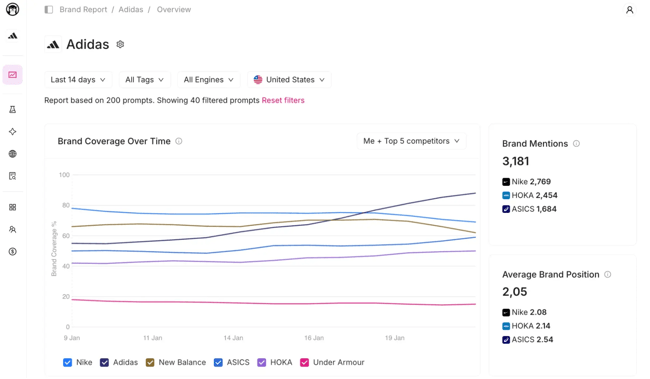
The true power of these tools lies in a cohesive workflow that connects question discovery to optimized, AI-ready content.
Phase 1: Seed Query Identification and Initial Expansion
- Seed Query Identification: Begin with 5-10 core topics central to your brand (e.g., product categories, use cases, customer pain points).
- Autocomplete Expansion: Input each seed topic into Google and capture autocomplete suggestions, focusing on question-format prompts ("how do I," "what is the best," "why does"). These often mirror answer engine prompt patterns.
- People Also Asked (PAA) Mapping: For each seed topic, screenshot Google’s "People Also Asked" box. Utilize AlsoAsked to expand this into a comprehensive question hierarchy, identifying primary and follow-up questions crucial for AEO.
- Prioritization: Cross-reference the PAA list with Semrush or Ahrefs data to identify questions with meaningful search volume and existing AI Overview appearances. These represent high-priority AEO targets, as they already trigger AI-generated answers.
Phase 2: Leveraging LLM Query Fan-Outs for Deeper Understanding
- Query Analysis: Group prioritized questions by intent cluster (e.g., "what is X" for informational, "how does X work" for procedural, "X vs. Y" for comparative).
- Synthetic Expansion: Feed each intent cluster into an LLM like Claude or ChatGPT with a fanout prompt: "A user asks: ‘[primary question]’. What are 8 follow-up questions they might ask after receiving an answer?" Document the generated output.
- Cross-Engine Validation: Test the top synthetic prompts directly in ChatGPT, Perplexity, and Gemini. Record which prompts generate AI-synthesized answers versus traditional link lists. These "AI-generated answer triggers" are your definitive AEO keywords.
- Gap Analysis: For each confirmed AEO target, check if your site currently appears in the AI-generated answer using tools like HubSpot AEO prompt tracking or Otterly.ai. Identified gaps become immediate content opportunities.
- Content Brief Creation: Develop detailed content briefs for each confirmed gap, including:
- The core question and its direct answer.
- Related fanout questions to be addressed.
- Supporting entities and relevant schema markup.
- Internal linking strategy.
- Target word count and E-E-A-T signals.
This ensures that AEO insights are translated into actionable content production.
Implications and the Future of Digital Marketing
AEO is not merely a fleeting trend but a fundamental evolution of digital marketing. It signals a move towards more semantic, conversational, and direct forms of information delivery. This shift has several broad implications:
- Content Strategy Redefinition: Content must be structured for clarity, conciseness, and direct answerability, making it easily parsable and citable by AI. Long-form, authoritative guides with clear question-and-answer sections will become even more valuable.
- Increased Importance of E-E-A-T: Expertise, experience, authoritativeness, and trustworthiness will be paramount. AI models are trained to identify and prioritize credible sources, making brand reputation and factual accuracy more critical than ever.
- Skill Set Evolution: SEO professionals must expand their expertise to include prompt engineering, semantic analysis, and AI model understanding. The role will blend traditional analytical skills with a deeper comprehension of natural language processing.
- Measurement Challenges: New metrics are required to track success beyond traditional rankings. AEO visibility scores, citation counts, and direct answer inclusions will become standard KPIs.
- Competitive Landscape: Early adopters of sophisticated AEO strategies will gain a significant advantage, establishing their brands as authoritative sources in the eyes of AI.
Addressing Common Queries in the AEO Transition
The transition to AEO raises many questions for marketing teams:
- Is AEO replacing SEO? No, AEO is expanding the scope of SEO. Traditional organic search remains significant, but the share of queries resolved by AI is growing. AEO complements SEO, requiring overlapping skills but divergent targeting and measurement.
- Can ChatGPT alone suffice for AEO keyword research? While ChatGPT is excellent for synthetic query generation and fanout expansion, it lacks search volume data, historical tracking, and competitive visibility analysis. It serves as a powerful input layer, not a standalone research platform.
- Which answer engine should be prioritized first? Google AI Overviews should be the initial focus due to Google’s dominant search market share and the expanding presence of AI Overviews for both commercial and informational queries. Existing E-E-A-T investments often translate directly. Once a Google AEO program is established, expansion to Perplexity and ChatGPT becomes a reasonable next step.
- How often should AEO keyword research be refreshed? More frequently than traditional SEO research. AI models and user behaviors evolve rapidly. A full AEO audit quarterly and monthly review of prompt-tracking data is advisable. Tools with AI-powered suggestions, like HubSpot AEO, can flag emerging opportunities between formal review cycles.
- What budget is realistic for AEO tools? An exploratory stack can start under $500/month, combining free tools (HubSpot AEO Grader, Google Search Console) with affordable specialized tools (AlsoAsked, Claude Pro). A growth-stage stack ($500-$2,000/month) would integrate platforms like Semrush/Ahrefs, Otterly.ai, and HubSpot AEO. The key is to start lean, prove the workflow, and then scale investment.
Choosing Your AEO Keyword Research Stack
Effective AEO keyword research is a multi-faceted process encompassing question discovery, AI prompt modeling, and visibility tracking. No single tool offers a comprehensive solution for all three. Therefore, a carefully curated stack is essential. For teams seeking an integrated starting point, HubSpot AEO consolidates visibility, tracking, and recommendations into one platform, offering a unified answer engine score across ChatGPT, Perplexity, and Gemini, alongside prioritized, plain-language recommendations.
The fastest and most accessible first step for any brand is to assess its current standing. The free HubSpot AEO Grader provides an immediate baseline check, offering crucial insights without a commitment. In an era where AI is rapidly reshaping how information is found and consumed, embracing AEO is not just an advantage—it’s a necessity for continued digital relevance.