 Azzam Bilal Chamdy
The rapid proliferation of large language models (LLMs) has presented a significant challenge for enterprises and developers: how to identify the most efficient, cost-effective, and ethically aligned model for specific tasks without undergoing exhaustive manual testing. While "vibe-checks"—the process of manually prompting a model and assessing its output—remain a popular method for initial exploration, they fail to scale as the number of available models and unique use cases grows. To address this bottleneck, a new methodology known as "LLM-as-a-judge" has emerged, utilizing automated workflows to benchmark multiple models against rigorous, custom-defined rubrics. By leveraging automation platforms like n8n and data management tools like Google Sheets, organizations can now transition from subjective manual assessments to scalable, data-driven performance evaluations.

The Evolution of LLM Benchmarking and the Scaling Problem
In the early stages of the generative AI boom, organizations relied heavily on standardized benchmarks such as MMLU (Massive Multitask Language Understanding) or HumanEval. However, industry experts have increasingly noted that these generic scores often fail to predict how a model will perform on specific proprietary tasks, such as legal document summarization or brand-specific content generation. This realization led to the rise of "vibe-checking," where human developers manually compare outputs.
The primary limitation of manual benchmarking is its inability to scale. A typical evaluation might involve testing ten different models across ten distinct benchmark prompts. For a human evaluator, this requires managing 100 separate outputs, defining "good" for each context, and maintaining consistency across every comparison. This labor-intensive process often results in infrequent testing, leading companies to overspend on high-tier models like GPT-4 or Claude 3.5 Sonnet for tasks that could be handled by much smaller, cheaper, and faster alternatives.

The Technical Framework: Automating the Evaluation Cycle
The solution to the scaling dilemma lies in a closed-loop automation system. The architecture of a modern benchmarking workflow typically involves three core components: a database for prompts and results (Google Sheets), an orchestration engine (n8n), and an API aggregator (OpenRouter) to access a diverse range of models.
The "LLM-as-a-judge" approach designates a high-reasoning model—often a top-tier model like Claude 3.5 Sonnet or GPT-4o—to act as the evaluator. This "judge" does not generate the initial content but instead reviews the outputs of "candidate" models based on a structured evaluation rubric. This allows for the rapid testing of "Small Language Models" (SLMs) such as GLM 5.3 Flash or Gemma 2, which may offer comparable performance for specific tasks at a fraction of the cost.
Chronology of an Automated Benchmarking Workflow
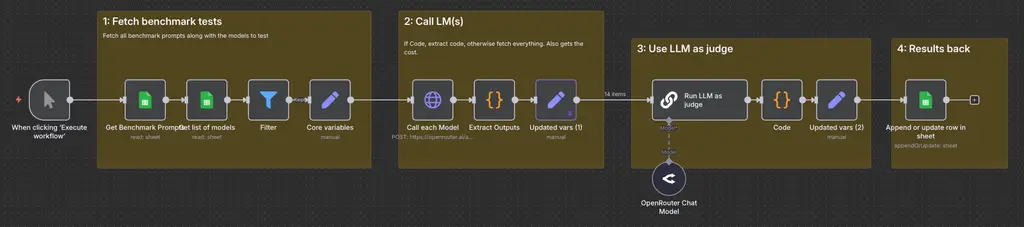
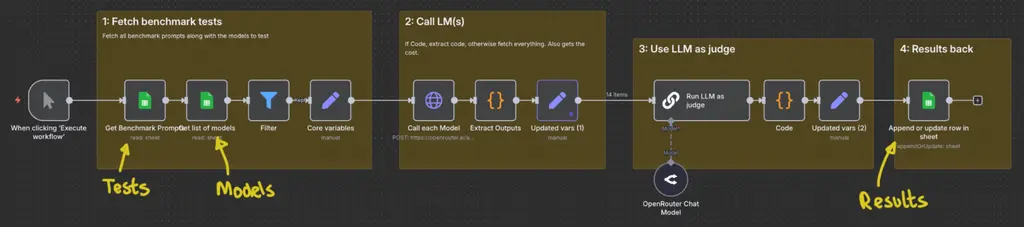
To implement a scalable benchmarking system, developers follow a systematic four-stage process. This chronology ensures that every model is tested under identical conditions, providing a level playing field for performance and cost analysis.
Phase 1: Data Preparation and Environmental Setup
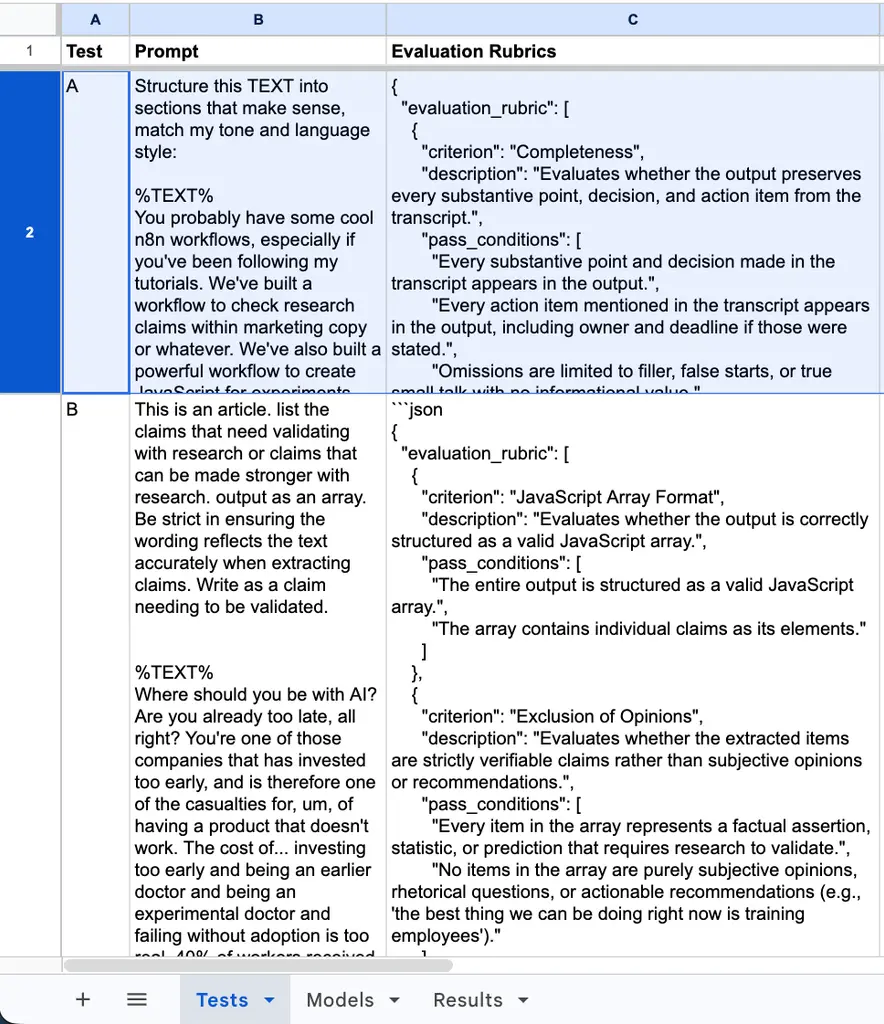
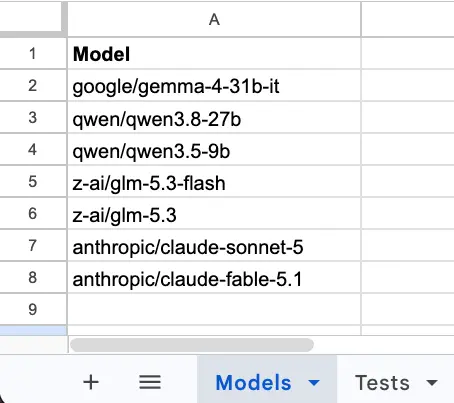
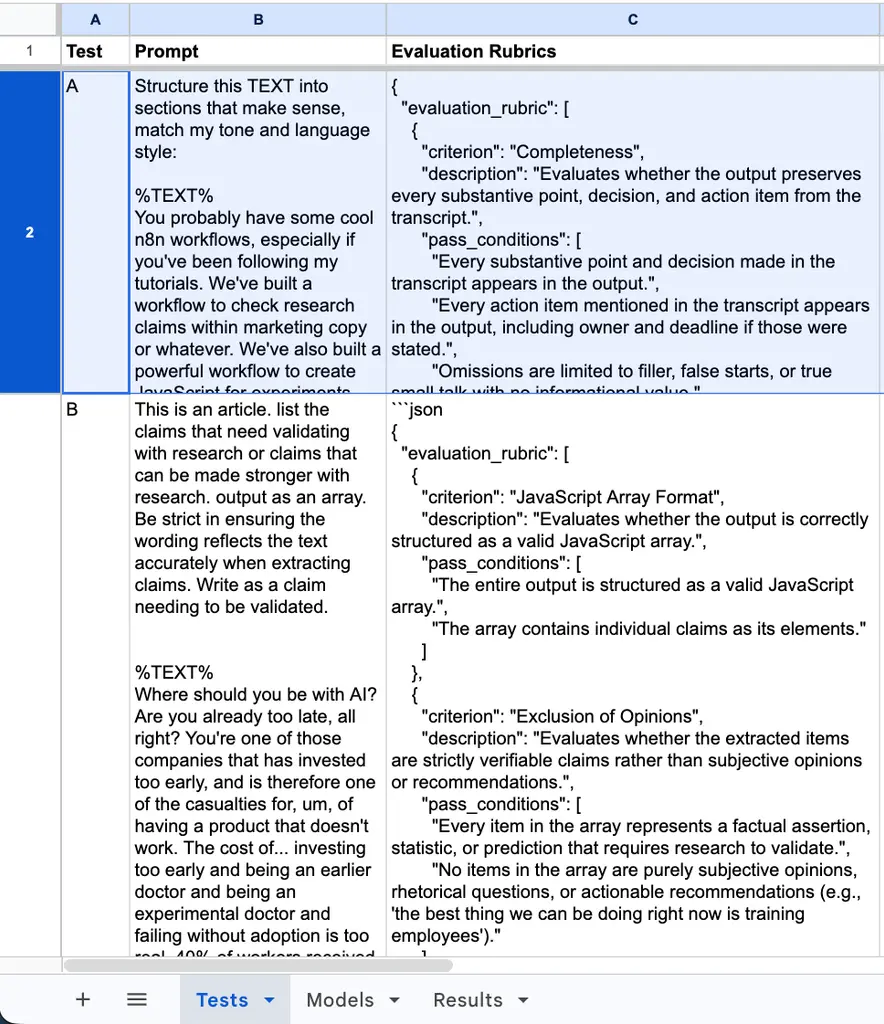
The process begins in a centralized Google Sheet containing three primary tabs: Models, Tests, and Results. In the Models tab, the user lists the technical paths for various LLMs, typically sourced from an aggregator like OpenRouter. The Tests tab serves as the "ground truth" repository, housing the specific prompts to be tested and the evaluation rubrics that define success.

Phase 2: Defining Evaluation Rubrics
A critical step in moving away from subjective "vibes" is the creation of structured rubrics. These rubrics are often formatted as JSON objects to ensure the "judge" model can parse them programmatically. A rubric for a "claim extraction" task, for example, might include criteria such as JavaScript-compliant formatting, factual accuracy relative to the source text, and the exclusion of subjective opinions.
Phase 3: The Orchestration Run
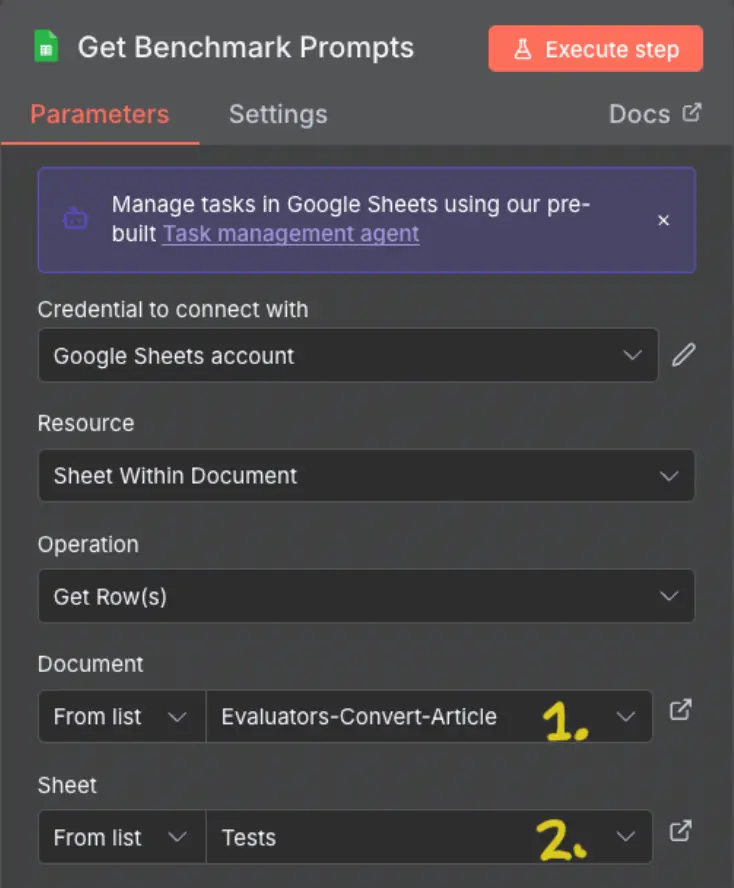
Once the data is prepared, the n8n workflow is triggered. The workflow follows a precise sequence:
- Fetch Data: The system retrieves the list of models and the benchmark tests from Google Sheets.
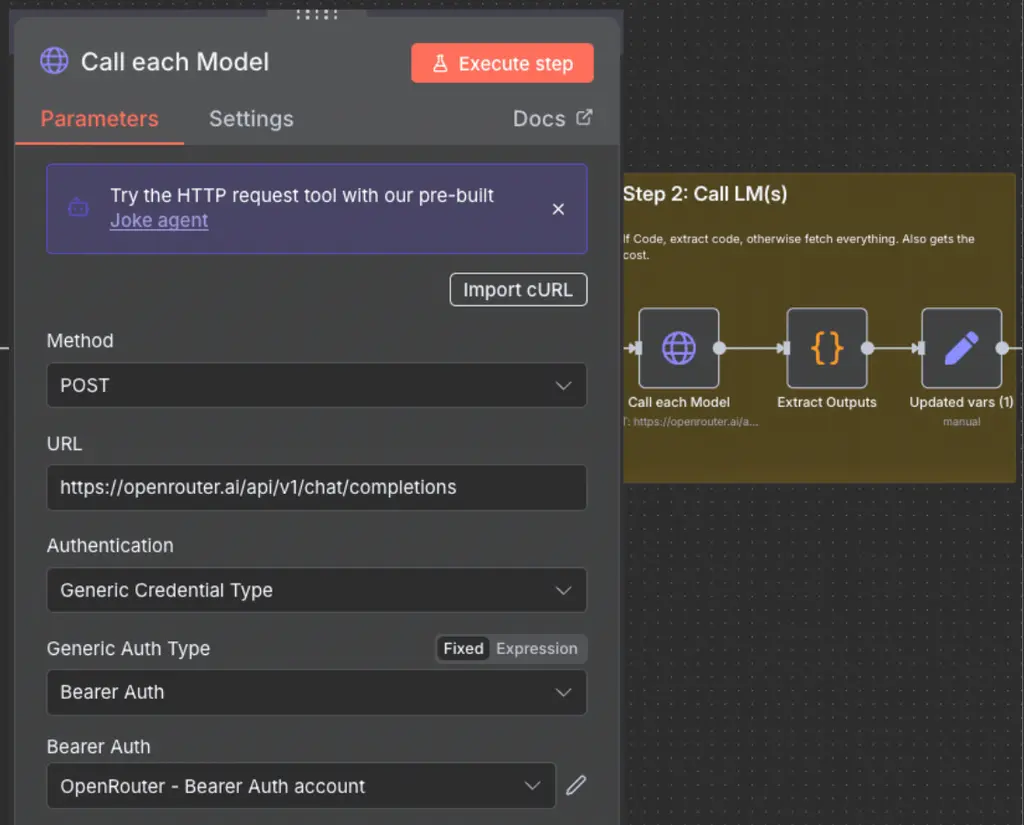
- Execute Model Calls: The workflow iterates through every model for every test, sending prompts via API. Crucially, the system captures metadata, including the precise cost per execution and the time taken for the model to respond.
- Judgement Phase: The outputs from the candidate models are sent to the "judge" model. The judge evaluates the response against the pre-defined JSON rubric, providing a "Pass" or "Fail" for each criterion and a reasoning summary.
Phase 4: Data Aggregation and Analysis
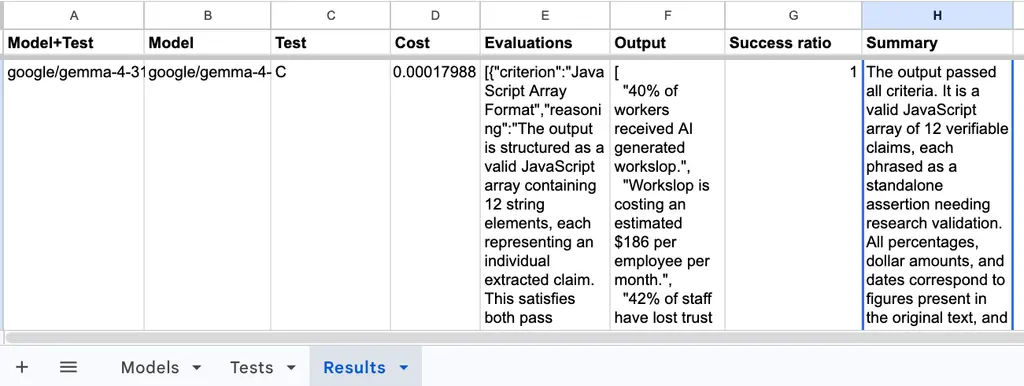
The final stage involves writing all data—output, judge’s feedback, status, and cost—back to the Results tab in Google Sheets. This creates a comprehensive ledger that allows for immediate comparison between high-cost frontier models and low-cost specialized models.
Supporting Data: The Economics of Efficiency
Empirical data from these automated runs reveals a staggering disparity in cost-to-performance ratios. In a recent benchmarking exercise comparing a high-tier model (referred to as "Fable") against a smaller alternative (GLM 5.3 Flash) for a claim extraction task, the results were telling.
For "Test A" (Claim Extraction), the high-tier model cost approximately $0.09 per execution. In contrast, the GLM 5.3 Flash model, which achieved a high performance score, cost only $0.0009. This represents a 100x reduction in cost. Similarly, in "Test B" (Thought Organization), the Gemma 4 model outperformed larger competitors at a cost of $0.0005 per execution, compared to $0.14 for the frontier model.
These figures highlight the financial risk of "blindly" using the most famous models. Without a scalable benchmarking system, organizations may be paying a 10,000% premium for performance that is either marginal or, in some cases, inferior to that of optimized small models.
Expert Perspectives and Calibration Requirements
While the "LLM-as-a-judge" methodology is highly efficient, AI researchers emphasize the importance of "judging the judge." Initial results often require a calibration phase where a human evaluator performs a manual spot-check on the judge’s scores.
"The goal is not to eliminate human oversight entirely, but to focus it where it matters most," says one experimentation consultant. "By comparing the automated scores with a manual sample, we can fine-tune the rubrics to minimize ambiguity. Once the rubric is calibrated, the system can run 1,000 tests with the same level of consistency that a human would bring to ten."
Common adjustments during the calibration phase include refining the "pass conditions" in the rubric. For instance, if a judge is too lenient on formatting errors, the rubric can be updated to include a strict binary check for JSON validity. This iterative process ensures that the automated system remains aligned with human standards of quality.
Broader Impact and Industry Implications
The ability to benchmark at scale has profound implications for the future of AI implementation in business.
1. The Rise of Local and Edge Computing
The data suggests that "tiny" models like GLM 5.3 Flash and Gemma 4 are increasingly capable of handling complex reasoning tasks. Because these models are small enough to run on local hardware or edge devices, organizations can reduce their reliance on third-party cloud providers, enhancing data privacy and reducing latency.
2. Ethical and Sustainable AI
Energy efficiency is becoming a key metric in corporate social responsibility (CSR). Frontier models require massive computational power for every token generated. By identifying smaller models that can achieve the same result, companies can significantly reduce the carbon footprint associated with their AI operations.
3. Democratization of AI Development
By lowering the cost of experimentation, automated benchmarking allows smaller startups and independent developers to compete with larger firms. When the cost of a test run drops from dollars to fractions of a cent, the barrier to entry for developing sophisticated AI-driven workflows is effectively dismantled.
4. Continuous Optimization
In a landscape where new models are released weekly, a static choice of LLM is a liability. An automated n8n workflow allows companies to treat their model selection as a dynamic process. Whenever a new model is released, it can be added to the Google Sheet and benchmarked against existing "champions" within minutes, ensuring the organization is always using the best tool for the job.
As the industry moves toward more specialized AI applications, the transition from manual "vibe-checks" to automated, rubric-based evaluation is not merely a convenience—it is a necessity for economic viability and operational excellence. The combination of n8n’s orchestration, Google Sheets’ accessibility, and the "LLM-as-a-judge" logic provides a blueprint for any organization looking to navigate the complex and costly world of modern artificial intelligence.


 Nana Wu

 Suro Senen