Nila Kartika Wati
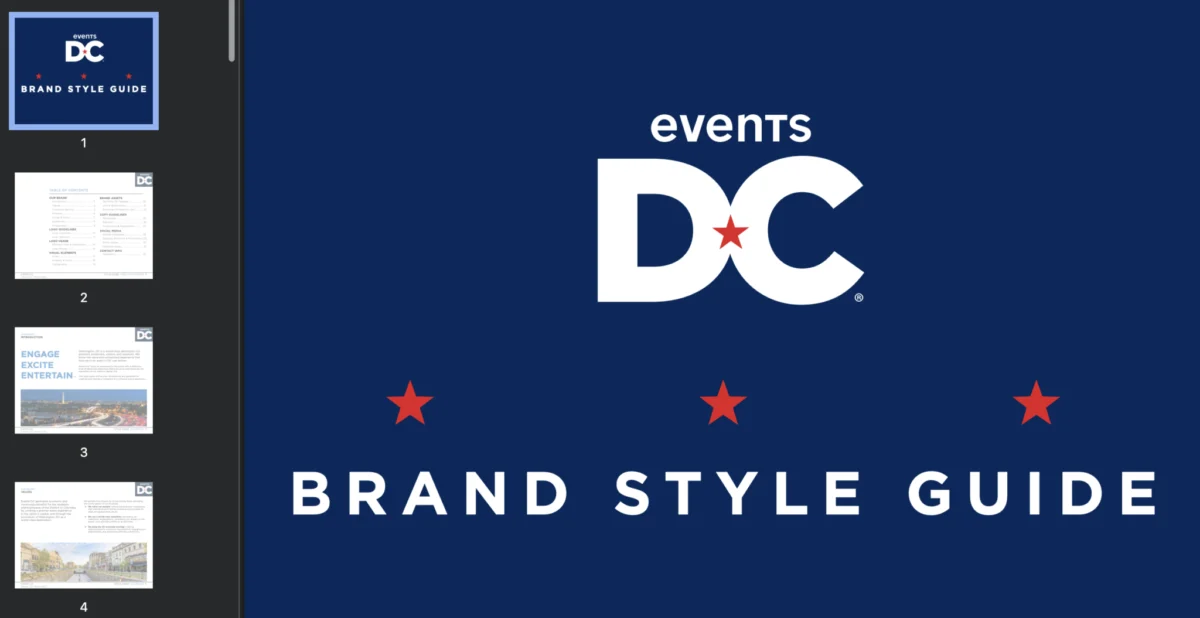
In today’s hyper-connected digital ecosystem, where brands interact with audiences across a myriad of platforms, establishing and maintaining a consistent brand voice on social media has become a strategic imperative. This consistency is primarily achieved through the implementation of a comprehensive social media style guide, a pivotal document that outlines how a brand should look, sound, and behave across every digital touchpoint. Far from being a mere set of rules, these guides serve as a singular source of truth, streamlining decision-making for content creators and ensuring a cohesive brand narrative that resonates with target audiences.
The Evolving Digital Landscape and the Rise of Style Guides

The proliferation of social media platforms, from established giants like Facebook and X (formerly Twitter) to newer, visually driven channels like TikTok and Instagram, has dramatically diversified the avenues for brand communication. This expansion, coupled with the increasing complexity of content creation—involving internal teams, external agencies, freelance contributors, and even AI-generated drafts—underscores the critical need for formalized guidelines. Without a well-defined style guide, brands risk fragmentation of their online identity, leading to diluted messaging and a diminished impact.
Historically, brand guidelines often focused primarily on visual identity—logos, color palettes, and typography—for traditional marketing collateral. However, the interactive and immediate nature of social media necessitated an evolution. Modern social media style guides extend beyond visual elements to encompass tone of voice, linguistic conventions, emoji usage, hashtag strategies, and even protocols for AI-assisted content generation. This holistic approach ensures that every piece of content, regardless of its origin or platform, authentically reflects the brand’s core identity.
Strategic Advantages: Consistency, Efficiency, and Trust

The benefits derived from a meticulously crafted social media style guide are multifaceted, impacting internal operations, market perception, and ultimately, commercial success.
1. Unwavering Image and Voice Consistency: A primary function of a style guide is to standardize brand representation. In the absence of clear directives, individual content creators might inadvertently adopt disparate tones or visual styles, leading to a disjointed brand experience for followers. A unified guide locks in critical decisions, ensuring that the brand remains instantly recognizable across all platforms. This consistency is particularly vital in an era where AI content generation tools are becoming commonplace. While AI excels at generating initial drafts, it often lacks the nuanced understanding of a brand’s unique voice. A style guide equips editors with precise criteria for refining AI outputs, ensuring they align perfectly with the brand’s established personality and avoiding generic-sounding content. Some forward-thinking organizations are even integrating their style guides directly into AI tools to accelerate content production while maintaining brand fidelity.
2. Accelerated Onboarding and Knowledge Preservation: For organizations experiencing growth or staff turnover, a social media style guide proves invaluable for onboarding new team members, freelancers, and agency partners. Instead of requiring new hires to deduce brand conventions from past posts, the guide provides a centralized, authoritative resource for understanding how the brand manifests on social media. This significantly reduces the learning curve, allowing new contributors to become productive faster. Furthermore, the guide acts as a repository of organizational knowledge, safeguarding critical decisions about voice, visuals, and strategy even as team members transition roles or depart. This continuity prevents disruptions in content flow and maintains brand momentum.
3. Cultivating Audience Trust and Driving Revenue: In a crowded digital space, consistency fosters familiarity, which, in turn, builds trust. When followers encounter a brand’s content, they should instinctively recognize its source, regardless of the platform. A well-defined style guide facilitates this recognition by ensuring all content emanates from a singular, coherent identity. This consistent articulation of the brand’s value proposition and messaging is not merely an aesthetic choice; it has tangible business implications. Research conducted by Marq and Demand Metric highlighted that 68% of organizations reported brand consistency contributing at least 10% to their revenue growth. This data underscores that sustained, consistent messaging reinforces brand identity, solidifies customer loyalty, and ultimately translates into commercial success as audiences become ready to engage or purchase.
The Anatomy of a Comprehensive Social Media Style Guide
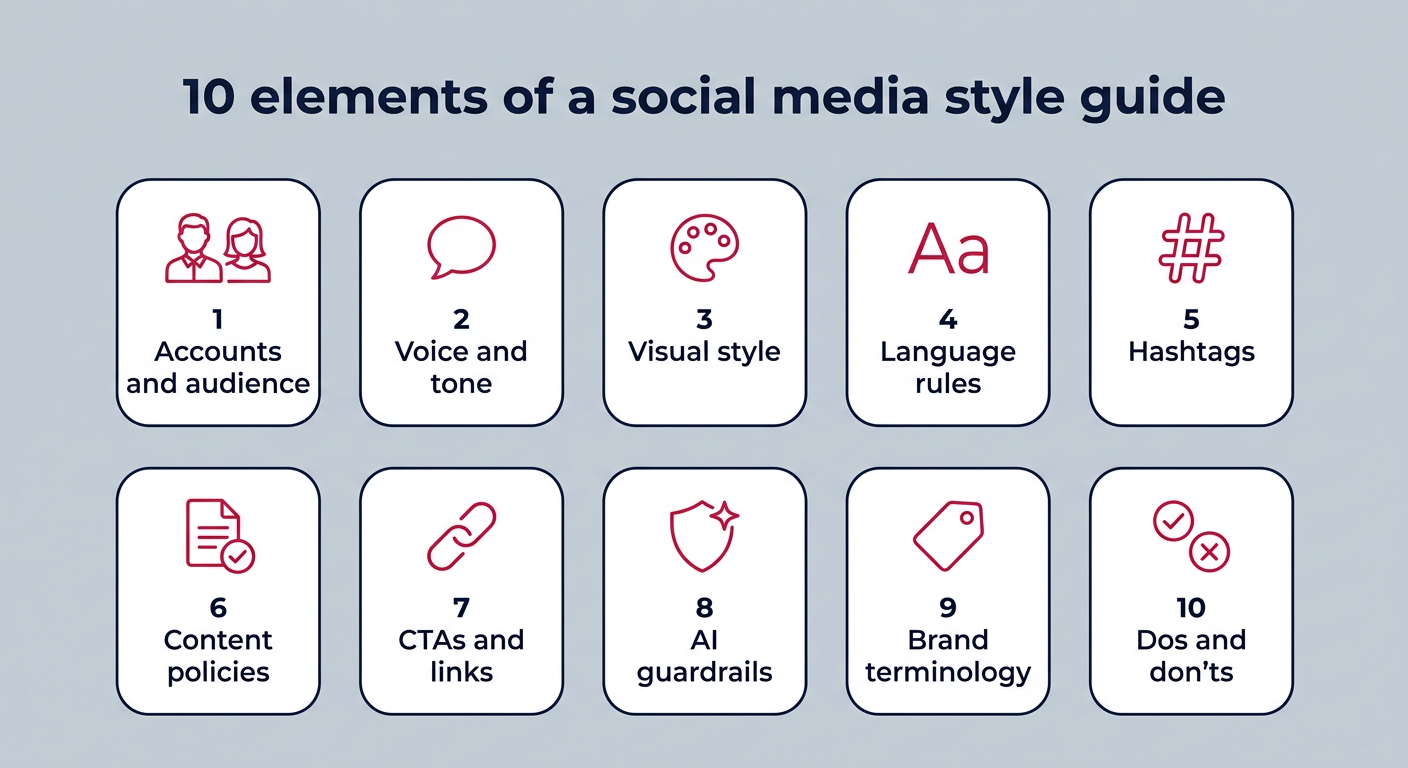
An effective social media style guide transcends basic branding elements, delving into granular details that shape every interaction. While specific components may vary, ten core elements typically form the backbone of a robust guide:

1. Social Accounts and Target Audience: The foundation of any guide is a clear inventory of all active social media accounts managed by the brand, coupled with detailed audience personas. Each account’s purpose, primary platform, target demographic, and key performance indicators should be clearly outlined. For audience personas, details such as demographics, psychographics, interests, pain points, and preferred content formats are crucial. Understanding "who" the brand is speaking to on each platform informs all subsequent stylistic and content decisions.
2. Brand Voice and Tone: This section is paramount. Brand voice represents the consistent personality of the brand across all communications (e.g., authoritative, witty, empathetic). Tone, conversely, is how that voice adapts to specific contexts (e.g., more serious during a crisis, celebratory during a product launch). The guide should define core brand adjectives, provide examples of "this, not that" phrasing to illustrate acceptable and unacceptable language, and specify appropriate emotional ranges. This helps teams articulate the brand’s character in diverse scenarios.
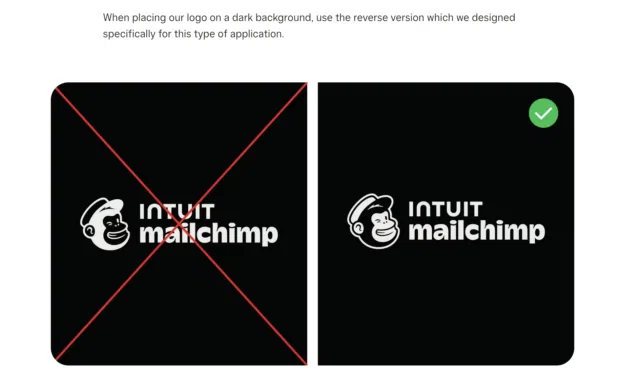
3. Visual Style and Assets: Consistency extends visually. This segment details the brand’s visual identity on social media, including logo usage guidelines (placement, clear space, minimum size), primary and secondary color palettes (with HEX/RGB codes), approved typography, imagery guidelines (style, subject matter, filters), video guidelines (length, aspect ratio, production quality), and an inventory of approved graphic elements. Crucially, a centralized digital asset management system (like Hootsuite’s content library) should be linked, ensuring all team members have easy access to approved visual assets.
4. Language and Grammar Rules: To prevent linguistic inconsistencies, the guide should establish a primary style reference (e.g., Associated Press Stylebook, Chicago Manual of Style) and then document specific brand deviations or preferences. This includes capitalization rules (e.g., title case for headlines, sentence case for body copy), punctuation conventions (e.g., Oxford comma usage, dash types), abbreviations, number formatting, date formats, and preferred spelling (e.g., British vs. American English). These seemingly minor details contribute significantly to a perception of professionalism and attention to detail.
5. Hashtag Conventions: Hashtags are critical for discoverability and campaign tracking. This section outlines the brand’s strategy for hashtag usage, specifying the maximum number of hashtags per platform, mandatory brand-specific hashtags, prohibited hashtags, and guidelines for trending or campaign-specific hashtags. Regular review of hashtag performance is recommended to ensure ongoing relevance and effectiveness.
6. Content Policies for Curation, UGC, and Cross-Posting: Beyond original content, brands often leverage external content.
- Curation: Guidelines for sharing third-party content, including source verification, attribution requirements, and the types of content deemed relevant or off-brand.
- User-Generated Content (UGC): Protocols for identifying, requesting permission for, and crediting UGC, along with legal and ethical considerations to safeguard brand reputation.
- Cross-Posting: Instructions for adapting content across different platforms. While repurposing is efficient, simply duplicating content is often ineffective. The guide should detail how to tailor content format, length, and messaging for each platform’s unique audience and technical specifications.
7. Call-to-Actions (CTAs) and Link Conventions: CTAs are crucial for driving desired audience actions. This section defines approved CTA phrasing (e.g., "Learn More," "Shop Now," "Download Here"), tone, and placement. It also specifies link shortening practices, UTM tracking parameters, and how to reference "link in bio" for platforms like Instagram and TikTok. Consistent CTAs improve conversion rates and provide clear direction to followers.
8. AI Guardrails: With the rapid integration of AI into content workflows, explicit guidelines are essential. This segment outlines approved AI tools, defines tasks where AI can be utilized (e.g., drafting captions, brainstorming ideas), establishes the mandatory human review process for all AI-generated content, and details compliance requirements for regulated industries, including documentation of approvals.
9. Brand-Specific Terminology and Trademarks: Every brand has unique linguistic elements. This section lists proper names for products, services, internal initiatives, and key personnel. It also covers trademark usage (e.g., proper capitalization and symbols for ™ and ®), industry-specific jargon to be used or avoided, and a glossary of brand-specific acronyms. This ensures internal and external communication is precise and legally compliant.
10. Dos and Don’ts: A concise, scannable summary of critical rules acts as a quick reference point for content creators. This section often highlights common pitfalls, preferred practices, and essential reminders regarding brand values, tone, and visual execution. It serves as a practical checklist for maintaining consistency on a day-to-day basis.
Adapting the Style Guide for Diverse Platforms
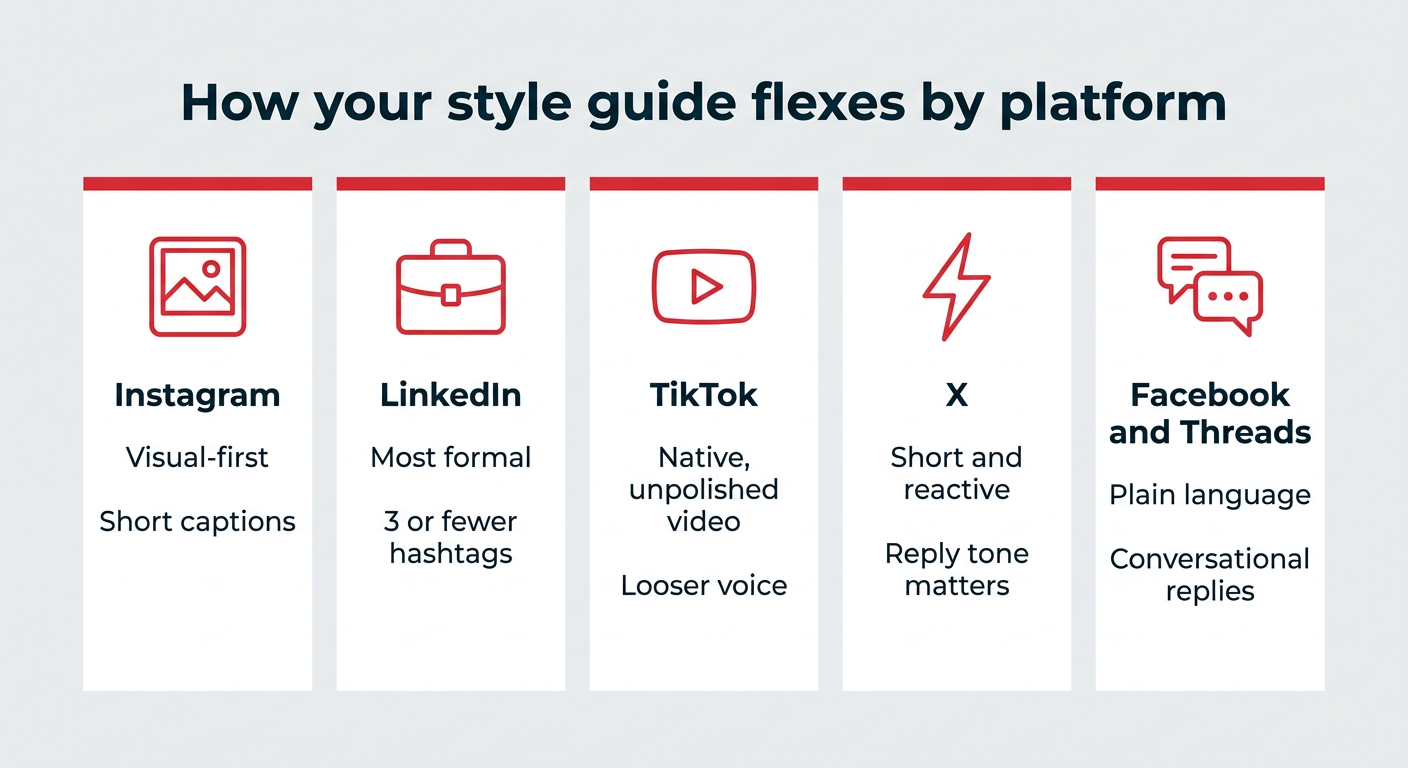
While a brand’s core voice and visual identity should remain consistent, its application must be flexible enough to accommodate the unique characteristics of each social media platform. A comprehensive style guide achieves this by establishing brand-level rules and then layering platform-specific adjustments. For instance:
- Instagram: Emphasizes high-quality visuals, succinct captions, strategic hashtag use (often 10-15), and effective "link in bio" strategies.
- LinkedIn: Calls for a more professional, thought-leadership-driven tone, longer-form articles, and networking-focused interactions.
- TikTok: Prioritizes short-form, authentic video content, trending audio, and a more informal, engaging tone.
- X (formerly Twitter): Focuses on brevity, real-time engagement, news dissemination, and often uses concise, impactful language.
- Facebook and Threads: Supports a mix of content formats, community building, and can accommodate longer posts and interactive discussions.
These platform-specific guidelines should only highlight what differs from the overarching brand rules, keeping them concise and actionable.
Engagement and Community Guidelines
A social media style guide’s purview extends beyond published content to encompass brand interactions within comments, direct messages, and community forums. These engagement guidelines are crucial for managing brand reputation and fostering positive relationships. Key areas to cover include:
- Reply Tone: Defining the appropriate tone for responding to comments, questions, and complaints (e.g., empathetic, informative, humorous).
- Response Times: Establishing clear expectations for how quickly the team should respond to inquiries and mentions.
- Escalation Paths: Outlining procedures for escalating sensitive customer service issues or critical feedback to appropriate internal departments.
- Moderation Rules: Defining policies for managing user-generated content, including what constitutes inappropriate content and how to address it.
- Crisis Protocols: Providing clear steps and communication templates for responding to public relations crises or negative sentiment spikes.
Maintenance and Evolution: A Living Document
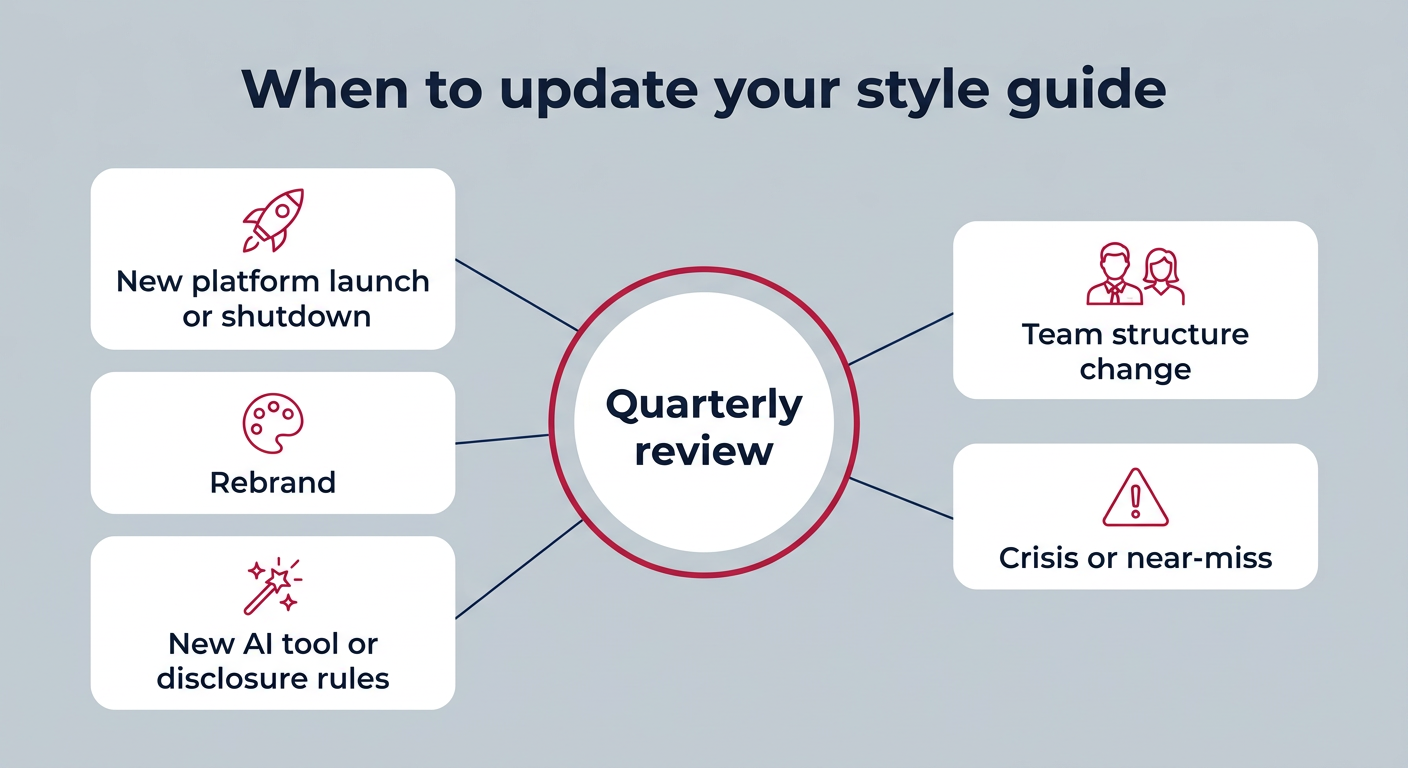
A social media style guide is not a static artifact but a dynamic, living document that must evolve with the brand, the platforms, and emerging industry trends. Regular review and updates are paramount to its continued effectiveness. Most organizations benefit from a quarterly review, where the guide is cross-referenced against recent content and current social media trends, and any discrepancies or outdated practices are addressed.
Beyond routine reviews, off-cycle updates are necessary when significant changes occur:

- New Platform Launch: Introducing a brand to a new social media platform necessitates specific guidelines.
- Rebrand: Any major brand overhaul requires a comprehensive update to reflect new visual identities, voice, and messaging.
- Team Structure Changes: Shifts in content creation responsibilities or team dynamics may require adjustments to workflow and approval processes.
- New AI Tool Adoption: Integrating new AI capabilities into the workflow demands updated guardrails and usage protocols.
- Lessons from a Crisis: Insights gained from managing a social media crisis often necessitate refinements to engagement and crisis communication guidelines.
Broader Implications and Future Outlook
The strategic investment in a robust social media style guide yields significant dividends, cementing brand equity, enhancing customer loyalty, and optimizing operational efficiency. In an increasingly fragmented and rapidly evolving digital landscape, such a guide is no longer a luxury but a fundamental component of a successful digital marketing strategy. As technologies like AI continue to advance and new platforms emerge, the role of the style guide will only grow, serving as the essential anchor that keeps a brand’s identity coherent and compelling amidst constant change. Organizations that embrace this discipline will be better positioned to navigate the complexities of digital communication, fostering meaningful connections with their audiences and driving sustainable growth. Many resources, including customizable templates from platforms like Hootsuite, are available to assist brands in developing and implementing these crucial guidelines.

 Lina Irawan
 Suro Senen