The rapid evolution of Large Language Models (LLMs) has transitioned the industry from simple text-based chatbots to autonomous agents capable of performing complex multi-step tasks. While the general public often attributes the versatility of platforms like ChatGPT or Google Gemini to the underlying model’s inherent intelligence, the true secret to their operational diversity lies in a concept known as "skills." These skills are essentially specialized sets of instructions that an AI agent loads dynamically and only when necessary. By moving away from monolithic system prompts and toward a modular "load-on-demand" architecture, developers are significantly enhancing the efficiency, accuracy, and cost-effectiveness of AI-driven workflows.
The Shift Toward Modular Agentic Architectures
In the early stages of generative AI development, a common practice was to "stuff" every possible instruction into a single, massive system prompt. This approach, while straightforward, presented several critical challenges for enterprise-level applications. First, there is the issue of "prompt bloat," where the cost per request increases linearly with the size of the prompt. Second, research into LLM performance has frequently highlighted the "lost in the middle" phenomenon, where models tend to ignore instructions buried in the center of long context windows.
To combat these limitations, the developer community has turned to frameworks like LangChain—an open-source orchestration tool designed to simplify the construction of LLM-powered applications. LangChain provides the scaffolding necessary to build agents that do not just generate text but interact with external tools, maintain memory, and, most importantly, manage specialized skills through middleware.
Understanding the Mechanics of Skills and Middleware
In the context of LangChain and modern software engineering, middleware acts as an intermediary layer that sits between the agent and the model during every turn of a conversation. It possesses the capability to intercept and rewrite a request before the model processes it, or to inspect and modify the response before it reaches the end-user. This mirrors the functionality of HTTP middleware in traditional web development, providing a clean separation of concerns between the agent’s core logic and its specific operational capabilities.
Skills are built directly upon this middleware foundation. A skill is defined as a self-contained instruction set that an agent retrieves via a specialized tool, often named load_skill. Rather than processing thousands of words of instruction for every query, the agent is presented with a concise menu of available skills. If a user asks for a financial report, the agent identifies the "Excel Reporter" skill, calls the tool to load the full technical guidelines for that specific task, and then executes the command. This dynamic loading ensures that the model’s focus remains sharp and its token usage remains optimized.
Chronology of AI Agent Evolution
The development of skill-based agents represents the fourth major era in the timeline of generative AI integration:
- The Direct Prompting Era (2022-early 2023): Users interacted directly with LLMs. Capability was limited by the model’s training data and the user’s ability to write comprehensive prompts.
- The RAG Era (Mid 2023): Retrieval-Augmented Generation allowed models to access external documents, providing factual grounding but limited functional utility.
- The Tool-Calling Era (Late 2023): Models gained the ability to use APIs (calculators, web search, databases), allowing them to act on the physical or digital world.
- The Modular Skill Era (2024-Present): Agents now manage their own instruction sets. They can "learn" new behaviors by simply adding a markdown file to a directory, allowing for highly specialized agents that remain lightweight.
Supporting Data on Efficiency and Cost
The shift to modular skills is driven by economic and performance data. For instance, using a model like GPT-4o-mini costs significantly less than its larger counterparts (roughly $0.15 per million input tokens). However, if an agent uses a 10,000-token system prompt for every interaction, the costs accumulate rapidly during long-running sessions. By using a skill-based architecture, the initial system prompt can be reduced to under 500 tokens, with larger instruction blocks only being "paid for" when the specific skill is invoked.
Furthermore, latency studies indicate that LLMs respond faster when the prompt is concise. A modular approach reduces the "Time to First Token" (TTFT), improving the user experience in real-time chat interfaces. In enterprise environments where an agent might need to handle fifty different types of document generation, the skill-based approach is the only viable path to scalability.
Case Study: Building a Document-Generation Agent
To illustrate the power of this architecture, consider the development of a specialized document-generation assistant. This agent is designed to handle two distinct tasks: creating professional PowerPoint presentations and generating complex Excel reports.
Step 1: Defining the Skills
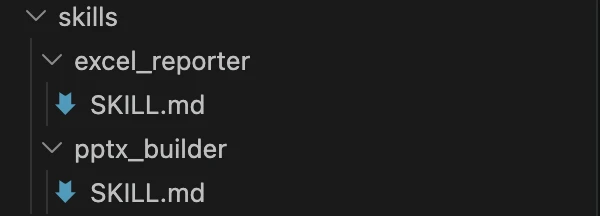
Each skill is stored as a separate Markdown file. For example, the excel_reporter skill contains specific guidelines on organizing data into tables, ensuring headers are in the first row, and maintaining numerical formats for calculations. The pptx_builder skill, conversely, contains instructions on slide counts (typically 4–8 slides), bullet point density, and aesthetic choices such as theme colors and font selections.
Step 2: The Loading Mechanism
The system utilizes a Python-based loading function that scans a designated "skills" directory. It parses the metadata (name and description) of each skill while keeping the "content" (the detailed instructions) in reserve. This allows the agent to see a "menu" of what it can do without being overwhelmed by the details of how to do it.

Step 3: Implementing Middleware
The SkillMiddleware class is the heart of this operation. It injects a list of available skills into the system prompt. If the agent determines a skill is needed, it uses the load_skill tool. This tool fetches the full Markdown content and feeds it back into the model’s context. This ensures that when the agent is ready to write the PowerPoint, it has the "Presentation Specialist" instructions fresh in its working memory.
Step 4: Tool Integration
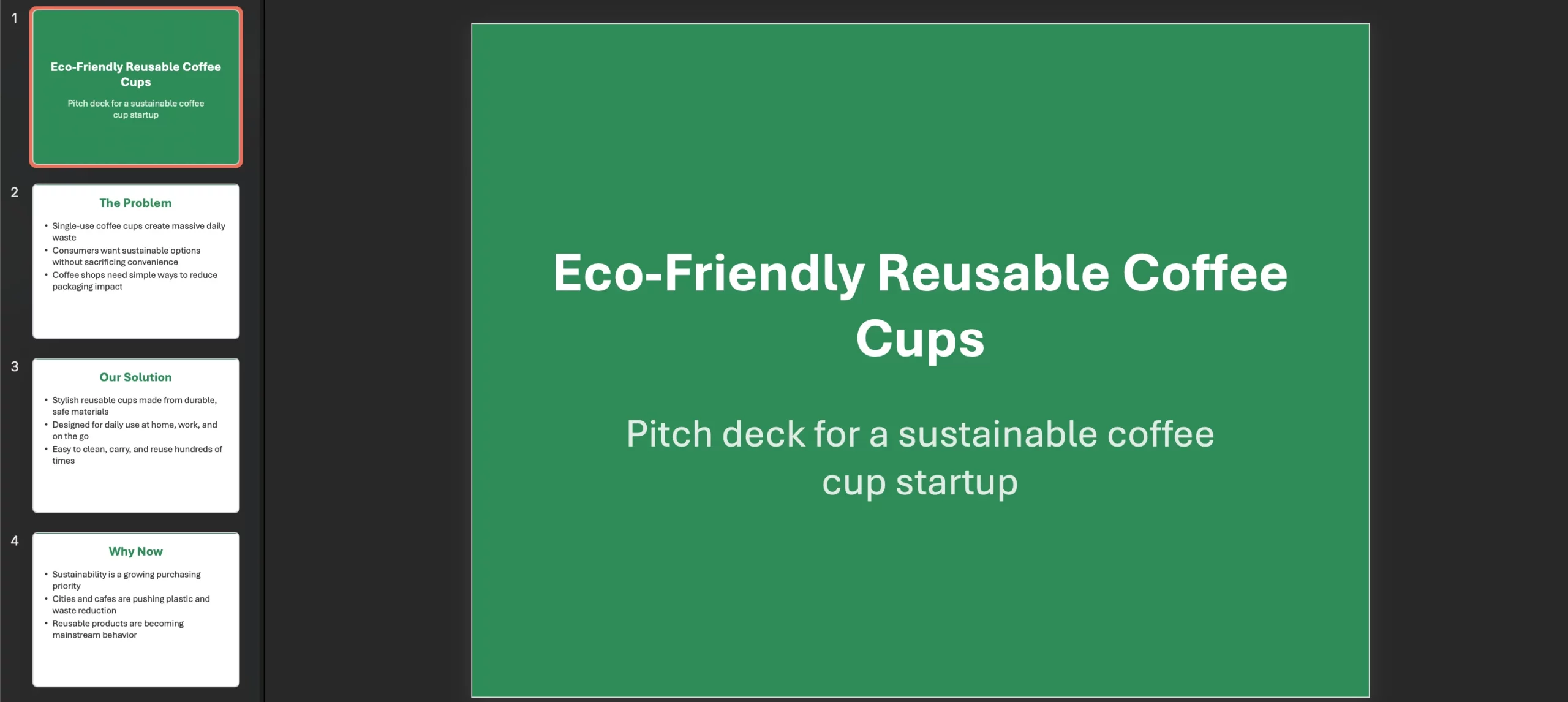
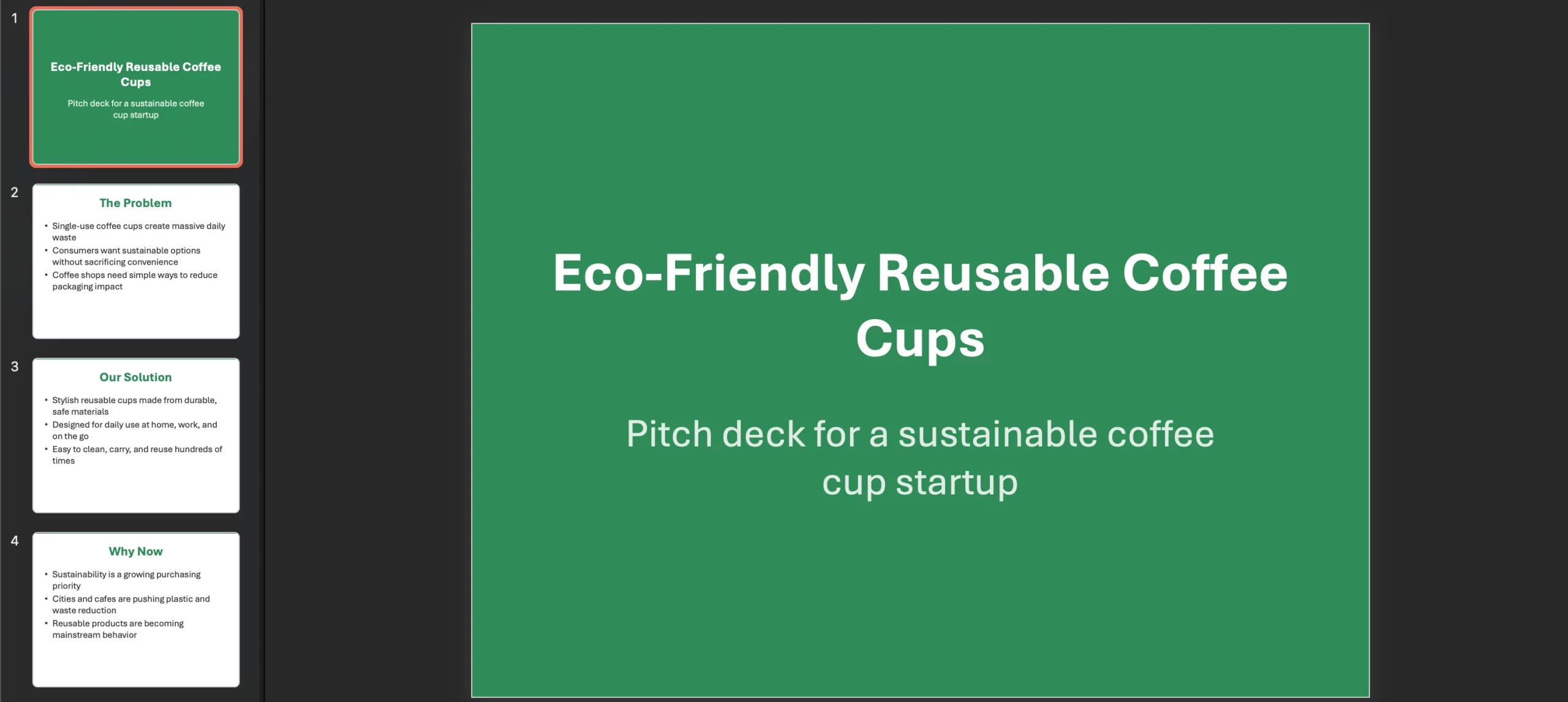
The agent is connected to physical tools such as python-pptx for slide generation and openpyxl for Excel workbooks. The skills act as the "brain," while these libraries act as the "hands." For instance, when a user requests a pitch deck for an eco-friendly startup, the agent loads the PowerPoint skill, decides on a green hex-code theme (#2E7D32), selects a clean font like "Calibri," and structures the data before passing it to the create_pptx tool.
Industry Reactions and Market Implications
The transition to skill-based agents has met with significant enthusiasm from the AI development community. On platforms like GitHub and Discord, developers have noted that this approach allows for better version control of AI behaviors. Instead of editing a massive, fragile system prompt, teams can update individual skill files, making the AI’s "training" more akin to traditional software modules.
Industry analysts suggest that this modularity will lead to the rise of "Skill Marketplaces." Companies may soon buy or license specialized instruction sets—such as a "Legal Compliance Skill" or a "Medical Coding Skill"—and plug them directly into their existing LangChain agents. This would allow businesses to rapidly expand their AI’s capabilities without needing to retrain models or hire expensive prompt engineering teams for every new use case.
Analysis of Broader Implications
The broader implications of skill-based agentic workflows extend into the realm of "Agentic AI" reliability. One of the primary hurdles to AI adoption in professional settings is hallucination and inconsistency. By isolating instructions into specific skills, developers can implement more rigorous testing. A "PPT Skill" can be tested against thousands of prompts to ensure it always produces valid slide outlines before it is ever deployed.
Moreover, this architecture supports the trend toward "Small Language Models" (SLMs). While a massive model like GPT-4 might be able to handle a large prompt through sheer "brute force" intelligence, smaller, faster models require concise, highly relevant instructions to perform at the same level. Skill-based middleware effectively "levels the playing field," allowing smaller models to compete with larger ones by ensuring they are never asked to process irrelevant information.
Future Outlook and Conclusion
As AI agents become more integrated into corporate infrastructure, the ability to manage complexity will be the primary differentiator between successful and unsuccessful implementations. Skills do not necessarily make an agent "smarter" in the sense of increasing its reasoning capacity; rather, they make the agent more organized and specialized.
By adopting a modular framework using LangChain and middleware, developers can create agents that are both powerful and efficient. Whether it is generating a quarterly financial spreadsheet or a startup pitch deck, the ability to load the right instructions at the right time is a fundamental shift in how we interact with and deploy artificial intelligence. The future of AI is not a single, all-knowing entity, but a flexible system of specialized capabilities, ready to be called upon at a moment’s notice.


 Ali Ikhwan
 Dwi Wanna