Google’s widely utilized job search functionality appears to be grappling with a significant technical malfunction, with numerous reports indicating that the platform is failing to display new job postings effectively. This persistent issue, which has reportedly been ongoing for approximately a week, creates a stark contrast with recent robust employment figures, raising concerns among job seekers and industry observers alike. Despite a recent jobs report highlighting substantial growth in nonfarm payrolls, Google’s aggregator is showing a puzzling dearth of freshly listed opportunities, leading to frustration and potential disruptions in the job market.
The Glitch Unveiled: A Scarcity of New Listings
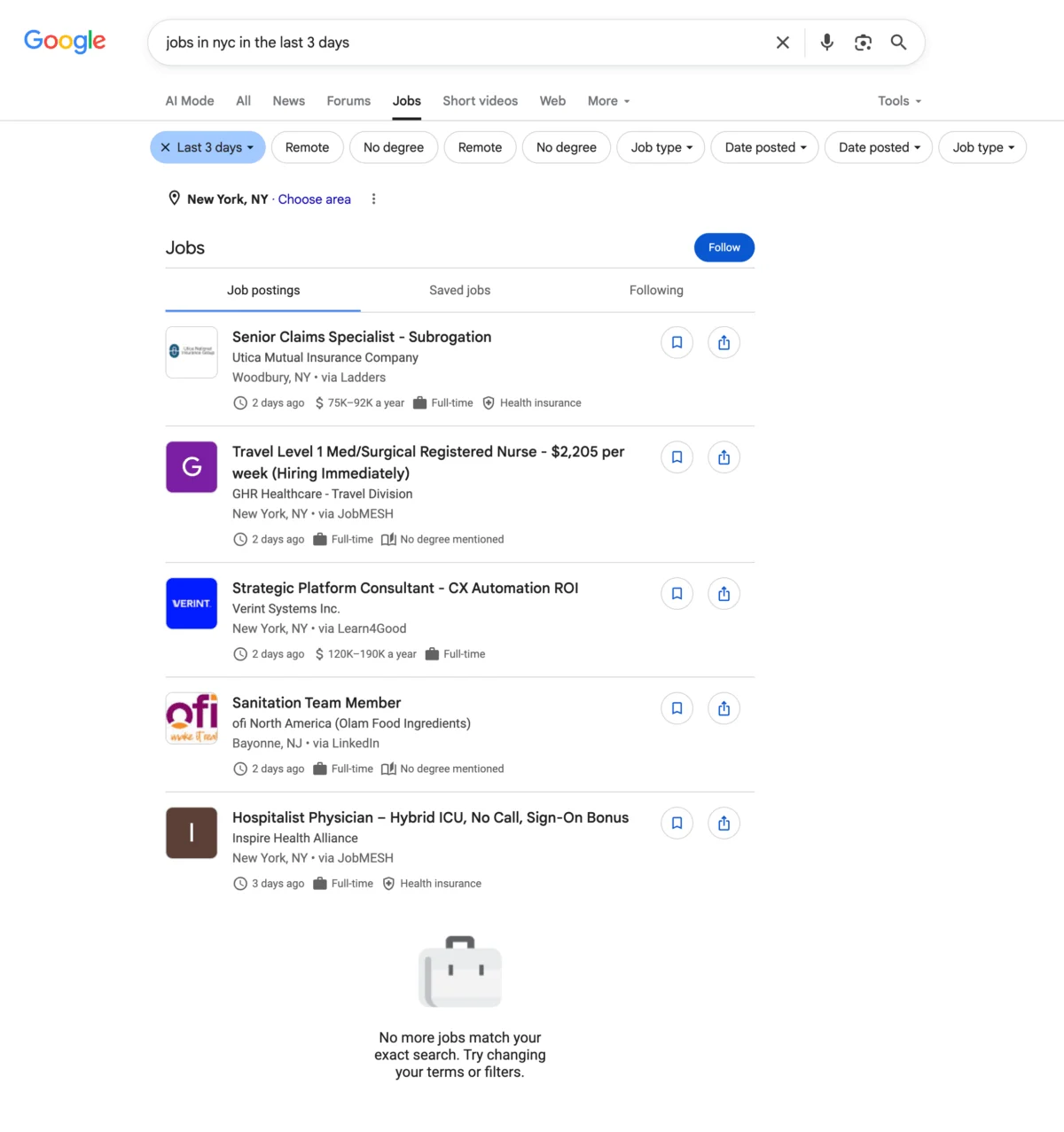
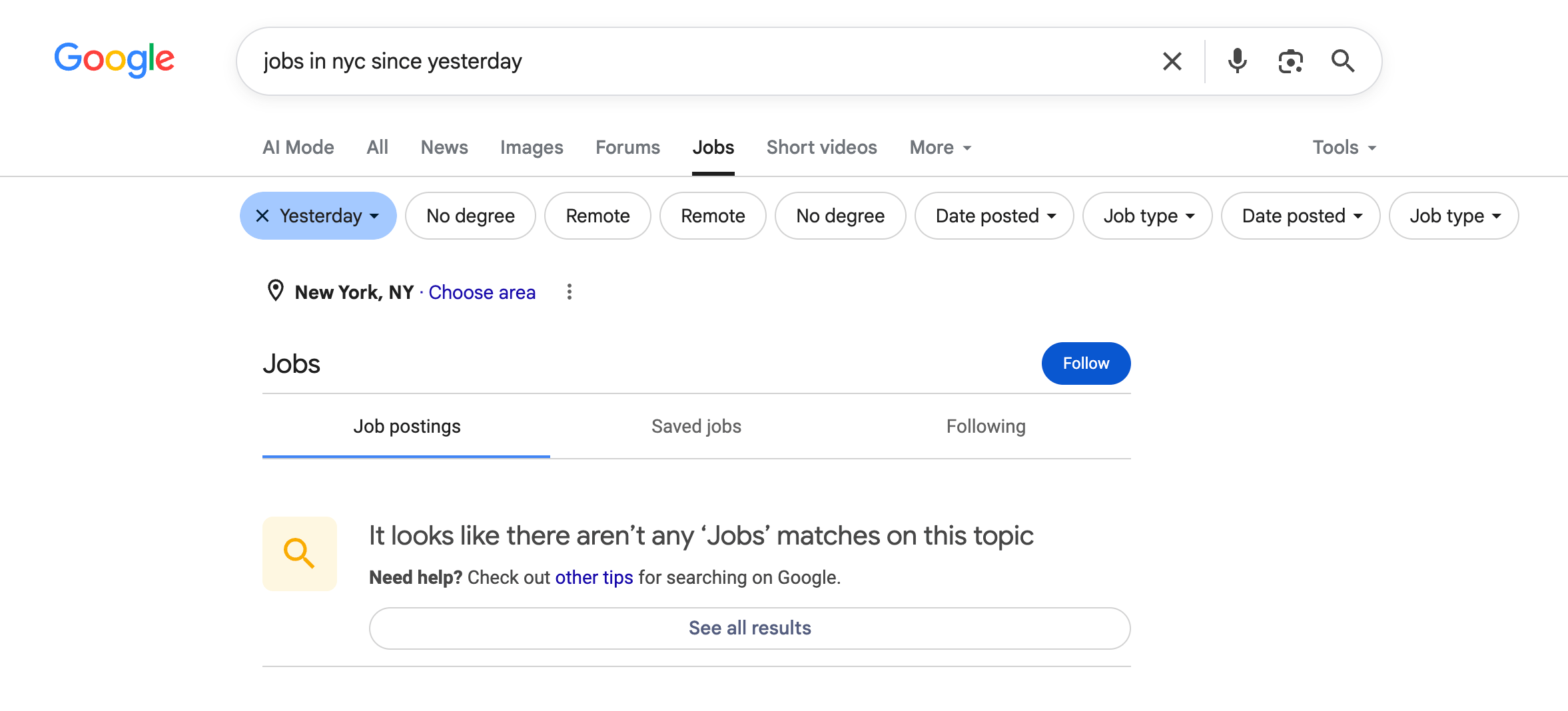
Observations from users and digital analysts point to a critical breakdown in how Google for Jobs indexes and presents recent employment opportunities. When filtering search results for new listings within specific timeframes, the platform frequently returns minimal or no relevant entries. For instance, a search for jobs in New York City filtered to show postings from "the past day" reportedly yielded zero results. Extending the filter to "the past three days" presented only a handful of listings, a strikingly low number for a major metropolitan area in a healthy job market. This absence of timely updates is particularly perplexing given Google’s sophisticated indexing capabilities and its ambition to be a primary resource for job seekers globally. The core functionality – providing access to the latest openings – appears compromised, leaving users to question the reliability of the platform.
User Outcry and Mounting Frustration
The growing concern among job seekers is palpable, as evidenced by a burgeoning discussion on platforms like Reddit. A thread titled "Google Jobs feed drying up?" has become a focal point for users sharing similar experiences. One user articulated their distress, stating, "I use saved Google Jobs queries to get potential job leads. Over the last few days, it appears that no new jobs are being generated. Queries still work, but only return old postings. Anyone else noticing this issue?" This sentiment resonates across the thread, with multiple individuals reporting identical issues.
Another user provided a more detailed account, noting, "I noticed it several days ago. I look for all jobs in a city here and filter by last three days. It stopped showing anything, so I removed that filter to see what was up. The ‘x days ago’ tag is missing from anything newer than 8 days ago." This specific detail about missing date tags suggests a potential indexing or display error rather than a complete absence of job data. The inability to ascertain the age of a posting critically impairs a job seeker’s ability to prioritize and apply for the most current roles, effectively rendering the "new jobs" filter useless for many. The collective experience points to a systemic issue affecting the platform’s core utility.
A Disconnect with Economic Reality: The August Jobs Report
The timing of this reported technical issue is particularly noteworthy, coinciding with robust economic indicators that suggest a thriving job market. According to a recent report from CNBC on August 4, 2026, nonfarm payrolls in August surged by an impressive 162,000. This figure significantly surpassed consensus expectations of 53,000, indicating stronger-than-anticipated job creation across various sectors. Furthermore, the unemployment rate remained stable at 4.1%, aligning with expert predictions and reinforcing the narrative of a resilient labor market.

Such strong employment data typically translates into a high volume of new job postings across various platforms, including aggregators like Google for Jobs. The discrepancy between the reported economic buoyancy and the stagnant job listings on Google’s platform creates a critical information gap for job seekers. If the most comprehensive search engine is failing to reflect current opportunities, it could inadvertently slow down the job matching process, even in an otherwise healthy economy. This divergence highlights the crucial role that digital platforms play in connecting labor supply with demand and the potential systemic impact when such platforms malfunction. The expectation is that a surge in payrolls would be mirrored by a surge in discoverable openings, an expectation that Google for Jobs is currently failing to meet.
Google for Jobs: A Critical Aggregator in the Modern Job Search
Launched in 2017, Google for Jobs quickly established itself as a formidable player in the online recruitment landscape. Its primary function is to aggregate job listings from various sources—company career pages, popular job boards, and recruitment sites—and present them directly within Google’s main search results. This initiative aimed to streamline the job search process by offering a centralized hub, leveraging Google’s unparalleled search capabilities to match candidates with relevant opportunities. For millions of job seekers, Google for Jobs has become an indispensable first stop, often replacing or complementing direct searches on individual job sites. Its advanced filters, location-based searches, and email alerts provide a powerful tool for navigating the often-complex world of employment.
The platform’s significance extends beyond individual job seekers. For employers, it offers increased visibility for their postings, reaching a broader audience who might not otherwise encounter their vacancies. Many companies have optimized their career pages specifically to be discoverable by Google for Jobs, understanding its reach. The seamless integration into Google’s ecosystem, including features like salary estimates, commute times, and company reviews, has cemented its position as a dominant force. Therefore, any prolonged malfunction in such a critical aggregator can have widespread repercussions, impacting not only the individuals actively seeking employment but also the efficiency of the broader labor market in connecting talent with available roles.
Echoes of Past Technical Hiccups: A Pattern Emerges?
The current reported bug in Google’s job search functionality is not an isolated incident in the company’s recent history of technical challenges. As one Reddit user alluded, "I’ve read elsewhere that, earlier in August, there was a time filter glitch/issue for regular search results and News articles. Maybe that’s trickled over." This reference to a previous "time filter glitch" in Google’s general search and news aggregators suggests a potential pattern of issues related to how Google processes and displays time-sensitive data.
Google’s search algorithms are extraordinarily complex, constantly being updated and refined to provide the most relevant and timely information. These algorithms handle petabytes of data daily, indexing new content from across the internet within milliseconds. Even minor alterations or unforeseen interactions within this intricate system can lead to cascading effects, impacting specific functionalities. A glitch affecting date parameters in one part of Google’s search infrastructure could conceivably manifest in other, related services like Google for Jobs, which heavily relies on accurate timestamping for filtering "new" postings. Such interdependencies highlight the delicate balance involved in maintaining a global search engine and the potential for seemingly small errors to have significant user impact across different Google products.
The Ripple Effect: Implications for Job Seekers and Employers
The implications of Google for Jobs failing to display new listings are far-reaching, affecting both sides of the employment equation.
For job seekers, the immediate impact is a sense of frustration and missed opportunities. Many rely on Google’s filters to prioritize the freshest postings, believing that early applications often have a higher chance of success. If these new listings are not appearing, or if their ‘x days ago’ tags are missing, candidates might be applying to stale jobs or missing out on genuinely new roles altogether. This can prolong their job search, lead to feelings of discouragement, and force them to revert to more manual and time-consuming methods of searching across multiple individual job boards. The efficiency gain that Google for Jobs promised is undermined, potentially extending unemployment periods for some.
For employers and recruiters, the bug translates into reduced visibility for their critical hiring efforts. Companies invest significant resources in attracting talent, often relying on major aggregators like Google for Jobs to syndicate their openings. If new postings are not being indexed or displayed correctly, their vacancies remain unseen by a substantial portion of the target audience. This can lead to slower hiring cycles, increased time-to-fill for open positions, and potentially higher recruitment costs as they explore alternative, more expensive channels to reach candidates. In competitive industries, even a few days of reduced visibility can mean losing out on top talent to competitors whose postings are appearing on functional platforms. Furthermore, the perceived lack of job activity on Google for Jobs might inadvertently give a false impression of a contracting job market, even when economic data suggests the opposite.
Silence from Mountain View: Awaiting Official Response
As of the time of this report, Google has not issued an official statement or acknowledgment regarding the widespread reports of its job search feature malfunctioning. This silence, while not uncommon for large tech companies in the initial stages of investigating a reported bug, leaves users in a state of uncertainty. Typically, when a critical service experiences issues, users anticipate some form of communication, whether it’s an acknowledgment of the problem, an estimated timeline for a fix, or guidance on alternative solutions.
Google’s standard protocol for addressing such issues usually involves internal diagnostics, followed by a phased rollout of a fix. However, the absence of public commentary adds to the anxiety of job seekers who depend on the platform for their livelihood. Inferred reactions from Google might suggest that their engineering teams are actively investigating the reports, working to identify the root cause, which could stem from indexing errors, database synchronization issues, or a bug within the display layer of the search results. Until an official statement is released, the community of job seekers and industry professionals can only speculate on the nature and extent of the problem, and crucially, when a resolution can be expected.
Broader Ramifications and the Digital Search Imperative
The incident with Google for Jobs underscores the increasing reliance of modern society on digital platforms for critical life functions, including employment. When a tool as ubiquitous and essential as Google’s job search falters, it highlights the fragility inherent in centralized digital services. This dependency means that even temporary outages or malfunctions can have tangible economic and social consequences. The trust placed in these platforms is immense, and consistent performance issues, particularly in high-stakes areas like employment, can erode that trust over time.
Moreover, the situation prompts a broader reflection on the need for robust and reliable digital infrastructure. In an era where efficiency and accessibility are paramount, the expectation is that major tech providers will ensure the seamless operation of their services. For job seekers, a functional job search tool is not merely a convenience but a vital pathway to economic stability and opportunity. For the economy at large, efficient labor matching is crucial for sustained growth and productivity. The ongoing issues with Google for Jobs serve as a potent reminder of the imperative for continuous vigilance, rigorous testing, and swift resolution mechanisms in the digital search ecosystem to ensure that essential information remains accessible and accurate for all users. The global job market, powered by digital connectivity, demands nothing less.