Google has rolled out a series of substantial updates to its Local Service Ads (LSAs) platform, a move that signals continued strategic investment in the product despite its ongoing transition to the broader Google Ads ecosystem. These enhancements include the introduction of "pre-badge ads," a massive expansion and granularization of eligible business verticals, and updated exclusions for the Google Verified badge. The changes, first observed in Google’s official support documentation, underscore a commitment to refining the LSA experience for both service providers and consumers, even as a multi-year migration plan unfolds.
The updates were initially brought to light through an observation of changes within the "Getting started with Local Services Ads" help document, a critical resource for businesses looking to leverage the platform. This discovery, publicly shared on social media, prompted inquiries to Google, which subsequently confirmed its ongoing dedication to the LSA product. Google officials reiterated that the transition of LSAs to the Google Ads platform is a process slated to continue through 2027, emphasizing that the current enhancements are designed to empower advertisers with superior targeting capabilities and will seamlessly migrate into the unified Google Ads platform upon completion. Furthermore, Google indicated that additional verticals might be introduced in the coming months, offering advertisers even more precise control over their campaigns.
The Evolution of Google Local Service Ads: A Strategic Imperative
Local Service Ads, initially launched as "Google Home Service Ads" in 2015 and rebranded in 2017, represent a pivotal component of Google’s strategy to connect local service providers with consumers actively searching for specific services. Unlike traditional Google Ads, which operate on a cost-per-click (CPC) model, LSAs function on a pay-per-lead (PPL) basis. A cornerstone of the LSA program is the "Google Screened" or "Google Guaranteed" badge, which signifies that a business has undergone rigorous background checks, licensing verification, and insurance validation. This badge serves as a powerful trust signal, providing consumers with confidence in the quality and reliability of the service providers listed.
The introduction of LSAs marked a significant shift in Google’s approach to local commerce, aiming to directly address the common pain points of consumers seeking trustworthy local services while simultaneously offering qualified leads to vetted businesses. Over the years, LSAs have expanded across numerous categories, from home services like plumbing and electrical work to legal and financial advice. Their success lies in their ability to streamline the consumer journey from search query to service booking, fostering a more direct and trust-based interaction.
The recent announcement in April 2024 regarding the migration of LSAs into Google Ads had raised questions among the advertising community about the future investment in the standalone LSA product. The current wave of updates, however, provides a clear answer: Google intends to strengthen the LSA offering, ensuring its core functionalities and value proposition are robust before and during its integration into the broader Google Ads ecosystem. This strategic decision suggests that Google views LSAs not merely as a transitional product but as a critical, evolving service that will enrich the unified Google Ads platform.
The Strategic Rationale Behind Continued LSA Investment
Despite the ongoing platform migration, Google’s continued investment in LSAs is driven by several strategic imperatives. Firstly, LSAs significantly enhance the user experience for local service searches. By presenting pre-vetted, highly relevant service providers at the top of search results, Google reduces friction for consumers and builds trust. This commitment to user satisfaction is paramount for maintaining Google’s dominant position in local search.
Secondly, advertiser demand plays a crucial role. The explicit statement from Google that the expansion of verticals was a "top request" from LSA advertisers highlights the direct influence of the business community on product development. Advertisers seek more precise control over their campaigns and the ability to target niche markets effectively. Satisfying these demands ensures advertiser loyalty and continued engagement with the platform.
Thirdly, LSAs represent a valuable revenue stream for Google, operating on a performance-based model that aligns with advertiser success. Sustained investment ensures the product remains competitive and attractive to businesses, thereby securing this revenue.
Finally, and perhaps most critically in the context of the migration, these updates serve to fortify the LSA product before its full integration into Google Ads. By enhancing features, expanding reach, and improving targeting capabilities now, Google ensures that it is migrating a highly functional and desirable product, rather than a stagnant one. The promise that these changes will seamlessly transfer to the Google Ads platform provides reassurance to advertisers that their efforts in adapting to the new features will have long-term benefits. This approach minimizes disruption and maximizes the potential for a successful, integrated advertising solution.
In-Depth Analysis of Key Updates
The recent updates are multi-faceted, each bringing distinct advantages and implications for various stakeholders.
Introducing Pre-Badge Ads: Bridging the Onboarding Gap
One of the most notable additions is the concept of "pre-badge ads." This innovative feature allows businesses to begin receiving leads from Local Services Ads even before completing all required onboarding checks and earning the coveted Google Screened or Google Guaranteed badge. Google explained that businesses can run pre-badge ads once they have passed preliminary checks, while they continue to complete the remaining, more extensive verification processes.
To qualify for pre-badge ads, businesses must satisfy a core set of requirements: possessing a valid license or business registration, accumulating a minimum number of reviews (likely to establish initial credibility), and completing the billing setup. For professional services, an additional requirement of headshots is mandated, presumably to add a personal and trustworthy element to the profile. It is important to note that pre-badge ads are not universally available; certain categories, specifically garage door services, healthcare verticals, and locksmiths, are explicitly excluded from this provisional advertising option. These exclusions likely reflect categories with higher regulatory scrutiny, greater potential for fraud, or more complex verification processes that Google deems essential to complete before any advertising can commence.
- Analysis and Implications: The introduction of pre-badge ads is a strategic move designed to significantly reduce the time-to-market for new LSA advertisers. Historically, the verification process for the Google Screened badge could be time-consuming, creating a waiting period during which businesses could not generate leads. This new feature addresses that pain point directly, allowing businesses to start monetizing their presence on LSAs much faster. For businesses, this means quicker access to potential customers and a reduced opportunity cost during onboarding. For Google, it accelerates advertiser acquisition, broadens the pool of active advertisers, and helps to keep businesses engaged throughout the verification process, rather than risking them abandoning the application due to delays. This could lead to a substantial increase in the number of businesses leveraging LSAs, especially those in less regulated or lower-risk sectors.
Massive Expansion and Granularization of Eligible Verticals
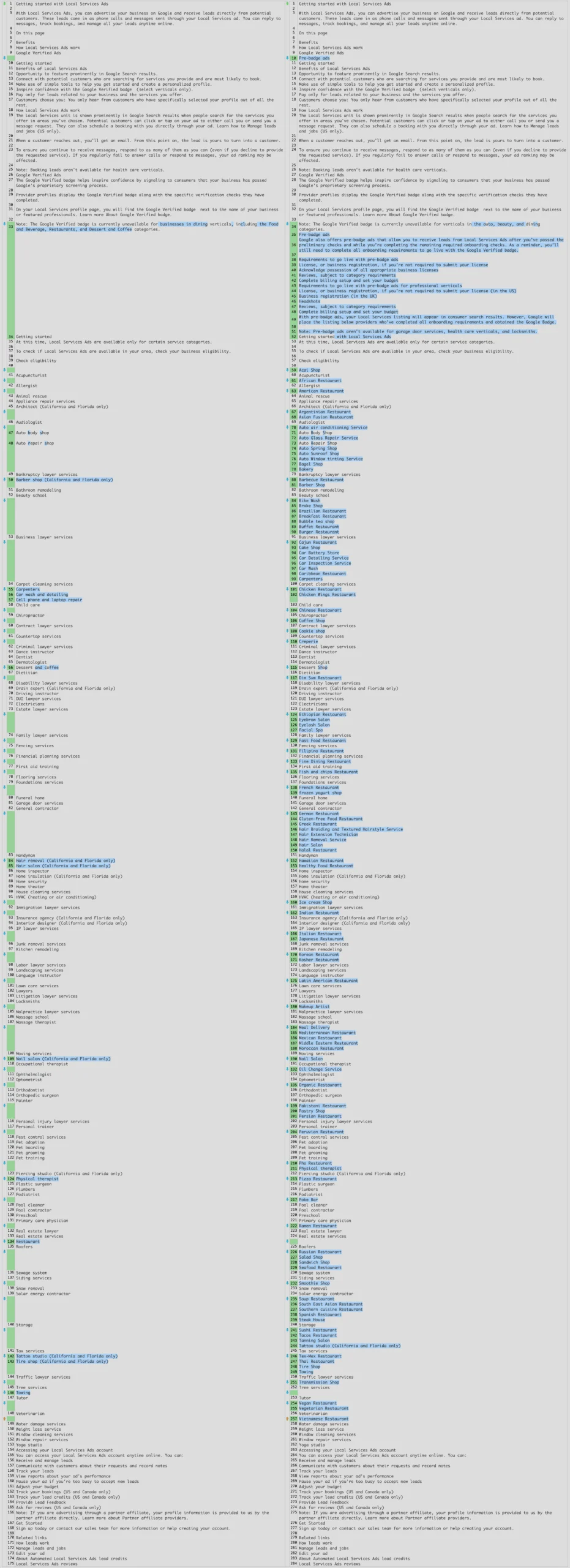
Perhaps the most significant and widely welcomed change is the massive expansion and granularization of eligible business categories under the "Getting started" section of the LSA help document. This enhancement directly responds to what Google identified as a "top request" from LSA advertisers. The previous iteration of the document listed generic categories such as "Restaurant" or "Dessert and coffee." The updated version now features dozens of highly specific cuisine and dining types, reflecting the increasing specialization of the food service industry. Examples include "Acai Shop," "African Restaurant," "Asian Fusion," "Bubble Tea Shop," "Buffet," "Fast Food," "Fine Dining," "Halal," "Korean," "Meal Delivery," "Poke Bar," and "Vegan," among many others.
Similarly, generic categories like "Auto repair" and "Auto body" have been meticulously broken down into highly specific services. Businesses can now select from options like "Auto Air Conditioning Service," "Auto Glass Repair," "Brake Shop," "Car Battery Store," "Oil Change Service," and "Transmission Shop." This level of detail allows auto service providers to precisely align their LSA profiles with the specific services they offer.

Beyond these existing sectors, entirely new categories have been introduced, reflecting emerging service demands and niche markets. These include "Eyebrow Salon," "Eyelash Salon," "Facial Spa," "Hair Braiding," "Hair Extension Technician," "Makeup Artist," and "Tanning Salon," significantly expanding LSA’s reach into the beauty and personal care industry. Crucially, previous regional limitations have been lifted. For instance, categories like "Barber shop," "Hair salon," and "Nail salon," which were once restricted to "California and Florida only," are now available nationwide.
-
Analysis and Implications: The granularization of verticals is a game-changer for both advertisers and consumers. For businesses, it translates into vastly improved targeting capabilities. Instead of a "Restaurant" receiving leads for any type of cuisine, a "Vegan Restaurant" can now specifically target users searching for vegan options, significantly increasing lead relevance and conversion rates while reducing wasted ad spend. This precise targeting is particularly beneficial for niche service providers who previously struggled to differentiate themselves within broad categories. It allows them to reach their exact key audiences more effectively. The removal of regional restrictions also opens up LSAs to a much wider geographic segment of service providers, especially in the beauty sector, fostering greater competition and choice.
For consumers, this means a more refined and efficient search experience. When searching for a "Korean restaurant" or an "Oil Change Service," they are more likely to be connected with businesses that precisely match their needs, enhancing satisfaction and trust in Google’s local search results. This expansion aligns with the ongoing fragmentation of the service economy, where specialized businesses cater to increasingly specific demands. Google’s adaptation to this trend positions LSAs as an even more indispensable tool for local commerce.
Refined Exclusions for the Google Verified Badge
The third significant update pertains to the eligibility criteria for displaying the Google Verified badge, a critical trust signal for consumers. The previous version of the LSA help document stated that the badge was unavailable "strictly for businesses in dining verticals, including the Food and Beverage, Restaurants, and Dessert and Coffee categories." The updated policy broadens this restriction considerably. The Google Verified badge is now "currently unavailable for verticals in the auto, beauty, and dining categories."
-
Analysis and Implications: This expanded exclusion suggests a re-evaluation by Google regarding the applicability or feasibility of its standard verification processes for certain sectors. While the Google Screened/Guaranteed badge generally involves background checks, licensing, and insurance verification, the nature of services in the auto, beauty, and dining sectors might present unique challenges or different risk profiles that Google is addressing. For example, verifying specific auto repair certifications, individual stylist licenses across various states, or food safety compliance might require different verification protocols that are not yet fully integrated into the existing LSA badge system.
For businesses in these newly restricted categories, the absence of the Google Verified badge could potentially impact lead conversion, as the badge is a strong indicator of trustworthiness and pre-screening for many consumers. These businesses will need to rely more heavily on strong customer reviews, detailed service descriptions, and competitive pricing to attract leads. For Google, this move could be interpreted as a step towards maintaining the integrity and high standards associated with the Verified badge, ensuring it is only displayed where its underlying verification processes are robust and consistently applicable. It might also foreshadow the development of sector-specific verification badges or alternative trust signals for these categories in the future.
Chronology of Updates and Communication
The journey of these updates from internal development to public knowledge began with their silent deployment to Google’s support documentation. The changes were first observed in the "Getting started with Local Services Ads help document," a critical resource that outlines the program’s requirements and eligible categories. This observation led to a public post on X (formerly Twitter) by industry analyst RustyBrick, highlighting the significant revisions. Following this public disclosure, Google was contacted for clarification.
Google’s response provided essential context: the company reassured stakeholders of its continued investment in the LSA product, clarifying that the migration to Google Ads is a multi-year process expected to conclude in 2027. This communication was vital in dispelling any speculation that the LSA product might be neglected during its transition. Google further elaborated that these changes are designed to enhance advertisers’ ability to target specific services and reach key audiences, explicitly stating that all current and future LSA enhancements will be seamlessly migrated into the Google Ads platform. This timeline and commitment underscore Google’s long-term vision for its local services advertising solutions.
Statements and Reactions
While formal statements from all parties are not yet extensively documented, inferences can be drawn based on the nature of the updates and Google’s explicit communications.
- From Google: The company’s reassurance of continued investment and the extended migration timeline through 2027 are clear indicators of its strategic commitment. Their statement that these changes "allow advertisers to better target the exact services they offer to reach their key audiences" directly addresses the core benefit of the vertical expansion. The willingness to "continue to add more verticals in the coming months" signifies an ongoing responsive approach to market demands.
- From Advertisers (Inferred): The explicit mention that the "Massive Expansion of Eligible Verticals" was a "top request from LSA advertisers" suggests a highly positive reception from the business community. Advertisers are likely to welcome the increased granularity, as it promises more relevant leads and optimized ad spend. The introduction of pre-badge ads would also be viewed favorably, offering a faster path to market. However, businesses in the auto, beauty, and dining categories that previously displayed the Google Verified badge might express concern over its new exclusion, potentially leading to questions about alternative trust signals.
- From Industry Analysts (Inferred): Industry experts would likely interpret these updates as a smart strategic move by Google. They demonstrate Google’s proactive stance in strengthening a key product before a major platform integration. This approach ensures a more robust and feature-rich offering within the eventual unified Google Ads platform, maintaining Google’s competitive edge in the local search and advertising landscape against platforms like Yelp, Angi, and Thumbtack. The focus on user experience and advertiser control aligns with best practices in digital advertising.
Broader Impact and Future Implications
These significant updates to Google Local Service Ads carry far-reaching implications across the local search ecosystem, small and medium-sized businesses (SMBs), and the future of online advertising.
Impact on the Local Search Ecosystem: By offering increasingly specialized and verified solutions, Google further solidifies its dominance in local search. The ability to precisely match niche service providers with highly specific consumer needs enhances the overall utility and efficiency of Google’s search results, making it an even more indispensable resource for local commerce. This move could intensify competition among local businesses for prime LSA placements, emphasizing the importance of excellent service, strong reviews, and accurate profile management.
Impact on Small and Medium Businesses (SMBs): For SMBs, these changes present both opportunities and challenges. The massive expansion of verticals creates unprecedented opportunities for niche businesses to gain visibility and attract highly qualified leads. A specialized "Bubble Tea Shop" or "Transmission Shop" can now directly target their core customer base, potentially leading to higher conversion rates and a stronger return on investment (ROI) from their advertising spend. The pre-badge ads feature lowers the barrier to entry, allowing new businesses to quickly test the LSA waters. However, businesses in the auto, beauty, and dining sectors that can no longer display the Google Verified badge may need to adapt their strategies, focusing more on cultivating strong online review profiles and showcasing their expertise through detailed service descriptions. The increased granularity also means SMBs must be more precise in defining their services, requiring careful attention to their LSA profile setup.
The LSA to Google Ads Migration: The updates provide crucial insights into Google’s strategy for the eventual LSA integration into Google Ads. It strongly suggests that Google is not merely porting an existing system but actively enhancing and refining it to ensure a more powerful and versatile offering within the unified platform. The promise that these changes will migrate smoothly indicates a commitment to preserving LSA’s unique value proposition within the broader Google Ads interface. This will likely mean a more integrated experience for advertisers, where LSA campaigns can be managed alongside other Google Ads campaigns, potentially leveraging shared data and analytics capabilities. The future of the ‘pre-badge’ concept within the unified Google Ads platform will be an interesting development to watch.
Competitive Landscape: These enhancements strengthen Google’s competitive position against other local service directories and marketplaces. By offering more granular targeting, a trusted verification system (even with its exclusions), and a streamlined onboarding process, Google makes LSAs an even more attractive proposition for businesses. This could draw more advertisers away from alternative platforms, further consolidating Google’s market share in local advertising.
Data and Analytics: The increased granularity in service categories will provide Google with an even richer dataset on local service demand, supply, and performance. This data will be invaluable for informing future product development, identifying emerging service trends, and refining targeting algorithms, ultimately leading to more effective advertising solutions.
In conclusion, Google’s latest round of updates to Local Service Ads represents a clear strategic investment in the product’s future, even as it transitions into the broader Google Ads platform. By introducing pre-badge ads, vastly expanding and granularizing eligible verticals, and refining badge exclusions, Google is demonstrably committed to enhancing the LSA experience for advertisers and consumers alike. These changes promise more precise targeting, faster onboarding, and a more relevant local search experience, setting a robust foundation for the eventual integration and reinforcing Google’s dominant position in the dynamic landscape of local digital advertising. The ongoing evolution of LSAs underscores Google’s commitment to adapting to the nuanced demands of the service economy and providing increasingly sophisticated tools for connecting local businesses with their target audiences.