rifanmuazin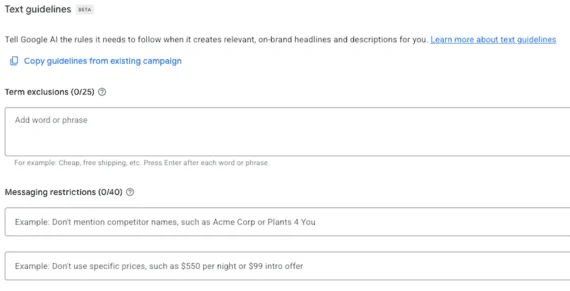
In a strategic move to further integrate artificial intelligence into its advertising ecosystem, Google has announced three significant updates poised to reshape how advertisers engage with consumers. These advancements, revealed in anticipation of the company’s annual Marketing Live event scheduled for May 20, include AI Max for Shopping campaigns, the new AI Brief feature, and text disclaimers for Search ads. All three innovations leverage Google’s sophisticated AI capabilities, with the company emphasizing the implementation of "guardrails" to ensure advertiser control and brand integrity.
The impending Marketing Live event, a pivotal gathering for digital marketing professionals and partners, typically serves as a platform for Google to showcase its latest developments and future vision for advertising. This year’s announcements signal a clear acceleration in Google’s AI-first strategy, extending its AI-driven automation beyond search and into the visually rich and transaction-focused realm of Shopping campaigns.
AI Max for Shopping: Expanding AI’s Reach
The introduction of AI Max for Shopping campaigns marks a logical progression following the successful rollout of AI Max for Search last year. AI Max for Search was designed to grant Google’s AI greater autonomy in determining which search queries trigger advertisements and how those ads are presented. This allows for a more dynamic and intent-driven ad delivery. For instance, if an advertiser has a campaign targeting the keyword "clear storage bins," AI Max can enable their ad to appear not only for that exact query but also for more nuanced searches like "What are the differences between clear and plastic storage bins?" Crucially, AI Max for Search can also dynamically alter ad text and redirect users to optimized landing pages (final URLs) to enhance conversion rates.
AI Max for Shopping is expected to operate on a similar principle, with a notable distinction: it can generate ad copy directly from an advertiser’s Merchant Center data. This means that even within a Shopping campaign, which traditionally emphasizes image-based product listing ads, text-based advertisements can be served. Advertisers who opt into AI Max for Shopping will also see their ads integrated into Google’s AI Overviews and AI Mode, mirroring the functionality introduced with AI Max for Search.
A key point of discussion will be the level of control advertisers retain over text customization and final URL expansion within AI Max for Shopping. While these features can be managed or opted out of in AI Max for Search, Google has yet to confirm the same flexibility for Shopping campaigns. This detail will be critical for advertisers seeking to maintain granular control over their messaging.
It is important to distinguish AI Max from Performance Max campaigns. Google currently recommends Performance Max for advertisers aiming for comprehensive, multichannel promotions across Search, Shopping, Display, and Video. Performance Max campaigns are designed for broad reach and diverse inventory. AI Max, on the other hand, is positioned as a solution for single-channel advertising, such as optimizing exclusively for Search or Shopping. It is anticipated that Google will eventually incorporate text customization capabilities into Shopping ads within Performance Max campaigns, further blurring the lines but also offering advertisers more sophisticated automation tools.
AI Brief: Enhancing Advertiser Input and Brand Alignment
The forthcoming AI Brief feature aims to provide advertisers with a more structured way to communicate their strategic preferences and brand guidelines to Google’s AI. This innovative tool will initially be integrated into AI Max for Search before being rolled out to Performance Max and AI Max for Shopping campaigns.
An AI Brief can be conceptualized as a digital brief that an advertiser provides to the AI. For example, a marketer selling high-end office chairs might furnish the AI with specific instructions. These could include:
- Target audience personas: Detailed descriptions of ideal customer profiles, including demographics, interests, and pain points.
- Brand voice and tone: Guidelines on whether the brand should communicate in a formal, casual, authoritative, or playful manner.
- Key product differentiators: Specific features or benefits that should be highlighted to stand out from competitors.
- Promotional restrictions: Information on what types of offers or discounts are permissible or should be avoided.
- Competitor landscape: Insights into rival products or marketing strategies to inform competitive positioning.
While such detailed guidance can significantly improve campaign performance by aligning AI-generated content with brand objectives, there is a potential challenge: overly restrictive briefs could inadvertently limit the AI’s ability to explore novel or unexpected optimization pathways. Balancing detailed input with algorithmic flexibility will be crucial for advertisers.
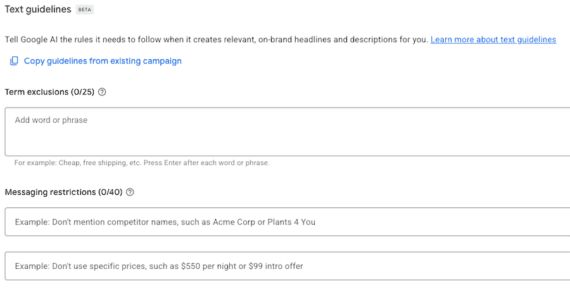
The AI Brief will incorporate a "Text guideline" feature, which is expected to function similarly to the existing text customization options within AI Max campaigns. This interface, visible in beta in screenshots released by Google, allows advertisers to input specific terms or phrases to exclude from ad copy and to define messaging restrictions. For example, an advertiser might choose to exclude terms like "cheap" or "free shipping" to maintain a premium brand image, or restrict mentions of competitor names or specific price points. This feature aims to ensure that AI-generated ad copy remains on-brand and adheres to marketing policies, without requiring advertisers to manually create every ad variation.
Text Disclaimers for Search: Adding Clarity and Compliance
The introduction of text disclaimers for Search ads represents a subtle yet impactful enhancement to ad transparency and compliance. This feature allows advertisers to append essential terms, conditions, or disclosures directly to their search advertisements. For instance, an advertiser selling water bottles could include a disclaimer such as "Product is BPA-Free. Learn More." This disclaimer would appear within the description line of Responsive Search Ads without the need for manual pinning, a process that can sometimes negatively impact ad strength scores.
The advantage of text disclaimers is that they do not affect an ad’s "ad strength" score, a metric Google uses to indicate how relevant and complete an ad is. While ad strength is often considered a vanity metric, ads with higher scores have historically demonstrated a tendency to gain more visibility. Therefore, the ability to include crucial information without penalizing ad performance is a significant benefit.
These text disclaimers are applied on a per-campaign basis and are managed within the "Assets" section of the "Campaigns" tab in Google Ads. They will occupy the first available description space and are capped at a maximum of 90 characters. Importantly, these disclaimers can coexist with final URL expansions and customized ad text, offering advertisers a flexible way to provide supplementary information. This feature is particularly valuable for industries with stringent regulatory requirements or for advertisers who need to communicate important product attributes or limitations directly to potential customers at the point of search.
The rollout of these three AI-driven updates underscores Google’s commitment to empowering advertisers with more intelligent and automated tools. As the digital advertising landscape becomes increasingly complex, AI is emerging as a critical component for navigating user intent, optimizing campaign performance, and ensuring brand consistency. The Marketing Live event will likely provide further details on the exact launch timelines and advanced functionalities of these new features, offering advertisers a clearer roadmap for leveraging AI in their future strategies. The implications for advertisers are profound, suggesting a future where AI plays an even more central role in ad creation, targeting, and optimization, ultimately aiming to deliver more relevant experiences for consumers and improved results for businesses.